
Additive manufacturing is reaching a point of maturity in Spain, with advancements spanning hospitals, companies, and universities. The maxillofacial surgery department at the Gregorio Marañón University General Hospital is already working with custom models and guides; the company BCN3D is embarking on a new business phase in partnership with Quantum; and the Public University of Navarre (UPNA) has won an award for its thermal simulation of metal printing processes.
These news stories paint a picture in which 3D printing is moving from being a one-off support to becoming a strategic resource : it improves patient safety and efficiency in the operating room, strengthens industrial capabilities within the country, and accelerates the transfer of knowledge from R&D to actual production.
Maxillofacial surgery with custom models at Gregorio Marañón Hospital
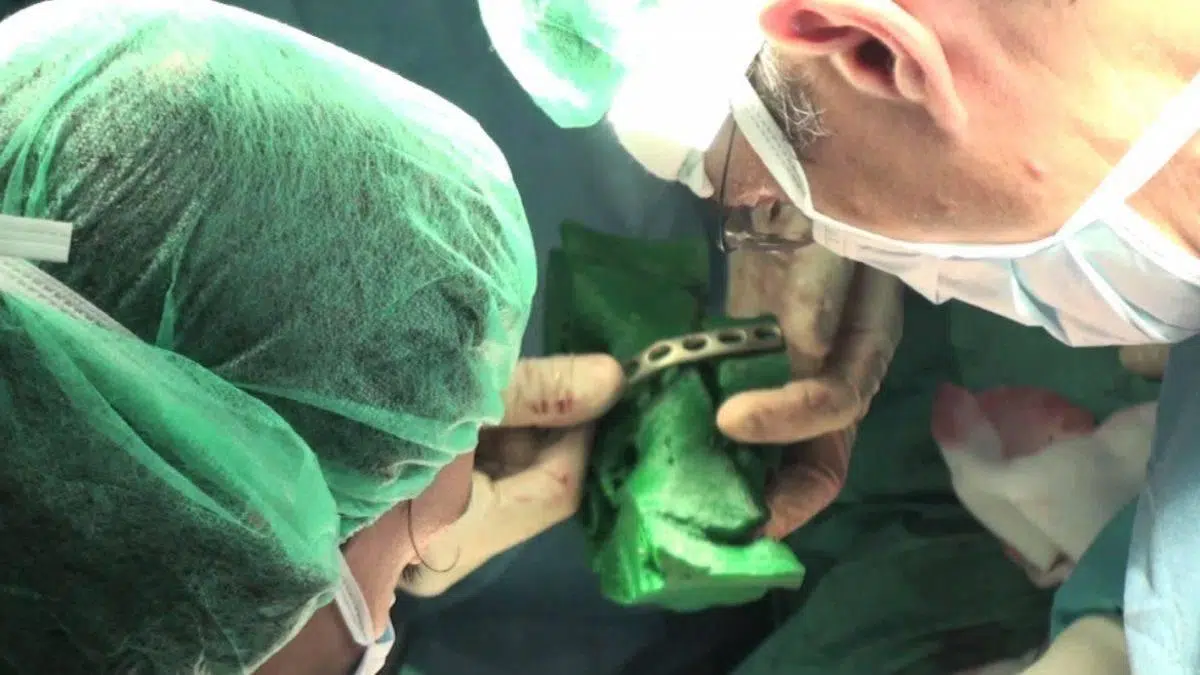
At the Gregorio Marañón Hospital, the 3D Planning Unit (UPAM3D) has integrated digitization, design, and manufacturing within the hospital environment, resulting in safer, less uncertain procedures and shorter surgical times . Working with biomodels of the patient and personalized guides allows for the preparation of each intervention with a level of detail difficult to match using traditional methods.
The applications range from anatomical replicas for planning facial fractures to cutting guides and prostheses designed for complex jaw or maxilla reconstructions. Procedures that previously took considerably longer are now performed in shorter timeframes, and in less complex surgeries, a substantial reduction in operating room time has already been observed thanks to biomodels.
The shorter duration of the operations also reduces the anesthetic risk and the potential for complications, resulting in shorter hospital stays and faster recoveries for patients.
This approach requires close coordination between specialties: oral and maxillofacial surgeons collaborate with neurosurgeons and engineers from the additive production unit to design guides and templates that ensure the ideal position of the bone segments.
Technology is also transforming medical residency training : residents participate in case planning and are involved in procedures. In parallel, new materials for implants and fixations—including resorbable or drug-controlled composites—are being explored with the aim of improving medium- and long-term outcomes.
The drive is supported by a demanding regulatory framework: the center is authorized to manufacture custom-made devices under quality systems aligned with ISO 13485 and with protocols that prioritize patient safety.
Industry: BCN3D opens a new era after its acquisition by Quantum
Quantum , a company from Lleida with the backing of private investors such as Sorigué, Banasegur (Sabseg Group), Terberfer and Inversions Vall, has acquired the assets and operations of BCN3D , ensuring the continuity of the project after the bankruptcy process and keeping the entire team.
The headquarters and production center in Lleida remain fully operational. The new structure will retain products, technologies, and brands, leveraging existing infrastructure and investment to strengthen BCN3D's presence in additive manufacturing for the light industry.
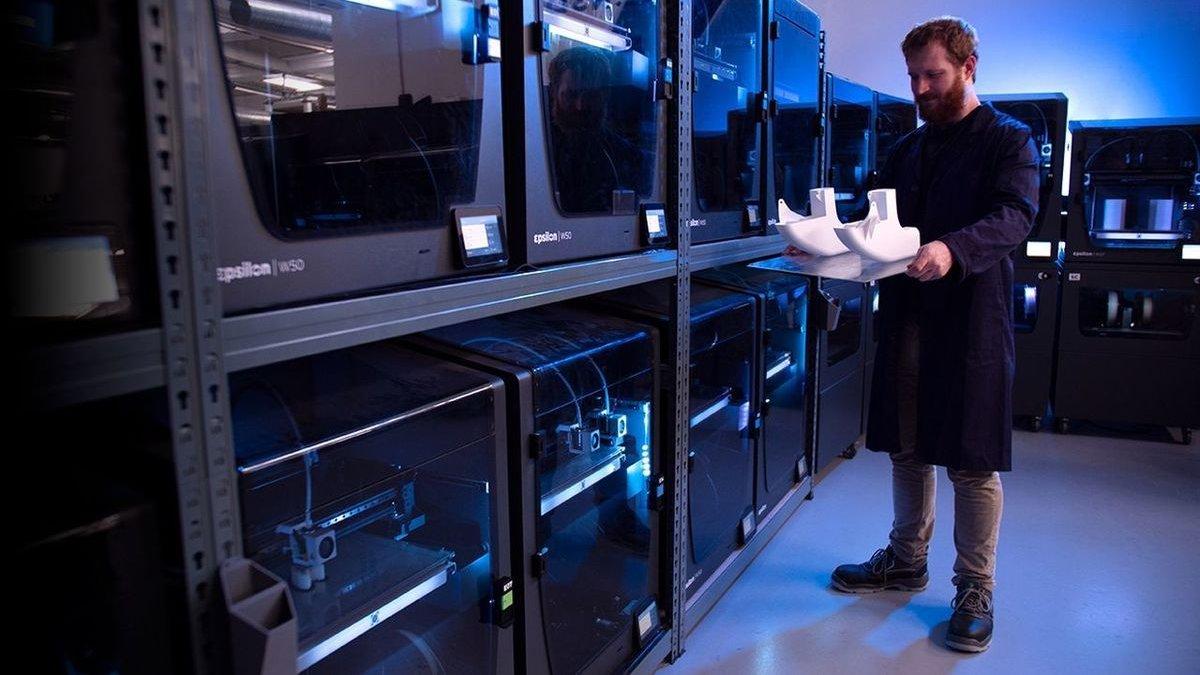
Among its solutions, the Omega I60 stands out , aimed at making the leap from prototypes to consistent series, and the Epsilon Series , designed for those who need flexibility with technical materials, easily integrating into printing farms and demanding workflows.
BCN3D's installed base includes leading clients such as Nissan, BMW, NASA, Camper, Louis Vuitton , and MIT —support that the new phase aims to consolidate. The company recorded a turnover of €4,4 million in 2023 and plans to drive innovation and expand its product catalog under the Quantum brand.
Metal R&D: UPNA awarded for optimizing the WAAM process
A team from the Public University of Navarra has received the Jaume Blasco Innovation Award for a work that models the thermal behavior of the WAAM process (arc and wire additive manufacturing), an award given by AEIPRO at the XXIX CIDIP held in A Coruña.
The research uses a finite element model to reproduce how heat is generated, distributed, and dissipated during manufacturing, allowing the outcome to be anticipated without physical testing and the process to be adjusted to gain efficiency and reduce costs.
The model has been validated with laboratory data and facilitates fine-tuning variables such as temperature, deposition rate or type of material, with a direct impact on sectors such as automotive and aeronautics due to the improvement of repeatability and reliability.
The team—linked to the INAMAT² and Smart Cities (ISC) institutes —is made up of Fernando Veiga Suárez (leader), Pedro José Rivero Fuente , Daniel Salcedo Pérez , Xabier Sandua Fernández , Sergio Ibáñez Losantos, and Miguel Ángel Martín Antunes . The project has received funding from the Ministry of Science and Innovation (FactorIA initiative) and the Euroregional Innovation program promoted by the New Aquitaine–Euskadi–Navarre Euroregion.
With these coordinated efforts between healthcare, industry, and R&D , 3D printing is consolidating a qualitative leap in Spain: safer and faster surgeries, companies with future plans, and a scientific base that accelerates the arrival of tangible improvements to the productive sector.