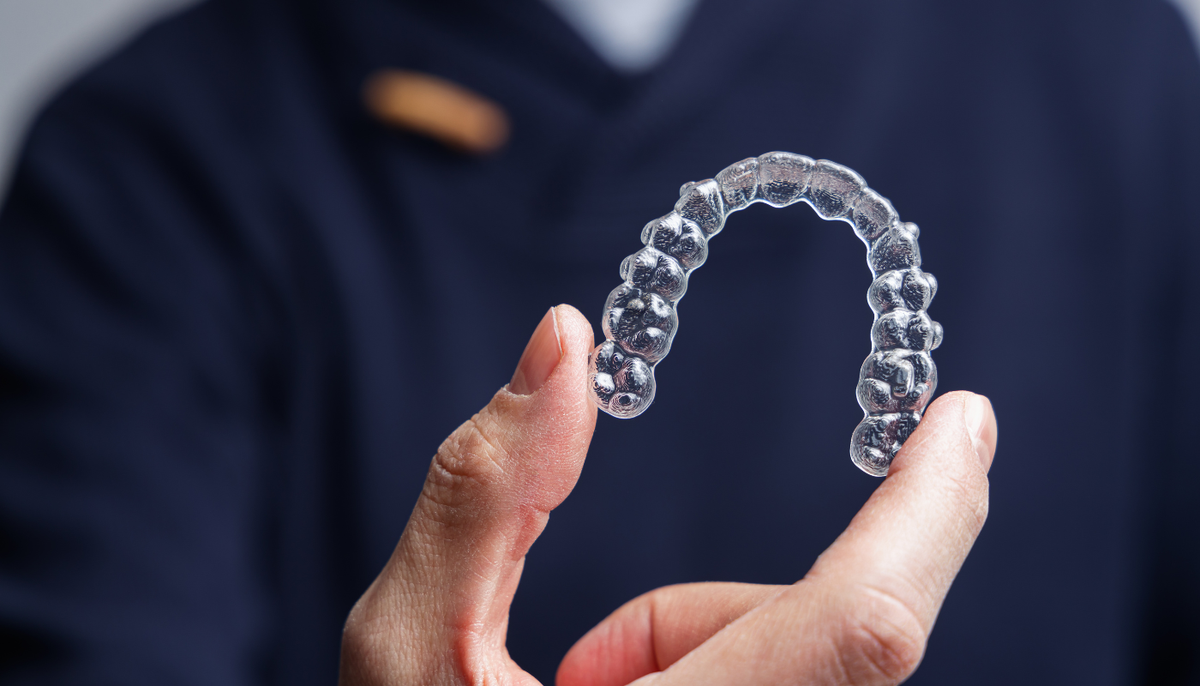
3D printing in medicine and dentistry has gone from a technological curiosity to an everyday tool for clinics, hospitals, and laboratories in just a few years. We're no longer talking about just models or prototypes: today, splints, surgical models, custom prostheses, implant guides, and even biocompatible materials specifically designed to remain in the mouth or body for extended periods are being printed.
This revolution is especially noticeable in digital dentistry and in medical specialties that require high anatomical precision . Thanks to additive manufacturing, it's possible to go from a digital scan to a physical piece in a matter of hours, with millimeter accuracy and a level of customization that traditional methods cannot match. Furthermore, the process is more efficient, shortens lead times, reduces costs, and significantly improves the patient experience.
What is 3D printing in medicine and dentistry?
When we talk about 3D printing applied to healthcare, we're referring to an additive manufacturing process that builds an object layer by layer from a digital file. Instead of carving, milling, or extruding material, the printer adds small layers until the final shape is achieved. In the medical and dental fields, this object is usually a completely customized piece, tailored to the patient's anatomy.
In dentistry, 3D printing allows for the creation of custom-made restorations, splints, aligners, models, and surgical guides, with very fine adjustments and complete control over shapes, thicknesses, and occlusal contacts. In medicine, it is used to manufacture realistic anatomical models, surgical guides, external prostheses, orthopedic devices, and surgical planning tools that help the medical team prepare for complex procedures with much greater confidence.
In contrast to traditional methods based on physical impressions, plaster casts, and manual processing , 3D printing fits into a completely digital workflow: scanning, computer-aided design (CAD), and direct manufacturing. This technological leap has made personalization the norm, not the exception.
Another key advantage is that 3D printing democratizes access to in-house manufacturing . What previously required large laboratory infrastructures can now be accomplished with desktop printers and specific materials, within a dental clinic or hospital department, while maintaining control over time, costs, and quality.
From digital scanning to physical object: the workflow
It all begins with the precise digitization of the patient's anatomy . In dentistry, intraoral scanners are used to capture teeth, gums, and adjacent structures with a very high level of detail. In medicine, the information usually comes from CT scans, MRIs, or 3D scanners that capture the bone structure and soft tissues of the area to be treated.
This data is converted into a digital file, usually in STL format or another compatible standard, which is imported into CAD software specifically designed for medical or dental applications . At this stage, the piece is designed: an occlusal splint, a surgical guide, an anatomical model, a temporary prosthesis, or any other device necessary for the treatment.
Once the design is finalized, it moves to the print preparation program , where the object is oriented, supports are added, and the printing parameters are defined (layer height, material type, exposure times, etc.). The software then generates the file that the 3D printer will understand to cure the resin or deposit the material layer by layer.
The next step takes place in the machine, where the 3D printer physically manufactures the model layer by layer . In the dental sector, photopolymerizable resins that solidify with ultraviolet light are primarily used, although in medicine other materials such as engineering plastics, metals, or biocompatible compounds are also used depending on the application; and procedures such as 3D printing bone directly in the operating room have even been developed.
After printing come the post-processing phases: washing, final curing, and, if necessary, polishing or finishing . In dentistry, these stages are critical to guarantee biocompatibility, dimensional stability, and to apply quality control to 3D printed splints, aligners, or prostheses to ensure proper mechanical behavior.
Most commonly used 3D printing technologies in the healthcare sector
In dentistry and many medical applications, technologies based on the photopolymerization of liquid resins are primarily used due to their combination of high precision, good speed, and excellent surface quality. The three most common are SLA, DLP, and LCD.
SLA (stereolithography) uses a laser that scans the surface of a light-cured resin vat, solidifying it point by point and layer by layer. This technique offers a high level of detail, ideal for dental models, temporary veneers, or complex structures. However, it is usually somewhat slower than other projection-based technologies.
DLP (Digital Light Processing) works in a very similar way, but instead of a laser, it uses a light projector that solidifies an entire layer of resin in a single step. This allows for shorter printing times , which is especially useful when producing multiple parts at once, such as numerous study models or several splints on the same build plate.
LCD technology has become extremely popular in the dental sector thanks to its balance of cost, speed, and resolution. In this case, an LCD screen allows ultraviolet light to pass through, following the pattern of each layer and curing the resin only in the intended areas. This technique integrates very well with compact desktop printers like those used in many modern dental clinics and laboratories.
Although other technologies such as selective laser metal melting, filament extrusion printing (FDM) or powder sintering are also used in medicine , for daily dental practice photopolymerizable resins continue to be the main protagonists due to their precision and versatility.
Applications of 3D printing in dentistry
Dentistry has been one of the fields that has most benefited from the patient-centered additive manufacturing revolution . The list of applications grows every year, but there are some key uses that are already fully established in the daily operations of clinics and laboratories.
One of the most widespread applications is the creation of printed digital dental models . After scanning the mouth, the dentist or dental technician can obtain accurate models of the dental arch in a very short time, without needing to store plaster casts or relying on setting times. These models are used for diagnosis, treatment planning, occlusion testing, or presenting cases to patients.
Surgical guides for implantology are another major advancement. Using a CT scan and the virtual design of the implants, custom guides are printed that fit the patient's teeth or bone and precisely mark the location, angle, and depth of each drill hole. This results in much more predictable, safe, and faster surgeries.
In orthodontics, 3D printing is used both for manufacturing clear aligners and for producing models for each stage of treatment . The practitioner can print the complete sequence of models and then thermoform the necessary aligners or splints onto them, significantly shortening delivery times and allowing for better adjustment of the planned tooth movement.
Workflows for provisional prostheses and some definitive restorations have also changed completely . Crowns, bridges, denture bases, and provisional frameworks can be printed from CAD designs, allowing for aesthetic and functional trials in a very short time. In many cases, the patient leaves the office with a fully fitted provisional solution on the same day.
The printing of occlusal splints, night guards, and bite guards has also benefited from this technology. Thanks to digital design and 3D printing, splints with an excellent fit are obtained; they are less bulky and more comfortable for the patient, which often improves adherence to treatment.
Revolution in dental laboratories and in-house production
Until a few years ago, many dental laboratories had to outsource part of their manufacturing processes , especially when it came to complex or high-volume production. This meant longer shipping times, waiting periods, and a reduced ability to respond to changes or adjustments requested by clinics.
With the arrival of desktop 3D printers designed specifically for dental use , the situation has changed completely. Today, it's possible to integrate the entire digital workflow within the laboratory itself: receiving scanned files, CAD design, and on-site manufacturing. This drastically reduces lead times and greatly improves responsiveness.
In-house production not only reduces waiting times but also allows for more efficient cost management and quality control . Technicians can decide which materials to use in each case, remake a part if it doesn't fit perfectly, or adjust designs almost in real time, without depending on third parties or external shipments.
Furthermore, many dentists have begun incorporating 3D printers directly into their own clinics . This allows them to manufacture models, splints, or temporary prostheses without sending anything out, offering immediate solutions to their patients. For example, a model and a splint can be printed in a matter of hours, avoiding second appointments or unnecessary waiting times.
This transformation goes hand in hand with the implementation of so-called complete digital dentistry , where the intraoral scanner, design software, 3D printer and, where applicable, milling systems, form an integrated ecosystem that greatly streamlines the entire work process.
Biocompatible materials and advances in dental resins
The development of 3D printing applied to healthcare has also spurred a veritable explosion of biocompatible materials specifically designed for medical and dental use . In dentistry, light-cured resins have become increasingly sophisticated, offering mechanical, aesthetic, and stability properties far superior to those of the first generations.
Today, we can find resins designed for diagnostic models, surgical guides, splints, aligners, long-term temporary restorations, or definitive prostheses , each with formulations adapted to its function. Some closely mimic the translucency and color of teeth, while others prioritize impact resistance or controlled flexibility.
Specialized dental brands like Graphy have developed high-end ranges of light-cured resins to meet these needs. Their catalog features Tera Harz resins , designed for demanding applications such as splints, aligners, and certain prostheses, where a balanced combination of strength, biocompatibility, and color stability is required.
These advanced resins offer, among other advantages, biocompatibility certifications, high mechanical resistance and good dimensional stability , fundamental aspects when the piece will be subjected to masticatory forces, temperature changes and constant exposure to saliva.
The range of colors, opacities, and finishes has also expanded, allowing for highly satisfactory aesthetic results that blend naturally with the patient's existing teeth. This is especially important in visible areas, where the goal is for the restoration to be completely undetectable.
High-precision dental 3D printers: Uniz SLASH 2 PLUS and Uniz NBEE
Among 3D printing solutions geared towards the dental sector, equipment focused on high precision, speed, and compatibility with specialized resins has been gaining ground . Notable examples include printers like the Uniz SLASH 2 PLUS and the Uniz NBEE, designed for seamless integration into laboratories and clinics.
The Uniz SLASH 2 PLUS is an LCD-based 3D printer that offers a highly effective combination of speed, detail, and print volume. This makes it particularly attractive for dental laboratories that need to produce models, splints, guides, and temporaries in large quantities while maintaining high accuracy in detail.
Its features include very fine resolution for reproducing complex anatomies , a large build area for printing multiple parts at once, and high compatibility with advanced dental resins, including ranges of materials specifically for splints or aligners.
On the other hand, the Uniz NBEE is geared towards environments seeking ultra-fast production without compromising on quality. Its technology significantly reduces printing times , which is especially valuable for clinics or laboratories that need to deliver splints, models, or temporary prostheses within very tight deadlines.
Integrating this equipment into the digital workflow allows professionals to have an efficient and scalable in-house production line . As the demand for 3D printing-based treatments grows, having fast and reliable machines becomes a key element for differentiation and offering a high level of service.
Clinical, economic and patient advantages
The adoption of 3D printing in medicine and dentistry is not explained solely by its technological component; what has really driven its expansion are the clear advantages it brings to clinicians and patients on a daily basis.
In terms of precision, the leap compared to traditional methods is very clear. The ability to work with exact digital files and reproduce anatomy at real scale means that restorations, splints, or surgical guides fit better, require fewer adjustments, and reduce the margin of error in procedures.
From a time perspective, the improvements are also significant. Many devices that previously required several days or weeks for mold printing, casting, shipping, and adjustments can now be ready in a matter of hours. This facilitates faster treatments, with fewer visits to the clinic and greater convenience for the patient.
From an economic standpoint, additive manufacturing allows for resource optimization and cost reduction in the medium term . Although the initial investment in scanners, software, and printers can be significant, the savings in materials, transportation, and manual labor time usually offset this, in addition to opening up new possibilities for services and treatments.
For the patient, the experience is also improved: uncomfortable physical impressions are avoided, waiting times are shortened, and devices are better adapted to their anatomy. All of this contributes to greater satisfaction and a more positive perception of the technology applied to their oral health or medical treatment.
3D printing in medical education and dental training
Beyond its direct clinical applications, 3D printing has become an invaluable tool for teaching and training healthcare professionals . In dentistry, it allows students and residents to familiarize themselves with complex dental anatomies using 3D-printed models that faithfully replicate real-life situations.
Thanks to these models, surgical procedures, tooth preparation techniques, implant placement, and instrument handling can be practiced in a safe environment, without risk to real patients. This helps to gain fluency and confidence before facing clinical cases in the office.
In the medical field, 3D models created from CT or MRI scans allow surgeons to plan complex or rare procedures using exact replicas of the patient's anatomy. Incisions, plate placement, resections, and reconstructions can be simulated, refining the surgical strategy before entering the operating room.
This ability to experiment with different scenarios, test alternatives, and analyze results on physical models accelerates the learning curve and improves the quality of training . At the same time, it helps to better explain treatments to the patients themselves, who can see and touch a representation of their specific case.
As technology becomes cheaper and digital workflows are simplified, it is expected that 3D printing will continue to be naturally integrated into universities, training centers and teaching hospitals , strengthening the link between theory and clinical practice.
The combination of digital scans, advanced design software, high-precision 3D printers, and biocompatible materials is redefining how treatments are planned and performed in medicine and dentistry. Increasingly, the path is moving from scans to smiles and guided surgeries with a fluidity unimaginable just a few years ago. For clinics, laboratories, and hospital services that decide to make the leap, 3D printing is not just a technological trend, but a more efficient, precise, and personalized way to care for their patients' health.

Table of Contents
- 1 What is 3D printing in medicine and dentistry?
- 2 From digital scanning to physical object: the workflow
- 3 Most commonly used 3D printing technologies in the healthcare sector
- 4 Applications of 3D printing in dentistry
- 5 Revolution in dental laboratories and in-house production
- 6 Biocompatible materials and advances in dental resins
- 7 High-precision dental 3D printers: Uniz SLASH 2 PLUS and Uniz NBEE
- 8 Clinical, economic and patient advantages
- 9 3D printing in medical education and dental training