
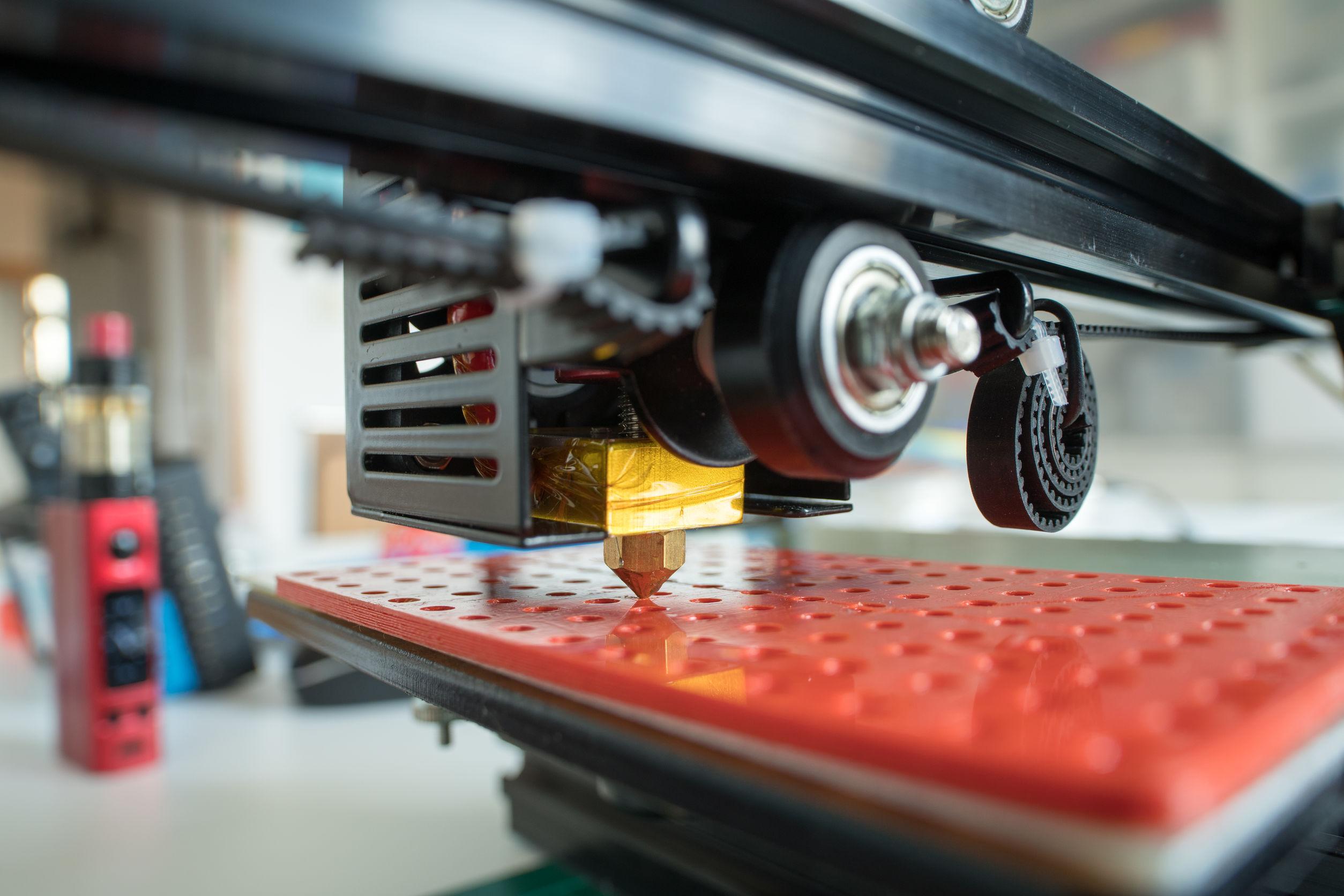
3D printing has gone from being almost science fiction to becoming an everyday technology in workshops, factories, universities, and even homes. Today, everything from simple models to airplane parts, medical implants , sports prostheses, jewelry, and industrial prototypes can be printed in a matter of hours.
To truly benefit from this technology, a good printer isn't enough: it's crucial to know what 3D printing materials are available , what their properties are , and what applications they excel at. Not all plastics or resins are suitable for the same purpose, and choosing the wrong material can ruin a project that, on paper, seemed perfect.
What exactly is 3D printing and how do the materials fit together?
When we talk about 3D printing, we're referring to a set of additive manufacturing processes in which a machine deposits very thin layers of material to build a three-dimensional object. The model originates in 3D software, is sliced into layers using a slicing program, and the printer follows those instructions layer by layer.
The beauty of it is that these layers can be made of plastics, resins, metals, ceramics , or even flexible materials . The software calculates the path of the nozzle or laser, and the printer adds material at the correct coordinates. Depending on the size of the part, the technology, and the material, a print can take anywhere from a few hours to more than half a day.
After printing, some post-processing is almost always necessary to improve the surface finish : sanding, polishing, UV curing for resins, support removal, staining, painting, etc. The properties of the chosen material also have a significant influence here.
In practice, most home and office equipment uses plastic filament via FFF/FFF (fused filament fabrication), while high-end professional machines use resins, plastic or metal powders fused by laser or heat in a powder bed.
Large families of materials for 3D printing
To simplify things a bit, 3D printing materials can be grouped into three main categories: thermoplastics, photopolymer resins , and metals . Within each group, there are dozens of variations adapted to very different uses, from rapid prototyping to the production of final parts.
FFF printing is dominated by thermoplastic filaments (PLA, ABS, PETG, nylon, polycarbonate, PEEK, etc.), while SLA/DLP/LFS technologies are dominated by light-sensitive liquid resins . For advanced industrial applications , high-performance metal powders, ceramics, and composites come into play.
In addition, there are hybrid or special materials, such as microfiber-reinforced plastics, continuous carbon, glass or Kevlar fibers , and compounds loaded with metal or ceramic powder that are then sintered to become metal or technical ceramic parts.
Most commonly used basic thermoplastics (PLA, ABS, PETG)
Among the most common thermoplastics are the so-called "basic" filament materials : PLA, ABS, and PETG. These are the most commonly found in home printers and in many professional settings where extreme performance isn't required.
PLA (polylactic acid) is probably the most widely used filament. It is obtained from renewable raw materials such as corn or wheat, making it more environmentally friendly and preventing the generation of particularly toxic fumes during printing. It is very easy to use, ideal for those starting out in 3D printing and seeking good dimensional stability . It offers a huge range of colors and finishes. Its weakness is its poor resistance to heat and intense mechanical stress, which limits its suitability for demanding industrial applications.
ABS (acrylonitrile butadiene styrene) is a classic in industry: it's used in Lego bricks, appliance casings, automotive components, and many other applications. In 3D printing, it's valued for its good resistance to impacts and high temperatures . It's also very easy to sand, drill, glue, paint, and polish, allowing for professional finishes. On the other hand, it requires a slightly more demanding printer (heated bed, airflow control) and emits fumes that should be well ventilated.
PETG is a derivative of traditional PET used in food packaging, formulated specifically for 3D printing. It is highly resistant to corrosion, moisture, and certain chemicals , and it also withstands impacts reasonably well. It is almost impermeable, making it ideal for containers, parts that come into contact with liquids, or external components. Its main drawback is that it is not biodegradable, unlike PLA.
Niche thermoplastics: nylon, TPE/TPU/TPC and polycarbonate
Beyond the basic materials, there is a set of niche thermoplastics that shine in specific applications thanks to some outstanding quality: flexibility, durability, chemical resistance or transparency.
Nylon (polyamide) is the heavyweight when it comes to toughness, flexibility, and durability. While not particularly rigid or as resistant to extreme temperatures as PEEK, it exhibits excellent fatigue resistance and is highly resistant to many chemicals. This makes it ideal for mechanical parts that bend, flex, or undergo continuous wear , such as lightweight gears, hinges, pins, or machine components where resistance to friction is paramount.
Thermoplastic elastomers TPE, TPU, and TPC are plastics with elastic properties, capable of deforming and returning to their original shape. They are extremely flexible, tear-resistant, and very durable. They are frequently found in automotive components, hoses, gaskets, shock-absorbing housings, and soft medical parts . In 3D printing, they allow the manufacture of covers, shock absorbers, insoles, sealing gaskets, or prototypes of soft consumer products.
Polycarbonate (PC) is an engineering plastic with a well-balanced combination of properties: it is impact-resistant, heat-resistant, and can be transparent . It is used in bulletproof glass, helmet visors, diving masks, and electronic displays. In 3D printing, PC is ideal for parts that must withstand impacts, moderate temperatures, and maintain transparency or high strength, although it requires printers capable of operating at high temperatures.
An interesting alternative is PC-ABS , an alloy that combines polycarbonate and ABS. This mixture results in a material with high hardness, good thermal resistance, and some flexibility , widely used in the automotive, telecommunications, and electronics sectors, where robust and heat-tolerant housings are needed.
Superplastics and high-performance technical materials
When applications are particularly demanding, so-called superplastics come into play : materials that combine high mechanical strength, excellent thermal stability, and high chemical resistance. PEEK and ULTEM are among the most prominent examples.
PEEK and ULTEM (such as ULTEM 9085 or ULTEM 985) are high-performance engineering polymers that were traditionally used in industrial settings before becoming 3D printable. They are very rigid, withstand extreme temperatures, and resist aggressive chemicals , while also offering dimensional stability even under harsh conditions. They are used in sectors such as aerospace, automotive, and medical industries for tooling, supports, and components subjected to high stress.
ULTEM 985, for example, is an amorphous polymer that combines excellent thermal properties, flame retardancy, good chemical resistance, and high dimensional stability . It is particularly interesting for interior vehicle parts, electrical components, and applications where flammability is a critical factor.
Filled thermoplastics and reinforced plastics
Another way to improve the performance of thermoplastics is to fill them with particles of other materials . These filled thermoplastics remain, for the most part, plastic in terms of behavior, but the particles modify key properties such as stiffness, hardness, and thermal stability.
In a filled thermoplastic, the base material (e.g., nylon or PLA) is impregnated with small solid particles of a second material . The concentration of this reinforcement can vary considerably. While chemical resistance is still determined by the base plastic, the presence of particles can drastically alter other characteristics.
On one hand, there are plastics filled with exotic materials (wood, coffee, etc.) , which primarily modify the appearance and texture, but barely improve mechanical performance. They function as niche thermoplastics focused on aesthetic and decorative purposes.
On the other hand, we find plastics reinforced with industrial microfibers , where a significant performance leap is indeed sought. The most common example is carbon-fiber-reinforced nylon : this is a nylon matrix loaded with tiny carbon fibers that considerably increase hardness, rigidity, and heat resistance.
With the right proportion of fiber, a material close to superplastics is obtained: very rigid parts with great dimensional stability and a high-quality finish , often difficult to distinguish from components manufactured by traditional methods. However, if the fiber concentration is excessive, printing becomes more complicated: the binder plastic flows less well, and the surface becomes rougher and has visible defects.
Continuous fibers (CFF) for ultra-resistant parts
Microfibers greatly improve the properties of plastic, but for an even greater leap forward, reinforcement with continuous carbon, glass, or Kevlar fibers comes into play . In this case, the printer deposits long strands within the part, as in traditional composites.
Continuous Fiber Fabrication (CFF) technology combines standard FFF extrusion with a second nozzle that places the continuous fiber inside the part. Instead of completely melting the fiber filament, the nozzle "irons" it and encapsulates it within the thermoplastic matrix. The fibers behave similarly to an epoxy resin laminate, but everything is generated layer by layer inside the printer.
The result is parts that can be an order of magnitude stronger and more rigid than those made of plain plastic, even when filled . They retain the thermal and chemical resistance of the base thermoplastic, but with mechanical behavior much closer to that of a lightweight metal.
This type of reinforcement allows for the manufacture of tooling, clamps, supports, and lightweight structural components that previously required machined aluminum. Furthermore, it leverages the ease of design offered by 3D printing, enabling complex geometries with optimized internal reinforcement.
General purpose and high resolution resins
In the world of stereolithography and similar technologies, photocurable liquid resins are used . So-called "general purpose resins" are designed for prototyping and visual models, offering good detail and finish.
A typical general-purpose resin offers high resolution, a smooth, matte surface, and excellent detail , making it ideal for concept models, presentation pieces, and aesthetic prototypes. It's easy to print, supports post-processing such as sanding and painting, and is perfect for scale models, test cases, or design products.
Transparent resins and colored resins
Among standard resins, there are specific formulations designed to achieve near-total transparency . These transparent resins can be polished to a finish very similar to glass or optically molded plastic, making them ideal for components requiring light transmission, microfluidics, or inspection windows.
Colored resins, on the other hand, allow for matching color, material, and finish in rapid prototyping . They are perfect for final product mock-ups, color-coded parts (for example, in guides and fixings), and end-use components where a specific corporate color or glossy finish is desired.
Technical resins: Tough, Rigid, High Temp and Polyurethane
For functional applications that require more than just aesthetics, technical resins come into play . They are formulated to withstand mechanical stress, high temperatures, or continuous use.
Tough resins are strong and dynamic materials capable of withstanding impacts and compressive, tensile, and bending stresses without cracking easily. Their properties are similar to plastics such as HDPE, ABS, or polypropylene . They are commonly used in housings, frames, connectors, tooling, and prototypes subjected to wear.
Rigid resins are reinforced to be very rigid and maintain their shape under load. They are distinguished by their excellent dimensional stability, thermal and chemical resistance . They are suitable for clamps, fixings, tooling, turbines, fan blades and components for air or fluid circulation, as well as electrical housings and automotive parts.
High -temperature resin is specifically formulated to withstand hot air, gases, and fluids at high temperatures while maintaining dimensional accuracy. It is ideal for housings, supports, heat-resistant fixtures, molds, inserts, and small production runs of parts subjected to high temperatures.
Polyurethane resins offer exceptional long-term durability. They are stable against UV radiation, temperature, and humidity, and can be flame-retardant, sterilizable, and resistant to chemicals and abrasion. They are used in automotive, aerospace, and high-performance machinery components , robust end-use parts, and long-life functional prototypes.
Flexible, elastic, and silicone resins
The family of flexible resins fills the gap for soft, deformable parts with a smooth finish and good precision. They are the liquid equivalent of flexible filaments, but with much greater detail and geometric control.
Flexible and elastic resins mimic the behavior of rubber, TPU, or silicone. They can withstand repeated bending and compression stresses without breaking over multiple cycles. They are ideal for consumer product prototypes, flexible robotic components, anatomical models , and special effects props.
Silicone 40A Resin takes this a step further, being a 100% real silicone 3D printing material . It offers the same properties as traditional cast silicone: controlled elasticity, biocompatibility in some cases, and excellent fatigue resistance. It is used for functional prototypes, small production runs of silicone parts, custom medical devices, fixtures and masking tools, as well as soft molds for casting urethanes or resins.
Specialty resins: medical, dental, jewelry, ESD and flame retardant
In professional applications, very specific resins appear, adapted to regulations and needs of specific sectors such as medicine, dentistry, jewelry or electronics.
Medical and dental resins comprise a wide range of biocompatible materials designed for manufacturing medical and dental devices: surgical guides, splints, dental prostheses, and other custom prostheses. They comply with regulations for contact with the human body and can be sterilized, opening the door to tailored solutions in operating rooms and dental offices.
Jewelry resins are designed for lost-wax casting and vulcanized rubber molding. They burn cleanly, with high precision in detail and shape retention , allowing for the production of master molds, test pieces, and custom jewelry without the need for hand-carved models.
ESD Resin is an antistatic material developed to improve electronic manufacturing processes. It allows for the printing of tooling, fixtures, custom trays, and prototypes or final components where it is critical to avoid electrostatic discharges that could damage circuits.
Flame Retardant Resin is a fire-resistant resin, resistant to heat and creep deformation, suitable for industrial and indoor environments with high temperatures or potential ignition sources. It is used in interior parts of aircraft, automobiles, and trains, custom fasteners, and protective and internal components of electronic or medical devices.
Ceramic resins and resins for metal casting
In addition to conventional plastics and resins, some technologies support advanced materials such as technical ceramics or resins specifically designed for casting patterns.
Alumina 4N Resin is a ceramic resin containing 99,99% pure alumina. After a sintering process, it produces parts with excellent thermal, mechanical, and conductivity properties , ideal for thermal insulation, heavy-duty tools, and components exposed to aggressive chemicals and wear.
Clear Cast Resin is designed for industrial lost-wax casting patterns. It offers clean burnout, low thermal expansion, and high accuracy. It is used to produce patterns for end-use metal parts in the factory , especially when high detail and dimensional control are required.
Metals and ADAM/MIM type processes
Atomic diffusion additive manufacturing (ADAM) is inspired by metal injection molding (MIM). A filament composed of a plastic binder filled with metal powder is printed using a process very similar to FFF. The part then undergoes washing to remove the binder and sintering , resulting in a fully metallic part.
These metal parts retain certain geometric limitations typical of FFF (such as minimum thicknesses or necessary supports), but offer all the advantages of metal: high mechanical strength, hardness, conductivity and thermal behavior typical of alloys for industrial use.
Other advanced materials: graphite, graphene, and carbon fiber composites
Beyond common plastics, resins, and metals, 3D printing research is exploring materials like graphite and graphene , which are notable for their high electrical conductivity, strength, and lightness. Graphene, in particular, can be used in electronics, sensors, and even LED lighting to reduce costs and improve performance.
Carbon fiber as reinforcement is one of the greatest allies of additive manufacturing: by combining filaments such as PLA, ABS, PETG, or nylon with carbon fibers, very rigid and lightweight composites are achieved, capable of withstanding wide ranges of loads and demanding conditions. These materials are perfect for structural applications where metal was previously used , achieving weight savings and design simplification.
Prominent uses of 3D printing according to material
The diversity of materials has allowed 3D printing to permeate virtually every sector. Each type of material opens the door to very specific applications that benefit from its properties.
In prototype manufacturing , basic plastics (PLA, ABS, PETG) and standard resins allow for the creation of mock-ups, aesthetic prototypes, visual aids, and functional models in a short time, at low cost, and with the possibility of quickly iterating the design.
In aeronautics and automotive , superplastics, high-temperature technical resins, carbon fiber composites, and sintered metal parts are used for tooling, supports, fluid conduits, internal housings, and prototypes of structural parts, taking advantage of their strength and lightness.
In architecture and construction , systems have been developed that can print homes and emergency shelters, using special mortars and cementitious mixtures suitable for layer deposition, although that is another major chapter within 3D printing.
In medicine and dentistry , biocompatible resins allow for the fabrication of customized surgical guides, splints, anatomical models, and custom-made prostheses. Limb prostheses, custom implants, and devices that improve osseointegration by controlling porosity have also been printed.
Other fields such as education, music, gastronomy or art benefit from specific materials: architectural models, musical instruments (violins, flutes, banjos), edible pieces (ice creams, doughs, hamburgers) and sculptures are printed with special finishing materials.
Understanding the characteristics of each material—from basic filaments like PLA, ABS, and PETG to technical resins, superplastics, reinforced composites, and metals —is key to deciding what to print, how to do it, and with what cost and reliability. Choosing the right material allows 3D printing to move beyond being just a novelty and become a powerful tool for designing, prototyping, and manufacturing real solutions in virtually any sector.
