3D printing has moved beyond being a technological novelty to become a key tool in the healthcare sector. Its ability to manufacture customized products, reduce waste, and adapt to small production runs is driving changes in diverse areas, from glove manufacturing to restorative dentistry.
In recent times, various studies and companies have demonstrated that this technology can improve sustainability, shorten production times, and offer solutions more tailored to each patient's needs. Below, we review two relevant examples: the development of natural rubber gloves using 3D printing and the digitization of dental clinics with in-house manufacturing.

3D printed natural rubber gloves
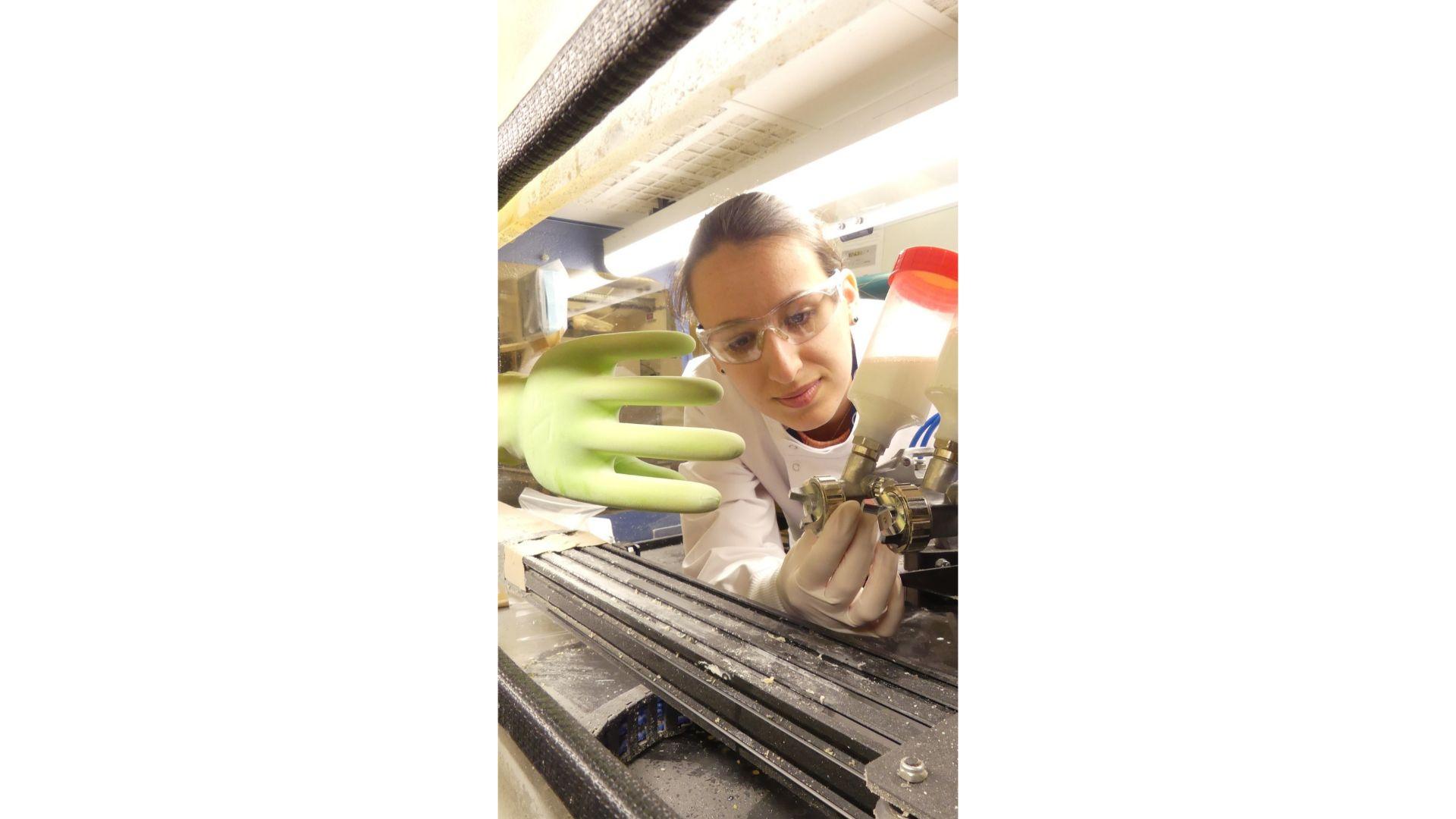
Traditional glove manufacturing relies on large production lines with molds that are immersed in various baths and require drying time between stages. This system, besides being slow, consumes a lot of energy and generates a significant amount of synthetic waste. In response, a team at Cranfield University has developed a medical 3D printing method that is better suited to smaller production volumes. It requires less space than a conventional line and uses natural rubber, a material that can offset the carbon emissions of the process and biodegrades rapidly.
The technique, called 3D-PEP, uses a printer designed for elastomeric products. Instead of immersing the mold, it sprays rubber onto it while heating the glove inside and out to vulcanize it and obtain the final product. This method allows for customization of properties such as thickness in specific areas and modification of specifications simply by changing the machine's instructions. Traditional production, on the other hand, requires extensive planning and allows for very few variations once the line is built.
Another advantage is control over batch size. Conventional methods require thousands of molds and a huge infrastructure, which makes small batches expensive. With 3D printing, dozens of printers can be used to produce slightly different gloves, and the features can be adjusted as needed. This opens the door to more flexible, demand-driven production.
From an environmental perspective, natural rubber latex is more sustainable than synthetic materials in both phases of the process. Rubber trees absorb CO2 organically, so increasing their planting brings production closer to net-zero emissions and, over time, could even generate a net benefit by removing more CO2 than is emitted. At the end of their useful life , synthetic rubber gloves degrade more than 100 times more slowly than natural rubber gloves, and some require additives to break down. Natural rubber, on the other hand, degrades in approximately one year, significantly reducing landfill waste.
Natural latex contains a protein that can trigger allergies in sensitive individuals. However, current technology allows this protein to be isolated and deactivated, making it possible to use gloves without adverse reactions . Furthermore, producing gloves using this method strengthens the resilience of the supply chain. The traditional industry is heavily concentrated in Southeast Asia, and relying on a single region can lead to shortages during any crisis, as occurred during the COVID-19 pandemic.
3D printers are far more compact than entire production lines, and manufacturing can begin as soon as the equipment arrives, without waiting to build large facilities. This allows for smaller factories and makes production viable in European cities with limited space. While it doesn't solve the dependence on raw materials, since Southeast Asia is also the largest producer of natural rubber, alternatives such as Russian dandelion and guayule, which could be cultivated in Europe, are being explored.
Digital dentistry and in-house manufacturing
In the dental field, digitalization has progressed unevenly. While intraoral scanners improved patient data capture, the fabrication of restorations and devices remained largely tied to analog processes, with long waiting times and multiple steps between the clinic and the laboratory. To bridge this gap, SprintRay, a company founded in California in 2014, has developed a comprehensive 3D printing ecosystem for medicine and dentistry that integrates 3D manufacturing into the daily work of dental professionals. Their goal is for the technology to move beyond being an isolated element and become an integral part of the workflow.
The company identified a critical bottleneck: while dentistry was moving toward digitalization with intraoral scanners, the manufacturing phase remained stuck in slow and fragmented methods. A decade later, SprintRay has evolved from high-precision hardware to an ecosystem based on four pillars: printers, software, materials, and specialized support. For a clinic, incorporating 3D design and manufacturing allows for the resolution of simple or urgent treatments on the same day.
In-house 3D manufacturing is not intended to replace the laboratory, but rather to create an integrated, real-time collaboration. The clinic can perform the scan, send the data instantly, and work with the dental technician to develop the digital design. From there, the restoration can be manufactured in the clinic itself under supervision, or the process can be reversed if the case requires other services. This connection demands a compatible technological environment , hence the focus on cloud-based software powered by artificial intelligence, biocompatible resins, printers, and standardized post-processing protocols.

This integration allows a design created by the prosthetist to be transferred to local manufacturing while maintaining the expected precision and streamlining a process that traditionally could take several days. Furthermore, to reduce complexity, SprintRay has focused part of its development on automating tasks using artificial intelligence, so the user doesn't need to become a specialist in 3D design or programming. The professional scans, and the system automatically parameters elements such as supports or the necessary adjustments for printing.
Closed post-processing protocols complete the workflow and minimize resin handling. The key, according to the company, has been eliminating technological complexity through automation and AI, preventing dentists and assistants from needing to be design engineers or programming experts. SprintRay develops its solutions specifically for dentistry , maintains a constant investment in R&D and materials science, and supports the integration of its technology with training and support.
This philosophy is especially important in markets like Spain, where clinics and laboratories have a high level of expertise and a growing willingness to incorporate new digital workflows. Europe is one of the company's strategic markets for international growth. The next leap forward will be driven by the convergence of several technologies : laboratories will strengthen their role as digital service and design centers, connected with clinics capable of handling urgent or high-turnover work locally.

Added to this is the evolution of artificial intelligence itself, which will accelerate image design and segmentation, reducing bottlenecks between the two parties involved. The third element will be the evolution of materials, which, with new biocompatible resins, will aim to expand the manufacture of definitive restorations with aesthetic and mechanical properties increasingly similar to those of natural teeth. The result is a field of dentistry where certain treatments can go from scanning to final restoration in a single session.
3D printing continues to demonstrate its versatility in the healthcare sector. On the one hand, research with natural rubber allows us to envision more sustainable, customizable gloves with a less vulnerable supply chain. On the other, the digitalization of dentistry brings the manufacturing of restorations closer to the clinic itself, reducing lead times and improving the patient experience. Both paths share a common goal: to leverage the advantages of additive manufacturing to create products better suited to each need, with less environmental impact and greater local autonomy.