
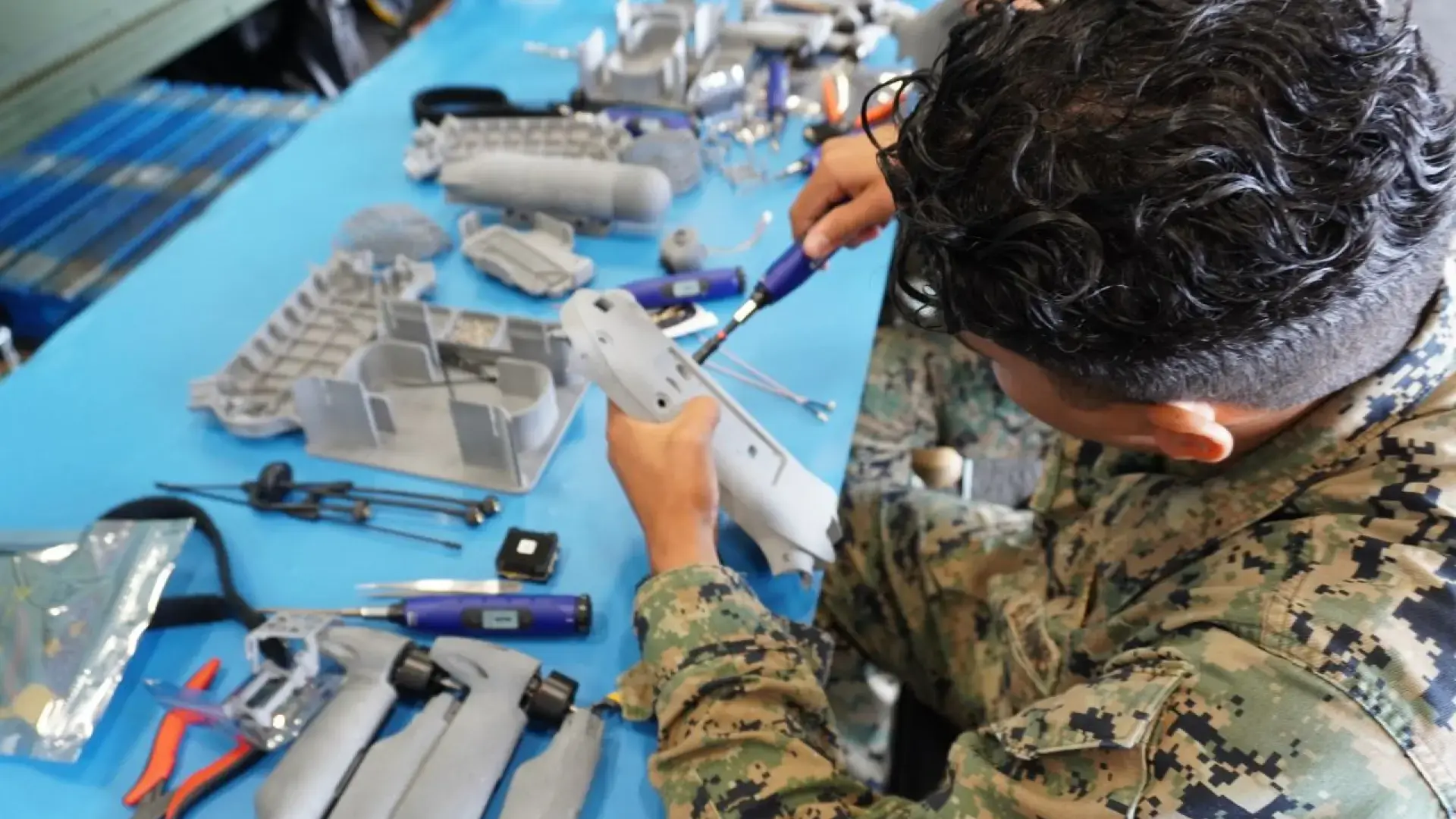
3D printing has become a strategic tool for the U.S. armed forces, which are seeking to reduce their reliance on traditional supply chains. Recent military exercises in the Indo-Pacific have demonstrated the feasibility of manufacturing drones, spare parts, and other equipment directly at the deployment site, including aboard warships.
During the RIMPAC and Valiant Shield exercises , the U.S. Marines tested various applications of additive manufacturing. One of the most notable initiatives was the installation of a portable microfactory called xCell, developed by Firestorm Labs, on the amphibious assault ship USS Essex. Thanks to this system, more than a thousand components and twelve Squall FPV drones were produced, which were subsequently used in simulated combat exercises.

The xCell microfactory aboard the USS Essex
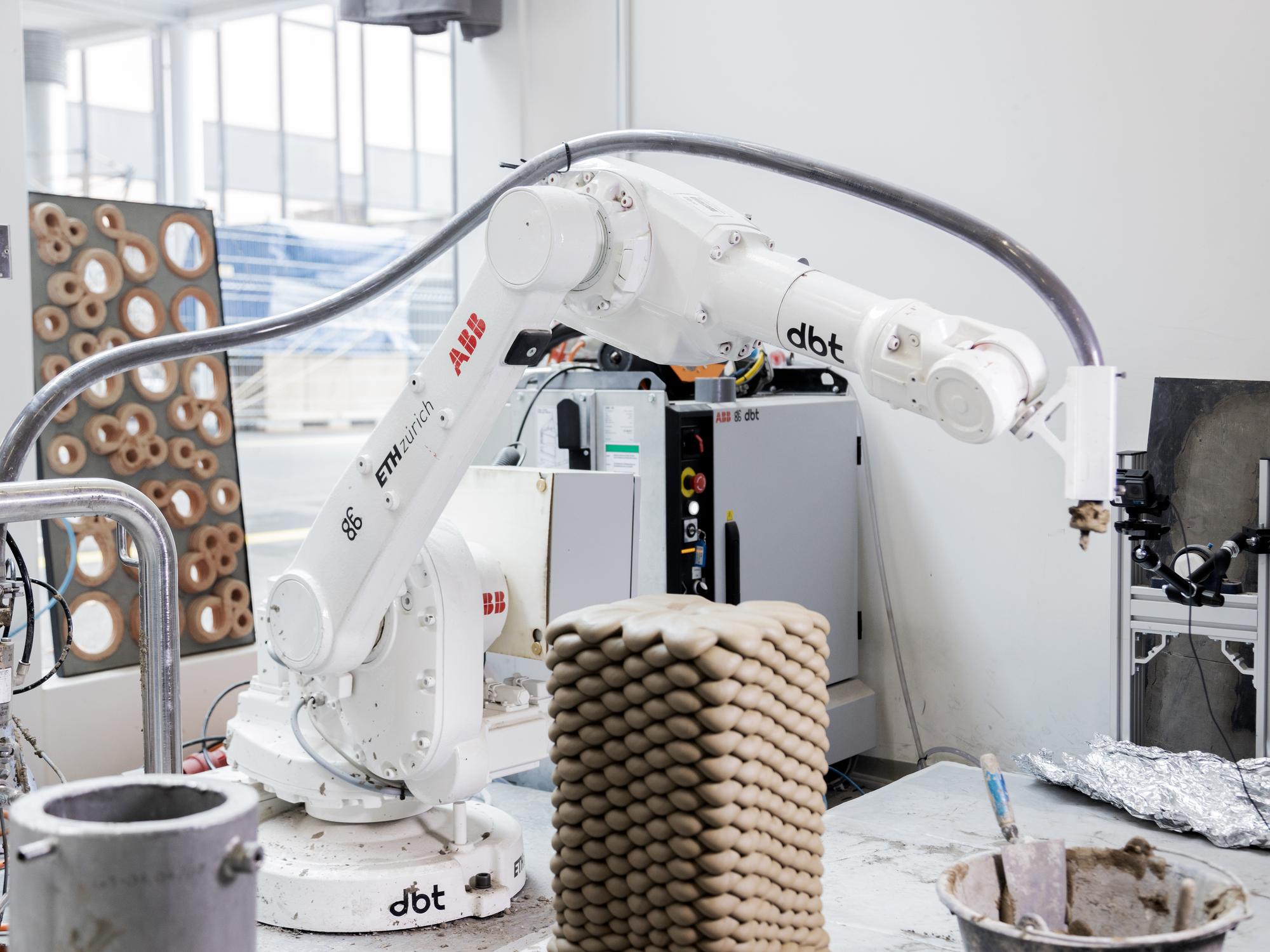
The xCell is a shipping container adapted as a manufacturing center that can be installed on any ship or forward operating base. In the case of the USS Essex, this unit was responsible for printing both spare parts and complete drones during its transit to Hawaii. Reports indicate that more than 1.000 parts were manufactured in two weeks, demonstrating its production capabilities at sea, even with waves exceeding four meters in height.
The 3D-printed Squall drones are FPV-type unmanned aerial vehicles designed for rapid battlefield production. During exercises, these drones were used as an opposing force in counter-drone maneuvers. The speed with which these systems can be generated and assembled provides a considerable tactical advantage, allowing them to be deployed in a matter of hours, instead of waiting weeks for traditional shipping.

Reduction of logistical dependence
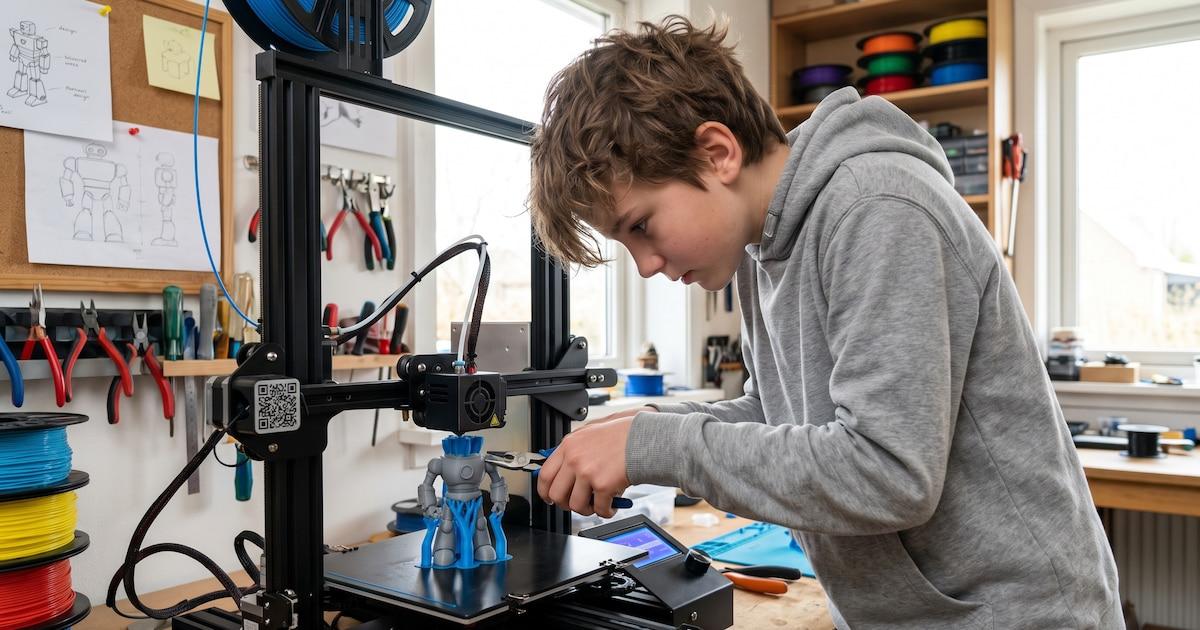
The main advantage of this technology is the drastic reduction in waiting times for spare parts or equipment. Instead of relying on a supply chain that can be disrupted in a high-intensity conflict, units can manufacture what they need on-site. This not only saves on transportation costs but also minimizes the time a system is out of service.
The Marines have already demonstrated in previous exercises that a spare part that used to take two or three weeks to arrive from the United States can be manufactured in a few hours with a 3D printer at military bases , for a cost of just twelve dollars. This capability is especially useful in scenarios like the Indo-Pacific, where distances are vast and logistical bases can be thousands of kilometers away.
The initiative is part of a broader effort to integrate additive manufacturing into the theater of operations , combining 3D printers, scanners, and design software to create an autonomous maintenance ecosystem. While challenges remain, such as material strength and process standardization, the results obtained in these exercises suggest that 3D printing will play a fundamental role in the future of military logistics.