
Toner and ink cartridges are the consumables for 2D printers; however, 3D printers require different consumables : additive manufacturing materials. Although this guide focuses primarily on 3D printer filaments , it will also cover other 3D printing materials , such as resins, metals, composites, and more. This will allow you to learn more about the types of materials available to you, their properties, advantages, and disadvantages, as well as provide some purchasing recommendations.
| The best |

|
eSUN PLA Filament... | See features | View deals |
| Value for money |

|
Superglue 3D Printing... | See features | View deals |
| Our favorite |

|
SUNLU 250G*8 PLA... | See features | View deals |

|
SUNLU 250g PLA Filament... | See features | View deals |
Best filaments for 3D printers
If you want to buy some of the best filaments for 3D printers , here are some recommendations with a great price-quality ratio:
GEEETECH PLA type filament

This PLA 3D printer filament spool is available in 12 different colors. It's a 1.75 mm diameter spool, compatible with most FDA-compliant printers , and weighs 1 kg. It will produce a very smooth finish with high precision, achieving tolerances of up to 0.03 mm.
SUNLU PLA
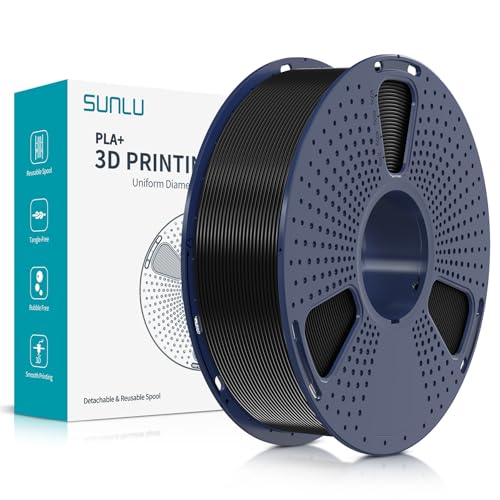
It's another major brand of filament for 3D printers. This one is also PLA, 1.75 mm thick, comes in a one-kilogram spool, and has an even better tolerance than the previous one, at only ±0.02 mm. As for colors, it's available in 14 different shades (and combinations).
Itamsys Ultem PEI

This is a reel made of a high-performance thermoplastic, PEI or polyetherimide . It's an excellent material if you're looking for strength, thermal stability, and the ability to withstand steam cleaning. It's also 1.75 mm thick with a tolerance of 0.05 mm above or below, but weighs 500 grams.
Itamsys Ultem Flame Retardant

Another spool of 3D printer filament from the same brand, weighing half a kilo. It's also PEI, but with integrated metallic particles, making this thermoplastic flame-retardant for high-performance applications. This material could even be of interest to the automotive and aerospace sectors.
GIANTARM type PLA

It's a pack of 3 spools , each weighing 0.5 kg. They are also 1.75 mm thick, high-quality, with 0.03 mm tolerances, and contain up to 330 meters of filament per spool. It's suitable for 3D printers and 3D pens. The key difference is that it's available in precious metal colors: gold, silver, and copper.
MSNJ PLA (wood)

This other PLA spool, available in 1.75mm or 3mm diameters (depending on your choice), weighs 1.2kg and offers surface finish tolerances between -0.03mm and +0.03mm, making it ideal for artistic projects. It comes in colors that simulate yellow wood, palm wood, and black wood.
AMOLEN PLA (wood)

A 1.75 mm PLA filament of high quality, available in exotic colors such as red wood, walnut, ebony, etc. However, it doesn't just imitate these colors; the polymer contains 20% real wood fibers.
SUNLU TPU
No products found.
A spool of TPU filament for 3D printers , a flexible material (like that used in silicone phone cases). Each spool contains 500 grams, regardless of the color chosen from the 7 available. And, of course, it's non-toxic and environmentally friendly.
SUNLU TPU

If you'd like an alternative to the previous reel, also made of flexible TPU but in more vibrant colors, you can choose this other reel. Furthermore, this brand has improved the accuracy by 0.01mm compared to the previous model. Each reel weighs 0.5 grams and is of very high quality.
eSUN ABS+

A 1.75mm diameter ABS+ 3D printer filament with a dimensional accuracy of 0.05mm, weighing 1 kg, and available in two colors: cool white and black. This filament is highly resistant to cracking, deformation, wear, and heat, and is even suitable for engineering applications.
Smartfil HIPS

Available in black, and in two diameters: 1.75 mm and 1.85 mm. Each reel weighs 750 grams and is made of HIPS material , which has similar characteristics to ABS but with less warping. It can also be sanded and painted with acrylic paints. HIPS also boasts excellent mechanical properties, making it highly sought after in the industrial sector, and can be used as a substrate since it dissolves easily in D-limonene.
FontierFila Pack 4x multi-material

You can also purchase this pack of four 1.75mm thick 3D printer filaments, each 250 grams, for a total of 1kg. The great thing is that you have four types of material to get started and try out the characteristics of each: white nylon, clear PETG, red Flex, and black HIPS.
TSYDSW With carbon fiber

If you're looking for something lightweight, advanced, and durable, this printer filament is made of PLA but also includes carbon fiber . It's available in 18 colors, in 1 kg spools, and has a diameter of 1.75 mm.
FJJ-DAYIN Carbon Fiber
No products found.
Spools of filament for 3D printers available in 100 grams, 500 grams, and 1 kg. Black in color, 1.75 mm thick, and made with a blend of materials such as acrylonitrile butadiene styrene (ABS) and 30% carbon fiber reinforcement.
FormFutura Apollox

A spool of white ABS filament weighing 0.75 kg. This high-performance filament is designed for professional use, such as in engineering. It is weather-resistant and UV-resistant. It has good heat resistance and is FDA and RoHS certified.
NEXBERG HANDLE

These 3D printer filaments are made of ASA, or Acrylonitrile Styrene Acrylate , a thermoplastic with some advantages over ABS, such as UV resistance and a low tendency to yellow. They come in 1 kg spools, are 1.75 mm in diameter, and are available in white and black.
eSUN Cleaning Filament

A cleaning filament , like this one, is a type of filament that can be used to clean the extruder nozzle, prevent clogs, and remove residue when changing materials or colors. It has a diameter of 1.75mm and is sold on 100-gram spools.
eSUNPA

1 kg spool, 1.75 mm thick, available in natural white and dark colors. This filament is nylon, a non-toxic synthetic fiber with no environmental impact. Some spools use 85% nylon and the remainder PA6, along with 15% carbon fiber , which provides greater strength, rigidity, and toughness.
| The best |

|
ANYCUBIC Resin... | See features | View deals |
| Value for money |

|
ANYCUBIC Water-Wash Resin... | See features | View deals |
| Our favorite |

|
ANYCUBIC Water-Wash Resin... | See features | View deals |

|
ELEGOO Washable Resin with... | See features | View deals |
Best resins for 3D printers
If you're looking for consumables for your resin 3D printer , these are also recommended containers:
ELEGOO LCD UV 405nm

Gray resin photopolymer for 3D printers with UV LCD lamps, compatible with most LCD and DLP resin printers . Available in 500g and 1kg sizes, and in red, black, green, beige, and translucent.
ANYCUBIC LCD UV 405nm
ANYCUBIC is one of the best brands in 3D printing, and they offer this fantastic resin in 0.5 kg or 1 kg containers, with a variety of colors to choose from. It's compatible with most 3D printers that use LCD and DLP lamps . Furthermore, the results will be exceptional.
SUNLU Standard
No products found.
A high-quality resin compatible with most resin 3D printers. Compatible with LCD and DLP printers, 405 nm UV, fast curing, 1 kg per container, and available in colors such as white, black, and pinkish-beige.
ELEGOO LCD UV 405nm ABS-like

This other standard photopolymer from the renowned brand ELEGOO is also available in 0.5 kg and 1 kg containers, with a variety of colors to choose from . Compatible with most DLP and LCD printers, it offers a finish similar to ABS, but for use in resin 3D printers.
RESORT
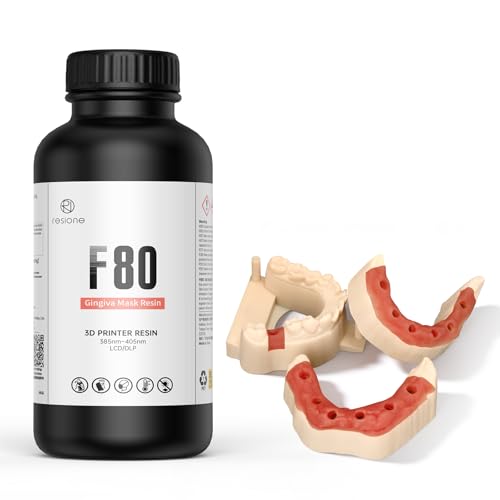
Available in 0.5 kg and 1 kg sizes, this F80 black elastic resin , with high elongation and tensile strength, is also highly resilient, opening up a wide range of possible applications. Compatible with MSLA, DLP, and LCD.
Materials for 3D printing: what materials do 3D printers use
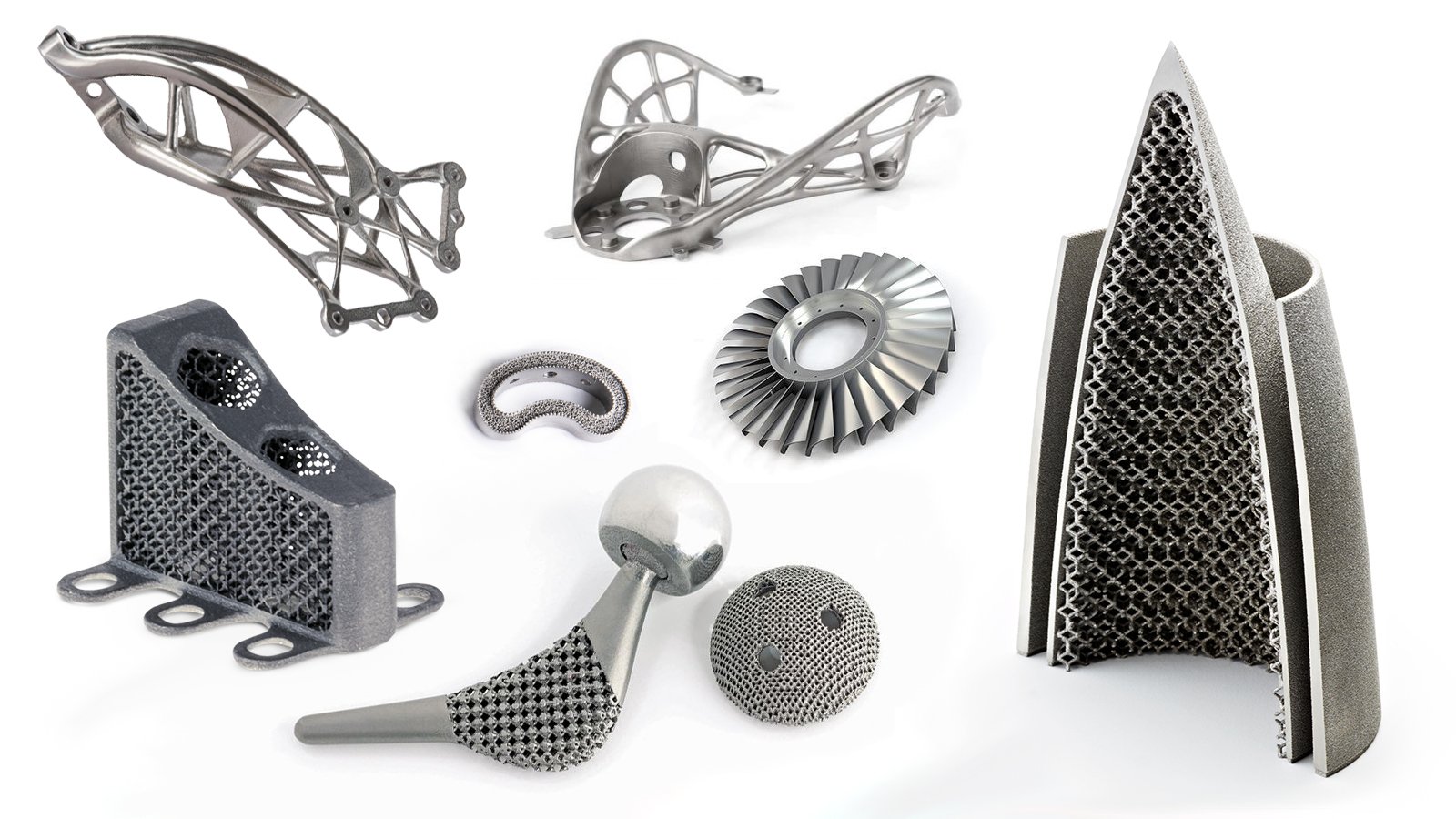
In the section on filament and resin recommendations for 3D printers , we've focused on the common materials frequently used by individuals, as well as some more advanced options for professional use. However, many more materials are available for 3D printers, and you should familiarize yourself with their properties.
For each material, you will find a brief description of what the material is, and a list of properties identical to this:
- Breaking strain: refers to the stress that a material can withstand before deforming considerably.
- Rigidity: it is the resistance to elastic deformations, that is, if it has low rigidity it will be an elastic material, and if it has high rigidity it will be not very malleable. For example, if you need better shock absorption and flexibility, you should look for something with low stiffness like PP or TPU.
- Durability: refers to the quality or how durable the material is.
- maximum service temperature: MST is the maximum temperature to which a material can be subjected without losing performance as a thermal insulator.
- Coefficient of thermal expansion (dilation): Measures the change in volume or length of a material in response to changes in temperature. If it has a high degree, it will not work for applications such as rulers or pieces that must retain their dimensions under any temperature, or they will expand and be imprecise or will not fit.
- Density: amount of mass in relation to the volume, while denser, it can be more solid and consistent, but it also loses lightness. For example, if you want the material to float, you will have to look for something with a lower density.
- Ease of printing: is how easy or difficult it is to print with said material.
- extrusion temperature: the temperature required to melt it and print with it.
- heated bed required: Whether or not you need a heated bed.
- bed temperature: the optimum heated bed temperature.
- UV resistance: if it resists UV radiation, such as exposure to the sun without deteriorating.
- Water resistance: resistance to water, to submerge it, or expose it to the elements, etc.
- Soluble: Some materials dissolve in others, which can be a good thing in some cases.
- Chemical resistance: is the resistance of the material surface to deterioration caused by the conditions of its environment.
- Fatigue resistance: When a material is subjected to a periodic load, the fatigue strength will indicate what the material is capable of withstanding without failing. For example, imagine that you create a piece that must be bent during use, because a material with low resistance could fail or break with 10 bends, others can withstand thousands and thousands of them...
- Applications (example of use): a practical example of what it could be used for.
Filaments
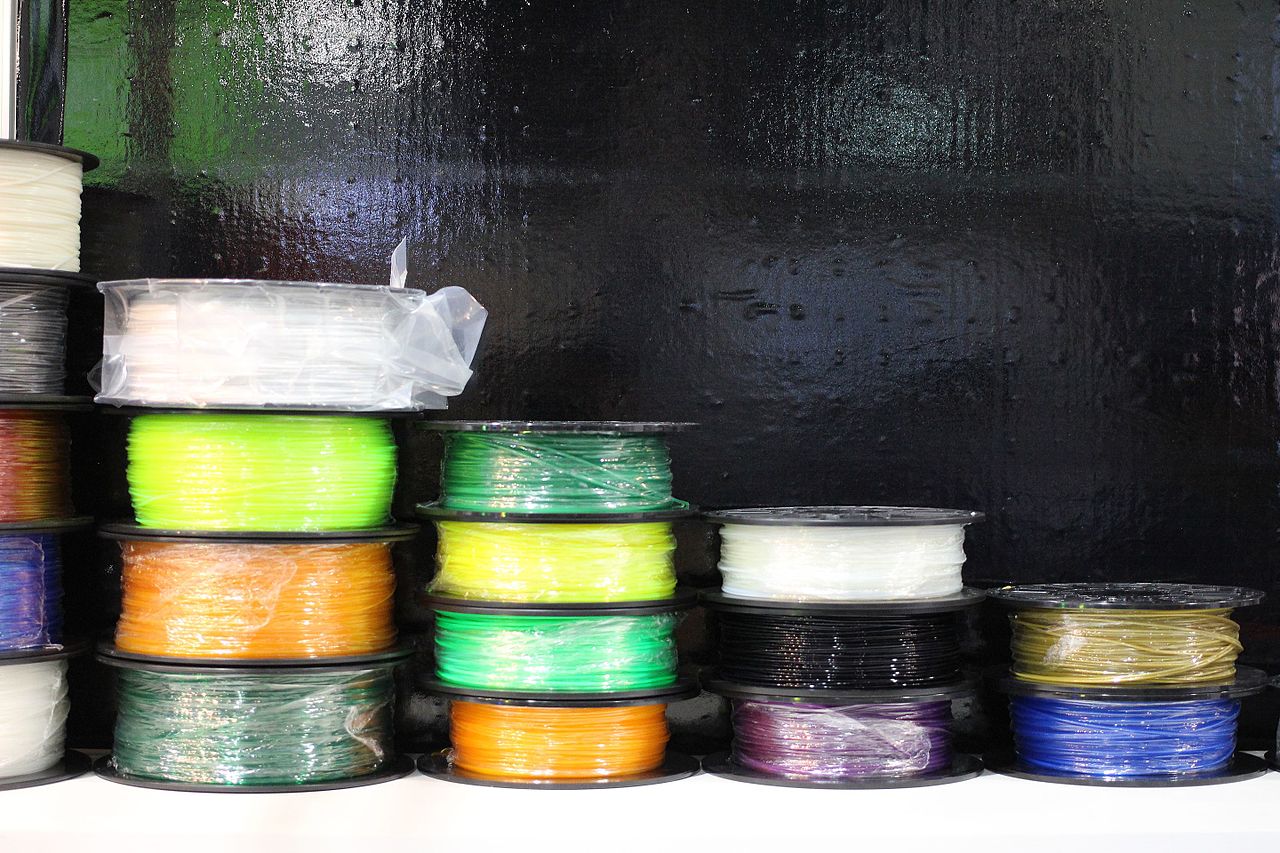
There are many types of filaments for 3D printers based on polymers (and hybrids), some non-toxic, environmentally friendly, biodegradable (from some created from algae, to those made from hemp, vegetable starches, vegetable oils, coffee, etc.), recyclable, and with an endless number of very different properties.
When choosing, you should take several factors into account :
- Type of material: Not all 3D printers accept all materials, it is important that you choose the compatible one. In addition, you should keep in mind the properties (see subsections with the properties of each one) of each material to know if it adapts to the application that you are going to give it.
- Filament diameter: the most common, and the ones with the greatest compatibility, are 1.75 mm, although there are other thicknesses.
- Use: for beginners the best is PLA or PET-G, for professional use PP, ABS, PA, and TPU. It is also important to take into account if you are going to use them for medical purposes, for containers or utensils for food use (non-toxic), or to be biodegradable, etc.
Some of the most commonly used are :
PLA
PLA stands for polylactic acid , and it's one of the most common and inexpensive materials for 3D printing. This is because it's suitable for a wide range of applications, inexpensive, and easy to print with. This polymer, or bioplastic, has properties similar to polyethylene terephthalate and is used for a multitude of applications.
- Breaking strain: high
- Rigidity: high
- Durability: middle-low
- maximum service temperature: 52 ° C
- Coefficient of thermal expansion (dilation): low
- Density: High average
- Ease of printing: High average
- extrusion temperature: 190 - 220 ° C
- heated bed required: optional
- bed temperature: 45-60ºC
- UV resistance: short
- Water resistance: short
- Soluble: short
- Chemical resistance: short
- Fatigue resistance: short
- Applications (example of use): The majority of parts and figures that are printed in 3D are made of PLA.
ABS meaning, and ABS+
ABS is a type of polymer, specifically acrylonitrile butadiene styrene plastic . It is a highly impact-resistant material used in a multitude of industrial and domestic applications. This amorphous thermoplastic also has an improved version, known as ABS+.
- Breaking strain: average
- Rigidity: average
- Durability: high
- maximum service temperature: 98 ° C
- Coefficient of thermal expansion (dilation): high, although they resist heat very well
- Density: middle-low
- Ease of printing: high
- extrusion temperature: 220 - 250 ° C
- heated bed required: Yes
- bed temperature: 95 - 110 ° C
- UV resistance: short
- Water resistance: short
- Soluble: short
- Chemical resistance: short
- Fatigue resistance: short
- Applications (example of use): The pieces of LEGO, Tente, and other construction games are made with this material, and many car parts. It is also used to make plastic flutes, housings for televisions, computers, and other household appliances.
HIPS
HIPS , or High Impact Polystyrene (also called PSAI), is another material widely used in 3D printers. It is a variant of polystyrene, but it has been improved to be less brittle at room temperature through the addition of polybutadiene, which also enhances its impact resistance.
- Breaking strain: short
- Rigidity: very high
- Durability: High average
- maximum service temperature: 100 ° C
- Coefficient of thermal expansion (dilation): low
- Density: average
- Ease of printing: average
- extrusion temperature: 230 - 245 ° C
- heated bed required: Yes
- bed temperature: 100 - 115 ° C
- UV resistance: short
- Water resistance: short
- Soluble: yes
- Chemical resistance: short
- Fatigue resistance: short
- Applications (example of use): Used to make automobile components, toys, disposable razors, PC keyboards and mice, household items, telephones, dairy product packaging, etc.
PET
Polyethylene terephthalate, or PET, is a very common type of plastic polymer belonging to the polyester family. It is obtained through the polycondensation reaction between terephthalic acid and ethylene glycol.
- Breaking strain: average
- Rigidity: average
- Durability: High average
- maximum service temperature: 73 ° C
- Coefficient of thermal expansion (dilation): low
- Density: average
- Ease of printing: high
- extrusion temperature: 230 - 250 ° C
- heated bed required: Yes
- bed temperature: 75 - 90 ° C
- UV resistance: short
- Water resistance: good
- Soluble: No
- Chemical resistance: good
- Fatigue resistance: good
- Applications (example of use): It is widely used for beverage containers, such as water or soft drink bottles, although PET-free containers have recently been promoted, since it is a material that can be somewhat toxic to health. Some recycled PET is also used to make polyester fiber clothing.
Nylon or polyamide (PA)
Nylon , also known as polyamide or nylon (Nylon is a registered trademark) , is a type of synthetic polymer belonging to the polyamide group. It began to be used in the textile industry because it is elastic and very resistant, and also because it doesn't require ironing.
- Breaking strain: High average
- Rigidity: medium, it is quite flexible
- Durability: very high, very resistant to impacts and temperatures
- maximum service temperature: 80 - 95 ° C
- Coefficient of thermal expansion (dilation): medium-high
- Density: average
- Ease of printing: high
- extrusion temperature: 220 - 270 ° C
- heated bed required: Yes
- bed temperature: 70 - 90 ° C
- UV resistance: short
- Water resistance: good
- Soluble: No
- Chemical resistance: short
- Fatigue resistance: high
- Applications (example of use): in addition to clothing, it is also used to make brush and comb handles, threads for fishing rods, gasoline tanks, some mechanical parts for toys, guitar strings, zippers, fan blades, sutures in surgery, watch bracelets , for flanges, etc.
SO
ASA stands for Acrylonitrile Styrene Acrylate , an amorphous thermoplastic with some similarities to ABS, although it is an acrylic elastomer and ABS is a butadiene elastomer. This material is more resistant to UV rays than ABS, so it can be good for parts that will be exposed to sunlight.
- Breaking strain: average
- Rigidity: average
- Durability: high
- maximum service temperature: 95 ° C
- Coefficient of thermal expansion (dilation): medium-high
- Density: middle-low
- Ease of printing: High average
- extrusion temperature: 235 - 255 ° C
- heated bed required: Yes
- bed temperature: 90 - 110 ° C
- UV resistance: high
- Water resistance: short
- Soluble: No
- Chemical resistance: short
- Fatigue resistance: short
- Applications (example of use): many device plastics used outdoors are from ASA, also the frame of sunglasses, some swimming pool plastics, etc.
PET G
This type of filament is also a popular thermoplastic in 3D printing and additive manufacturing. PETG is a glycol polyester that combines some of the advantages of PLA, such as ease of printing, with the strength of ABS. It is one of the most widely used plastics in the world, and many of the things around us are made from it.
- Breaking strain: average
- Rigidity: middle-low
- Durability: High average
- maximum service temperature: 73 ° C
- Coefficient of thermal expansion (dilation): low
- Density: average
- Ease of printing: high
- extrusion temperature: 230 - 250 ° C
- heated bed required: Yes
- bed temperature: 75 - 90 ° C
- UV resistance: short
- Water resistance: high
- Soluble: No
- Chemical resistance: high
- Fatigue resistance: high
- Applications (example of use): also used for cases similar to those of PET, such as plastic bottles, glasses, cups and plates, chemical or cleaning product containers, etc.
PC or polycarbonate
Polycarbonate (PC) is a thermoplastic that is very easy to mold and work with, allowing it to be shaped as desired. It is widely used today and boasts excellent properties, such as thermal and impact resistance.
- Breaking strain: high
- Rigidity: average
- Durability: high
- maximum service temperature: 121 ° C
- Coefficient of thermal expansion (dilation): short
- Density: average
- Ease of printing: average
- extrusion temperature: 260 - 310 ° C
- heated bed required: Yes
- bed temperature: 80 - 120 ° C
- UV resistance: short
- Water resistance: short
- Soluble: No
- Chemical resistance: short
- Fatigue resistance: high
- Applications (example of use): for mineral water bottles, drums, covers in architecture, agriculture (greenhouses), toys, office supplies such as pens, rulers, CDs and DVDs, electronic product cases, filters, transport boxes, riot shields, vehicles, molds of pastry etc.
High performance polymers (PEEK, PEKK)
PEEK, or polyether-ether-ketone , is a high-purity material with low VOC (volatile organic compound) content and low gas emissions. It also has excellent properties and is a high-performance, semi-crystalline thermoplastic for professional use. There is a variant in the family called PEKK, which offers even greater performance and has a different structure: instead of one ketone and two ethers, it contains two ketones and one ether.
- Breaking strain: high
- Rigidity: high
- Durability: high
- maximum service temperature: 260 ° C
- Coefficient of thermal expansion (dilation): short
- Density: average
- Ease of printing: short
- extrusion temperature: 470 ° C
- heated bed required: Yes
- bed temperature: 120 - 150 ° C
- UV resistance: High average
- Water resistance: high
- Soluble: No
- Chemical resistance: high
- Fatigue resistance: high
- Applications (example of use): bearings, piston parts, pumps, valves, compression rings cable insulation, and insulation of electrical systems, etc.
Polypropylene (PP)
Polypropylene is a very common, partially crystalline thermoplastic polymer. It is obtained from the polymerization of propylene. It has good thermal and mechanical properties. It is classified as a thermoplastic elastomer (TPE ) , like Ninjaflex and similar products.
- Breaking strain: short
- Rigidity: low, it is very flexible and soft
- Durability: high
- maximum service temperature: 100 ° C
- Coefficient of thermal expansion (dilation): high
- Density: short
- Ease of printing: middle-low
- extrusion temperature: 220 - 250 ° C
- heated bed required: Yes
- bed temperature: 85 - 100 ° C
- UV resistance: short
- Water resistance: high
- Soluble: No
- Chemical resistance: short
- Fatigue resistance: high
- Applications (example of use): can be used for toys, bumpers, fuel bottles and tanks, microwave or freezer resistant food containers, tubes, sheets, profiles, CD/DVD sleeves and cases, laboratory microcentrifuge tubes, etc.
Thermoplastic polyurethane (TPU)
TPU , or thermoplastic polyurethane , is a type of polyurethane. It is an elastic polymer and, unlike some other polyurethanes, does not require vulcanization for processing. It is a relatively new material, having been first introduced in 2008.
- Breaking strain: low-medium
- Rigidity: low, great flexibility and elasticity, and soft
- Durability: high
- maximum service temperature: 60 - 74 ° C
- Coefficient of thermal expansion (dilation): high
- Density: average
- Ease of printing: average
- extrusion temperature: 225 - 245 ° C
- heated bed required: no (optional)
- bed temperature: 45 - 60 ° C
- UV resistance: short
- Water resistance: short
- Soluble: No
- Chemical resistance: short
- Fatigue resistance: high
- Applications (example of use): the famous silicone covers of smartphones are mostly made of this material (at least the flexible ones). It is also used to cover flexible cables, pipes and flexible hoses, in the textile industry, as a coating for some parts such as vehicle door knobs, gear levers, etc., shoe soles, cushioning, etc.
Resins for photopolymerization

3D printers that use resin , instead of filaments, such as DLP, SLA, etc., require a resinous liquid to create objects. Furthermore, just as with filaments, there is a wide variety to choose from. The main categories include:
- Standard: they are clear resins, such as white and gray colors, although there are also other shades such as blue, green, red, orange, brown, yellow, etc. It is excellent for creating prototypes or for small gadgets for home use, but not they are good for creating final products where higher quality is needed or for professional uses. The positive is that they have good finishes in terms of smoothness, they allow you to paint them. They can be good for toys or artistic figurines.
- mammoth: they are not very frequent, although the finishes of these surfaces are not all bad. As its name suggests, these resins are designed to print pieces that are really large in size.
- transparent: They are quite widespread for home use and also for industrial production as people love transparent parts. These resins are water resistant, ideal for small objects, with great quality, smooth surfaces and rigid.
- Tough: These types of resins are very popular among professionals, such as for engineering applications, since they have more interesting properties than the standard ones. In addition, as their name suggests, they are harder or more robust.
- high detail: It is a bit different from the normal stereolithography, since it is used in more advanced 3D printers such as the PolyJet. It works by injecting very fine jets in layers onto the build platform and exposing them to UV to harden it. The result is a perfect surface, with the highest level of detail, even if they are minute details.
- medical grade: These resins are used for medical uses, such as creating implants such as personalized dental implants, etc.
Advantages and disadvantages of resin
Regarding the advantages and disadvantages of resin , compared to filaments, we have:
- Advantages:
- Better resolutions
- Fast printing process
- Robust and durable parts
- Disadvantages:
- More expensive
- not so flexible
- something more complex
- Vapors or contact with them can be dangerous, as some are toxic
- The number of models available is less than those of filament
How to choose the right resin
When choosing the right resin for your 3D printer, you should consider the following parameters:
- Tensile strength: this characteristic is important if the piece must resist tensile forces and a durable piece is required.
- Elongation: If needed, the resin should give pieces capable of stretching without breaking, although the flexibility is not the best.
- Water absorption: If the piece needs to resist water, you should observe the characteristics that the resin you have acquired has in this regard.
- Finish quality: these resins allow smooth finishes, but not all of them have the same quality, as we have seen in the types. You will need to know if you prefer a cheaper resin, or a more expensive one with high detail.
- Durability: It is important that the designs are resistant and last a long time, especially if they are used for cases, and other similar types of pieces.
- Transparency: if you need transparent pieces, you should stay away from mammoth-type or gray/standard resins.
- Costs: the resins are not cheap, but there is a wide range of prices to choose from, between some that are somewhat more affordable and others that are more advanced and expensive. You will have to evaluate how much you want to spend and choose the one that best suits your budget.
Other materials

Of course, up to now we've been looking at materials primarily used at home, although some that could be used professionally or industrially have been mentioned. However, there are other specialized materials for very specific applications that can only be used with the most advanced and expensive 3D printers employed by businesses.
Fillers (metal, wood,…)
There are also consumables for filament, primarily wood fibers and metals . These are typically used in 3D printers for industrial applications, and with more advanced systems, especially those for metal. These consumables are also not easy to find, as they are geared towards professional use.
composites
Composites , or composite resins, are synthetic materials mixed heterogeneously to form compounds. Examples include glass-reinforced plastics, fiberglass, and fiberglass itself, such as Kevlar, Zylon, etc. Their applications include creating very lightweight and strong parts, and even applications in motorsports, aviation, aerospace, bulletproof vests, and other military uses.
hybrid materials
These types of materials combine organic and inorganic compounds to improve the properties of the materials used in their composition, allowing them to complement each other and create synergies. They can have a wide variety of applications, such as optics, electronics, mechanics, biology, and more.
Ceramics
There are 3D printers that can use ceramics, such as alumina (aluminum oxide) , aluminum nitride, zirconite, silicon nitride, silicon carbide, and others. One example of these 3D printers is the Cerambot, which is also affordably priced for home use, among other industrial models. These types of materials have excellent thermal, chemical, and electrical (insulating) properties, making them useful in the electrical, aerospace, and other industries.
Soluble materials (PVA, BVOH…)
Soluble materials , as their name suggests, are those (solutes) that form a solution when they come into contact with another liquid (solvent). Some examples used in additive manufacturing include BVOH, PVA, etc. BVOH (butenediol vinyl alcohol copolymer), such as that offered by Verbatim, is a water-soluble thermoplastic filament for FFF printers. PVA (polyvinyl alcohol) is another water-soluble filament widely used in 3D printing. For example, it can be used to create supports for parts, which can then be easily removed by dissolving them in water.
food and biomaterials
Of course, there are also 3D printers capable of printing edible objects, using plant fibers, sugar, chocolate, proteins, and other types of nutrients. Biomaterials for medical use, such as tissues or organs, can also be printed, although this is still under development. Obviously, many of these biomaterials are not commercially available but are custom-made for the laboratory. Edible products are also not common, although they are becoming increasingly widespread in the professional food service industry.
Concrete
Finally, there are also 3D printers capable of printing in construction materials such as cement or concrete . These types of printers are usually very large, capable of printing large-scale architectural structures, such as houses, among other things. Obviously, these types of 3D printers are not intended for home use either.
More Information
- Best Resin 3D Printers
- 3D scanner
- 3D printer spare parts
- Best Industrial 3D Printers
- Best 3D printers for home
- Best cheap 3D printers
- How to choose the best 3D printer
- All about STL and 3D printing formats
- Types of 3D printers
- 3D Printing Getting Started Guide
Table of Contents
- 1 Best filaments for 3D printers
- 1.1 GEEETECH PLA type filament
- 1.2 SUNLU PLA
- 1.3 Itamsys Ultem PEI
- 1.4 Itamsys Ultem Flame Retardant
- 1.5 GIANTARM type PLA
- 1.6 MSNJ PLA (wood)
- 1.7 AMOLEN PLA (wood)
- 1.8 SUNLU TPU
- 1.9 SUNLU TPU
- 1.10 eSUN ABS+
- 1.11 Smartfil HIPS
- 1.12 FontierFila Pack 4x multi-material
- 1.13 TSYDSW With carbon fiber
- 1.14 FJJ-DAYIN Carbon Fiber
- 1.15 FormFutura Apollox
- 1.16 NEXBERG HANDLE
- 1.17 eSUN Cleaning Filament
- 1.18 eSUNPA
- 2 Best resins for 3D printers
- 3 Materials for 3D printing: what materials do 3D printers use
- 4 More Information