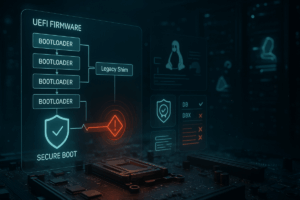
The Linux kernel is undergoing a period of adjustments in its maintenance and how changes are reviewed. Artificial intelligence has been integrated into bug detection, patch generation, and alert prioritization, increasing the workload for teams that maintain servers, cloud infrastructure, and devices. In Spain and the rest of Europe, this pressure translates into decisions that affect system administrators, service providers, and companies with critical infrastructure.
Two issues are currently generating considerable interest. Canonical has restructured its patch schedule for Ubuntu, with overlapping two-week cycles and more frequent releases. Meanwhile, kernel developers are exploring how to regulate AI agents that prepare contributions, after some added signatures or attributions without permission. The shared understanding on both sides is simple: AI is no longer a novelty; it's an integral part of the process and requires clear boundaries.

More AI, more security alerts, and less waiting time

Canonical has announced that stable and security updates for the Ubuntu kernel will no longer be released separately. Previously, stable versions were released every four weeks and security patches every two. Now, they will be unified into fourteen-day cycles, with a new cycle starting every seven days, so the company expects to release updates weekly.
The method involves two weeks of work per release. In the first week, the packages are prepared, compiled, and basic testing is performed to ensure the system boots and doesn't fail unexpectedly. The candidates are then moved to the proposed repository . The second week is dedicated to hardware certification, integration with the distribution, and regression detection. If everything is in order, the update is released.
For those who can't wait, Canonical offers an early option: the proposed packages are updated weekly, even though they haven't yet completed certification. Furthermore, if a critical vulnerability appears and there's no guaranteed patch, the company commits to providing mitigation measures within 24 to 48 hours . These measures are temporary and do not replace a kernel update.

The reason for this change lies in the increase in reported vulnerabilities. Canonical attributes much of this growth to AI tools for discovering vulnerabilities . In addition, the kernel community acts as the CVE assignment authority and classifies almost any patch affecting a live system as a CVE. With this volume, maintaining the previous schedule has become difficult.
The practical effect for users is that they will see more frequent weekly updates instead of larger monthly updates. In data centers, cloud environments, and critical infrastructure, the waiting period is cut in half. For the average user, the change may be less noticeable, but it will also arrive through regular Ubuntu updates.
Rules for AI agents in kernel development

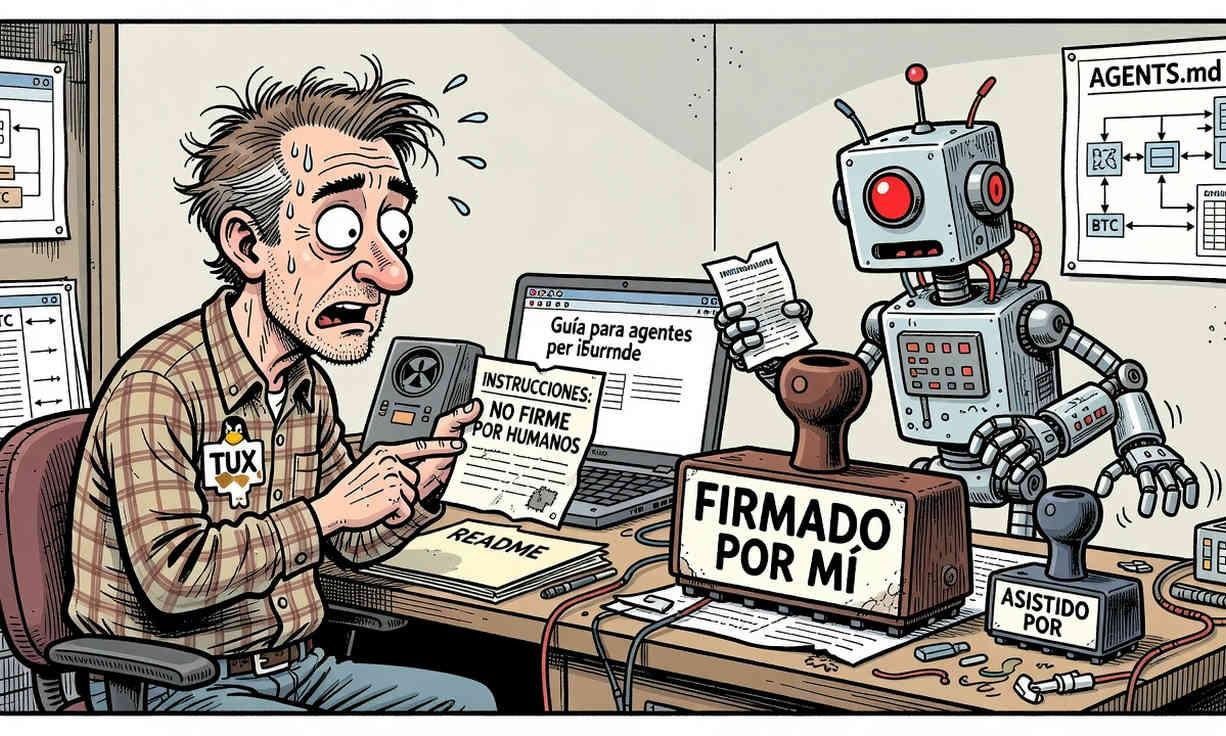
The other major discussion concerns how AI participates in development. In July 2025, Sasha Levin proposed adding a file called AGENTS.md to the kernel's code tree. His goal wasn't to change how Linux works, but rather to guide the automated assistants that prepare patches and help them adhere to the project's conventions.
The file wouldn't be a huge new manual. It would link to the kernel's README and from there to documentation for code assistants and other useful information for contributors. The intention is for agents to find the rules before making a change, especially regarding formatting and attribution, which often fail when they lack context.

The tests that prompted the proposal revealed some striking cases. One assistant added a Signed-off-by tag without the user's explicit signature and chose an attribution other than Assisted-by, the project's convention. Another agent didn't include any attributions. When AGENTS.md was incorporated into the tests, both agents conformed more closely to the kernel standards.
On the kernel mailing list, the proposal also received some criticism. Some participants pointed out that directing agents to extensive documentation could increase token consumption and make even small tasks more expensive. As an alternative, they suggested creating more specific documentation for models and agents, with concise instructions. The proposal remained open and no final decision had been made.
This debate comes at a time of increasing review workload . AI helps detect problems and propose improvements, but it also generates code that needs auditing and alerts that aren't always helpful. Maintainers have warned that some of this material ends up on security checklists as if they were actual bugs, adding noise to their daily work.
What does this mean for teams and administrators in Europe?

For administrators in Spain and Europe, Ubuntu's new pace necessitates a review of maintenance windows . Weekly updates can be advantageous for exposed environments, but they also require internal testing and a clear policy on when to implement changes. In critical systems, it's advisable to separate test teams from production teams before making the switch.
The proposed repository is useful for those who need to get ahead, although it involves including packages that aren't yet certified . Organizations with validation teams can use it to test fixes before they reach the stable branch. Those without that technical expertise might prefer to wait for the final release and apply updates through the normal channels.
The announced mitigations for critical cases should be understood as temporary measures . Canonical implements them when there is no immediate, secure solution, but the company itself warns that they do not replace the final patch. In practice, they serve to reduce exposure while the full update is being prepared.
In kernel development, the discussion surrounding AGENTS.md offers a similar lesson: automation requires human oversight . An agent can draft a patch, but it shouldn't sign on behalf of a person or assume unauthorized privileges. The project maintains collaboration rules that extend beyond simply getting the code to compile.
The general recommendation remains to keep the kernel on the latest stable version offered by the distribution. In the case of Ubuntu, this means accepting a more continuous flow of patches; in other distributions, it will depend on their own schedule. The important thing is not to leave systems exposed for convenience or to apply changes without minimal validation.

The landscape these new developments paint combines increased automation, more security alerts, and growing pressure on maintenance . Canonical is responding with two-week cycles, weekly releases, early access in proposed versions, and emergency mitigations. Kernel developers are trying to ensure AI agents operate with clear rules, while European administrators are adjusting their procedures to maintain control. The key lies in balancing speed, testing, and human accountability.