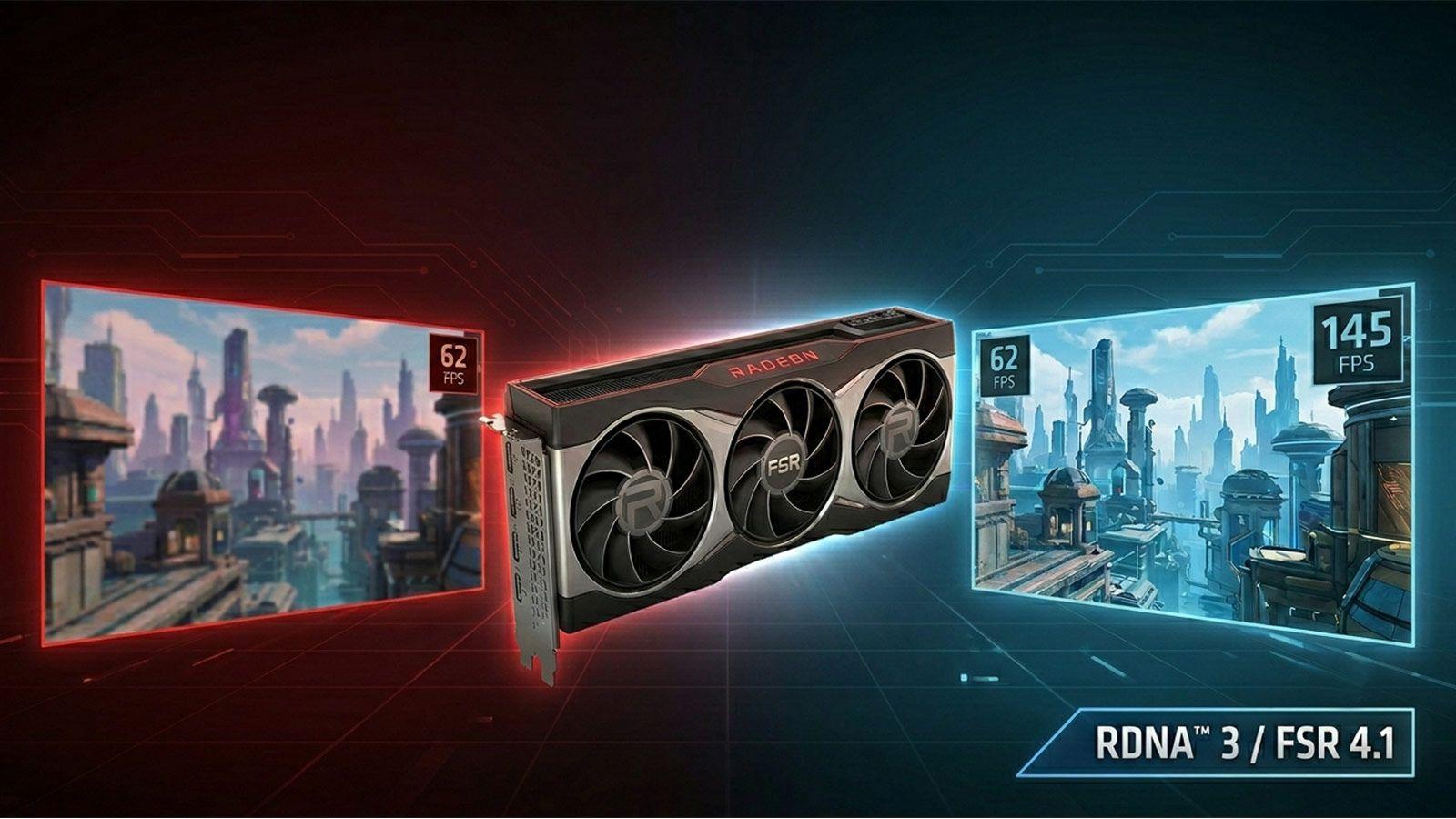
PC users who opted for the previous generation of hardware from the red brand are in luck. After months of rumors and the occasional leak circulating online, the arrival of FSR 4.1 to Radeon RX 7000 graphics cards has finally been officially announced . This update represents a significant leap forward, as it natively implements AI-assisted upscaling in models that, until recently, were thought to be excluded from this technological advancement.
The news broke thanks to Jack Huynh, a prominent figure in AMD's graphics division, who confirmed that the rollout has been brought forward from the original plans, which targeted July. This move directly addresses the strong demand from the gaming community, which was clamoring for a solution capable of competing head-to-head with rival alternatives without requiring the purchase of the new RX 9000 series.
The complex technical challenge of adapting AI to RDNA 3
It hasn't been a walk in the park for the company's engineers, as the RDNA 4 architecture was designed from the ground up to work with 8-bit floating-point (FP8) data. However, for this technology to perform optimally in Spain and the rest of the world on RX 7000 series graphics cards, it was necessary to redesign the machine learning model to use the INT8 integer format. This system is the one that best utilizes the die cores integrated into RDNA 3-based cards, ensuring that the workload doesn't negatively impact overall game performance.

Although the use of AI incurs a slight additional processing cost compared to the older FSR 3.1, the on-screen benefits are immediately apparent. The biggest advantage of this version is its significantly improved temporal stability and much cleaner edges, which is especially noticeable during fast-paced action when you want to avoid a pixelated mess. This considerably extends the lifespan of current graphics cards, giving them an extra boost in the most demanding games on the market.
Full compatibility and new Adrenalin drivers
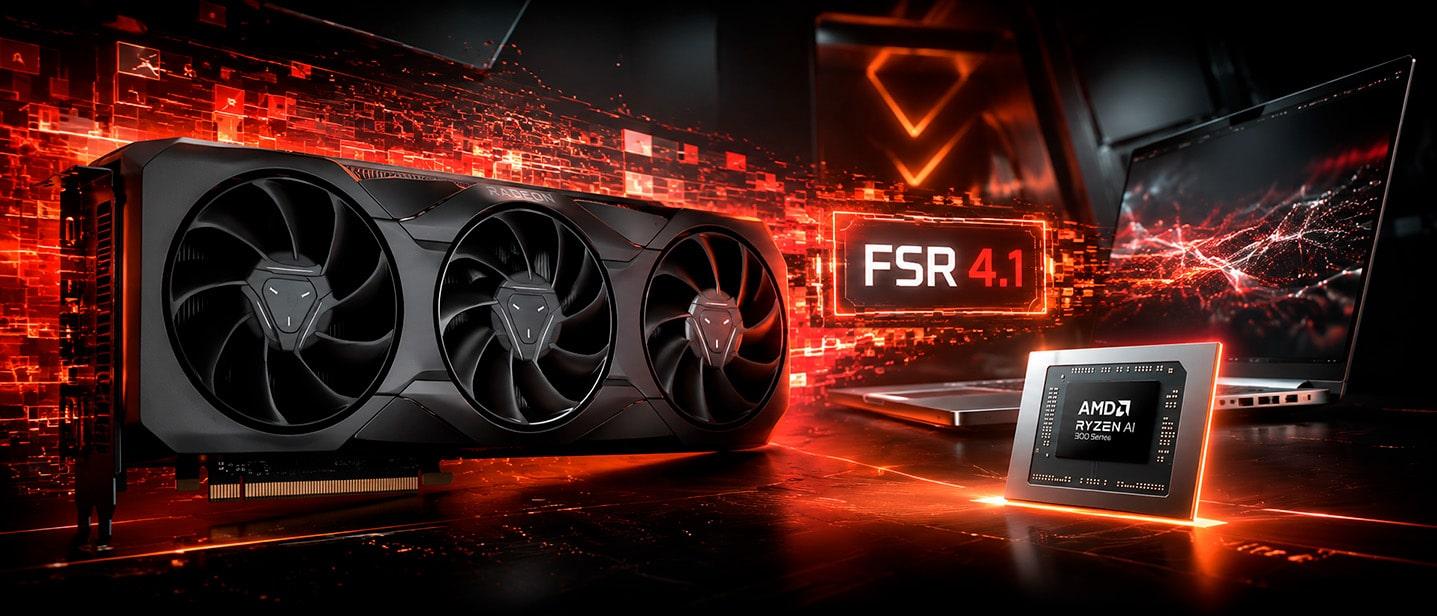
To start using this new feature, all you have to do is download the latest version of the AMD Software drivers: Adrenalin Edition 26.6.2 . This patch activates support for the entire RX 7000 series, from the modest RX 7600 to the powerful RX 7900 XTX. Furthermore, this isn't just an experiment with a few select games; the company has confirmed that there are over 300 compatible titles that can now take advantage of this technology to improve their frame rate without sacrificing sharpness.
The launch also includes specific optimizations for highly anticipated games like the new Assassin's Creed Black Flag Resynced and DOOM: The Dark Ages. No more tinkering with third-party mods or external applications that sometimes caused more problems than they solved; now the integration is native and official , guaranteeing no strange display errors or stability issues during your gaming sessions.
The future in handheld consoles and legacy hardware
But it doesn't stop at desktop computers, as AMD has quite ambitious plans for the rest of its ecosystem. They're already working on a lightweight version of this AI model for APUs with RDNA 3 and 3.5 architecture , meaning that popular devices like the ASUS ROG Ally and the latest generation of handheld consoles will see a substantial performance boost. This is a logical move, since in these types of machines, every extra watt and every extra FPS counts for a smooth experience anywhere.
For those still using a Radeon RX 6000 series card in their system, the wait will be a bit longer, but support will eventually arrive. Without dedicated AI cores, the optimization work is much more demanding, and the RDNA 2 release is estimated for 2027. Despite the delay, it's appreciated that the brand isn't abandoning its long-time users, demonstrating that there's still potential to be squeezed from an architecture that has delivered such excellent results over the years.
This massive rollout marks a turning point in the company's strategy to democratize the use of artificial intelligence in gaming. By adapting the code to be compatible with millions of devices already in gamers' homes, the company ensures that the quality standard is raised several notches at once. The arrival of FSR 4.1 to the RX 7000 series proves that software support can be just as important as the raw power of the silicon when choosing one graphics card over another.
Table of Contents