AMD is once again at the center of attention in the semiconductor industry. Artificial intelligence has ceased to be a mere marketing ploy and has become the driving force behind many investment decisions, and Lisa Su's company is emerging as a key player in this movement.
However, the optimism isn't solely due to graphics chips. Server CPUs are taking center stage as AI workloads become more complex and require the coordination of data, accelerators, and networks. This is where AMD aims to gain market share with its EPYC processors and Helios platform, based on a comprehensive guide to Intel and AMD processors.
Analysts make their move
Several analyst firms have raised their price targets for AMD in recent weeks. Bank of America maintains a buy recommendation and has set its target price between $620 and $720, a figure also reflected in other subsequent reports. The bank justifies this confidence by citing the growth of the server CPU market linked to AI.
The US bank estimates that this market could grow from approximately $61.000 billion to $211.000 billion by 2030, with a significant portion linked to artificial intelligence workloads. AI agents , capable of performing tasks with less human oversight, are emerging as one of the catalysts driving CPU demand.
Along the same lines, other firms like BNP Paribas and Stifel have also raised their expectations. Their objectives aren't identical, nor do they follow the same timelines, but they agree that AMD's processor and accelerator business has potential if spending on AI infrastructure remains strong.
The data center pulls the cart
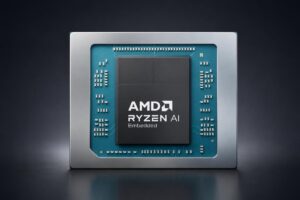
AMD's latest results show that the data center has become a critical pillar of its business. Revenue from that segment grew strongly in the second quarter, driven by demand for EPYC processors and Instinct GPUs. The company doesn't just sell accelerators; it also supplies CPUs that support these workloads.
The analysts' view doesn't hinge on AMD displacing Nvidia as the dominant accelerator provider. The argument is broader: as AI becomes more complex, data centers need CPUs, GPUs, networking, and storage to work together. That combination opens an opportunity for AMD even if GPUs remain the primary driver.
Platforms like Helios and future generations of accelerators, such as MI450, are part of that strategy. The company has also been forging agreements and acquisitions to strengthen its ecosystem, with the aim of ensuring that the AI business is not limited to a single type of chip.
World Labs and the commitment to the ecosystem
One of the most noteworthy moves is the agreement to acquire World Labs . The deal, pending regulatory approvals and expected to close by the end of the fiscal year, aims to strengthen AMD's understanding of how AI models and the computing platforms that support them are evolving.
Lisa Su herself has pointed out that building platforms for the next generation of AI requires a thorough understanding of these changes. This acquisition complements other initiatives, such as the improvement of ROCm and collaborations with large-scale computing partners, to ensure AMD is not solely reliant on selling individual hardware components.
Meanwhile, the company continues to work with memory manufacturers and Asian partners to ensure supply. Demand for the coming years is so high that AMD wants to plan its capacity several years in advance, according to company management.
Supply, memory, and margins
The main risk highlighted in the reports lies not so much in demand as in responsiveness. DRAM and other memory components have become a bottleneck for building servers at the pace the market demands. AMD itself has acknowledged that the limiting factor in the server business is supply, not demand, exacerbated by the RAM crisis.
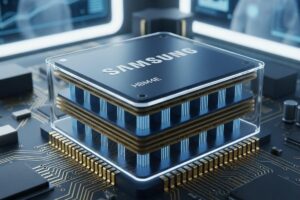
The company's management has explained that it plans to substantially increase its chip supply to support AI. To this end, it is in discussions with supply chain partners and is studying its three- to five-year requirements for advanced wafers. This is no easy task: manufacturing capacity cannot be built overnight.
Another point investors are watching is the margin. The start of revenue from new products could put pressure on gross profitability for a few quarters, and AMD will have to demonstrate that it can offset this effect with volume and operating leverage. Execution will be key to ensuring that the positive forecasts don't turn out to be just wishful thinking.
Evaluation and comparison with Nvidia
AMD's strong rally has raised expectations. The stock is trading around $630 and has seen a substantial increase in value so far this year, with gains exceeding 180% or 195% in some periods, depending on the timeframe. This performance has been one of the most remarkable in the semiconductor sector.
The market rewards this trajectory with a premium. AMD trades at a significantly higher future earnings multiple than Nvidia, although it starts from a smaller base and is growing at a good pace. The comparison isn't straightforward: Nvidia maintains higher gross margins, while AMD is trying to gain market share in CPUs and expand its presence in accelerators.
Institutional investors have also increased their exposure to AMD, according to data compiled by several reports. Hedge funds have raised their positions, although not all have followed the same trend: while some have increased their bets, others have reduced their exposure after the rally.

What the experts are watching
AMD's upcoming quarterly report is shaping up to be a crucial test. Analysts want to see if the company maintains its gross margin within expectations and if it finalizes its framework for the data center business in 2027. The guidance for the fourth quarter and the long-term comments on Helios and World Labs will be more significant than the single-day figures.
Spending by hyperscalers, AI labs, and infrastructure providers will also be under scrutiny. If these customers cut or delay their investments, AMD could see a slowdown. Memory supply and power availability are other factors influencing data center construction.
In the broader market, semiconductors experienced a powerful rally followed by a brief respite. Nvidia continues to set records, and AMD has appreciated significantly, although in the second half of the year, Nvidia outperformed Intel and AMD in stock market returns. Competition remains fierce, and any missteps in execution could weigh on share prices.
AMD's current story combines unrelenting demand for AI, a strong commitment to EPYC CPUs and Instinct GPUs, and a supply chain that has become its biggest challenge. Analysts have raised their targets, but also warn that memory, margins, and the valuation premium leave little room for error. The ball is now in execution's court: if the company can convert its massive AI infrastructure spending into sustained revenue, its role in the sector will continue to grow; if not, the already priced-in expectations could take their toll.
Table of Contents