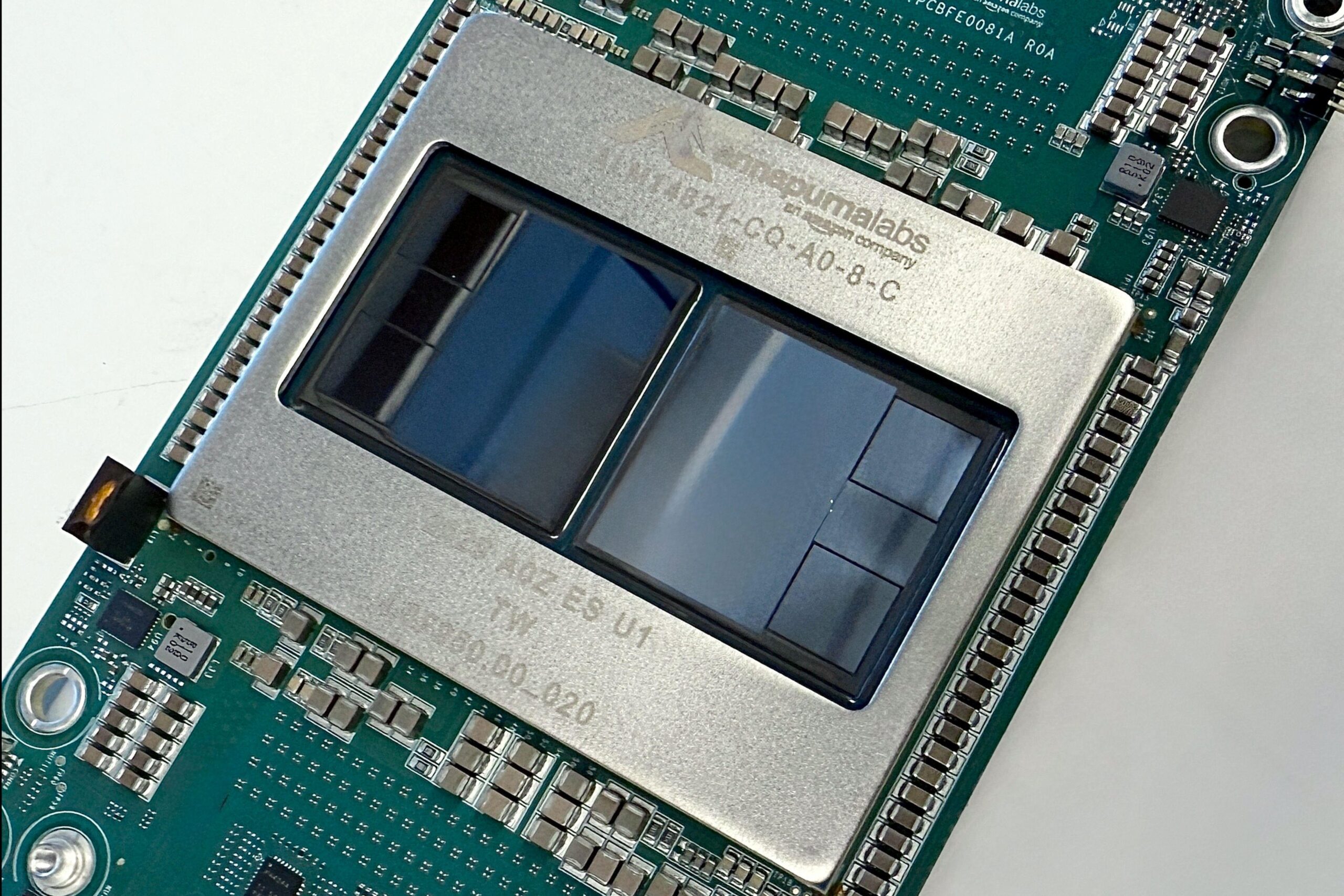
Amazon Web Services has taken its artificial intelligence strategy a step further with a series of announcements that strengthen both its proprietary chip lineup and its technological alliance with Nvidia. At its major annual cloud computing conference in Las Vegas, the company detailed how it will integrate Nvidia technology into its upcoming AI processors and unveiled new servers designed for training and deploying large-scale AI models.
This move positions AWS even more prominently in the race for artificial intelligence computing, a field where it competes directly with giants like Microsoft, Google, and Meta. Far from simply reselling third-party GPUs, Amazon is betting on a combination of its own chips, specialized interconnects, and agreements with Nvidia to offer European and global companies more performance and cost options.
Trainium4: Amazon's next chip will speak Nvidia's language
One of the most significant announcements was the confirmation that the company's upcoming AI training chip, known as Trainium4 , will incorporate Nvidia's NVLink Fusion interconnect technology . This solution enables ultra-fast communication between processors, which is critical when thousands of machines need to work together to train large language models.
NVLink is considered one of Nvidia's key assets in high-performance data centers, and until now it was primarily associated with configurations based solely on the company's own GPUs. Amazon's decision to integrate this technology into Trainium4 means that its future AI clusters will be able to combine AWS chips and Nvidia GPUs in the same infrastructure, facilitating hybrid architectures.
Although AWS has not given specific dates for the arrival of Trainium4 to the market, it has made the objective clear: to offer a platform that allows customers to continue taking advantage of the Nvidia software ecosystem, especially CUDA, while migrating part of their workloads to hardware designed by Amazon in search of better availability and price.
This compatibility is especially relevant for organizations in Europe and Spain that have already standardized around Nvidia GPUs and optimized libraries, but are encountering capacity limitations or increasing costs when scaling their generative AI projects.
New servers with Trainium3: more power and less energy
While the development of Trainium4 continues in the background, AWS has already launched a new generation of servers based on the Trainium3 chip. These servers, available since the Las Vegas conference, are geared towards training large models and high-volume inference in cloud-based AI services.
Each server integrates 144 Trainium3 chips and, according to the company, offers more than four times the computing power of AWS's previous generation of AI hardware. Furthermore, it does so with approximately 40% lower energy consumption, a key factor in a context where electricity costs and network constraints are beginning to impact data center expansion.
Dave Brown, vice president of computing and machine learning services at AWS, emphasized that the goal is not simply to boast about raw power, but to demonstrate to customers that a competitive price-performance alternative exists compared to traditional GPUs. The company avoids providing absolute figures, but insists that the leap from the previous generation is significant.
This efficiency improvement is particularly interesting for European operators, where regulatory and social pressure on the energy consumption of digital infrastructure is constantly increasing. Less electricity for the same volume of training means more sustainable data centers and, potentially, lower bills for enterprise customers.
Within Amazon's roadmap, Trainium3 not only seeks to gain ground against Nvidia, but also to reduce dependence on external suppliers and establish its own line of AI chips that can evolve with cycles more controlled by the company.
AI factories: dedicated infrastructure in our own data centers
Another announcement that has generated a lot of attention is the launch of AWS's so-called AI Factories , a product designed for large companies and public administrations that want to run advanced artificial intelligence systems in their own data centers , without giving up integration with the Amazon cloud.
The model is simple on paper: the client provides the physical space and energy, and AWS takes care of installing, managing, and maintaining the AI system, connecting it with the rest of the platform's services. In this way, European companies with stringent regulatory requirements, or governments concerned about data sovereignty, can maintain full control over sensitive information without exposing it to external infrastructure.
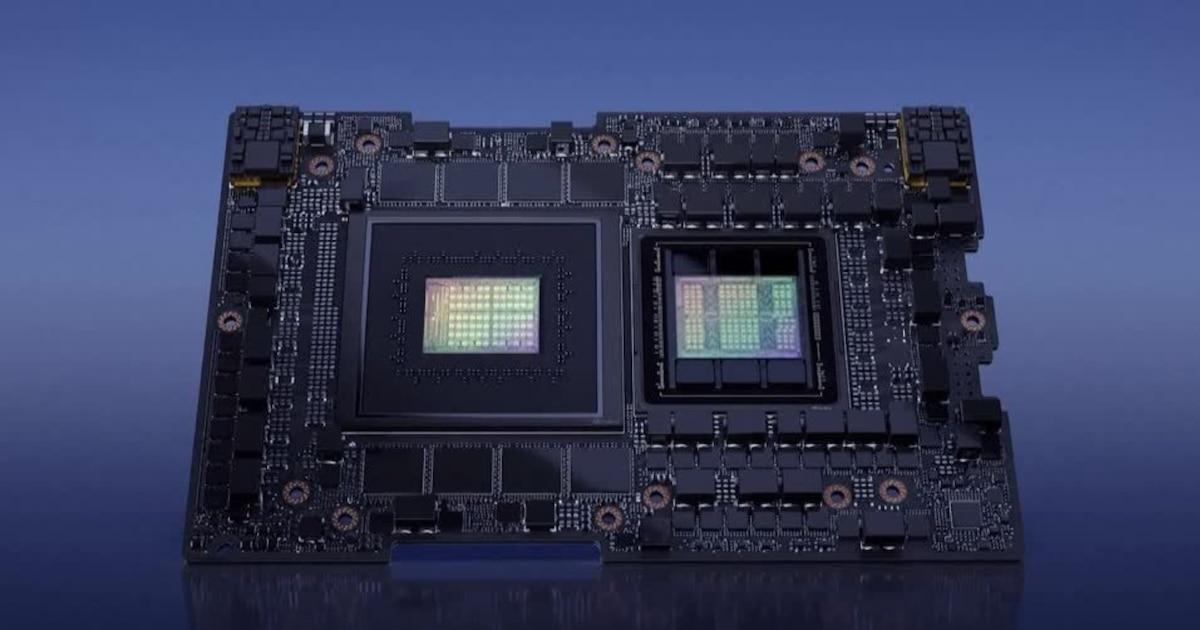
The term AI Factories is no coincidence. Nvidia uses the same concept to refer to its own hardware systems optimized for artificial intelligence, and in this case, the AWS solution is being built precisely in collaboration with the GPU manufacturer. Amazon's AI Factories will combine Nvidia's Blackwell chips and the new Trainium3, leveraging AWS's cloud networking, storage, and security.
In addition to hardware, these facilities can be integrated with managed services such as Amazon Bedrock —for orchestrating and deploying foundational AI models—and AWS SageMaker , geared toward developing and training custom models. For businesses, this means a high-performance AI environment deployed under a hybrid cloud model that better adapts to local data regulations.
Meanwhile, other major providers like Microsoft are also moving in the same direction, with on-premises data centers and solutions designed for data sovereignty. Amazon's investment in AI Factories reflects the extent to which artificial intelligence is pushing cloud giants toward more hybrid models , moving away from the purely centralized model of a decade ago.

Nova and Sonic models and the boost to AWS's AI offering
Alongside the hardware announcements, Amazon used its conference to bolster its software offerings with new versions of its artificial intelligence models, grouped under the Nova brand . The company unveiled Nova 2 , an evolution that promises greater speed and responsiveness compared to the previous generation.
One of Nova's variants can interact with users not only through text, but also through images, voice, and video , expanding its potential use cases in sectors such as customer service, online education, and content creation. This multimodal capability places it on par with other leading proposals in the generative AI market.
In addition, AWS showcased a model called Sonic , designed for voice interactions. According to Matt Garman, CEO of Amazon Web Services, this system can respond to spoken commands with "human-like" voice output, paving the way for more natural conversational assistants for public and private services.
Although the company acknowledges that its models still face the challenge of gaining market share against competitors like ChatGPT (OpenAI) , Claude (Anthropic) , and Gemini (Google) , AWS's business figures for the last quarter point to solid growth. Sales in the division increased by around 20%, driven largely by demand for AI computing and infrastructure.
For European businesses, this expanded catalog offers more options when choosing an AI platform, both in terms of ready-to-use models and infrastructure on which to train their own solutions adapted to each sector and local regulations.
Fierce competition in the AI chip and infrastructure race
All these launches are taking place against a backdrop of intense competition in the artificial intelligence chip market . Nvidia maintains a dominant position thanks to its GPUs and the strength of its CUDA ecosystem, but companies like Amazon, Google, Microsoft, and even traditional processor manufacturers are investing millions to avoid falling behind.
In the case of AWS, the commitment to Trainium3 and the upcoming Trainium4 is part of a dual strategy. On the one hand, it seeks to reduce dependence on external providers and better control the costs and availability of its infrastructure. On the other, it wants to offer customers hardware alternatives that allow them to optimize spending without sacrificing performance or compatibility with Nvidia tools.
From a market perspective, the combination of its own chips, collaboration agreements with Nvidia, and products like AI Factories positions Amazon as a player capable of competing not only in cloud services, but also in the very foundation of the hardware that drives the new wave of artificial intelligence applications.
For businesses and public administrations in Spain and Europe, this landscape translates into a broader range of infrastructure options—from the public cloud to on-premises or hybrid data centers—with the ability to choose from different configurations in terms of price, performance, and data sovereignty. In a sector where technological decisions have a direct impact on costs , regulatory compliance, and innovation capacity, the arrival of Trainium3, future integrations with NVLink Fusion, and AI Factories adds new elements to the mix that are expected to further accelerate the adoption of large-scale artificial intelligence solutions.

Table of Contents