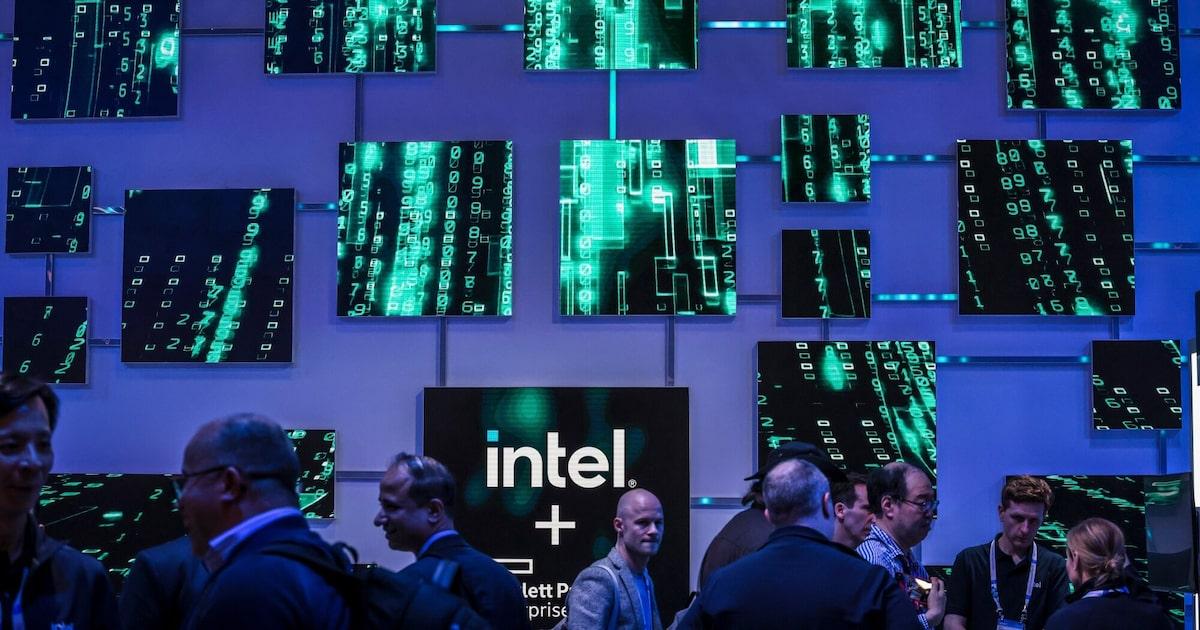
The technology industry has been shaken by the announcement of a strategic collaboration that could be a game-changer in the semiconductor market. Donald Trump has confirmed that Apple and Intel have reached an agreement to design and produce advanced chips within the United States, a move aimed at restoring industrial strength to the country and which immediately sent Intel's stock price soaring.
This agreement is not simply a commercial contract between two California giants; it represents a Copernican shift for Apple , which for years has relied almost exclusively on TSMC's manufacturing capacity in Taiwan. Although the companies involved have maintained a prudent silence, the White House's direct involvement in shaping the narrative of this alliance makes it clear that silicon production has gone from being a purely technical matter to becoming a national security priority.

The role of the Government as a strategic investor
This turn of events cannot be understood without looking back, specifically to mid-2025, when the US administration decided to take a significant stake in Intel, acquiring nearly 10% of the company. This move, valued at billions of dollars, made the government the largest investor in the tech giant, ensuring that the only domestic company capable of competing at the forefront of logic had the necessary financial backing to withstand the onslaught of Asian competition.
From the Oval Office, the argument is that this intervention has been a boon for taxpayers, claiming that the capital gains generated by these actions have already exceeded $60.000 billion in just three quarters. In short, the move has worked out perfectly for Washington, which now not only sets the rules but also has a seat at the table where major industrial contracts are negotiated with companies like Nvidia and Apple.
Apple seeks alternatives to Taiwan's monopoly
For Cupertino, interest in Intel's factories is nothing new, but the growing geopolitical tension in the Taiwan Strait has made putting all their eggs in one basket a risk they no longer want to take. Apple has long sought a second source of supply for its A and M series processors, and having a foundry on American soil provides a safety net against potential blockades or natural disasters in Asia that could paralyze its global production.
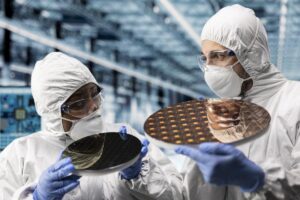
On the other hand, Intel has made a bold move with its 18A manufacturing node , which promises energy efficiency and performance that finally rival TSMC's standards . If Intel manages to meet the deadlines and quality demands of a client as discerning as Apple, it will have a massive impact on other chip designers, definitively validating its contract foundry business, which had previously raised many doubts.
Repercussions for the European and Spanish markets
Although the epicenter of the news is across the Atlantic, the technology sector in Spain and the rest of Europe is closely monitoring these developments, as a reconfiguration of the global supply chain directly affects the costs and availability of components. Spanish companies focused on critical sectors such as defense or telecommunications, which depend on cutting-edge hardware, could see the supply chain shift from Asia to the West, which in the long run could bring greater price stability.
Furthermore, Intel's dramatic surge in value on international stock exchanges has a direct impact on investment funds and portfolio management companies operating in Spain, where exposure to the semiconductor sector is increasingly significant. This industrial boom in the United States is expected to force the European Union to act quickly with its own Chip Law if it doesn't want to fall behind in a race where silicon is the new oil and no one wants to depend on third parties to run their economy.
The landscape emerging from this alliance reveals a far more polarized and less globalized industry, where corporate decisions are increasingly tied to the political strategies of major powers . Ultimately, Apple and Intel joining forces confirms that manufacturing cutting-edge technology domestically has shifted from a nostalgic desire to an absolute necessity for survival in today's competitive landscape, demonstrating that whoever controls the factory controls the future of the devices we carry in our pockets.
Table of Contents