

Arm has taken another step in its AI strategy by extending Flexible Access to include its edge-oriented Armv9 platform. The company aims to attract manufacturers and startups developing on-device AI by lowering barriers to entry and shortening design cycles.
With this expansion, Arm promises easier access and a cost-effective way to create AI solutions that run locally. The initiative, as its management emphasizes, aims to make the company's technology more accessible to the entire ecosystem.
What's changing in Flexible Access
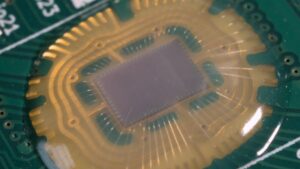
The program allows companies to use chip design tools, IP, and training at minimal or no cost, making it easy to experiment, iterate, and validate prototypes without large upfront investments. License fees are paid at the end of the design phase, when the project is ready for finalization and manufacturing.
This model has served as a springboard for ecosystem partners such as Raspberry Pi , Hailo, and SiMa.ai , and currently boasts over 300 member companies. According to Arm, approximately 400 chip designs have already been completed under this umbrella.
Armv9 for AI at the Edge: Architecture and Capabilities
Introduced in early 2025, the Armv9 platform incorporates the Arm Cortex-A320 CPU and the Arm Ethos-U85 NPU as its key components. This combination is designed to run models with up to one billion parameters on the device , while also enhancing security with advanced technologies.
With this hardware foundation, developers can build AI applications at the edge , with improvements in performance per watt and data protection by maintaining local inference , without needing to send sensitive information to the cloud.
Use cases: from vision to multimodal interaction
Arm emphasizes that this proposal opens the door to smart cameras, connected homes , industrial automation, and more advanced human-machine interfaces. Thanks to local execution, interactions via vision, voice, and gestures are more natural and have lower latency.
The focus on the device helps machines perceive and respond more immediately, reducing dependence on connectivity and improving privacy by processing data where it is generated.
Competition and market context
The program expansion strengthens Arm's position in an increasingly crowded edge AI market , where it competes with Nvidia, Intel, and new specialized players like SiFive . Sectors such as autonomous vehicles and retail are adopting edge AI for real-time analysis and decision-making.
From inventory management to collaborative robotics, workloads that benefit from local processing due to latency, operating cost, and confidentiality issues are proliferating—areas where Arm seeks to consolidate its technological footprint.
Market figures and signals
Arm claims that over 300 companies are part of Flexible Access and that there are approximately 400 designs ready for manufacturing under this program. Furthermore, it has been reported that Qualcomm has migrated its flagship chips to the v9 architecture , further strengthening the appeal of the offering.
Following the announcement, Arm's shares advanced around 4% , to $172,23, and so far this year they have accumulated a rise of 34,2% , a reaction that reflects the market's interest in AI in the device and formulas for flexible access to intellectual property.
With the inclusion of Armv9 in Flexible Access, Arm democratizes access to its IP and accelerates the arrival of AI products at the edge: less friction to get started, more options to iterate, and an ecosystem that is already showing traction in real-world partners, designs, and applications.