

The Regional Government of Extremadura has taken a key step towards the construction of what will be one of Spain's largest data centers dedicated to artificial intelligence. The Directorate General of Industry, Energy and Mines has granted Data Riocaya SLU the preliminary administrative authorization for the electrical infrastructure that will supply power to the Data Center Nostrum Evergreen project , also known as DC Badajoz. This resolution, published in the Official Gazette of Extremadura (DOE), represents a significant advance in the processing of an initiative declared a Business Project of Regional Interest (PREMIA) last November.
The regional authorization focuses on the electrical installations under regional jurisdiction, specifically the 220-kilovolt (kV) bay of the interconnecting substation and the underground routing of the conductor cables that will connect the future facility to the electrical grid. The project will be located at the Badajoz Logistics Platform , where facilities for data processing and the development of artificial intelligence applications will be built, with a strong emphasis on sustainability.
A large-scale electrical infrastructure

The electrical infrastructure designed to supply the data center includes a 400/220 kV interconnection substation, a dedicated 220/20 kV substation, and two underground 220 kV high-voltage lines totaling approximately 6,62 kilometers in length. The first of these lines will be 3,34 kilometers long and the second 3,27 kilometers, and both will run underground to minimize visual and environmental impact. The interconnection substation will have a 220 kV switchyard configured with a double busbar, eight transformer bays, switching and coupling equipment, and four feeders for the underground lines.
The Badajoz DC electrical substation will have a 220 kV double-busbar system, with six transformer bays in the first phase and two additional bays planned for the future. Initially , six power transformers will be installed, expandable to eight depending on the complex's needs. The project also includes two incoming feeder bays for self-consumption installations, which will be equipped later. All of this infrastructure will be developed on a plot of over 200.000 square meters of industrial land.
Project details and its processing
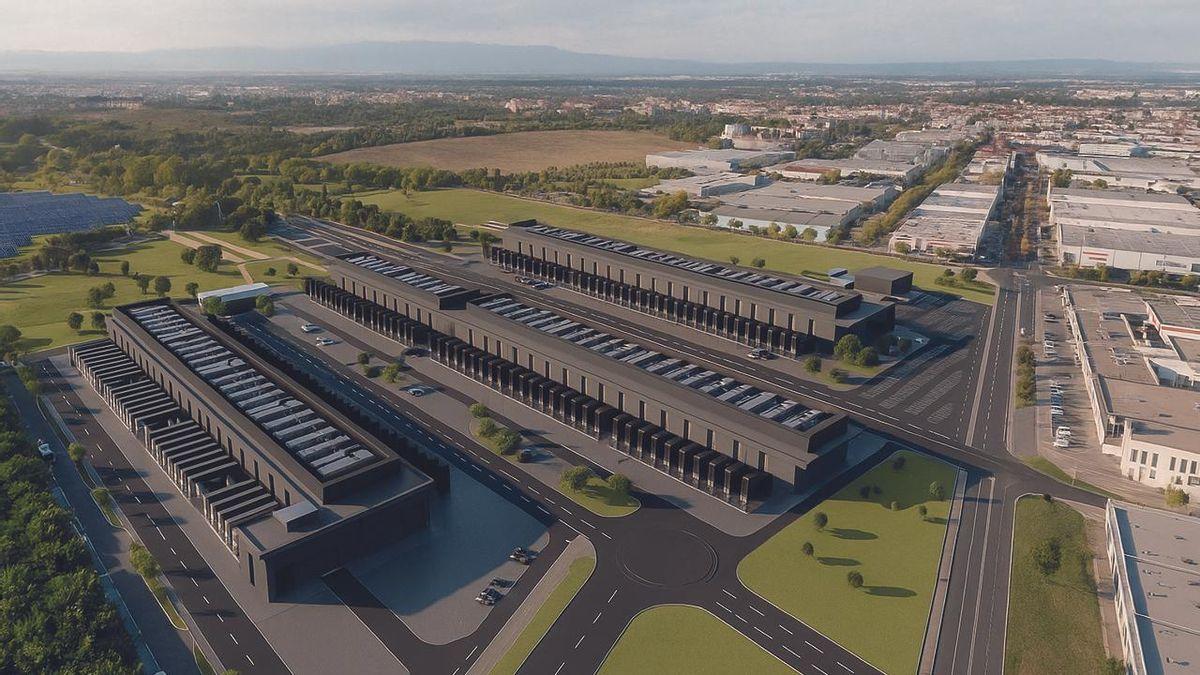
The Nostrum Evergreen project was presented by its promoters as a complex designed to meet the growing demand for computing power associated with the development of artificial intelligence. According to data released by the international consulting firm AECOM, selected to lead the design and construction management, the planned investment exceeds €1.900 billion. The first phase of the center will have an electrical capacity of 150 megawatts (MW), while a second phase would allow it to reach 300 MW starting in 2029. The complete design allows for the possibility of expansion up to 500 MW.
During the public consultation period, no objections were filed against the project, as recorded in the Official Gazette of Extremadura (DOE). The promoting company, Data Riocaya SLU, has expressed its acceptance of the conditions set forth in the reports issued by the various public administrations and affected service companies. The declaration of the project as a Business Project of Regional Interest recognizes the public utility and the urgency of acquiring the land necessary for the 220 kV substation and the underground routing of the power lines, thus expediting the administrative procedures.
Investment, employment and expectations
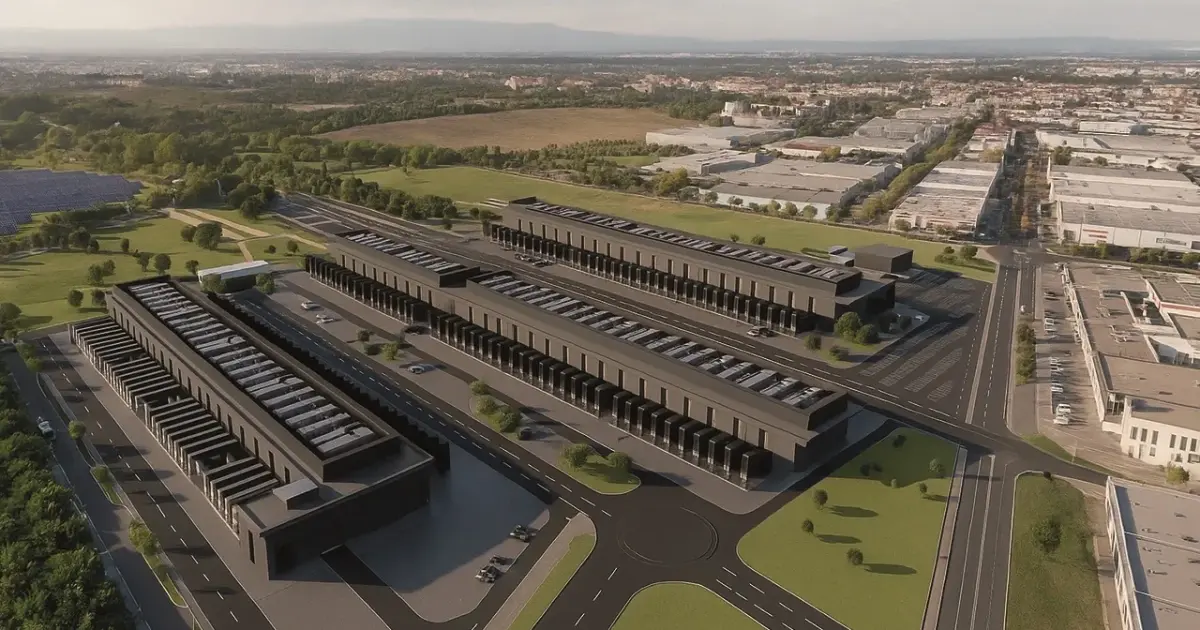
The Regional Government of Extremadura approved the PREMIA designation for this project in November 2025, which implied its declaration of public utility or social interest and the urgent need to acquire the affected properties. The total planned investment amounts to €1.913 billion , and the creation of approximately 330 jobs is expected, with the facility projected to be operational by 2031. The center is designed to achieve a grid-connected access capacity of up to 300 MW, meeting the highest standards of energy efficiency, sustainability, and operational safety.
The Regional Minister for Industry, Energy, Science, and Territory, Mercedes Morán, referred at the end of August to the progress in obtaining permits for the data centers in Badajoz and Navalmoral de la Mata, and emphasized that these infrastructures are strategic for the region's industrialization and for the modernization of businesses and public administrations. However, the authorization now published only covers the electrical installations under the regional government's jurisdiction; the rest of the interconnecting substation and the lines that connect to the transmission network must be authorized by the central government. Specifically, the Ministries for Ecological Transition and the Demographic Challenge, Economy, Trade and Business, and Digital Transformation and Public Administration will have to approve the 400 kV line and other technical aspects.
Furthermore, the project must undergo a standard environmental impact assessment, the report of which will be processed by the competent environmental authority. The developer still needs to obtain the necessary urban planning and environmental permits, as well as final authorization for the entire complex. Although the initial intention was to begin construction in 2026, the final timeline will depend on the completion of all these procedures.
In parallel, the central government has initiated the public consultation process for a draft royal decree to regulate the energy sustainability, environmental, and digital sovereignty requirements applicable to data centers. This legislation, being fast-tracked, would require that the operation of the data center and control of the data be the responsibility of entities subject to EU law, as well as mandating the use of newly installed renewable energy and compliance with energy efficiency and water consumption criteria. The government estimates that Spain will need between 3,5 and 4 GW of electricity demand for the computing power projected for 2030, although requests for access and connection have already exceeded 12 GW since 2021.
With this authorization, the Badajoz data center secures one of the essential elements for its viability, although the final construction schedule, updated investment figures, and the exact number of jobs per phase still need to be determined. The authorized electrical infrastructure is a firm step toward realizing a project that aims to position Extremadura as a technological hub in southern Europe, leveraging its strategic location, climate, and leadership in renewable energy.