
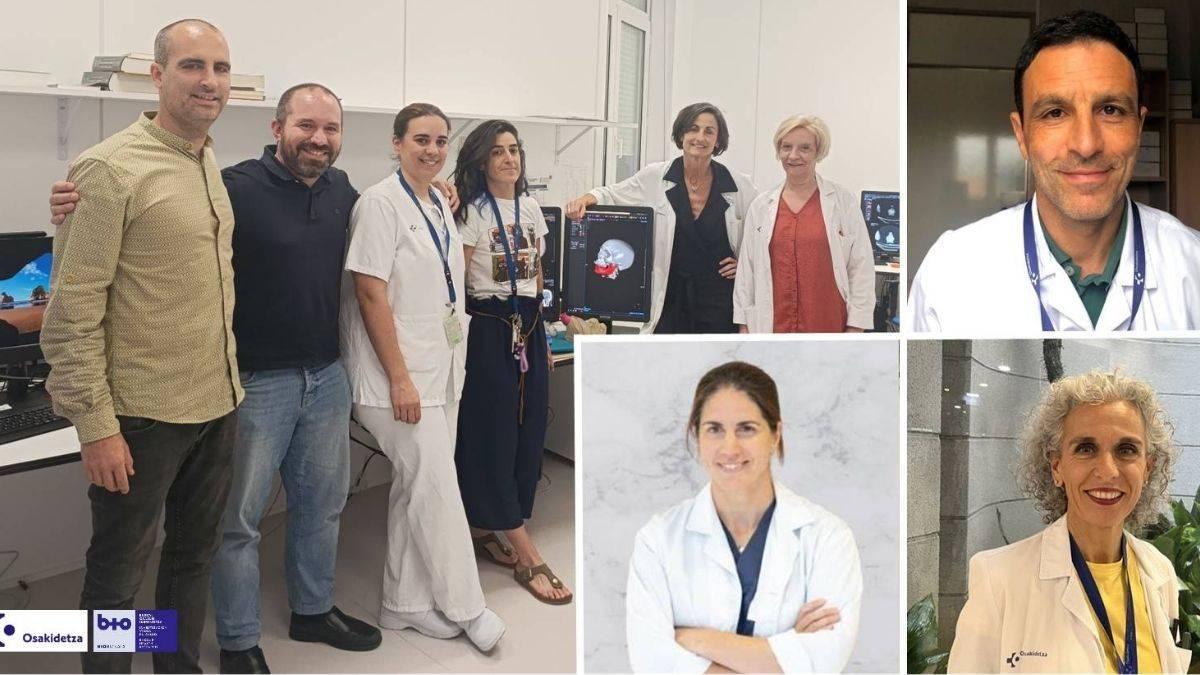
Additive manufacturing applied to healthcare has just taken a significant step forward in the Basque Country. The Biobizkaia Health Research Institute has received authorization from the Basque Government to operate as a manufacturer of custom-made medical devices, a recognition that positions it as the first center in the Basque public healthcare network with this capability . This license is no small matter: it allows 3D printing to move beyond the laboratory and be integrated in a regulated manner into the daily care provided by Osakidetza (the Basque Health Service).
With this authorization, Biobizkaia will be able to design and produce five types of customized devices: anatomical biomodels, sterilizable biomodels, surgical guides, masks for superficial radiotherapy, and temporary epitheses. All of these are manufactured using each patient's medical images, ensuring a perfect fit to their anatomy and the specific clinical needs of each case. This initiative is part of the Basque Health Pact, which aims to promote more personalized, innovative, and patient-centered healthcare.
From medical image to physical object
The process begins with obtaining images using CT or MRI scans. Radiology staff digitally select and separate the structures of interest, such as bones, blood vessels, or tumors, in a procedure known as segmentation. From there, a three-dimensional model is generated that accurately reflects the patient's anatomy, which the engineering team then adapts for manufacturing using 3D printers. This collaboration between radiology, engineering, and clinical specialties is one of the cornerstones of Biobizkaia's model.
The accumulated experience is not new. Since 2016, the Ezkerraldea-Enkarterri-Cruces Integrated Health Organization (OSI) has been developing 3D printing training programs for attending physicians and residents, and in 2024 the Bilbao-Basurto OSI joined them. This direct integration reduces uncertainty in complex procedures and can have a real impact on health outcomes, according to institute officials.

Real-world applications in hospitals
One of the most striking examples is cardiovascular surgery. Roberto Voces, head of the Cardiovascular Surgery Department at the Ezkerraldea-Enkarterri-Cruces Integrated Health Organization, uses replicas of each patient's heart to prepare for complex operations, such as those for obstructive hypertrophic cardiomyopathy. These models allow the medical team to plan the intervention with greater precision, anticipate the areas to be treated, and explain the procedure to the patient using a replica of their own organ. The team's safety and confidence increase significantly.
In maxillofacial surgery, Leyre Margallo, an attending physician at the same hospital, uses 3D-printed surgical models and guides for procedures involving fractures, malformations, or implant placement. Previously, specialists had to bend and cut titanium plates by hand during the operation; now, with the printed model, they can prepare everything in advance. This reduces surgery and anesthesia time, minimizes blood loss, and promotes a faster recovery. The aesthetic result is also improved because the pieces fit together perfectly.
Radiation oncology also benefits. Olga del Hoyo, an attending physician in Radiation Oncology at Cruces Hospital, uses custom-made molds to treat skin cancers in delicate areas such as the nose, eyelids, or ears. These molds adapt to the patient's contours and allow for more precise delivery of radiotherapy, protecting healthy tissue. The treatment is more comfortable and shorter, especially for elderly or frail patients, and can improve quality of life and the cosmetic outcome.
A summary with figures
A study published in 2022 by professionals from Biocruces Bizkaia and Cruces University Hospital analyzed the first six years of implementation of this technology, between September 2016 and December 2021. During that period, the unit handled 352 cases requested by 85 professionals from 27 hospital departments. More than half of the models (54%) were used to plan surgeries, and 36% were used for pre-operative rehearsal. 26% were used as a guide in the operating room , and another 26% were used to explain the patient's condition.
The study also calculated manufacturing costs. A jawbone produced with certified technology cost €13,97; a hemipelvis, €60,41; and a heart chamber, €81,14. Added to this is the cost of staff time, which ranged from €70,96 for a simple bone model to €202,92 for a cardiac model. The researchers considered this expense acceptable for complex procedures that can exceed €10.000, since printing a cardiac model represents less than 1% of that cost.
The professionals rated the anatomical accuracy of the models at 4,39 out of 5 and their usefulness in the operating room at 4,60. They also highlighted the increased confidence of the team and the improved understanding of the patient, although they were more cautious about the reduction in surgical time, which received a score of 3,32. The authors call for larger comparative studies to rigorously quantify all the benefits.
Obtaining this license not only consolidates over ten years of work but also opens the door to new lines of research and closer collaboration between specialties. Although comparative studies are still needed to accurately measure all its benefits, available data indicate that personalized 3D printing improves surgical planning, reduces risks, and brings innovation closer to the patient. Biobizkaia thus positions itself as a regional and national leader in this field, with the potential to participate in healthcare innovation networks and multicenter projects.
