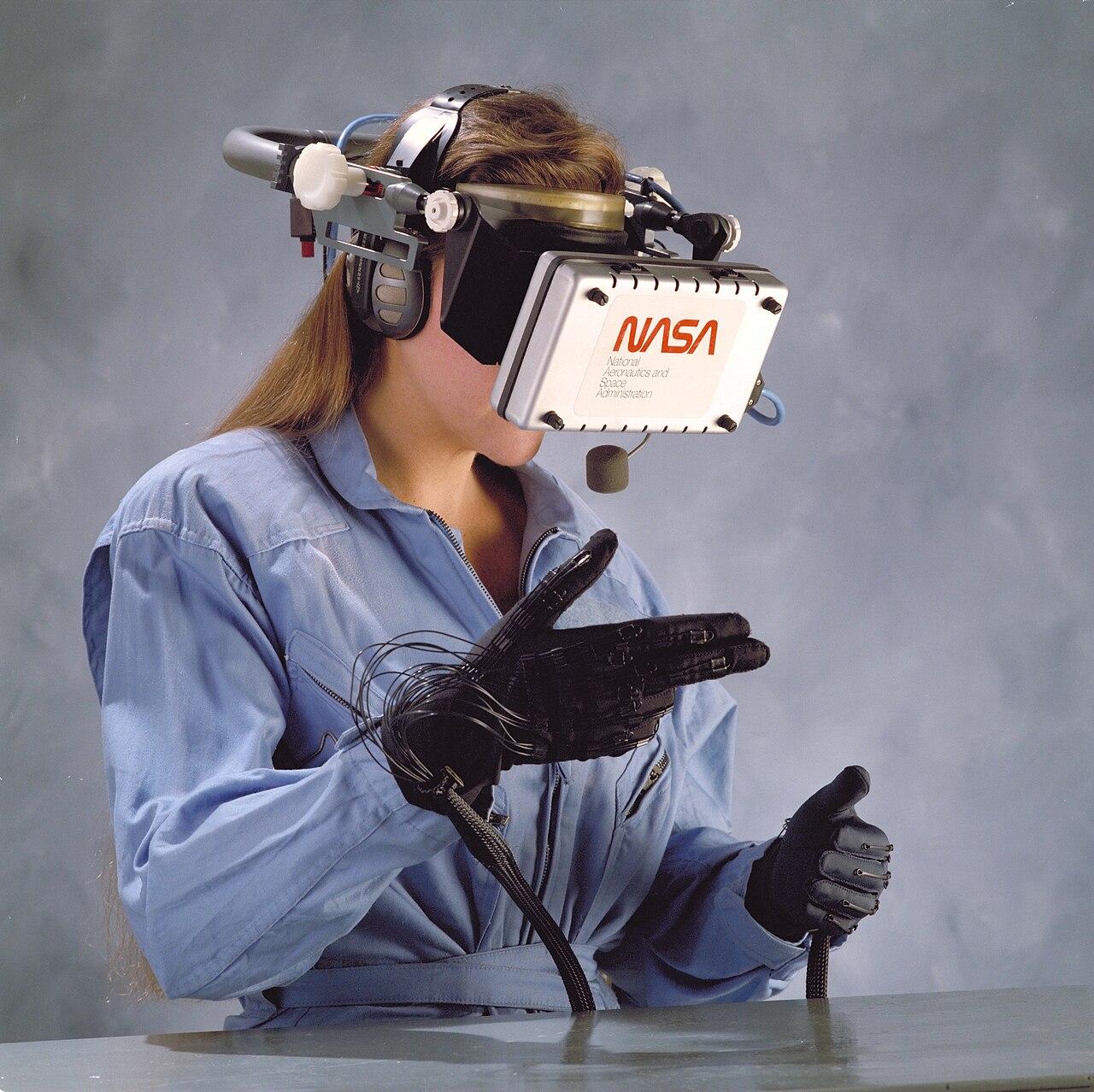
When we talk about immersing ourselves in digital worlds, we usually think of video games, but it goes much further than that. Virtual reality (VR) and its cousins, augmented reality (AR) and mixed reality, have taken an impressive leap, changing the rules of the game in how we learn, work, and heal. It's not just about putting on a pair of glasses and seeing strange things, but about a technological architecture that seeks to trick our senses into making us feel like we're somewhere else.
Entering this world might seem like navigating a labyrinth of technical terms, but essentially, we're dealing with a tool that 's breaking down physical barriers . From the ability to operate on a patient in a safe environment to the possibility of analyzing complex data in three dimensions, VR has become the driving force behind a new digital era where the boundary between reality and simulation is increasingly blurred.
Fundamental Concepts and Technological Differences
To avoid confusion, it's vital to differentiate between the technologies. AR doesn't take us out of our world; instead, it adds layers of digital information to the physical environment. It's like having an invisible assistant projecting data onto the table. In contrast, VR transports us to a completely artificial ecosystem, creating a fully immersive experience where the outside world disappears entirely.
In this context, the concept of "presence" emerges, which is nothing more than the psychological illusion of being there , even though our body is sitting on the sofa. To achieve this, technology relies on immersion, which is the system's ability to replicate reality through high resolution and low latency , preventing the brain from detecting that there's a trick involved.

Types of Virtual Reality Systems
Not all VR systems are the same. We have immersive systems , which are the most powerful and require virtual reality headsets and gloves for the user to move around in a 3D space. Then there are semi-immersive systems , like the famous CAVE system, which is basically a cubic room with screens that project images depending on where the user is looking, allowing several people to collaborate in the same virtual space.
On the other hand, there are non-immersive systems, which are the most common and cheapest. This includes desktop video games; even without a headset, the interactivity and graphic quality can generate a strong emotional response and mentally isolate us from our surroundings, demonstrating that you don't always need expensive hardware to feel like you're part of a story.
Practical Applications in Various Sectors
Higher Education and Training
The integration of these technologies into universities has been a game-changer. While AR is ideal for connecting theory with practice in real-world environments, VR shines in complex engineering or medical simulations . The use of the PRISMA methodology in recent studies confirms that these tools boost student motivation and facilitate the understanding of concepts that would be impossible to visualize in a textbook.

Medicine and Mental Health
In the healthcare field, VR is invaluable. It allows surgeons to train in controlled environments without risk to the patient , recording every movement to analyze errors. In psychology, it is used to treat phobias (such as fear of flying) through gradual exposure techniques in a safe environment where the therapist has complete control over the stimuli, sometimes integrated with exosuits for rehabilitation.
Data and Business Analysis
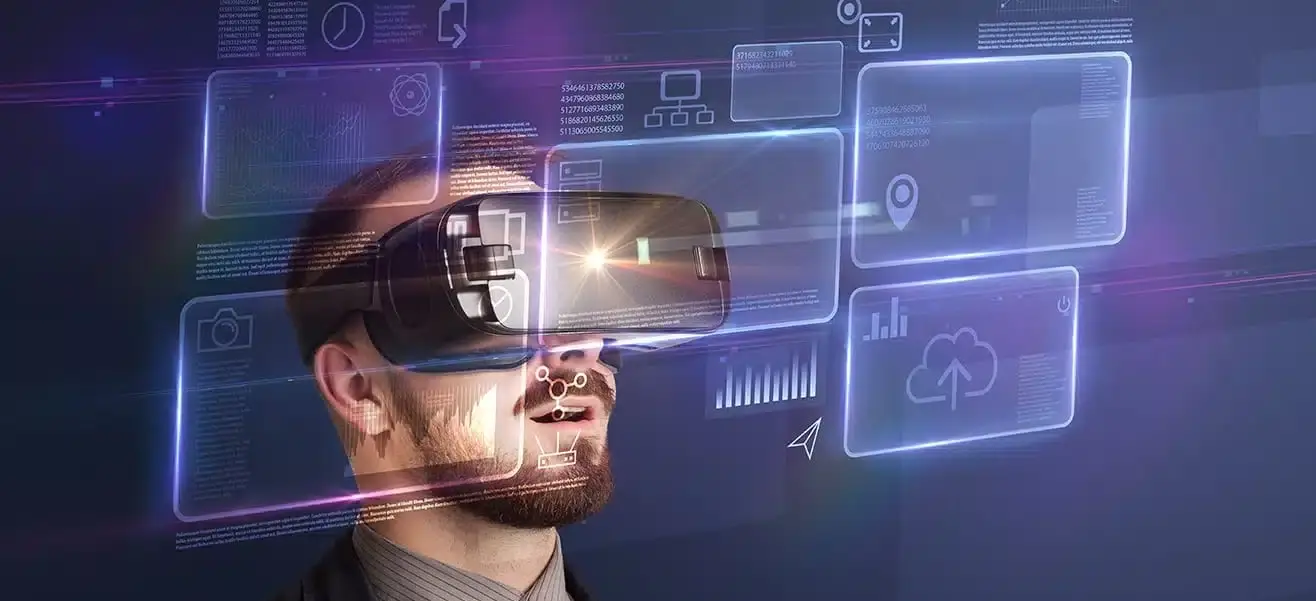
Forget boring Excel spreadsheets. AR lets you transform massive amounts of data into interactive, three-dimensional graphics . This allows companies to intuitively detect patterns and bottlenecks using natural gestures or voice commands. It's a paradigm shift that democratizes access to advanced information, enabling any department to understand complex metrics without being a statistics expert.
Evolution of Hardware and Software
From the first US Navy flight simulators in the 50s to Heilig's Sensorama, the evolution has been remarkable. We've gone from heavy, monochrome headsets like Nintendo's Virtual Boy to devices like the Meta Quest 3 or the Apple Vision Pro, which use OLED displays and precise tracking sensors to reduce motion sickness.
Software has also advanced. We now have tools like Unreal Engine and Unity that allow us to create interactive worlds, and the arrival of generative AI is accelerating everything. It's now possible to create 3D assets and voice audio in real time, reducing development times from months to mere minutes, making environments much more dynamic and responsive to user behavior.
Technical Challenges and User Health
It's not all sunshine and roses. One of the biggest problems is cybersickness , which occurs when there's a mismatch between what your eyes see and what your inner ear (vestibular system) senses. To combat this, it's crucial that the latency is less than 20ms and that the refresh rate is high, avoiding image duplication or judder.
Furthermore, there are real concerns about data privacy . Headsets that track iris movement or body posture can generate a biomechanical profile of the user, opening up a necessary debate about privacy protection in virtual worlds. Added to this is eye strain and the need for ample space to avoid bumping into real furniture while engrossed in the simulation.

Market Outlook and Future
The global VR market is growing rapidly, with a compound annual growth rate exceeding 26%. North America leads in market share, but Asia Pacific is the fastest-growing region thanks to the rollout of 5G in China and India . Hardware remains the most lucrative segment, although demand for enterprise-specific content and live entertainment is driving software growth.
The trend is moving towards hyperreality and the metaverse, where social interaction through avatars will be the norm. The ability to merge military training , robotic medicine, and mass entertainment indicates that VR is not a passing fad, but a basic infrastructure of the digital future that will continue to be optimized to become lighter, cheaper, and more accessible to everyone.
The convergence of artificial intelligence, cloud-based data processing capabilities, and the continuous improvement of haptic sensors is consolidating an ecosystem where simulation is almost indistinguishable from reality. This advancement not only impacts company profitability and global market volume but also redefines human interaction, transforming education, therapy, and information management into fully immersive and personalized experiences.

Table of Contents