When we delve into the world of operating systems, we usually go straight to the usual suspects: Windows, macOS, or Linux. However, there's a fascinating corner called BSD, which is essentially a UNIX derivative born in the halls of the University of California, Berkeley. What makes this system special isn't just its architecture, but also its extremely permissive license , almost as if it were in the public domain. This has allowed its code to circulate freely across the internet and be integrated into both open and closed projects.
To understand BSD, you need to know that UNIX is the ancestor of almost everything we use today. It emerged in the late 60s and, although it's no longer the king of the desktop, it remains the backbone of supercomputers and mobile devices. While Linux is its more famous sibling, BSD is the alternative path taken by the University of Berkeley when AT&T decided to cut off its access and withdraw its usage licenses for commercial reasons. That ended in a legendary legal battle that ultimately led Berkeley to create its own independent version, bringing groundbreaking innovations to the TCP/IP stack and virtual memory management.
The ecosystem of BSD distributions
The first thing to make clear is that installing BSD isn't exactly like switching from Windows to Linux; they aren't direct replacements for the average user. They don't update as quickly and aren't suitable for everyone , but they are a free and open-source gem. For anyone wanting to experiment with virtual machines or standalone systems, getting into BSD is the ideal gateway to the complex but fascinating world of UNIX.
One of the craziest things about BSD is that, thanks to its license, the BSD code is found in places you'd never imagine. For example, much of Apple's macOS and iOS are based on Darwin, which draws directly from BSD. Even Microsoft Windows uses fragments of this code in its TCP/IP networking stack and in the console. It's also found at the heart of the PlayStation 4 and in routers from various brands, demonstrating that it's a robust and versatile system.
FreeBSD: The performance giant
When we talk about BSD, FreeBSD is probably the most well-known name. Released in 1993, it's a full-fledged UNIX system that prioritizes high performance and ease of use . It's a favorite among many web hosting and service providers due to its stability. The most recent versions have brought significant improvements for Intel, ARM, and PowerPC CPUs , optimizing EFI booting and AES-NI encryption.
It can be deployed on a huge variety of architectures, from x86 to UltraSPARC, and is compatible with Linux binaries. Furthermore, FreeBSD has spawned other interesting projects such as TrueNAS (formerly FreeNAS) for mass storage, and OPNsense and pfSense , which are powerful firewalls and routers.

NetBSD and OpenBSD: Portability and Security
NetBSD is the king of compatibility. Its motto, "of course it runs NetBSD," is no joke; this system can run on more than 50 different platforms , from old PDAs to NASA space missions. It stands out especially for its pkgsrc package system , which is essentially a meta-system capable of managing software on a wide variety of hardware.
On the other hand, we have OpenBSD, which originated from a fork of NetBSD due to differences in approach. Here, the absolute priority is cybersecurity and cryptography . They define themselves as "secure by default" because they meticulously review the code and disable any unnecessary services. It's the ideal tool for setting up firewalls or intrusion detection systems , and is highly respected by banks and government entities.
Options for desktop users and niches
For those who don't want to struggle with the terminal, there are options like GhostBSD. This distro is based on FreeBSD but comes ready to use , with environments like MATE and pre-installed applications, geared entirely towards laptops and desktops. Along similar lines, we find MidnightBSD , which mixes code from various sources and offers a very familiar Xfce environment for those coming from Linux.
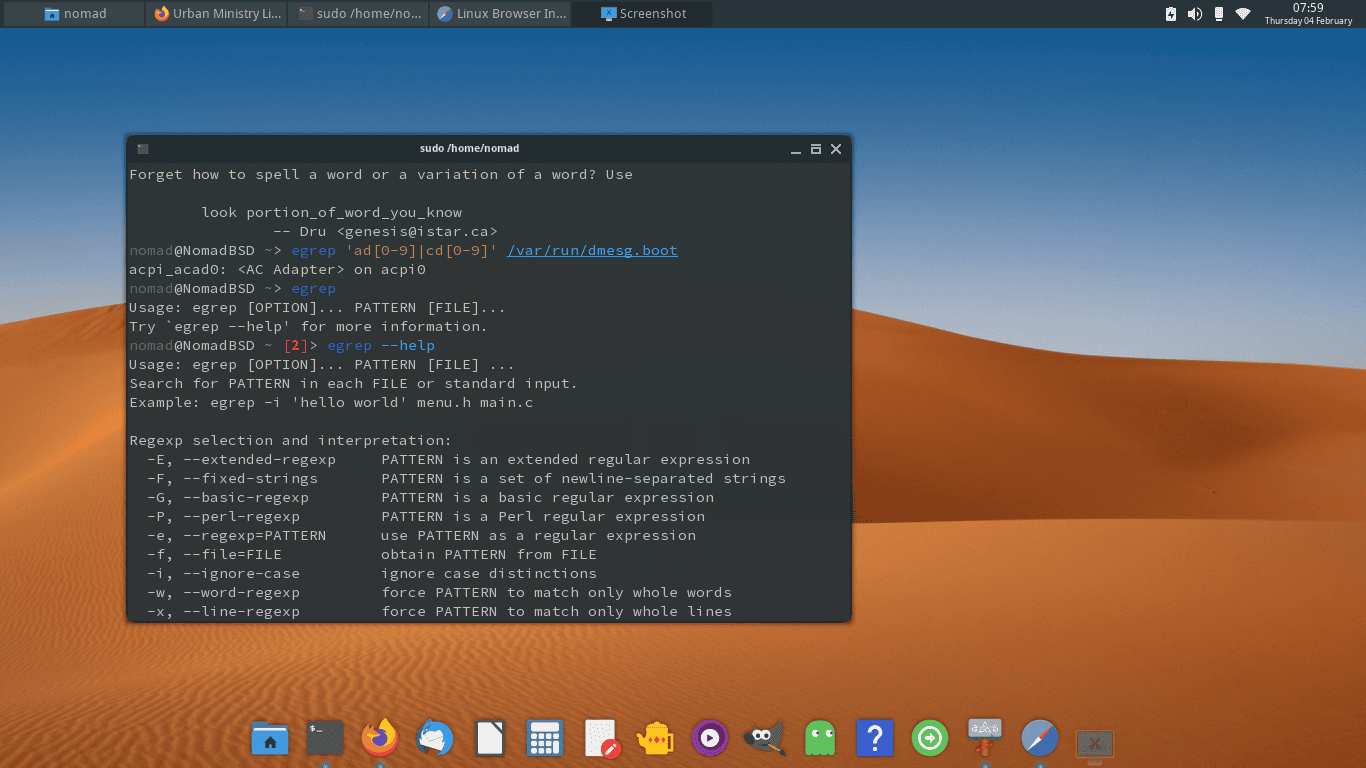
There are also more specialized options. For example, NomadBSD is a "portable UNIX" designed to boot from a USB drive, ideal for data recovery or testing without accessing the hard drive. And if you're looking for something more experimental, DragonFly BSD focused on rewriting concurrency management and the HAMMER file system to improve performance on high-throughput servers.

We can't forget PC-BSD (now evolved into TrueOS), which pioneered the attempt to make the system user-friendly by installing .pbi packages with one click and integrating desktop environments like KDE. Other projects like HardenedBSD focus on mitigating exploits, while helloSystem strives for elegance and simplicity, drawing inspiration from macOS's aesthetics.
Over the years, dozens of variants have existed, some now defunct, such as FuryBSD or various LiveCD versions. There are even Linux distributions like Void Linux or Quimera that, while using the Linux kernel, are heavily inspired by BSD's philosophy and tools for managing their packages and boot processes.
This universe of operating systems demonstrates that Berkeley's legacy lives on, offering everything from extreme security tools to ultra-stable file servers. Whether through the versatility of NetBSD, the power of FreeBSD, or the robustness of OpenBSD, the BSD ecosystem remains a vital alternative for those seeking complete control and transparency over their hardware and software.
Table of Contents