If you're fascinated by technology but don't know where to start, PictoBlox is probably one of the best entry points available right now. It's not just a program for making a kitten move around the screen; it's a comprehensive educational ecosystem that allows kids and adults to take their first steps in coding without getting overwhelmed by complicated syntax.
What makes this tool stand out is its ability to adapt to each user's pace . Whether you're four years old and want to create your first interactive story, or a teenager looking to master Machine Learning, PictoBlox offers a gradual path that makes programming for children and students super fun and, above all, very practical.
A bridge between the blocks and the actual code
To begin with, the software is based on the logic of Scratch 3.0, using a drag-and-drop system of pieces that fit together like a puzzle. This is key because it allows students to focus on logic and reasoning before grappling with parentheses or semicolons in traditional programming languages.
But here's the best part: once users are comfortable with blocks, they can easily upgrade to Python 3. PictoBlox includes specialized editors like PyEditor and PyNotebook, which function as a workbook where you can mix text and code execution. It also features a REPL mode and a PIP package manager , making it a true programming workshop and not just a toy.
For the youngest children, between 4 and 7 years old, there's Junior Blocks mode . This simplified interface is designed to foster creativity and critical thinking through playful activities, even allowing them to animate characters using facial recognition and gestures thanks to AI.
Artificial Intelligence and Machine Learning within everyone's reach
PictoBlox goes beyond the surface. One of its gems is the machine learning module , where students can train their own models. You don't need to be a data expert; the import, train, and test workflow is fully integrated into the app.
Projects can be developed based on various classifiers, such as image recognition, object detection , or even audio and text analysis. Imagine creating a program that can tell if you're smiling or recognize specific voice commands to trigger an action; that's what this platform allows.
Robotics, IoT and the physical world
The magic happens when the code jumps off the screen and starts moving things in the real world. PictoBlox is fully compatible with a huge range of hardware, from classic boards Arduino UnoMega and Nano...to more modern options like the ESP32, evive or Quarky robots.
In terms of its operation, it offers two very distinct modes. Scenario Mode allows real-time interaction between the computer and the board via specific firmware. On the other hand, Upload Mode is used to upload the program directly to the microcontroller, allowing the device to operate autonomously without being connected to the PC.
Furthermore, the software promotes the Internet of Things (IoT) . Students can create systems that use a home automation sensor to read environmental data (such as temperature or light) and react automatically, thus understanding how information flows in today's smart environments.
Exploring Virtual and Augmented Reality
For those looking to go a step further, the 3D and XR Studio opens up a universe of possibilities. Here you can design 3D environments, apply materials, lighting, and physics to create Virtual Reality (VR) and Augmented Reality (AR) experiences.
From creating AR filters to running complex physics simulations, everything can be controlled using blocks or Python. The most interesting thing is that these projects can be exported for viewing on devices like Google Cardboard, MetaQuest, or Pico VR , taking programming to a completely immersive level.
Accessibility and educational deployment
The software is designed to be accessible from anywhere, offering versions for Windows, macOS, Linux, and Chromebook , in addition to native apps for Android and iOS. The mobile version leverages smartphone sensors, such as the camera and microphone, to create computer vision projects instantly.
For educational institutions, PictoBlox differentiates between teacher and student profiles . This allows teachers to manage tasks, monitor progress, and guide STEM activities, integrating science, technology, engineering, and mathematics into a single multidisciplinary project.
This tool positions itself as a powerful alternative to other environments like mBlock or TurboWarp, standing out for its multilingual support and its ability to convert blocks into C++ or Python code. Ultimately, it's a platform that transforms computer science education into an experience of constant discovery and experimentation.
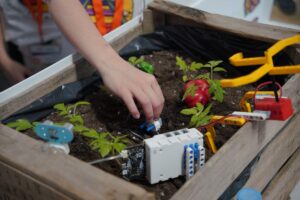
Table of Contents