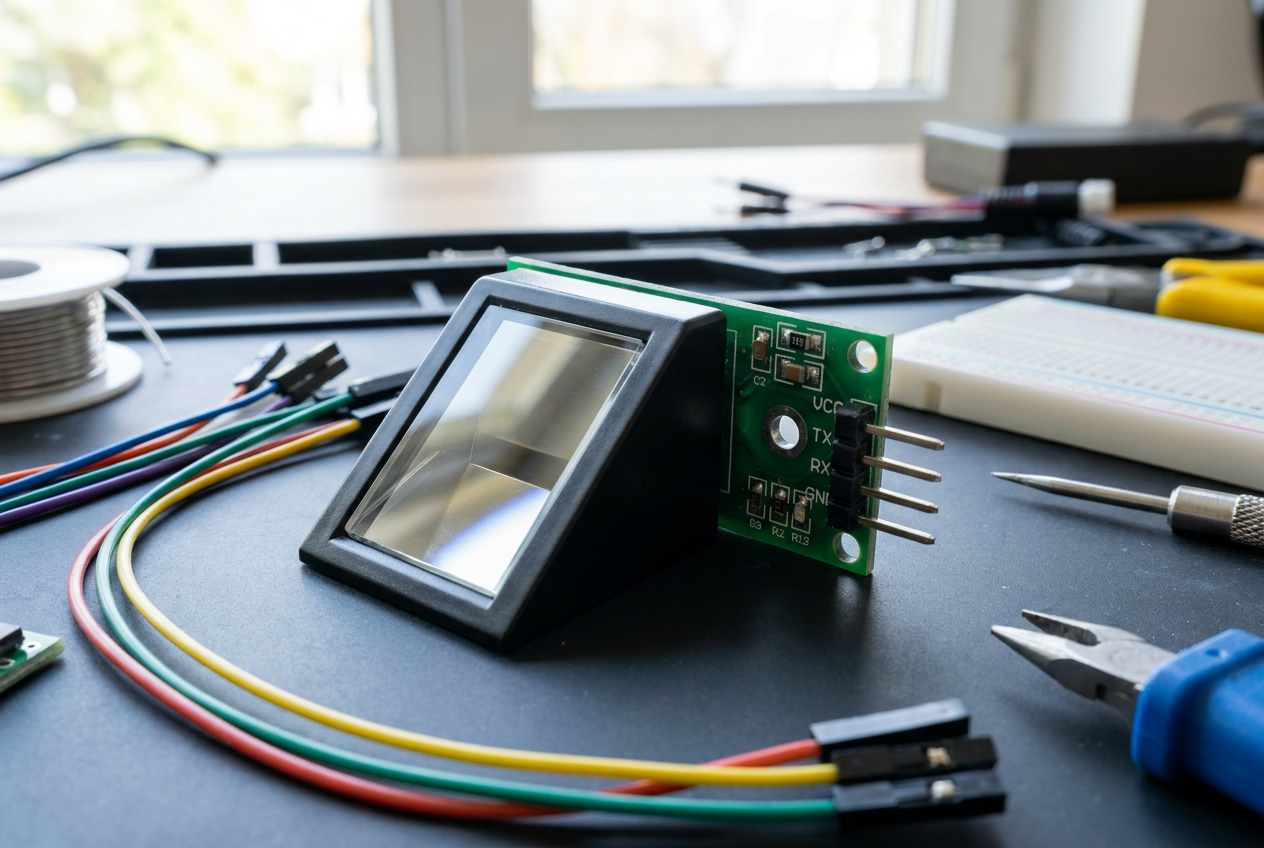
If you're looking to add a professional level of security to your electronics projects, UART fingerprint sensors are the ideal solution. These devices aren't just simple scanners; they act as intelligent modules that handle all the technical aspects, from capturing the image to processing the recognition algorithms, leaving your microcontroller only needing to manage the access command.
The best part is that there are several options available to suit your needs, from a more robust optical sensor for industrial environments to a much more compact and precise capacitive sensor that fits practically on the tip of your finger. Thanks to their use of the UART communication protocol , they are compatible with almost any circuit board on the market, greatly simplifying integration into access control systems or safes.
Sensor Types: Optical vs. Capacitive
When choosing, you'll find two main technologies. Optical sensors, such as those based on the STM32F205 processor, are true workhorses. They are very durable and have high electrostatic resistance , withstanding up to 150KV. These modules typically separate the physical sensor from the processing circuitry, allowing for greater flexibility in hardware design and massive storage capacity, capable of storing up to 4000 fingerprints.
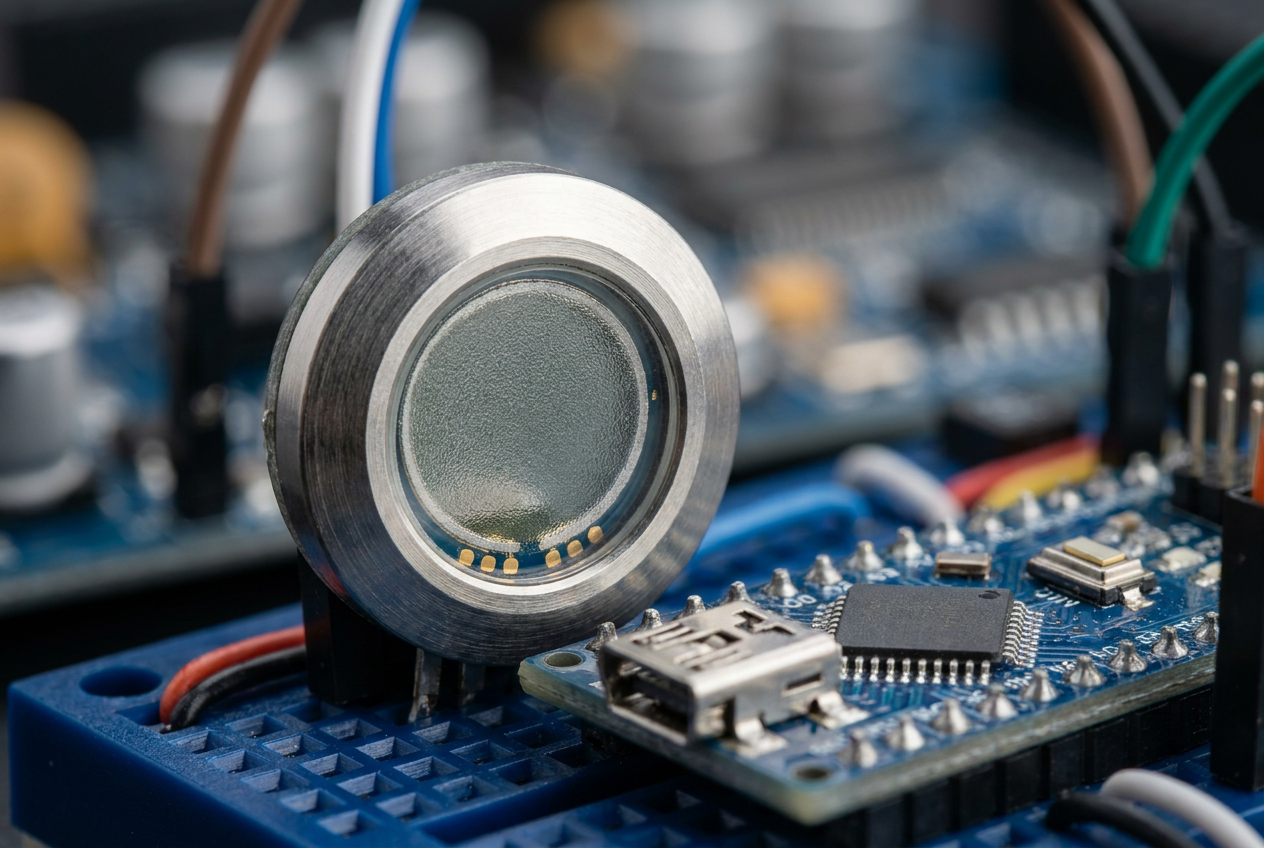
On the other hand, we have capacitive sensors, which are the crown jewel in terms of precision and size. These devices are extremely compact, with circular shapes that mimic the size of a fingernail, and offer much finer detection . Unlike optical sensors, these are ideal for high-end products where space is limited, although they typically have a smaller storage capacity, around 80 or 3000 records depending on the model, and are more sensitive to environmental conditions such as dust or humidity.
Technical Specifications and Performance
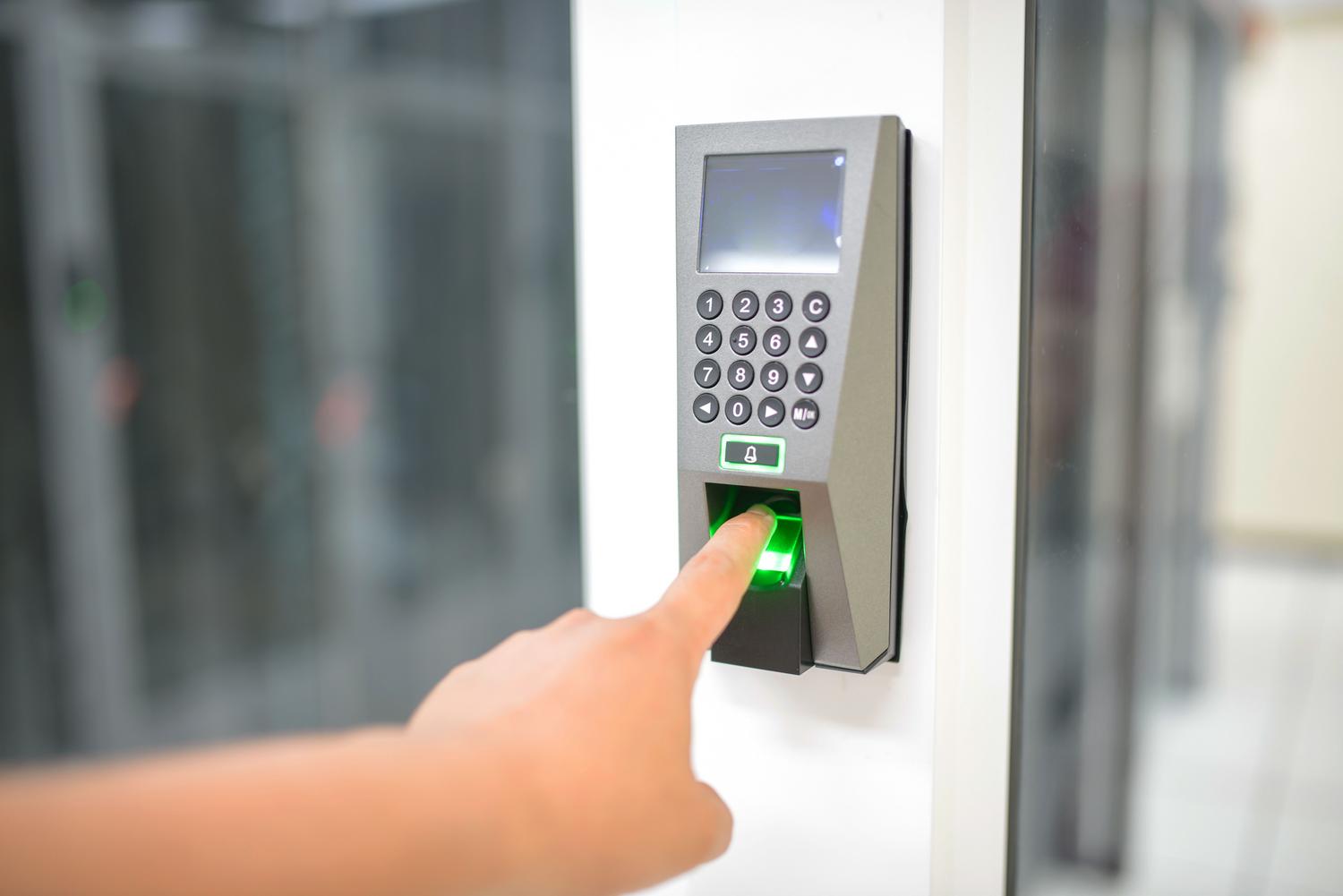
Looking at the numbers, the speed is impressive. Most of these modules achieve a pairing time of less than 0,5 seconds , meaning the response is almost instantaneous. As for security, they operate with adjustable levels (generally from 1 to 10), where a higher level drastically reduces the false acceptance rate , bringing it down to negligible levels like 0,001%.
- Powerful processors: Use of CPUs such as the STM32F205 for fast image processing.
- Flexible feeding: They support voltage ranges that typically go from 3.3V to 7.5V.
- International standards: They comply with the ISO19794-2 standard for fingerprint templates.
- Simple interface: Communication via UART with configurable baud rates between 9600 and 57600bps.
Integration with Popular Hardware
Implementing these sensors is a piece of cake if you use the right tools. For those working with Arduino , there are libraries that simplify the basic functions: you can clear all records, read a new fingerprint (repeating the process three times to ensure accuracy), or check the number of registered users using simple commands.
If you prefer to use a Raspberry Pi , the connection is made via the GPIO pins, after first enabling the serial port in the system configuration. For developers using more professional environments like the XNUCLEO-F103RB, it can be programmed using Keil5, connecting the transmit and receive (TX/RX) pins and managing flow control and module wake-up via the WAKE and RST pins.
Connectivity and Testing Guide
To connect the sensor directly to a PC and perform quick tests, a USB-to-UART converter (such as the FT232) is essential. Once connected, testing software allows you to manage the fingerprint database without writing a single line of code, enabling you to add or delete users, or perform 1:1 comparisons (a specific user against a fingerprint) or 1:N comparisons (a fingerprint against the entire database).
It's important to consider the logic level adjustment . If your development board operates at 5V and the sensor is 3.3V, you'll need to add a level converter circuit to prevent the module from burning out. Regarding the physical assembly, capacitive sensors typically come with 6-pin FPC connectors, which require an adapter for easy wiring to a breadboard.
Having a biometric identification system readily available allows for the creation of everything from smart locks to highly sophisticated authority management systems. Whether opting for the robustness of optical technology for industrial access control or the elegance and precision of capacitive sensors for a wearable device, the versatility of the UART protocol ensures seamless, secure, and highly efficient implementation in any technological environment.
Table of Contents