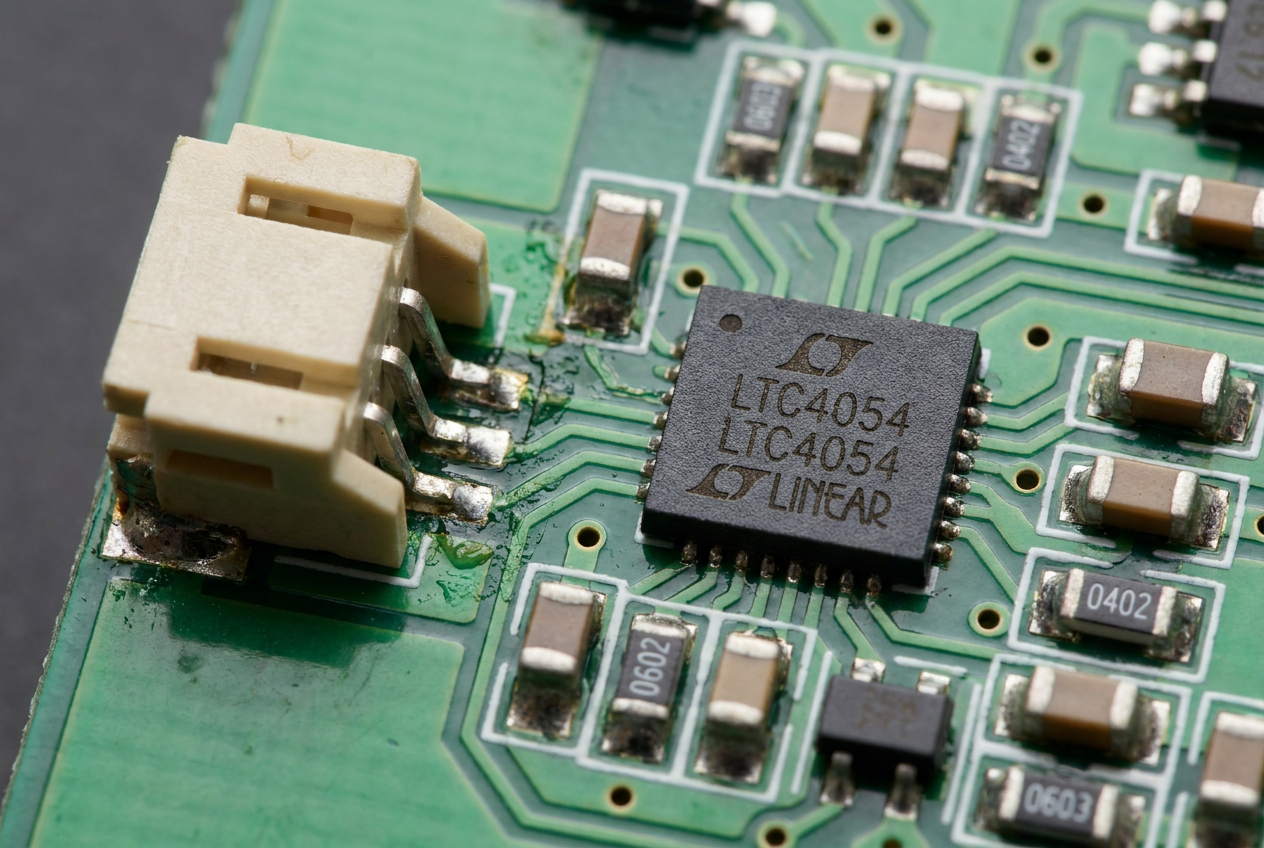
If you've ventured into the world of IoT, you'll know that the ESP32 is a true gem thanks to its power and connectivity. However, the transition from a prototype assembled with wires on a breadboard to a standalone, professional device is where most makers face a harsh reality check. Getting a sensor to operate for years on a single charge isn't a matter of luck, but rather of meticulous electrical design.
Designing a PCB to manage lithium batteries requires understanding that simply connecting a charger isn't enough. There are invisible technical details , such as leakage currents or cell chemical stress, that can cause your project to go from lasting four years to failing in a couple of months. In this article, we'll break down how to build a robust, safe, and extremely efficient power system.
Energy management: The heart of the project
One of the most common mistakes is using the typical TP4056 charger connected in parallel with the load. The problem is that this chip doesn't always detect the end of the charging process if the ESP32 is drawing power at the same time, which means the battery is always under voltage . This not only shortens the cell's lifespan but can also be dangerous.
The professional solution is to implement a Power Path Management system , such as the one offered by the MCP73871 integrated circuit. This system acts like a traffic controller: if there is external power, the chip powers the circuit and charges the battery with the excess. If the external power source disappears, the battery takes over without the system having undergone micro-cycles of charge and discharge, thus eliminating unnecessary chemical stress.
Key components for minimal consumption
If you want your device to survive months in deep sleep mode , the voltage regulator is either your worst enemy or your best friend. Standard LDO regulators draw too much current when idle. It's crucial to choose ultra-low current LDOs , such as the RT9080-33GJ5 or the AP7215-33YG, which keep power consumption to an absolute minimum while the processor sleeps.
- Voltage dividers: To monitor the battery level without draining it, use very high-value resistors (for example, 470k Ohms). This reduces the leakage current to a few microamps.
- Stabilizing capacitors: The ESP32's WiFi causes sudden current spikes. Placing a 10µF capacitor and a 0.1µF capacitor near the power pin prevents this. restarts unexpectedly.
- Load control: Using chips with protection against deep discharge and short circuits is non-negotiable to prevent the battery from becoming unusable or, worse, causing an accident.
Physical PCB design and signal optimization
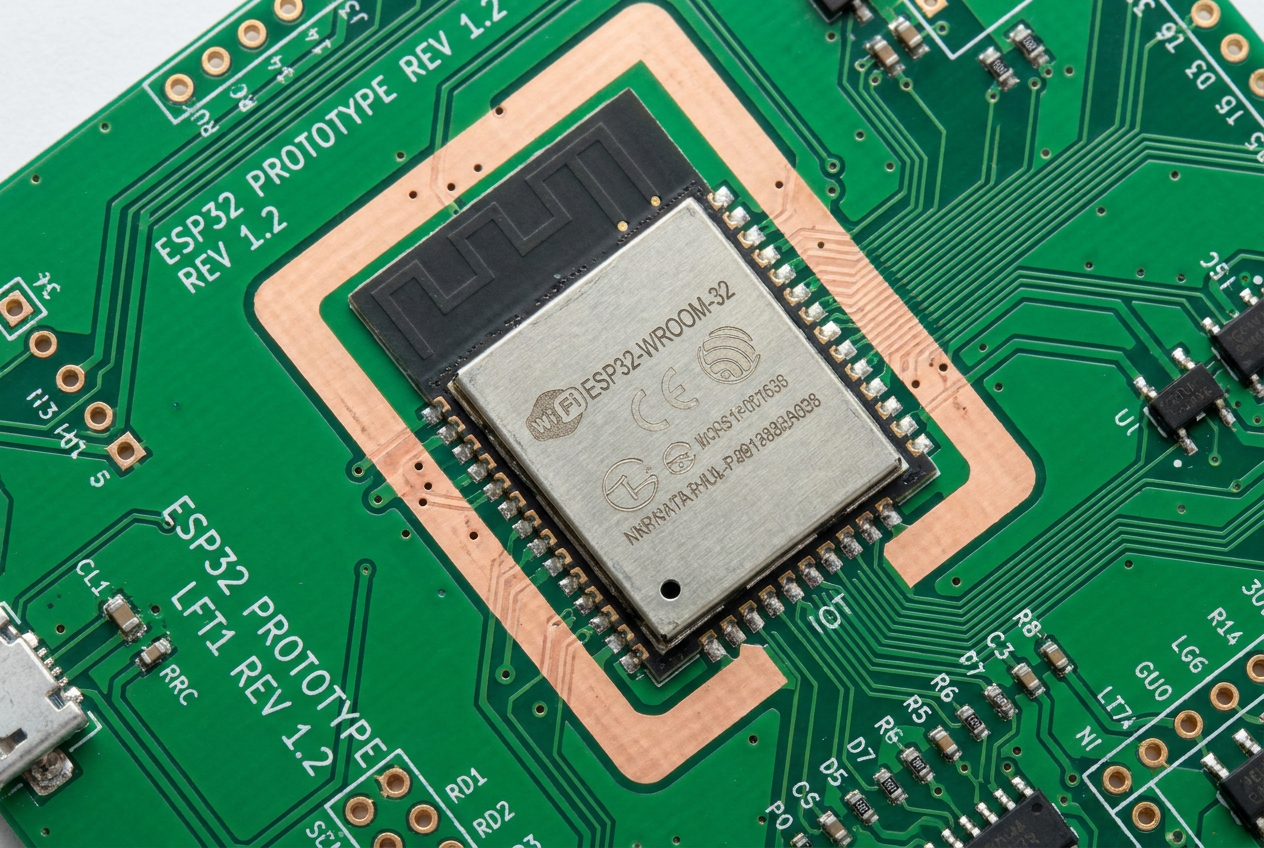
When transferring the schematic to the PCB layout, there are some sacred rules you can't ignore. The most important one concerns the antenna. The area directly beneath the ESP32 module's antenna must be a copper-free zone (keep-out). If you place traces or ground planes directly underneath it, the WiFi signal will degrade, and the range will be poor.
Another critical point is the thickness of the power traces. Even though average power consumption is low, transmission peaks require that energy flow without voltage drops. Furthermore, using SMD modules directly instead of development boards will save considerable space and reduce electrical noise in the circuit.
Comparison of energy sources
Not all batteries are the same, nor do they serve the same purpose. LiPo and Li-ion batteries are the most common due to their energy density, but they require careful management to avoid overcharging. On the other hand, LiFePO4 batteries are a safer and more stable alternative, although they offer less capacity in the same volume.
For projects requiring extreme autonomy (years), non-rechargeable lithium batteries (like CR123) are unbeatable due to their very low self-discharge rate. However, if you need solar recharging, using a controller with VPCC functionality allows you to maximize the panel's energy output without it failing when irradiance is low.
Advanced tricks to save battery
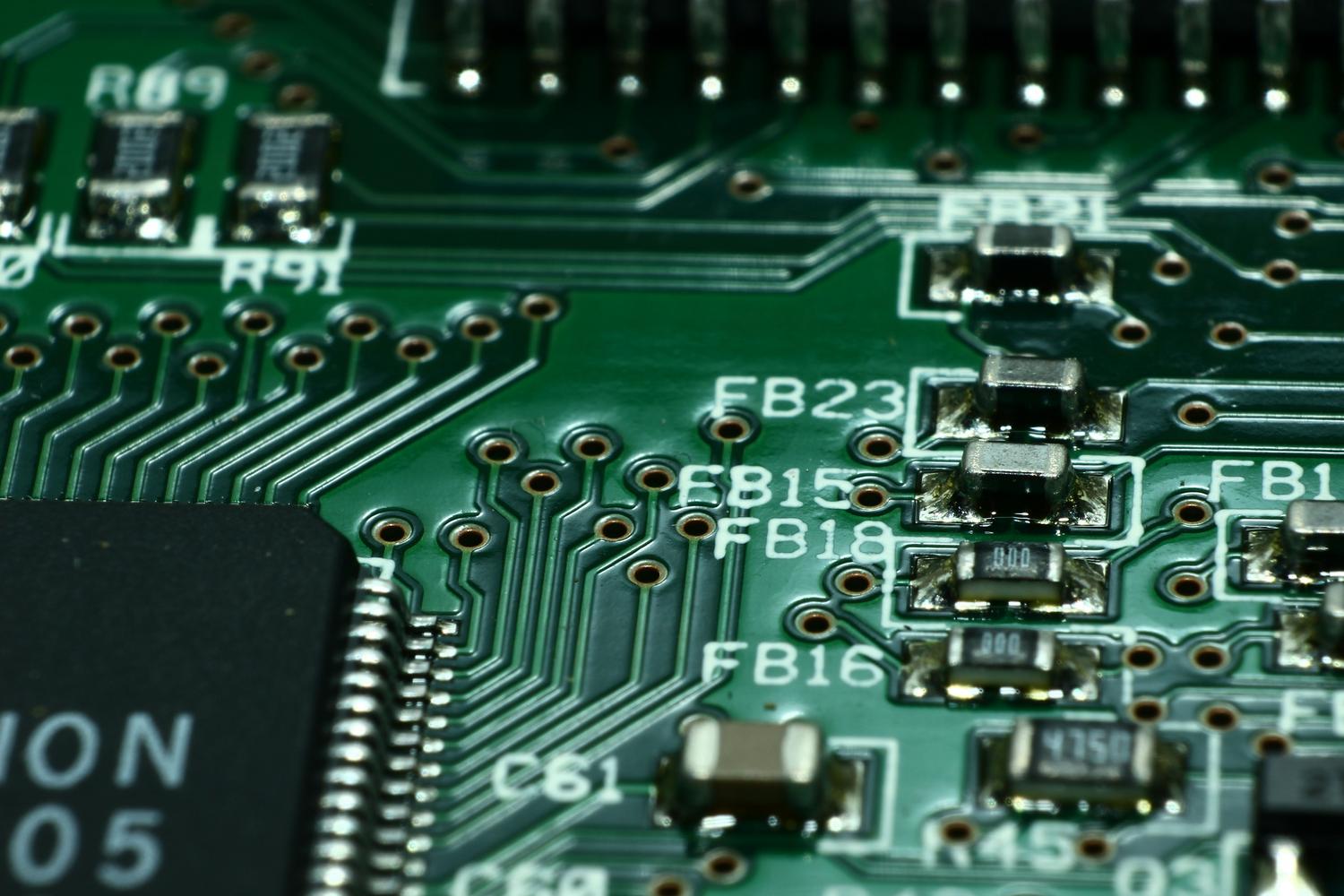
To maximize efficiency, you can add a MOSFET to act as a master switch for peripheral components. For example, if you have a sensor that you only need to read hourly, you can use the ENABLE pin of a step-up converter (such as the MT3608) to completely cut power to that sensor while the ESP32 is idle.
Another common problem is the drift of the ESP32's internal clock during deep sleep. If time accuracy is critical, integrate an external RTC like the DS3231 . This temperature-compensated clock prevents your device from losing track of time, which is essential for professional telemetry applications.
Achieving an efficient IoT device involves combining intelligent power management with ultra-low-power components and a PCB layout that adheres to RF standards. From selecting the appropriate LDO to implementing a power path system and properly managing the antenna, every detail counts in transforming a prototype into a reliable product that can operate for years without human intervention.
Table of Contents