
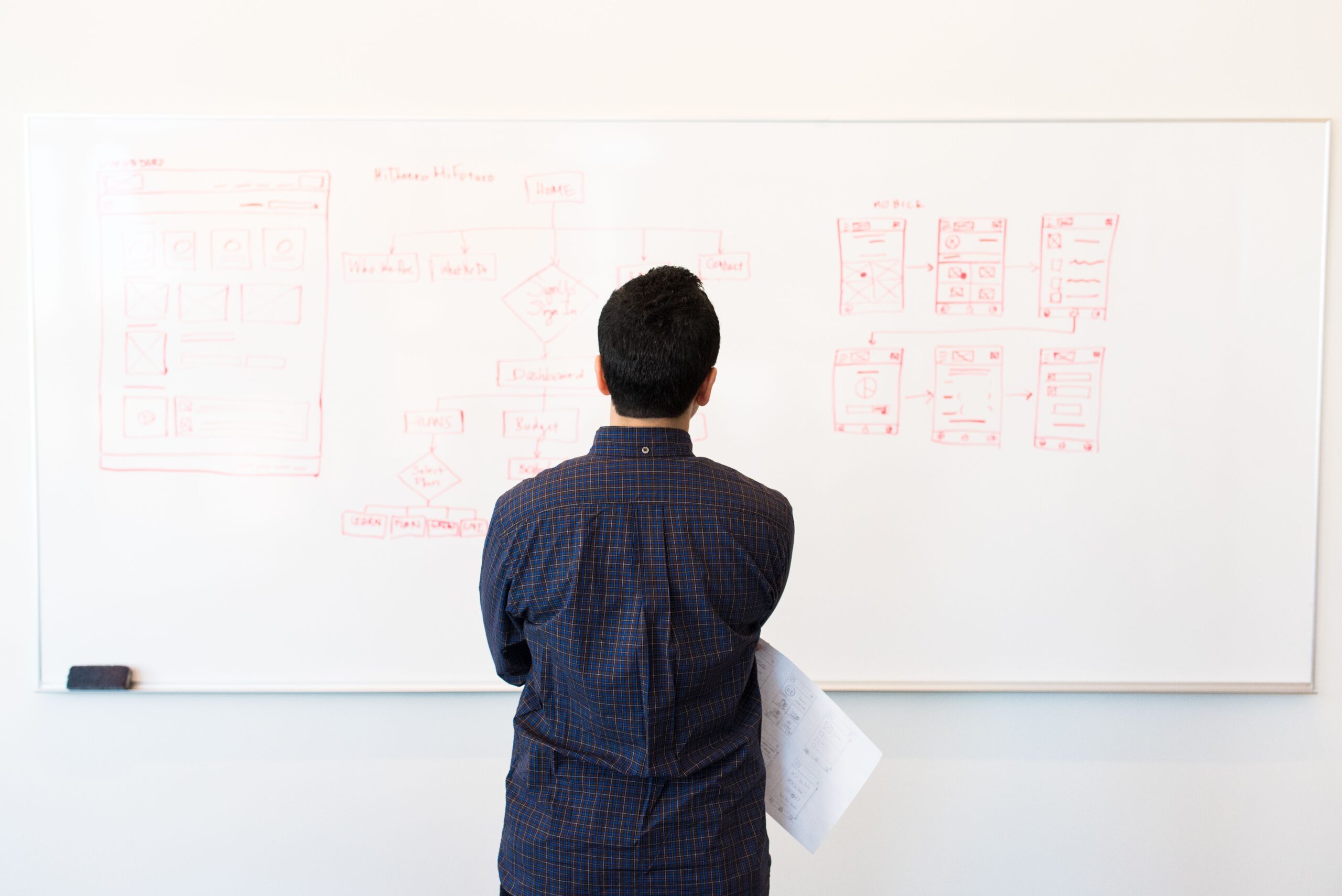
When we delve into the world of software development, it's very common to confuse simply programming with the structural design of a system. Software architecture is, essentially, the highest-level design of a program's structure, functioning as the blueprint for a project. It's not just about writing lines of code that work, but about establishing a coherent framework, based on abstractions and patterns, that allows the software to be manageable and evolve without everything falling apart at the first modification.
Imagine trying to build a complex application without a clear architecture; it's like trying to construct a skyscraper without blueprints. The first few floors might look good, but sooner or later the structure will collapse. This process involves making critical decisions before implementation , analyzing not only what the system must do (functional requirements), but also how it must behave in terms of performance, security, and flexibility—what we call non-functional requirements.

Fundamentals and Dimensions of Architecture

To fully understand this, we must distinguish between logical and physical architecture. While logical architecture focuses on abstract components, their interfaces, and how they communicate, physical architecture is responsible for translating that into the real world, deciding on which servers or computers will run each task.
A key point is that any architecture is designed with objectives and constraints in mind. Objectives include aspects such as auditability, flexibility, and maintainability , while constraints are typically the limitations of available technology. For example, it would be unwise to attempt to use a three-tier architecture for a system requiring extreme real-time responses, as the latency would be unacceptable.
System Views and Modeling
Because a software system is too complex to be seen in a single image, different views or models are used to describe it. The three most fundamental are:
- Static vision: It is responsible for detailing which components make up the architecture.
- Functional vision: Explain the specific task that each of those components performs.
- Dynamic vision: Describe the behavior and interaction of the elements over time.
To ensure the entire team speaks the same language, the Unified Modeling Language (UML) is often adopted . Although it's the standard, caution is advised because such a general-purpose language can sometimes overlook very specific system constraints, similar to what happens with some specialized CAD software.
Most Relevant Architectural Patterns

There's no need to reinvent the wheel for every project; the usual approach is to choose a familiar pattern based on its advantages and disadvantages for the specific case. Here's a look at the most common ones:
Centralized and Distributed Structures
The client-server pattern is the bread and butter of the web. It centralizes resources on a server that responds to multiple clients. It's great for administration and scalability, although it has a weakness: if the server goes down, the service stops completely. On the other hand, the broker pattern is used in distributed systems where an intermediary component coordinates communication between remote services, improving performance under heavy loads but increasing infrastructure costs.
Layered and Modular Organization
Layered architecture is probably the most widespread. It divides software into levels of abstraction (typically presentation, business, and data). Its main advantage is the ability to be tested independently , although it can suffer performance drops since each request must traverse all layers.
Within this approach, the Model-View-Controller (MVC) pattern stands out , decoupling the logic from the data (Model), the interface (View), and input handling (Controller). It is the foundation of frameworks like Spring and Angular and allows multiple developers to work in parallel without overlapping.
Modern and Scalable Approaches
When we talk about massive applications, microservices come into play . Here, the system is fragmented into independent services that communicate via APIs, allowing Netflix or Amazon to update a single feature without shutting down the entire website. Similar to this is SOA (Service-Oriented Architecture) , very common in banking, where reusable services are exposed to different internal applications.
We also find Event-Driven Architecture , where services react to changes in state (events), ideal for asynchronous processes, and Serverless Architecture , where the developer only uploads functions to the cloud and the provider manages the infrastructure, optimizing costs in sporadic traffic peaks.

How to Design an Architecture Step by Step

Designing isn't like rolling dice; it requires a methodical process to avoid over-engineering. First, it's vital to understand both the functional and non-functional requirements . Simply stating that the system must be "fast" isn't enough; performance and scalability must be quantified to give the design a clear direction.
Once the objectives are clear, it's recommended to think about the components and perform rapid prototyping . This helps validate assumptions and discover flaws before they become too expensive to fix. A very useful technique is to divide the architecture into "slices." While the horizontal slice defines the layers, the vertical slice (Agile approach) allows for the iterative delivery of complete functionalities (from the database to the UI).
Quality Principles and Good Practices
For a design to be truly robust, it must respect certain pillars: modularity allows changing one part without breaking the rest; separation of responsibilities prevents the code from becoming a "mud ball"; and reusability saves time by not having to program the same thing twice.
It is crucial to avoid the temptation to choose a pattern simply because it's trendy. The design should stem from the project's needs. Furthermore, excessive scope creep must be monitored, as adding features on the fly without adjusting the architecture can compromise the stability of the entire system.
Proper architectural planning, which balances cost, development time, and responsiveness to user volume, is what distinguishes a programmer from a true software engineer. By integrating a clear vision of the components, the appropriate selection of patterns, and a continuous improvement cycle based on prototypes, it is possible to build a system that not only solves the current problem but is also capable of evolving and remaining efficient in the face of the changing demands of the technology market.
