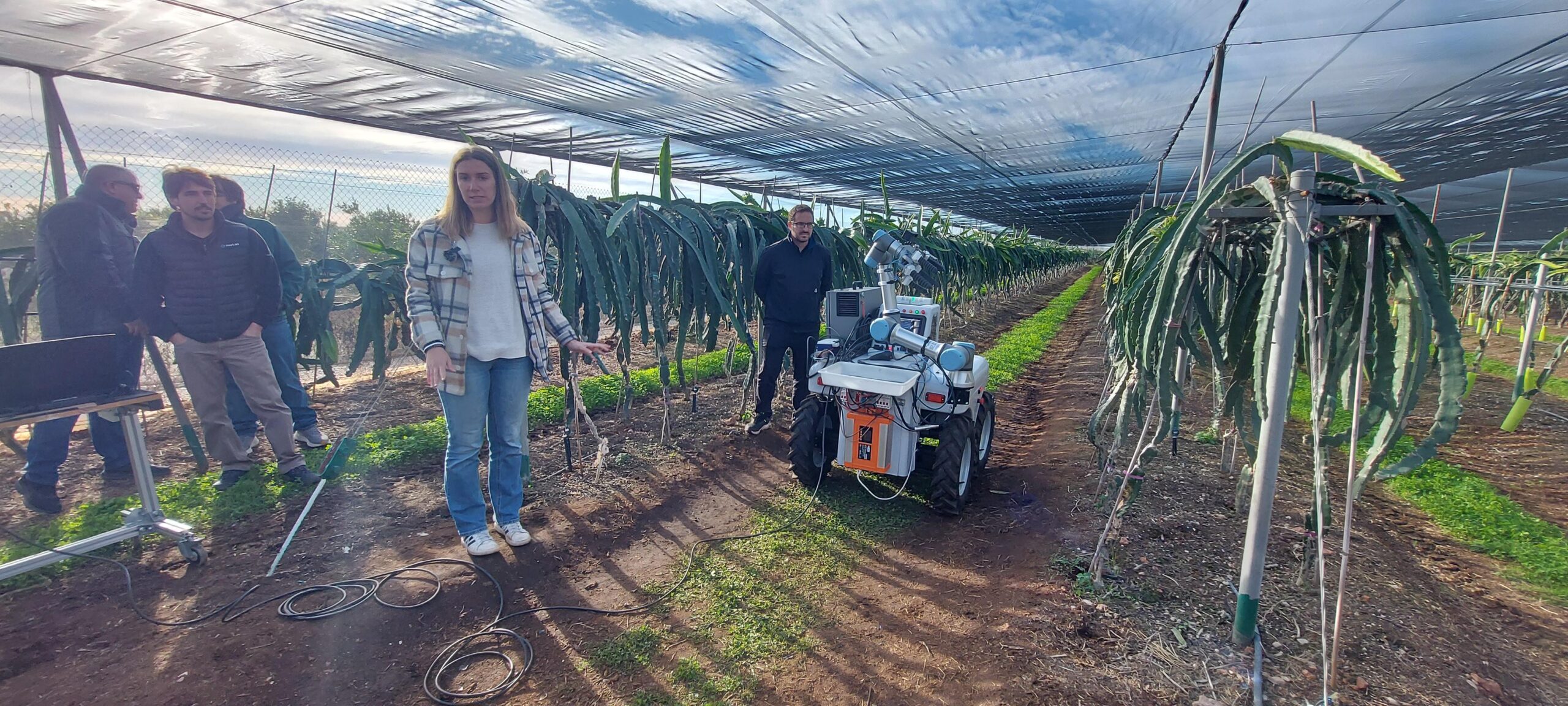
Harvesting delicate fruits has always been a challenge for farmers. Picking them at the perfect point of ripeness without bruising them requires skilled labor and a lot of patience. Now, a team from the Polytechnic University of Valencia has come up with a solution that promises to be a game-changer: Dragonbot, an intelligent robot capable of harvesting pitayas autonomously and selectively , without damaging the fruit and choosing only those that are ready to be picked.
The project, coordinated by the UPV's Agricultural Robotics Laboratory, comes at a time when pitaya cultivation, also known as dragon fruit, is gaining ground in the Mediterranean basin. Its drought resistance—it is, after all, a cactus—and its high commercial value make it an increasingly attractive option for producers. According to its creators, Dragonbot is the first robot specifically designed to automate the harvesting of this fruit , and the results of the first field tests are very promising.
This is how Dragonbot works
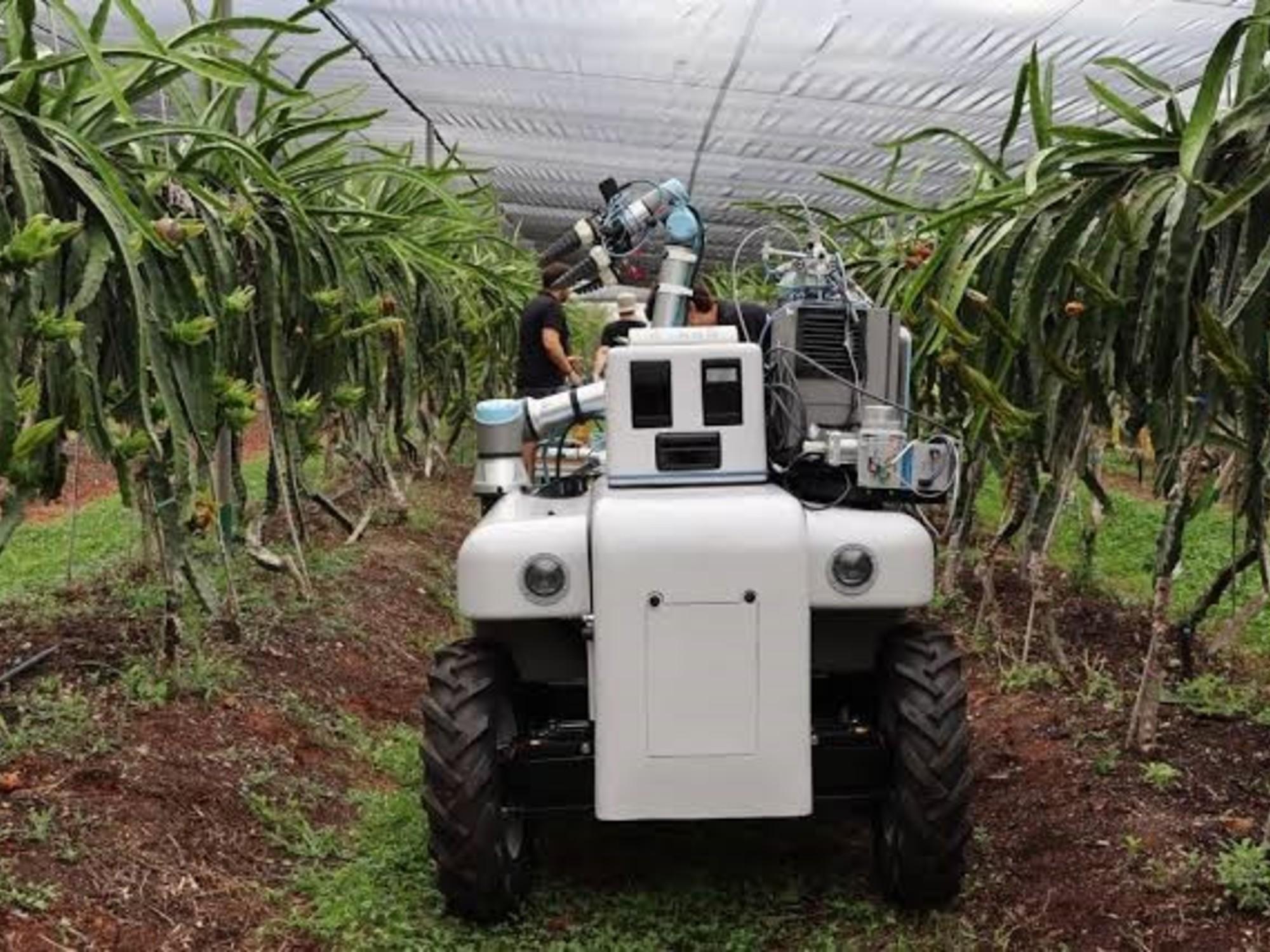
The robot rides on an autonomous platform with four-wheel drive, two-wheel steering, and independent suspension, allowing it to move smoothly across agricultural terrain. On this platform, a collaborative robotic arm equipped with a gripper and two cutting systems —a vibrating blade and pneumatic scissors—separates the fruit from the plant with millimeter precision. But the most striking feature is the flexible pneumatic fingers that hold the dragon fruit without squeezing it, preventing bruising or deformation.
The system's true brain is its computer vision. Dragonbot analyzes each fruit using cameras and algorithms that determine its ripeness before deciding whether to harvest it or leave it on the plant. This way, only the pitayas at their optimal point are picked, reducing losses and improving the quality of the final product. Carlos Blanes, a researcher at the University Institute of Automation and Industrial Informatics (ai2) of the UPV, explains that the team has programmed all the harvesting and storage operations to ensure the fruit is not damaged during the process.
Results that speak for themselves
Tests conducted on real farms have yielded very positive results. More than 75% of the ripe fruit were successfully harvested , while less than 12% showed any damage during handling. For Coral Ortiz, the project coordinator, this data validates the robot's viability not only for dragon fruit but also for other crops with similarly delicate fruit. "These results demonstrate that the technology developed has great potential for the autonomous harvesting of fruits that require particularly careful handling," she notes.
Francisco Rovira, director of the Agricultural Robotics Laboratory, points out that the rise in pitaya cultivation in the Mediterranean is due to both its resilience and growing consumer demand. Dragonbot has arrived to address the need to automate a harvest that, until now, depended almost entirely on manual labor . And it does so with a precision that, according to researchers, exceeds initial expectations.
Public-private collaboration and European funding
The UPV (Polytechnic University of Valencia) is not the only entity behind Dragonbot. The consortium includes GreenVision, responsible for developing the system to estimate fruit ripeness; Inderen, which provided an agrivoltaic testing environment; and Nutai, a company specializing in artificial vision, which worked on identifying the optimal harvest point for each fruit. The project has been funded through the Valencian Regional Government's Strategic Cooperation Projects program , with co-financing from ERDF (European Regional Development Fund) funds. Dragonbot was recently selected as a collaborative innovation success story during the Innova Connect event, organized by the Directorate General for European Funds and IVACE+i Innovation.
The commitment to agricultural robotics doesn't stop there. With Dragonbot, researchers aim to demonstrate that artificial intelligence and automation can offer concrete solutions for the agricultural sector, improving harvesting efficiency and reducing losses in crops that require precise picking. The robot has already proven its ability to work in real-world conditions , and the team is confident that its technology can be adapted to other delicate fruits in the future.
Table of Contents