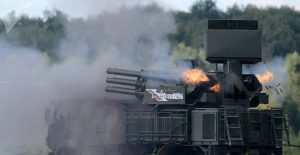
The Álvarez de Sotomayor Base in Viator (Almería) has recently become one of Spain's most important testing grounds for new drone defense solutions . At this training and firing range, the Spanish Army has conducted an advanced exercise to experiment with counter-unmanned aerial systems (C/UAS), an area now considered essential in modern conflicts.
For several consecutive days, from January 19 to 22 , units of the Spanish Legion and specialists from the Future Force Center rehearsed how to detect, identify, and neutralize unmanned aerial vehicles (UAVs) in an environment as close as possible to a real combat situation, combining sensors, jammers, and interception systems under a common command and control structure. This exercise also tested solutions such as the Iron Beam laser system and other complementary technologies.
A key exercise for Force 35 and the Force 2035 project
The exercise, organized by the Future Force Center —integrated into the Plans Division of the Army General Staff—, is part of the process of transforming the force towards the concepts of Force 35 and Force 2035 , which pursue a profound modernization of Spanish land capabilities.
The King Alfonso XIII II Brigade of the Legion , based in Viator, has acted as an Experimental Brigade (BRIEX) , which consolidates its position as a benchmark for evaluating new systems before their possible integration into other units. Its role consists of testing equipment, tactics, and procedures to assess whether they fit into the future structure of the Army.
This time, the priority has been defense against unmanned aerial vehicles (UAVs ), a type of threat that has become widespread in recent conflicts in Europe and other regions. The proliferation of drones of varying sizes and capabilities is forcing militaries to develop specific solutions to minimize their impact on troops and sensitive positions.
According to the Army, the work has focused on the brigade level , integrating all types of sensors and effectors, both kinetic (capable of physically destroying the target) and non-kinetic (inhibitors, jammers or electronic warfare systems), into a "layered and multi-domain" defense.
These maneuvers are considered especially relevant to Spain's contribution to NATO's collective defense , particularly in reinforcing the Alliance's Eastern Flank, where the presence of hostile drones has become a common factor to consider in any deployment.
Viator, a laboratory for technological solutions against drones
It is no coincidence that Almería, and specifically the Viator base, has become a benchmark for testing next-generation technologies for the Armed Forces. The Álvarez de Sotomayor training area has become a regular site for testing capabilities that could be incorporated into the operational arsenal of the Army, as demonstrated by initiatives in specialized centers and laboratories such as the drone laboratory at the University of Burgos.
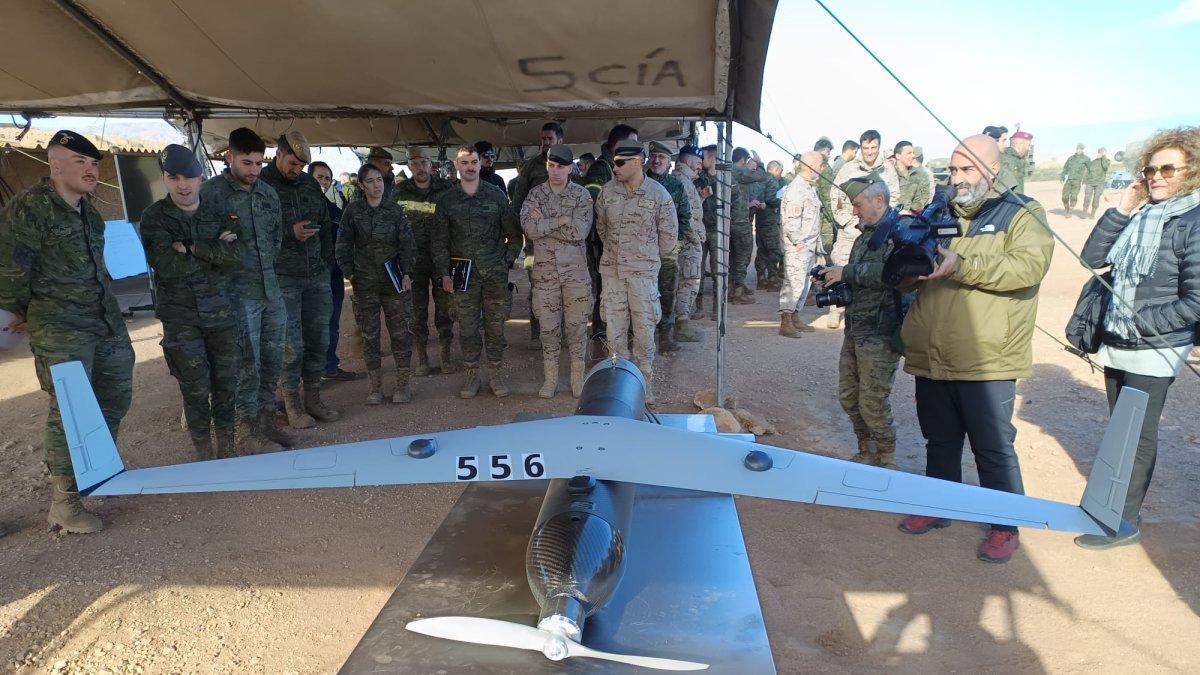
This C/UAS exercise involved over one hundred military observers from various units, who traveled to Viator to gain firsthand knowledge of the different systems under evaluation. Their role is not only to observe, but also to analyze the systems' performance, provide feedback, and suggest improvements.
Over the four days, intensive work has focused on airspace management , one of the most critical aspects of drone defense. The goal is to be able to distinguish at all times between friendly and potentially hostile platforms , avoiding interference with friendly assets and allowing command to make quick and informed decisions.
In practice, this involves coordinating radars, radio frequency sensors, optical and tracking systems, as well as neutralization capabilities, so that they can seamlessly share data. All of this is structured through a common command and control architecture that serves as the "brain" of the defense.
The maneuvers have also allowed for adjustments to operating procedures and coordination between different units, something fundamental when it comes to responding to small, fast and changing aerial threats such as modified commercial drones or unmanned systems for military use.
A layered defensive "great spider web"
Colonel Alberto Quero , head of the Future Force 2035 Center, summarized the system's approach as a layered defensive architecture . The idea is to deploy different rings of protection, from the front line to the rear, overlapping each other to minimize the chances of an enemy drone reaching its target.
In this model, each company contributes one or more subsystems , all integrated through a single command and control system. This creates a network that combines radar sensors, radio frequency detection equipment, optoelectronic systems, jammers, and physical interception solutions.
Experts compare the result to a large security "web" covering the area to be protected. If a drone enters this space, it is detected, tracked, and, if necessary, neutralized by one of the system's levels, depending on its flight profile and the threat it poses.
This phased approach also seeks to optimize resources: not all drones require the same response, and the system allows choosing between different options, from signal inhibition to direct interception using specific platforms, depending on the tactical situation.
The experience gained in Viator will serve to adjust both the technology and the tactics, techniques and procedures, with a view to a possible future acquisition by the Ministry of Defense of those systems that demonstrate their effectiveness and reliability in the real operating environment.
National industry and SMEs, key players in the defense of C/UAS
One of the most notable features of the exercise has been the broad participation of the national defense industry , including a significant number of Spanish small and medium-sized enterprises. The objective is to strengthen technological sovereignty and strategic autonomy in an area as sensitive as the fight against drones.
In total, six Spanish companies showcased their solutions for integration into a global C/UAS defense system at the Viator airbase. These included Suite ACRE, Destinus, Advex, ART, Amper, and GMV , which contributed everything from specialized sensors to data fusion software and neutralization platforms.
The presence of this business network allows the Army to have technology adapted to its specific needs , with greater scope to make adjustments, evolutions and continuous improvements according to the operational experience accumulated by the units.
For companies, these exercises represent a real opportunity to validate their developments in a demanding military scenario, with the possibility that their products will eventually be adopted as part of official equipment. The transfer of innovation from design and prototyping to actual operational capability is one of the central objectives of these events.
From an industrial policy perspective, this type of collaboration helps to strengthen Spain's technological and defense base , promoting the competitiveness of companies in the European and international market and reducing dependence on external suppliers for critical technologies.
Testing under demanding conditions: the case of the Hornet interceptor
The maneuvers also served to test how the systems behaved in adverse weather conditions . During the final day, strong gusts of wind at the Álvarez de Sotomayor Base, between 18 and 24 kilometers per hour, hampered the execution of some planned demonstrations.
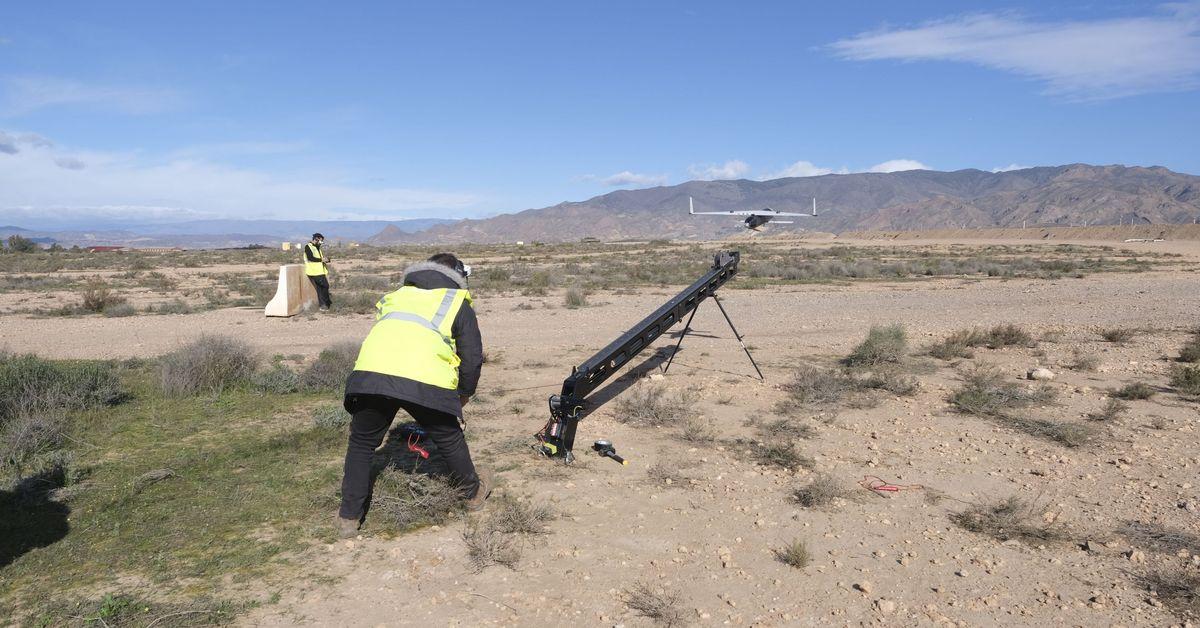
One of the most significant examples was the Hornet interceptor system , developed by the company Destinus. Windy conditions forced a delay in its launch, and the cancellation of the test was even considered, given that the safety and reliability of the system take precedence over any demonstration.
Finally, when the wind subsided, the interceptor was able to take off from its launch pad . The system then began its mission against two drones simulating enemy aircraft, allowing real-time observation of its ability to detect, track, and neutralize these threats.
The Hornet test is part of the search for active interception solutions to complement jammers and other non-kinetic means. In a scenario where drones can operate autonomously or with electronic warfare-resistant links, having physical interceptors adds an extra layer of security.
The results obtained in exercises like this will allow the Army to assess which combination of resources — jammers, radars, optical systems and interceptors — offers the best balance between effectiveness, cost and ease of deployment in different theaters of operations.
All this effort in drone defense at the Legion base in Viator reflects the extent to which the threat of unmanned aerial vehicles has become a central factor in military planning. The experience gained in these exercises, the Legion's participation as an experimental brigade, and the involvement of Spanish industry point to a clear path forward: progressively strengthening the protection of deployed forces and critical infrastructure through integrated, flexible C/UAS systems capable of adapting to the constantly evolving battlefield.