In our daily lives, we interact with dozens of embedded systems without even realizing it : from cars and washing machines to ATMs, home routers, and pacemakers. All of them conceal one or more microprocessors designed for a very specific task, far removed from the classic idea of a "computer" that we might have in mind.
Behind that apparent simplicity lies a vast technical world: microcontrollers, DSPs, FPGAs, real-time operating systems, buses, sensors, actuators, and communication stacks . Understanding how all of this fits together is key for any systems, automation, robotics, or electronics engineer who wants to design efficient, reliable, and competitive products.
What is an embedded or recessed system?
When we talk about an embedded system (or embedded, integrated, embedded) we are referring to a computer system designed to perform one or a few very specific functions, integrated within a larger piece of equipment (a car, an industrial machine, a household appliance, a medical device, etc.).
Instead of a general-purpose PC, an embedded system combines custom-made electronic hardware (microprocessors, microcontrollers, memories, interfaces, sensors, actuators) and highly optimized software to control or monitor a specific process, often under real-time, power consumption, and cost constraints.
In many cases the user is not even aware that there is a computer inside: the "brain" remains hidden in an integrated board or module , without a keyboard or mouse, perhaps only with a few buttons, a small LCD screen, LEDs or a web interface for configuration and diagnostics.
A significant portion of these systems must react within strict timeframes; therefore, many are real-time systems , where simply doing things well is not enough: they must be done on time. This is where concepts such as soft and hard real-time systems, or the use of specific RTOSs, come into play.
Basic architecture of an embedded electronic system
At the heart of every embedded system lies a processing element: a microprocessor, microcontroller, DSP, or SoC . Around it are organized the rest of the blocks: memory, input/output modules, communications, clock, power supply, sensors, and actuators.
In a typical setup, the processor connects to the other components via system buses: data bus, address bus, and control bus . Instructions, data, and synchronization signals are exchanged over these buses between the CPU, memory, and I/O peripherals.
The memory subsystem stores both the program and the data: resident code (often in non-volatile memory) and input data, intermediate results, and outputs . The memory can be integrated into the chip itself (as in many microcontrollers) or located on external chips connected to the bus.
Input and output are organized in the form of specialized I/O peripherals : timers, analog-to-digital converters (ADCs), digital-to-analog converters (DACs), serial ports (UART, SPI, I²C, CAN), USB interfaces, Ethernet, digital GPIOs, etc. These blocks allow the system to interact with sensors, actuators, networks, and users.
It's important to understand that the functional structure (CPU, memory, I/O) doesn't always coincide with the physical division into chips or boards : a single integrated circuit can contain the CPU, memory, and peripherals, or only a portion of the functionality. What the designer sees are "functional subsystems" that are then implemented in a wide variety of ways.
Hardware components: CPU, memory, I/O, clock, and power
The central component is the processor. A microprocessor is an integrated circuit implementation of a computer's CPU: it contains the ALU, registers, control unit, internal caches, and often other support functions. Today, we often use "processor" and "microprocessor" almost interchangeably.
A microcontroller (MCU) is a microprocessor with memory and I/O integrated onto the same chip . It typically includes RAM, program memory (Flash), timers, ADCs, DACs, communication interfaces, PWM, etc. For this reason, it is considered "a dedicated computer on a single chip," ideal for low-cost control applications with limited resources.
Between these two worlds are the SoC and embedded PC solutions: manufacturers such as STMicroelectronics (STPC), AMD (Geode), Motorola (ColdFire) or Intel integrate x86 CPUs or other architectures with memory controllers, basic graphics and common I/O to offer compact platforms designed for embedded systems.
Memory is typically organized into several levels: main memory (RAM) for running code and data, non-volatile memory (Flash, ROM) for firmware and, in the case of embedded PCs, high-speed L1/L2 caches, as well as mass storage devices (SSD drives, Flash cards, etc.).
A key module is the clock generator , which typically starts with a main oscillator (quartz crystal or RC oscillator) and, using a PLL, generates the various frequencies required. Quartz crystals are notable for their stability and good balance between accuracy and cost; RC oscillators reduce power consumption at the expense of stability.
Finally, the power supply module is responsible for obtaining, from an AC or DC input, the voltages and currents required by each part of the system . This includes AC/DC and DC/DC converters, linear or switched-mode regulators, filters, and voltage monitoring circuits. In battery-powered systems, power consumption becomes a critical requirement.
Interfaces, sensors, actuators and presentation
To monitor and control physical processes, an embedded system needs inputs from sensors and outputs to actuators . The analog and digital I/O module is responsible for digitizing signals, reading logic states, and generating control signals.
Analog inputs are captured by ADC converters , allowing measurements of temperature, pressure, voltage, current, position, speed, etc. Digital inputs read pushbuttons, limit switches, or signals from other devices. Digital outputs activate LEDs, relays, or power drivers.
Actuators can be very varied: electric motors, relays, valves, heating elements , etc. A very common technique is to use PWM (pulse width modulation) outputs to control, for example, the speed of DC motors or the intensity of a lamp.
Regarding the user interface, the system can range from simple LEDs and buttons to a more advanced presentation subsystem: graphic displays, alphanumeric LCDs, or touchscreens for home automation . In other cases, the user's "front-end" is a web interface served by the embedded system itself.
Connectivity plays a vital role: many systems need to communicate with other equipment or the network. To achieve this, interfaces such as RS-232, RS-485, SPI, I²C, CAN, USB, Ethernet/IP, Wi-Fi, GSM/GPRS, DSRC , etc., are integrated. Depending on the application, industrial buses, simple serial communications, or complete IP networks will be chosen.
Microprocessors, microcontrollers, DSPs, FPGAs and SoCs
A general-purpose microprocessor focuses on delivering high computing power, with deep caches, advanced pipelines, and the ability to run complex operating systems. It forms the basis of embedded PCs, panel PCs, and systems that require rich interfaces or high processing capacity.
A microcontroller (MCU) sacrifices raw power in exchange for integration and low power consumption. By including memory, I/O, timers, ADC, DAC, and communications on a single chip, it greatly simplifies the design of control systems, sensors, small robots, instrumentation, and consumer electronics.
Digital Signal Processors (DSPs) are processors optimized for the intensive processing of digital signals: audio, video, radar, telecommunications, etc. Their architecture is designed for fast MAC (multiplication-accumulation) operations, efficient memory usage, and pipelines tightly tailored to filtering and transform algorithms.
FPGAs represent another approach: they are arrays of programmable logic blocks and interconnection resources that allow for the implementation of custom hardware without manufacturing a specific chip. Circuits are defined using hardware description languages (HDLs), and the FPGA is configured to emulate processors, controllers, digital filters, or other blocks.
The term SoC (System-on-Chip) is broad and is generally used to describe chips that integrate a CPU (or several), memory, peripherals, communication controllers, and sometimes FPGA or DSP blocks, all in a single package. Many advanced microcontrollers and modern application processors could be considered SoCs, such as some commercial RISC-V CPUs.
Development platforms: Arduino, Raspberry Pi and kits
To facilitate design and experimentation, development boards or development kits are available . These boards integrate the target microcontroller, microprocessor, or FPGA along with the necessary components for its operation and a series of test interfaces (connectors, LEDs, buttons, sample sensors, etc.).
The most popular example of a microcontroller-based platform is Arduino . At the hardware level, an Arduino board is basically a microcontroller with everything necessary to function: voltage regulation, a crystal or oscillator, accessible pins, and, in many models, an integrated USB interface.
Arduino's greatest strength lies in its software ecosystem: it provides an integrated development environment (IDE) and an abstraction layer that greatly simplifies the process of compiling, uploading firmware, and accessing peripherals. This has led thousands of students, makers, and professionals to adopt it for rapid prototyping of embedded systems.
On the other hand, Raspberry Pi is an SBC (Single-Board Computer), meaning a complete computer on a single board: powerful CPU, RAM, storage via card, network connectivity, USB connectors, HDMI, etc. It usually runs Linux systems (such as Raspbian) and allows the development of applications that require more computing resources, a graphical interface, or intensive network use.
Many projects combine both worlds: a simple microcontroller for low-level, real-time control (fast sensor readings, PWM for motors) and a Raspberry Pi or other single-board computer (SBC) for the high-level layer (user interface, IP communications, data logging, AI). FPGAs and other development kits complete the range of options depending on the complexity of the application.
History and evolution of software for embedded systems
The first embedded systems, especially in communications (electromechanical switches in the 60s), already introduced the idea of "stored program control systems" : instead of wiring the logic into hardware, it was transferred to a program, which meant a radical change in flexibility.
At that time, development tools were very rudimentary : high-level language compilers were scarce, and almost everything was done in assembly language. Each project rewrote a large part of the software from scratch, with very little reuse and virtually no standard libraries.
It wasn't until the late 70s that the idea of creating reusable libraries and operating systems specifically for embedded systems began to take hold . However, many of these operating systems were written in assembly language and were not very portable: when the microprocessor was changed, the operating system and applications had to be rewritten.
With the arrival and maturation of the C programming language, the door opened to efficient, stable, and portable operating systems . Linux is the most obvious example, but not the only one. From the 80s onward, a wide range of operating systems for embedded systems emerged, both proprietary and open source.
Today we find everything from lightweight RTOSs (VxWorks, pSOS, Nucleus, FreeRTOS, µC/OS-II) to embedded versions of larger systems (Windows CE, QNX, Embedded Linux). Many simple systems, however, still don't use an operating system, running on a main loop structured with interrupts.
Real-time systems and RTOS
A real-time system is one that must respond to external events within well-defined timeframes. It's not just about "being fast," but about ensuring that certain operations occur before a known deadline.
Two categories are traditionally distinguished: soft real-time and hard real-time . In a soft system, occasionally missing a deadline can degrade performance (for example, a slight delay in a computer's sound). In a hard system, missing a deadline can lead to a critical failure or serious consequences (such as an aircraft's flight control or braking system).
As software complexity increases, maintaining this temporality with a simple control loop becomes intractable. Therefore, complex systems employ a real-time operating system (RTOS) that provides task scheduling, interrupt management, queues, semaphores, timers, and other services.
An RTOS facilitates the concurrent execution of multiple tasks (sensor reading, communications, user interface, data logging, etc.) while adhering to strict timing constraints . Furthermore, many RTOSs integrate communication stacks (TCP/IP, CANopen, Modbus, etc.) that simplify network integration.
Embedded Linux occupies a special place: it uses the same Linux kernel but tuned, stripped down, and optimized to run on devices with limited resources. Depending on the application, it can be complemented with real-time extensions or used in applications where timing is not critical.
Classification of embedded systems
We can classify embedded systems in several ways. One of the most widespread classifications groups them according to their performance and functional requirements into:
On one hand, we have real-time embedded systems , which we've already discussed, and which can be either soft or hard depending on the importance of meeting deadlines precisely. An example of a soft system would be a PC's audio system; an example of a hard system would be an aircraft's flight control system.
There are also standalone embedded systems , which do not require a host computer to function. They are autonomous and perform their tasks using their own CPU, memory, and I/O: a microwave oven, a washing machine, or a video game console are good examples.
Networked embedded systems connect to a wired or wireless network (LAN, WAN, Wi-Fi, mobile networks) to interact with other equipment or services. Typical examples include ATMs, connected home security systems, and smart vending machines.
Finally, there are mobile embedded systems , small, portable, and designed to accompany the user: digital cameras, mobile phones, smartwatches, fitness trackers, etc. They are usually very limited in memory and power consumption, but must offer user-friendly interfaces and connectivity.
Examples of real-world applications
The list of real-world examples is practically endless, but it is worth reviewing some representative types to see how embedded systems impact so many facets of modern life.
In residential settings, central heating systems use built-in controllers to regulate temperature via smart thermostats, acting on boilers, pumps, or valves. This allows for comfort, energy savings, and remote control.
GPS positioning integrates a receiver with an embedded system that processes satellite signals, calculates position, speed and time, and presents the information in car navigation systems, mobile phones or handheld devices.
Medical devices are another key field: pacemakers, implantable defibrillators, insulin pumps, and vital signs monitors use embedded systems to process sensor data, make critical decisions, and, in many cases, send information to the cloud for remote monitoring.
In the automotive industry, almost the entire vehicle is governed by controllers: engine management unit, ABS systems, traction control, airbags, power steering, entertainment systems, navigation, advanced driver assistance systems (ADAS), etc. A modern car can house dozens or even more than a hundred microcontrollers.
In public transport, we find automatic fare collection (AFC) systems with ticket machines, validators, turnstiles, and smart cards. Each element integrates one or more embedded systems that manage payments, validations, backend communications, and data security.
Automated teller machines (ATMs) combine an embedded PC connected to the bank's network with specific modules for card reading, a secure keypad, and a cash dispenser and receiver. The embedded system manages user interaction and hardware, while the bank server validates and records transactions.
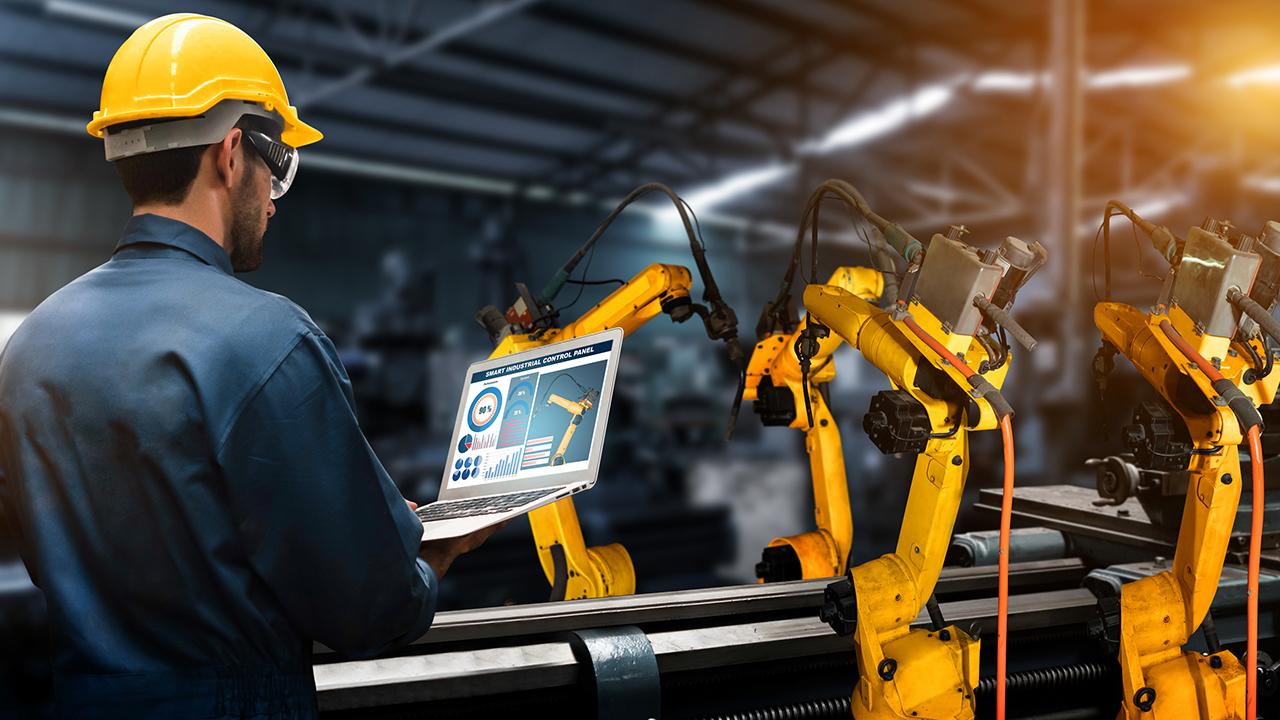
In industry, factory robots use integrated controllers that coordinate actuators, position sensors, vision systems, and communications with other elements of the plant. They must be fast, accurate, and safe, and are increasingly incorporating AI and machine learning algorithms.
Another current example is electric vehicle charging stations , which incorporate controllers to manage charging, interact with the vehicle, display information on screens, communicate with management platforms, and report faults or maintenance needs.
Finally, interactive kiosks and self-service machines (in airports, shopping centers, hospitals, public administrations, etc.) integrate embedded PCs or advanced SoCs that manage touch screens, payment systems, ticket printers and network communications to offer 24/7 services.
Industrial importance and advantages of embedded systems
In industrial settings, embedded systems are the foundation for automation, monitoring, and process control . They enable the management of production lines, ovens, motors, robots, packaging systems, internal logistics, and much more.
Compared to more generic solutions, a well-designed embedded system offers highly accurate execution of control and automation tasks , very tight response times, and enormous reliability, by focusing on a well-defined function.
Working with dedicated hardware and optimized software means that problems can be solved using specific algorithms , making the most of the capabilities of the processor, memory architecture, and available peripherals.
Furthermore, these systems are usually cheaper and more compact than assembling a conventional PC and generic peripherals: by eliminating unnecessary expansion slots and adjusting the hardware only to what the application needs, size, cost and consumption are reduced.
Modular design and high connectivity allow an industrial plant to interconnect multiple embedded devices, creating networks of sensors, actuators, and controllers that facilitate real-time monitoring, traceability, and predictive maintenance.
Training and skills in embedded systems
Given their importance in industry and current technology, numerous master's programs and university courses are dedicated to embedded systems . Their aim is for future engineers not only to program, but also to have a comprehensive understanding of hardware, software, communications, and design criteria.
These programs cover topics such as: introduction to embedded systems, microcontrollers, digital signal processors (DSPs), and System-on-a-Chip (SoCs ). They also include hands-on work with simulators, specific development boards (such as those from Microchip), Arduino, and other platforms.
The student is expected to develop skills such as selecting the most suitable microcontroller or DSP for an application , interpreting semiconductor manufacturer data sheets, designing electronic circuit boards, handling A/D and D/A conversion, or applying digital signal processing techniques.
Methodologically, these subjects typically utilize virtual learning platforms , where theoretical materials, practical guides, activity statements, and tutoring forums are published. Assessment is often based on practical activities (PEC) and the design of a complete embedded system.
The contents are complemented with specialized bibliography, access to collections of electronic books (O'Reilly, Springer, Elsevier) and technical documentation from manufacturers such as Microchip, Texas Instruments, Arduino, Raspberry Pi or tools such as Proteus and Matlab/Simulink.
Embedded Linux and other operating system options
When the application requires it, an embedded system can run a more or less complete operating system . In the world of RTOSs, there are VxWorks, QNX, Nucleus, pSOS, FreeRTOS, and others, designed for fine real-time control.
In other situations, it is more useful to use embedded Linux , which is simply an instance of Linux adapted to limited resources: services are cut back, the kernel is adjusted, and only the essential components for the target device are included.
Embedded Linux maintains the same kernel as a desktop Linux system, but with a smaller footprint, lower CPU and memory consumption , and a feature set tailored to the application. Custom images are typically built that include precisely the drivers, libraries, and applications needed.
The main advantage is that the software is reusable across platforms : even if the underlying hardware changes, much of the code can be ported with minor modifications. This contrasts with early assembly-based systems, where the end of the microprocessor's life meant rewriting everything.
In parallel, systems without dedicated OSs still exist, especially in small microcontrollers, where a well-structured main loop and a few interrupts control the entire system with minimal cost and complexity.
Embedded software development and professional profiles
Software developers for embedded systems work very close to the hardware: they configure peripheral registers, optimize critical routines, manage interrupts, and in many cases, they take care of power consumption, energy management, and low-level startup.
Historically, C has been the dominant programming language , complemented by assembly language for the most critical parts. Over time, C++ has gained prominence thanks to its modularity and reusability, provided it is used in a controlled manner to avoid excessive resource consumption.
Interestingly, even "higher" languages like Python or JavaScript have found their niche in certain embedded environments, especially when running on embedded Linux or SBCs with more resources, and when it is important to accelerate development over maximum optimization.
Typical work includes everything from device drivers and hardware abstraction layers to communication protocols, control algorithms, user interfaces, and application logic. The quality of the design makes all the difference in the product's robustness, maintainability, and scalability.
Many companies choose to outsource part of the embedded software development to teams specializing in C/C++, RTOS, embedded Linux and specific platforms, especially when they do not have that know-how internally or when deadlines are very tight.
In light of all the above, it is understood that embedded systems are the invisible backbone of modern technology: they combine specific hardware, optimized software, communications and real-time control to bring to life safe, efficient and accessible products, and represent a professional field with enormous potential for those who master both electronics and low-level programming.

Table of Contents
- 1 What is an embedded or recessed system?
- 2 Basic architecture of an embedded electronic system
- 3 Hardware components: CPU, memory, I/O, clock, and power
- 4 Interfaces, sensors, actuators and presentation
- 5 Microprocessors, microcontrollers, DSPs, FPGAs and SoCs
- 6 Development platforms: Arduino, Raspberry Pi and kits
- 7 History and evolution of software for embedded systems
- 8 Real-time systems and RTOS
- 9 Classification of embedded systems
- 10 Examples of real-world applications
- 11 Industrial importance and advantages of embedded systems
- 12 Training and skills in embedded systems
- 13 Embedded Linux and other operating system options
- 14 Embedded software development and professional profiles