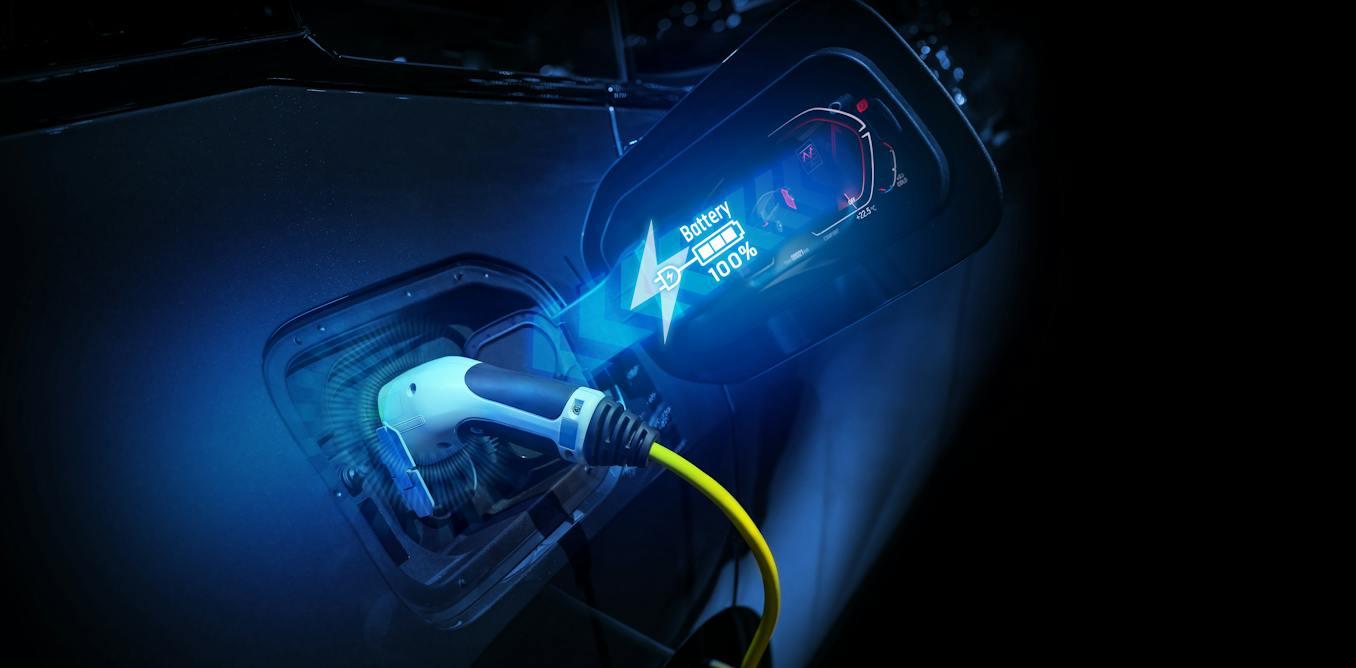
Electric motors have become a key component of the energy transition and are ubiquitous in factories, homes, and roads. They power a significant portion of the electricity consumed in Europe, as well as the machinery that drives industry and everyday household appliances. Their impact on the energy balance is so substantial that any improvement in their efficiency translates into significant savings.
Therefore, research and industry across the continent have been working on two interconnected fronts: maximizing the efficiency of these systems and reducing reliance on critical raw materials, such as rare earth elements . Fewer losses and less external dependence are currently the main objectives.

Electric motors consume more than half of the electricity in the EU
The numbers help to understand the scale of the issue. According to estimates from the European Commission, electric motors accounted for around 53% of the European Union's electricity consumption in 2020. The 380 million devices between 0,12 and 1.000 kilowatts covered by ecodesign regulations consumed approximately 1.326 terawatt-hours, a figure equivalent to more than half of all electricity used in the bloc.
It's important to keep in mind that we're talking about data from a few years ago, and that since then, the installed base of these devices has continued to grow . These devices power industrial machinery, but also the pumps in all kinds of household appliances, renewable energy systems, and the propulsion of electric vehicles. With such large-scale operations, even a modest improvement in efficiency has a considerable impact: gaining just a few percentage points could save tens of terawatt-hours per year.
The challenge also aligns with international goals. The COP28 conference called for doubling the annual rate of improvement in energy efficiency by 2030 , which means going from around 2% to more than 4% per year. The question is how to achieve this when modern engines already operate at high efficiency levels.

Where does energy escape within an engine?
Since current motors already perform well, the room for improvement lies in the specific areas where losses occur . The main ones are the heating of the materials that make up the circuits, that is, the resistance of the windings; magnetic losses in the core; eddy currents, those small eddies that are generated within the core when the magnetic field changes; and mechanical and other losses.
The solution lies in redesigning the entire electromagnetic and thermal system, seeking materials that allow for new geometries and less energy waste . This is where an unusual family of materials comes into play.
Metallic glass, the material that promises the fewest leaks
We're talking about metallic glasses. Most metals, including the silicon electrical steels used in motors today, have a crystalline structure with a repeating atomic order. Metallic glasses, on the other hand, solidify very quickly and end up with an amorphous structure: their atoms maintain a local order between neighbors, but without the periodic pattern characteristic of crystals . And that's where the advantage lies.
This structural difference has consequences. In a motor, the core's magnetic field is constantly changing as electricity is converted into motion. Every time the current reverses direction, the magnetic material has to rearrange itself repeatedly. The more difficult this process, the more energy is lost as heat with each cycle. In the case of crystalline materials, their structure hinders this movement and significantly increases losses; furthermore, the changing fields induce eddy currents that dissipate as heat. The loss from a single motor may seem small, but multiplied by billions of devices, the cumulative effect is enormous.

Metallic glasses can reduce some of these losses, and iron-based ones are emerging as attractive candidates for advanced electric machines, especially in high-speed or high-power-density designs.
3D printing these materials, the European challenge
If metallic glasses have been known for decades, why aren't they more widely used? The answer lies in the manufacturing process. To prevent crystal formation during solidification, they must be cooled at very high speeds, which in practice limits production to ribbons or sheets. The challenge is to make them retain that amorphous structure in three-dimensional geometries useful for, for example, the motors of an electric car.
This challenge has been one of the focuses of the European project AM2SoftMag, funded by the Horizon Europe program, which brings together specialists in materials science, manufacturing, and the design of electrical machines. At the IMDEA Materials Institute, they have been working with 3D printing for motors , a process that allows for an inert environment to prevent oxidation and create complex geometries with very little waste.
In recent work, the consortium developed a new metallic glass based on iron, silicon, boron, niobium, and nickel, with improved glass-forming capacity. The composition achieves a thickness of approximately one millimeter without the addition of phosphorus, cobalt, or rare earth elements, thus avoiding dependence on critical materials . Relative densities exceeding 92% and amorphous fractions above 87% were achieved, with coercivity reaching values as low as 44 amperes per meter. Further work remains, such as reducing porosity and scaling up production, but the approach shows promise.
Rare earth-free engines for trucks and buses
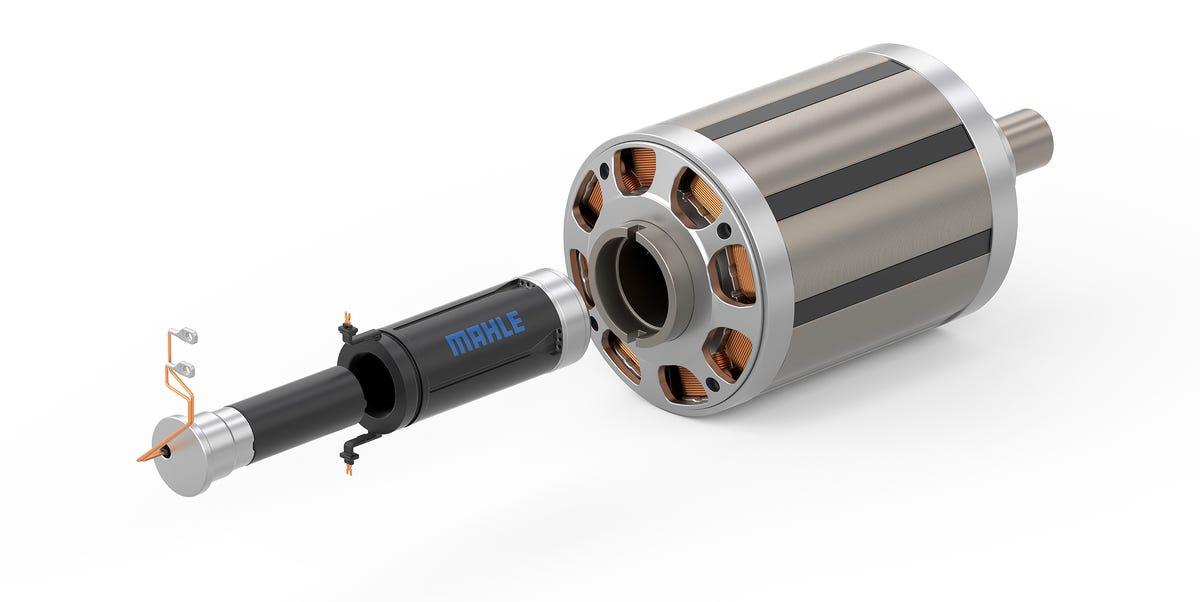
While research progresses in the laboratory, industry is also making moves. At the IAA Transportation trade show, Mahle unveiled an electric motor that doesn't rely on rare earth elements . Called MCT, short for Mahle Contactless Transmitter, it's designed for the electric axles of heavy-duty commercial vehicles.
By not using permanent magnets, this motor eliminates the need for rare earth elements and is lighter, saving up to three kilograms of these materials per vehicle and minimizing dependence on critical raw materials . With a maximum power output of 370 kilowatts (approximately 495 horsepower) and a torque exceeding 900 newton-meters, it delivers the power density required for the most demanding heavy-duty transport applications. Furthermore, it reduces the weight of the propulsion system by up to ten kilograms compared to similar solutions.
In the VECTO cycle, the European tool that calculates fuel consumption and CO₂ emissions for heavy-duty trucks, the motor achieves 95% efficiency . And in real-world driving cycles encompassing multiple applications, the system achieves efficiency levels exceeding those of comparable permanent magnet electric motors. The company maintains that this technology combines resource savings, high performance, and energy efficiency.
Putting the pieces together, the European landscape points in the same direction: increasingly efficient engines less reliant on rare earth elements . From new materials being researched in laboratories to designs already being presented at industry trade shows, the shared goal is to consume less electricity and depend less on raw materials whose supply is precarious. Concrete advances still require time and scaling up, but the roadmap seems clear.

Table of Contents