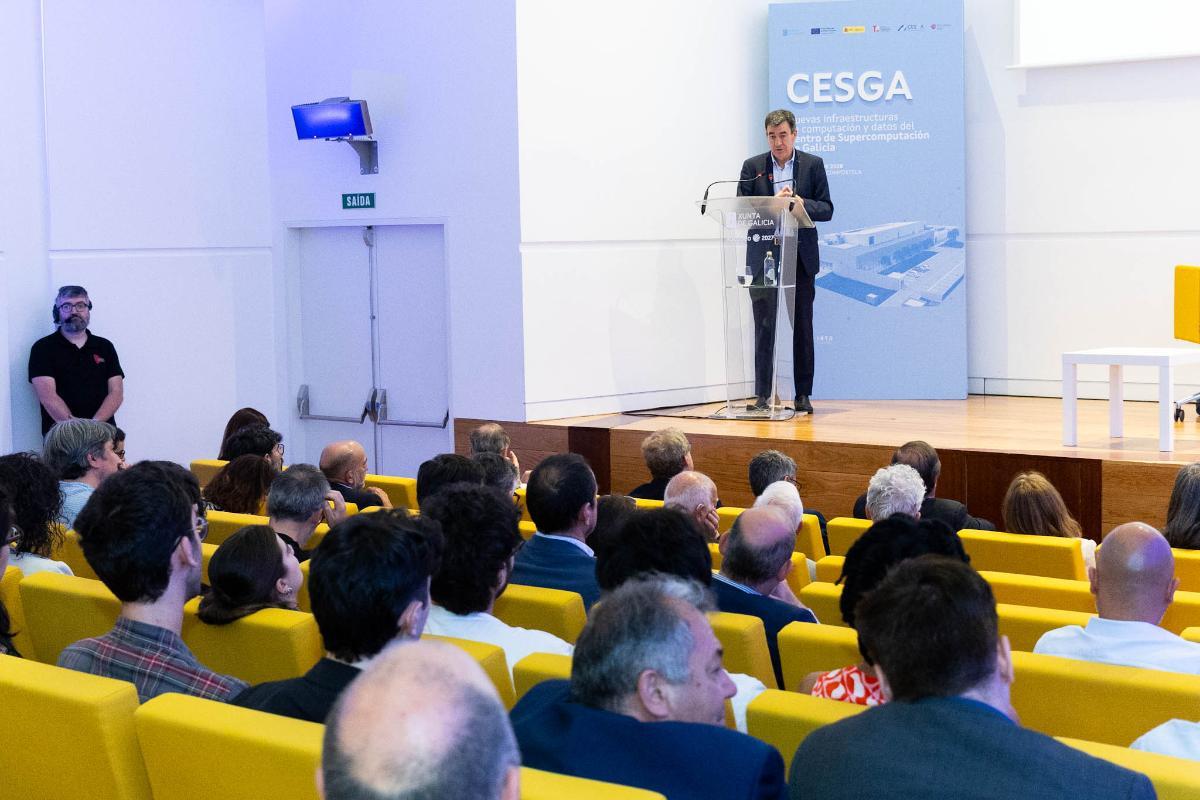
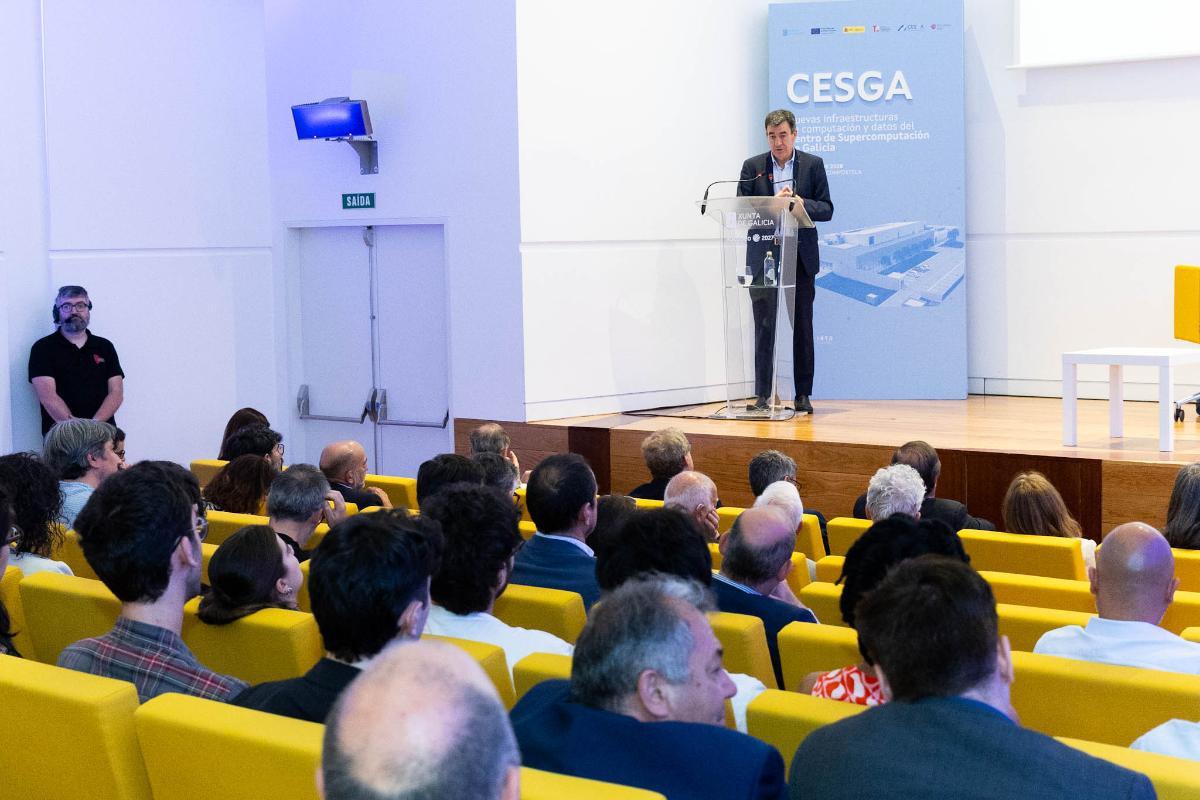
In the heart of Galicia, a paradigm shift is taking shape, one that promises to place the region at the forefront of the European technological landscape. The recent unveiling of the Galician Supercomputing Center's new capabilities has made it clear that the commitment to innovation is not just wishful thinking, but a well-defined plan to equip scientists and companies with cutting-edge computing tools . This modernization not only involves improving existing infrastructure, but also opening doors to realms that until recently seemed like science fiction, particularly regarding massive data processing.
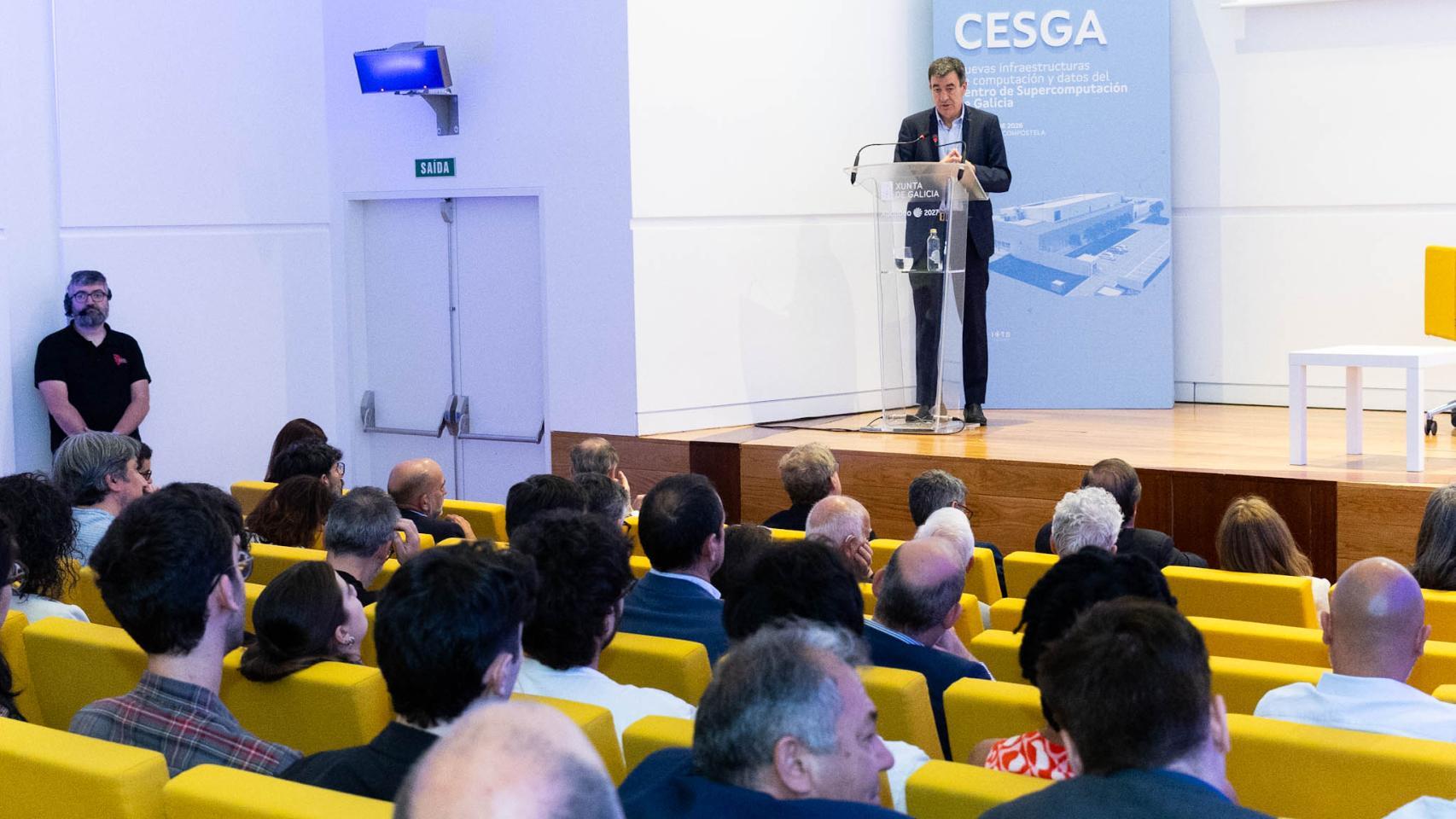
During a meeting held in Santiago de Compostela, details were revealed of an operation that represents a breath of fresh air for the research ecosystem. Regional Minister Román Rodríguez was responsible for outlining this development, emphasizing that the ultimate goal is for Galicia to be able to participate on equal footing in major international research projects . It's not just about having faster machines, but about creating an environment where artificial intelligence, quantum computing, and intelligent robotics cease to be abstract concepts and become real solutions to everyday societal problems.
A double quantum bet for training and scientific production
One of the most striking aspects of this deployment is the decision not to put all its eggs in one basket. Instead of relying on a single machine, a dual structure has been chosen, including a second quantum computer called IQM Spark . This machine, with five qubits, isn't designed to break speed records, but rather to serve as a testing ground. It is, in a sense, the training ground where tomorrow's experts will be developed and where algorithms will be validated before being scaled up, allowing the main 54-qubit machine to focus exclusively on heavy industrial and scientific production.
This division of tasks is a masterstroke to avoid overloading the most powerful systems with learning tasks. By separating the experimental environment from the production environment, CESGA ensures that researchers have a specialized testbed for their trials without compromising the delivery times of the most critical projects. Both teams are provided by Telefónica, consolidating an infrastructure that already included a Fujitsu computer and is now exponentially strengthened to meet the challenges of the digital age.
Finisterrae IV: a giant leap in classical supercomputing
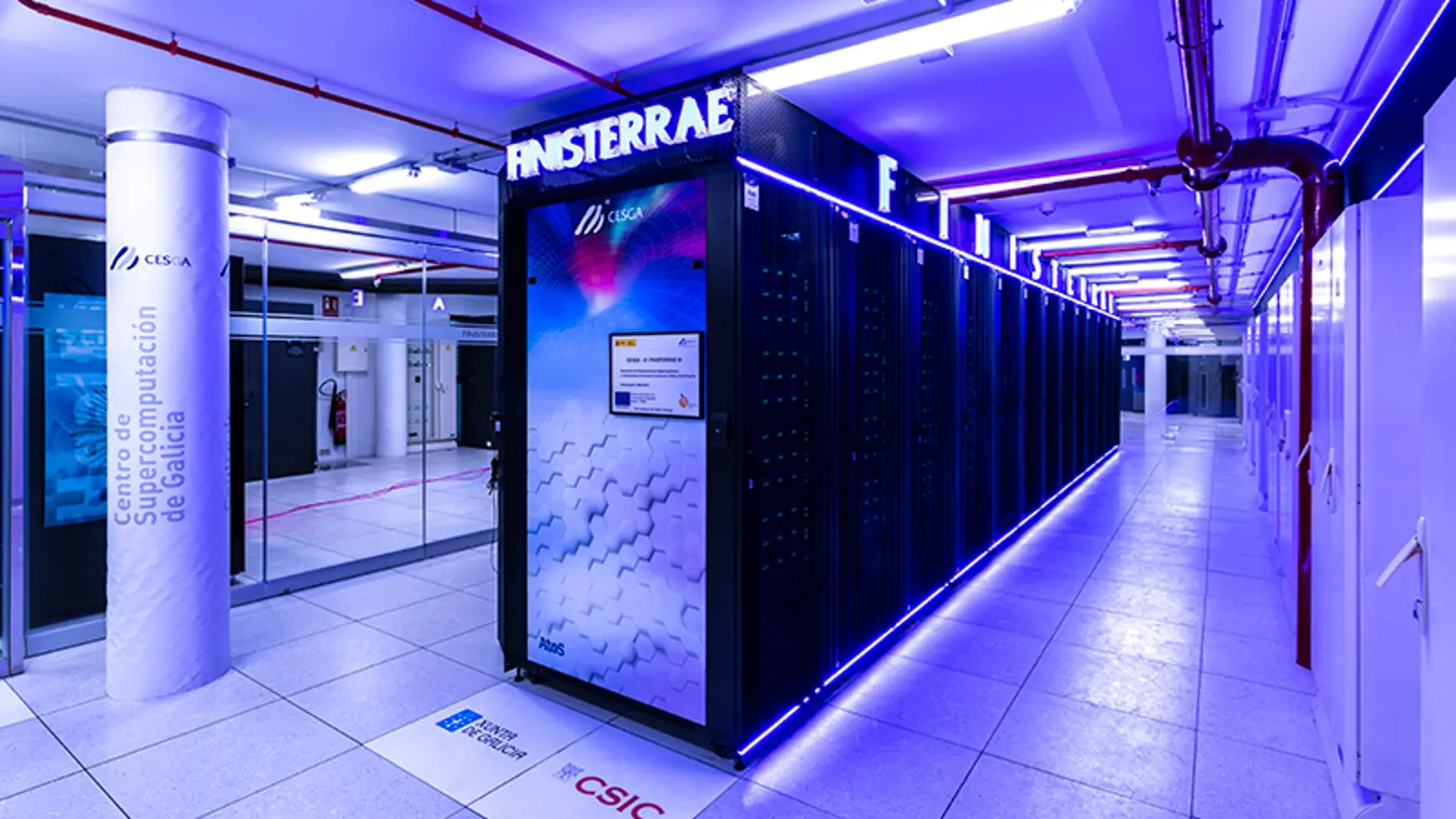
But this story isn't all about quantum computing; traditional supercomputing remains the driving force behind many current processes, and that's where the impressive Finisterrae IV comes in. This machine, acquired by Fujitsu, will dwarf its predecessor by increasing its computing power sevenfold . It's a significant leap forward that will allow processing in hours what previously took days—crucial when simulating complex weather patterns or analyzing genomic sequences for personalized medicine.
To prevent such a beast from overheating, a liquid cooling system has been implemented that is the envy of the industry, achieving a balance between power and energy efficiency. Furthermore, storage capacity has been doubled, using a hierarchical architecture that streamlines data access intelligently. It's not just that there's more space to store things; the system is much smarter at finding and moving the necessary information at any given time—something vital for feeding modern, hungry artificial intelligence.
A European-funded innovation ecosystem
All this technological deployment doesn't come cheap, but it's seen as a necessary investment in the future to avoid falling behind in progress. The total budget is close to 56 million euros , money that comes largely from European funds linked to the PERTE Chip project. This injection of capital allows Galicia not only to acquire technology, but also to become a magnet for research talent from all over Spain and Europe, facilitating collaboration with prestigious centers like the one in Barcelona or the CSIC itself.
The focus is on strategic sectors that directly affect citizens. From the design of new materials to the optimization of the energy transition, including the ambitious 1HealthAI European AI Factory applied to healthcare, the applications are almost endless. Ultimately, the goal is for this entire network of cables, qubits, and processors to improve the competitiveness of local companies and raise the bar for Galician science, demonstrating that the northwest of the Iberian Peninsula can confidently lead the global technological vanguard.
The transformation of the Galician center represents a definitive boost to decades of experience in high-performance computing. With the integration of these new systems, the community not only expands its technical capabilities but also consolidates a high-performance data ecosystem capable of addressing the most demanding scientific challenges of the decade. This step forward ensures that both universities and industry have access to one of the most advanced infrastructures on the continent to continue innovating.

Table of Contents