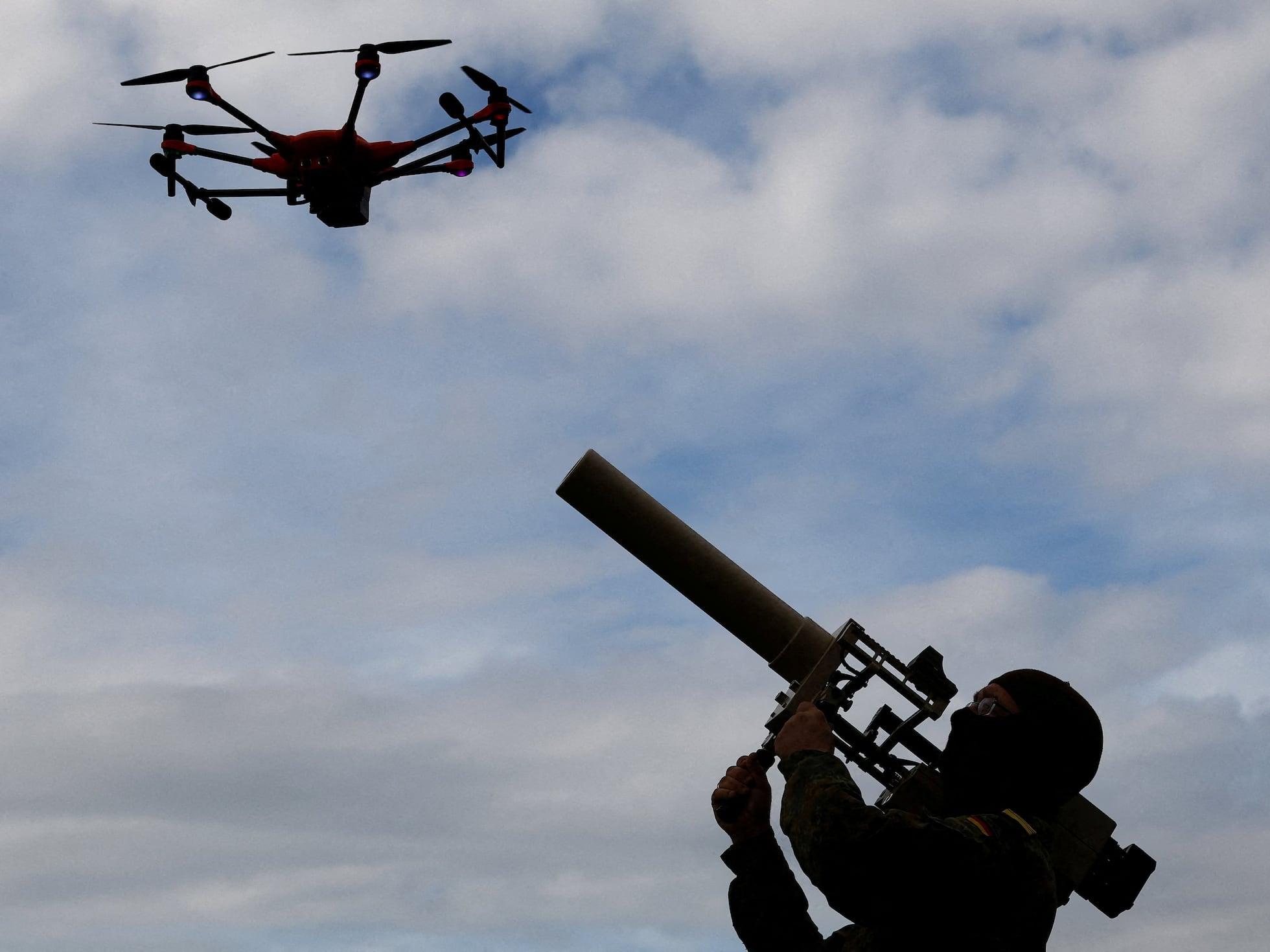
Germany has taken a decisive step in protecting against the malicious use of drones with the launch of its first major center dedicated exclusively to this threat. The new agency is being established in a context marked by the increase in incursions of unmanned aerial vehicles into European airspace, and particularly in NATO areas.
Located in Berlin, the Joint Drone Defense Center (GDAZ) aims to become the central hub for coordinating German authorities' responses to drone incidents. The goal is to enable a swift and unified response to any suspicious drones near critical facilities, airports, or sensitive infrastructure .
A joint center to coordinate all authorities
The GDAZ was inaugurated by Interior Minister Alexander Dobrindt , who emphasized that the center is a key pillar within the country's security architecture. According to the Interior Ministry, this marks the first time that resources and capabilities from different levels of government have been consolidated into a single structure to specifically address drones, as discussed at Interpol's global drone forum.
The central objective of the new agency is to consolidate the responsibilities of federal security forces, state police, and the Bundeswehr (the German Armed Forces) onto a single platform. This aims to prevent overlaps, information gaps, and uncoordinated responses to incidents that could have a nationwide impact.
Dobrindt emphasized that within the GDAZ, the various authorities will work closely together, integrating available information and continuously sharing their situational assessments . The priority is to improve both the speed and accuracy of detecting hybrid threats, sabotage, or deliberate provocations that utilize drones.
This enhanced cooperation also aims to provide a stable and permanent framework for data sharing, joint analysis, and coordinated decision-making . The center's structure is designed to allow police, military, and other security services to access the same real-time situational awareness.
24/7 operation and rapid response in the NATO context
The Joint Drone Defense Center will be operational 24/7 . It is not merely an administrative office, but a facility designed as a permanent command center, capable of receiving alerts, processing information, and activating resources at any time.
According to the Interior Ministry, the GDAZ will begin fully deploying its functions in January, although the formal inauguration has already taken place in Berlin. This timeline responds to the need to have a structured capability in place as soon as possible to address the increase in drone incursions into NATO airspace, a phenomenon that is causing concern throughout Europe and has been reflected in recent sightings and alerts at European airports.
The center's mission is not limited to reacting to specific incidents. It must also provide a framework for continuously assessing risk , identifying trends in drone use, and adjusting operating protocols. All of this is aimed at minimizing both the margin of error and response times to a potential attack or act of sabotage.
In practice, the GDAZ will act as a central node to coordinate the detection, tracking, and interception of suspicious devices, integrating information from radars, specialized sensors, intelligence services, and citizen reports. This centralization aims to ensure that any drone incident can be managed with a common approach and a clear chain of command.
Reinforcement with specialized units and military cooperation
The creation of the center is part of a broader strategy to strengthen anti-drone capabilities in Germany . In early December, a dedicated Federal Police unit was launched to defend against these devices, working in close coordination with the new GDAZ.
This specialized police unit comprises approximately 130 officers , trained to detect, identify, and intercept drones that may pose a threat. Their duties range from monitoring sensitive events and protecting critical infrastructure to supporting other security forces when significant incidents occur.
The role of the Bundeswehr is also fundamental. The Armed Forces contribute their technical expertise and military capabilities to the center , especially regarding surveillance systems, electronic warfare, and the neutralization of unmanned aerial vehicles. In this sense, the GDAZ serves as a meeting point between the civilian and military sectors.
Meanwhile, the German government is considering legislation to expand the military's operational authority in drone-related situations, a measure still under debate in Parliament. The aim is to clarify the limits of military intervention on national territory when faced with security threats involving unmanned aerial vehicles.
Research, development and response to hybrid threats
In addition to daily operational coordination, the center will have a clear role in research and technological development . German authorities want to ensure that law enforcement agencies and the Bundeswehr always have the most advanced tools for detecting and neutralizing drones.
Alongside the GDAZ (Special Operations Group) and the specialized police unit, plans are underway to establish a dedicated research center for anti-drone defense . This future organization would focus on testing new technologies, improving detection systems, and developing more effective countermeasures against increasingly smaller, quieter, and more difficult-to-track drones. A leading example in Spain is the drone laboratory at the University of Burgos.
The rise of so-called hybrid threats —actions that combine cyberattacks, disinformation campaigns, and the use of drones, among other elements—has led Germany to review its security strategy. Authorities attribute a significant portion of the suspicious flights detected in recent months, especially near military installations, energy infrastructure, and airports, to actions linked to Russia with the aim of destabilizing the country and intimidating the population.
In this scenario, the GDAZ not only responds to specific incidents but also contributes to strengthening NATO's overall resilience on the European flank . The information generated and shared from Berlin can be crucial for other allied countries, including Spain, to adjust their own drone defense plans. Cases such as drone swarm attacks reinforce the need for coordination and technological improvement.
With the opening of the Joint Drone Defense Center in Berlin, Germany is consolidating a more structured and permanent approach to the risks associated with unmanned aerial vehicles: from 24/7 coordination between police and armed forces to the creation of specialized units and research projects, everything points to drone defense becoming a regular component of European security in the coming years.

Table of Contents