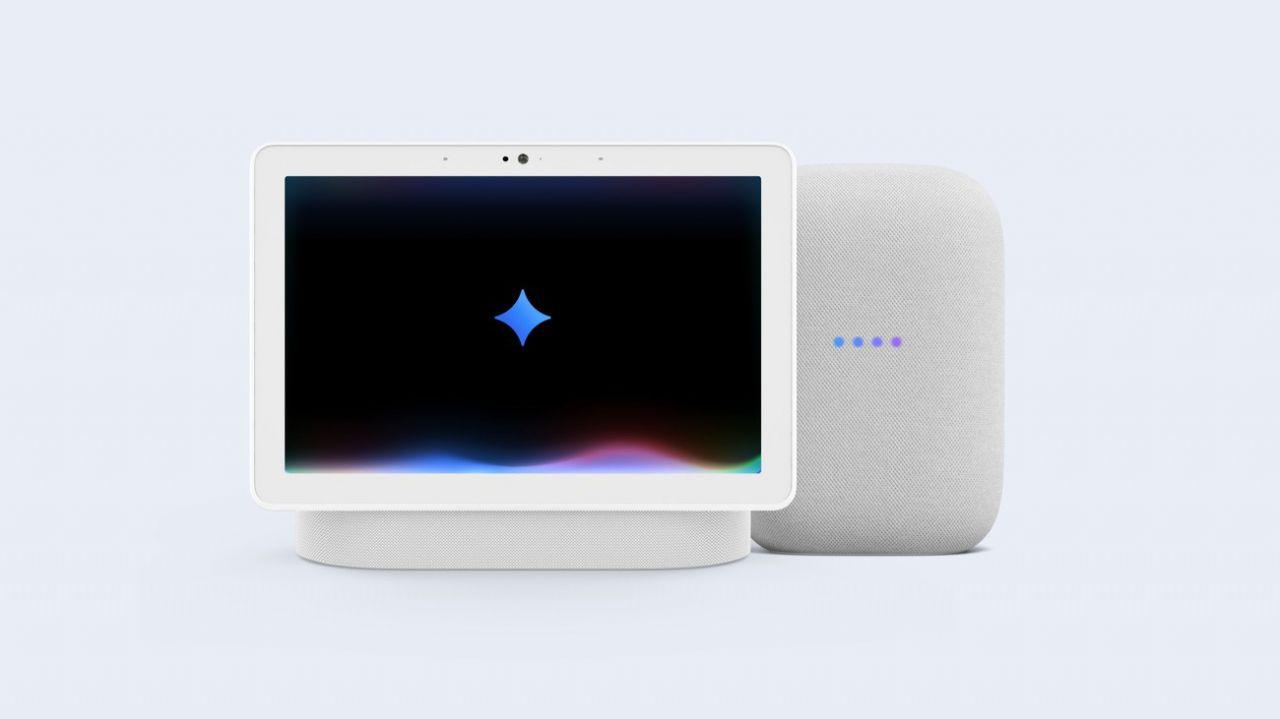
Google has begun rolling out Gemini for Home in Spain , making the leap to a new home assistant model based on its generative artificial intelligence. After several months of testing in North America, the company is now extending this experience to more territories, including much of Europe, with full Spanish support.
This move marks a turning point in Google's home ecosystem: Gemini for Home isn't just a tweak to the old Google Assistant, but a complete overhaul of how everything in a connected home is understood, coordinated, and responded to . From lighting and appliances to cameras and smart speakers, the goal is to make interaction more natural, faster, and more flexible.
What is Gemini for Home and how is it different from Google Assistant?
Originally launched in the United States last October, Gemini for Home is a complete redesign of the home assistant experience. Instead of simply receiving rigid commands and predefined responses, this system leverages Gemini's generative AI to offer more conversational communication, better understand context, and anticipate specific needs.
The experience is integrated directly into the new Google Home app , which acts as the smart home control center . From there, users can manage connected devices and, in countries where the program has been activated, choose the new Gemini voice assistant for Home instead of the traditional Google Assistant.
Google's stated goal is to become a more proactive assistant in daily tasks: controlling lights and plugs, managing compatible appliances , consulting relevant local information, or coordinating routines according to the time of day, all with less friction and latency than in previous versions.
Since its initial launch, the company claims to have achieved a significant reduction in response time and an improvement in natural language understanding. This translates into more flexible commands, fewer misunderstandings with devices, and conversations that are less disruptive to the user's workflow.
Arrival in Spain: early access and included countries
After several months of testing in the United States, Canada, and Mexico, Google has launched the global rollout of Gemini for Home . This deployment is currently being carried out through an early access program that users must voluntarily sign up for via the Google Home app.
The new phase incorporates 16 additional countries , with a clear focus on Europe and some key Asia-Pacific markets. The list announced by the company includes: Austria, Belgium, Denmark, Finland, France, Ireland, Italy, the Netherlands, Norway, Spain, Sweden, Switzerland, the United Kingdom, Australia, Japan, and New Zealand.
In parallel, support is also being expanded to seven new languages , including Spanish. Users are now offered interaction in Danish, Dutch, English, French, German, Italian, Japanese, Norwegian, Spanish, and Swedish, thus covering a large portion of the European languages where Google has a strong presence in the connected home.
The Google Nest community itself has confirmed that users in Spain and other participating countries will begin seeing invitations in the Google Home app to join this early access program. Those who accept will be able to try out Gemini's new features for Home before anyone else and send their feedback to the company.
Google insists that early adopter feedback is directly influencing the service's evolution, something already seen in North America, where criticisms and suggestions have led to improvements in performance, accuracy, and response methods. Discussions about connected security and home privacy are central to this feedback.
How to activate Gemini for Home in Spain
For now, Gemini for Home in Spain is offered in preview mode , meaning that not all final features are active and the service may continue to change over the coming months. Activation is not automatic: it requires a short registration process by the user.
To try it, you need the latest version of the Google Home app and compatible devices (mainly Nest products released from 2016 onwards, such as speakers, displays, and cameras). From there, the general procedure described by Google is as follows:
- Open the Google Home app on your mobile phone or tablet.
- Tap on the profile picture, in the upper right corner of the screen.
- Access the section of Public Preview or program preview.
- Select the "Join Public Preview" option to activate the new assistant on compatible devices.
The company warns that these are preliminary features and that some advanced capabilities may require Google Home Premium, the paid subscription. Basic home control functions are available in the standard preview, while more sophisticated features will be added gradually.
It's important to note that once your home is migrated to Gemini as your voice assistant , compatible devices will no longer use Google Assistant. If a device isn't compatible at the time of the switch but becomes compatible later, the system will automatically update it to Gemini when compatibility is enabled. For environments with advanced installations using KNX or other systems, it's advisable to review the Smart Home ecosystem guide before migrating.
Goodbye to Google Assistant on home devices
One of the most important aspects of the announcement is that Gemini for Home is designed as a direct replacement for Google Assistant on speakers, displays, and other devices in the home ecosystem. It's not about both assistants coexisting, but rather a gradual transition to the new model.
Google has explained that when a user chooses Gemini for Home, all members of the household will automatically see the change reflected on compatible devices. In other words, the migration applies to the household as a whole, not individually for each person.
Among the points that the company has communicated, three key ideas stand out:
- Home devices that are already compatible, and those added later, They will always use the Gemini voice assistant instead of Google Assistant.
- If a device is not currently compatible, but becomes compatible in the future, will update automatically to the Gemini assistant for Home when you receive support.
- Once the home has been moved to Gemini, It will not be possible to return to Google Assistant on those devices.
This last point represents a structural shift in Google's smart home strategy , in a context where the company acknowledges that it had fallen behind Amazon and its Alexa ecosystem, which boasts hundreds of millions of active devices worldwide. Competition with services like Amazon Sidewalk and Alexa is a decisive factor in this transition.
Key features: expressive lighting, appliances, and precise control
Gemini for Home not only changes the underlying technology, but also introduces new ways to interact with devices. One of the most striking new features is what Google calls "expressive lighting," which allows users to request lighting changes with more natural and less technical phrases.
Instead of ordering "turn on the blue light," the user can request things like "turn on the color of the ocean ," "the brightness of the moon," or "the color of my soccer team," letting the AI interpret which tone is most appropriate for the request. The idea is that the person speaks in everyday language, while the system translates that intention into specific values of color and intensity.
Another area where capabilities have been strengthened is that of smart home appliances . Gemini for Home understands more complex commands such as "preheat the oven to 180 degrees" or requests to adjust specific humidity levels on compatible devices, adding finer control over the home environment.
The company also emphasizes that special attention has been paid to reducing ambiguity when making general requests. The system now better distinguishes between "lamp" and "general lighting" and respects the context of each room, so that commands like "turn off the stove" only affect the lighting and not other connected appliances in the same area.
All of this is complemented by shorter responses for common tasks like timers and alarms , ensuring a smooth user experience. "World-aware" alarms have also been incorporated, allowing users, for example, to set reminders linked to the start of an event, rather than a specific time, by leveraging the contextual information Gemini handles.
Performance improvements: less latency and more context
Since Gemini for Home launched in North America, Google claims to have rolled out several waves of updates focused primarily on performance and accuracy. The company reports latency reductions of up to 40% for common commands related to turning lights and other devices on or off.
In practice, this means the home should feel more agile and responsive , with less time between the voice command and the action being executed. For many users, these kinds of details can make all the difference in perceiving the system as truly useful in their daily lives.
Gemini has also revised how it identifies and categorizes home devices . The assistant now better analyzes what's in each room, the names of the different items, and what type of device each one is, reducing errors when issuing general commands like "turn on everything in the living room" or "turn off the hallway lights."
Another aspect that has received attention is the improvement of natural interactions . Many of the assistant's responses have been shortened so as not to interrupt conversations or what the user is doing. At the same time, unnecessary repetitions and overly long confirmations have been minimized.
For users with Google Home Premium , additional features are added, such as the so-called "live camera search," which allows Gemini to analyze Nest camera images in real time to answer questions about what is happening at that moment in the home.
A home for the whole family, with a focus on child safety
Gemini for Home has also been designed as an experience for all members of the household , including the youngest members. Google has announced specific support for supervised Google accounts, so children can interact with the assistant within predefined safety and privacy limits.
The goal is for children to be able to learn, play, and ask for information without accessing inappropriate content, leveraging the parental control architecture that the company already offers in other services. All of this is integrated within the same Google Home environment, where adults can manage home settings.
This family dimension adds to the competition Google faces with other market players like Amazon, which has achieved a very large base of Alexa devices in homes around the world. In this context, Gemini for Home is a clear commitment to repositioning Google's role in the living room and kitchen, not just on mobile phones or computers.
Its arrival in Spain and other European countries, along with multilingual support and the progressive expansion of features, marks a turning point in the company's domestic strategy. For users, the key will be to see in daily use how well this new assistant simplifies tasks , reduces friction, and offers reliable control of the connected home compared to established options on the market.

Table of Contents
- 1 What is Gemini for Home and how is it different from Google Assistant?
- 2 Arrival in Spain: early access and included countries
- 3 How to activate Gemini for Home in Spain
- 4 Goodbye to Google Assistant on home devices
- 5 Key features: expressive lighting, appliances, and precise control
- 6 Performance improvements: less latency and more context
- 7 A home for the whole family, with a focus on child safety