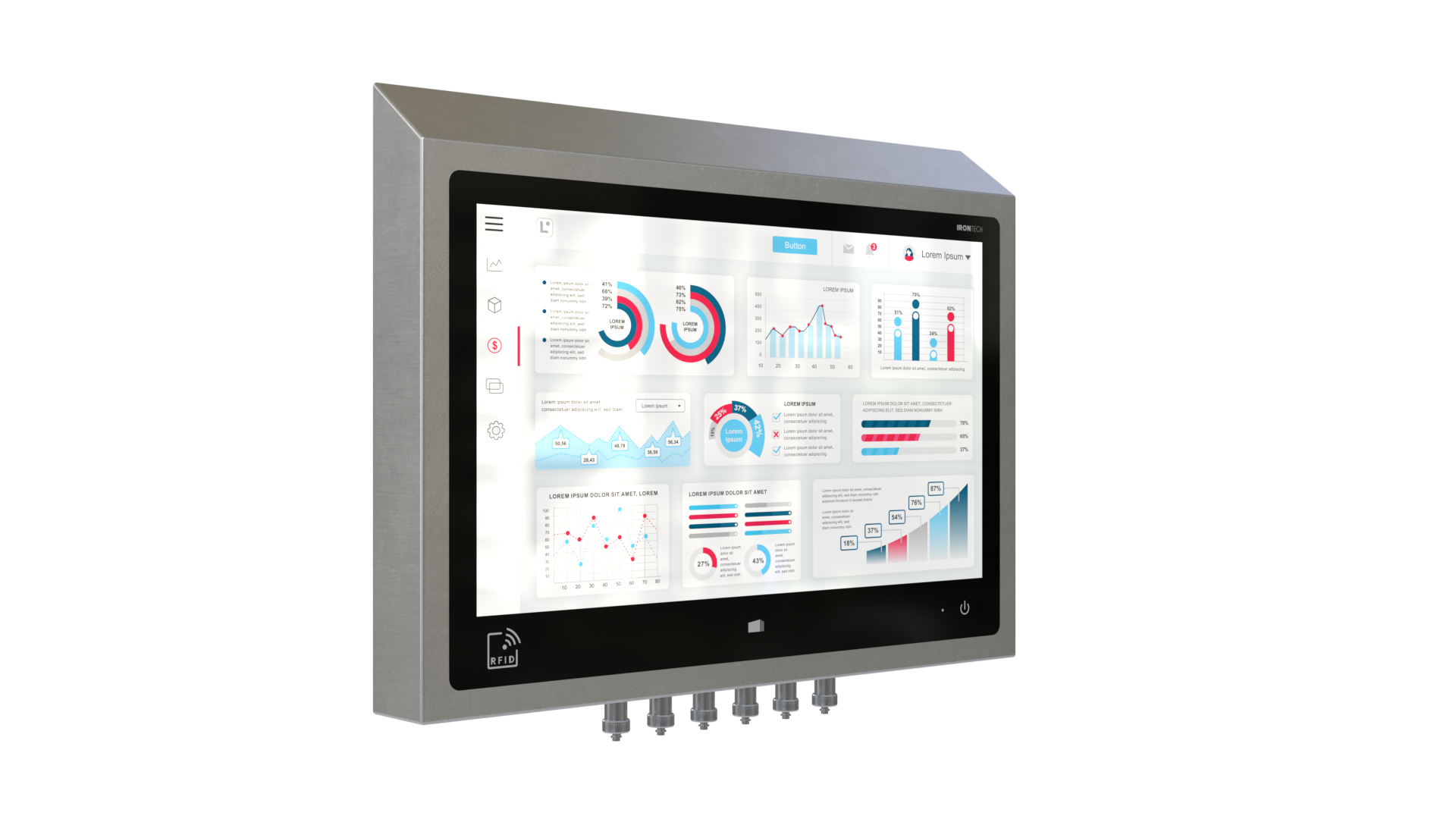
If you work in demanding industrial environments, you know that a conventional computer doesn't last long. That's where high-performance panel PCs come in —equipment designed to withstand shocks, dust, humidity, vibrations, and even pressure washing, without sacrificing processing power.
These devices combine an industrial touchscreen and a robust computer in a single chassis , ready for integration into production lines, vehicles, monitoring systems, kiosks, or complex process installations. Throughout this article, we'll break down what they are, the different types available, the sizes offered, and what you should consider when choosing the right model for your project.
What exactly is a high-performance Panel PC?
A Panel PC is essentially an industrial computer integrated into a touchscreen panel , typically LCD, combining the computing power of an Industrial PC (IPC) with a touchscreen interface for the operator. It's an all-in-one solution designed for mounting on machines, electrical cabinets, walls, VESA arms, or mobile structures.
Unlike an office computer, an industrial panel PC is built to withstand harsh environmental conditions : extreme operating and storage temperatures, high humidity, dust, water jets, continuous vibrations, and shocks. This makes them particularly suitable for factory automation, the food industry, logistics, transportation, retail, the military, and IIoT applications.
In these devices, the touchscreen can be either resistive or projected capacitive . Resistive touchscreens respond well to use with thick gloves or styluses, while projected capacitive touchscreens offer a more smartphone-like experience, with greater sensitivity and image clarity, ideal for advanced HMIs and SCADA systems with many on-screen elements.
Thanks to this combination of robust hardware and touchscreen, panel PCs are used as a human-machine interface (HMI) in manufacturing processes, monitoring systems, digital signage, energy management, building control, and distributed control and monitoring applications.
Robust design and protection against harsh environments
Manufacturers specializing in industrial computing, such as leading brands in the sector, offer high-quality panel PCs specifically designed for harsh environments . These devices must withstand not only dust and splashes, but also vibrations, mechanical shocks, and, in some cases, frequent washing with hot water and harsh detergents.
One of the key aspects is the IP (Ingress Protection) rating , which defines the level of protection against dust and water ingress, either for the front panel or the entire device. In the world of touchscreen panel PCs, three main configurations are used:
- Models without external IP rating, in which the front frame can be removed or customized, designed to be mounted in housings or enclosures that provide the necessary protection.
- Models with protection Front IP65The most common option: once embedded, the front is completely sealed against dust and low-intensity water jets, perfect for most industrial environments.
- Models Fully IP65 or even IP69K, in which the entire unit (not just the front) is protected, with sealed connectors and a design prepared for intensive cleaning, including hot water pressure washing, very common in food, chemical or pharmaceutical processing.
In addition to their sealed design, industrial panel PCs are distinguished by their wide operating and storage temperature range , resistance to continuous vibration, and the use of components without moving parts, such as SSDs and fanless, low-power CPUs. This eliminates traditional weak points, reduces maintenance, and improves long-term reliability.
Many ranges integrate high-performance fanless processors such as Intel Atom or Intel Core i5 , combined with industrial SSD drives to ensure fast boot times, smooth interface response, and long lifespan, even in 24/7 applications.
Key advantages of a Panel PC compared to other solutions
The greatest advantage of an industrial panel PC is that it radically simplifies installation and cabling . Instead of mounting the monitor on one side, the computer on the other, and adding video, power, USB, keyboard, and mouse cables, everything is concentrated in a compact unit that is screwed in and connected to the electrical and data network.
This integration saves space in electrical panels, articulated arms, or vehicles, which is critical when working on machines with very limited space or on forklifts, AGVs, kiosks, or self-service terminals. The reduced number of components also minimizes potential points of failure and improves ergonomics for the operator.
Another clear advantage is that touchscreen panel PCs don't require an external keyboard or mouse for daily use. All interaction is done via the screen, making work easier for plant personnel, eliminating the need for peripherals to hang around or be exposed to dirt, and reducing training time when the interface is well-designed.
Manufacturers offer a wide range of sizes, from small screens of just a few inches to large-format panels of around 20-23 inches or more . This makes them extremely versatile, covering everything from simple local HMIs to complete process monitoring systems, digital signage, or complex SCADA dashboard displays.
Their low weight and compact format allow them to be installed in virtually any location , whether embedded in the front of a machine, in an automation cabinet, on an adjustable VESA arm or on a mobile structure that moves around the plant.
Touch technologies and display options in industrial environments
In industrial applications, the screen is not a minor detail; it is the direct point of contact between the operator and the process. Therefore, high-performance panel PCs integrate touchscreens designed for intensive use , with technologies that adapt to the type of work and the environment.
Resistive technology is based on pressure and allows you to work with almost any object: fingers, thick gloves, pointers, etc. It is highly valued in environments where heavy protective gloves are used or where there is humidity, although it offers slightly less transparency than capacitive technology.
Projected capacitive touch (PCAP) technology offers an experience similar to that of modern mobile phones: fast response, multi-touch gesture support, high image clarity, and a more scratch-resistant glass surface. It is ideal for advanced HMIs, graphically intensive SCADA systems, or systems where user experience is paramount, such as kiosks or industrial point-of-sale systems.
In many cases, these screens are combined with special surface treatments (anti-reflective, hardened, anti-glare) to improve visibility in brightly lit rooms or environments with sudden changes in light, as well as with frames prepared for frequent cleaning in hygienic industries.
The quality and brightness of the LCD panel, along with the viewing angle and resolution, directly influence the operator's ability to clearly see alarms, trends, and process diagrams , which is essential when working with complex production recipes, complete P&IDs, or multiple simultaneous control windows.
Screen size ranges and recommended uses
One of the most important decisions when choosing a high-performance panel PC is the screen size. Each range is typically associated with specific industrial applications , depending on the available space and the amount of information that needs to be displayed.
In the most compact segment, we find panels of around 10 to 12 inches , widely used in mobile logistics and kiosks. They are ideal for forklifts, AGVs, or self-service points where space is minimal, but a robust, machine-powered terminal is required , capable of displaying work orders, picking routes, or simple user interaction screens.
Moving on to intermediate sizes, 15-inch panels have become the standard format for many production lines. They are frequently used in automotive, packaging, and food processing lines because they combine good visibility with relatively compact dimensions, facilitating recessed mounting in control cabinets or VESA arms without taking up too much space.
In more specialized machinery , 17- to 18-inch diagonals are very common . This size is ideal for CNC machining centers, presses, textile and metallurgical equipment, or food processing machinery (mixing, cooking, kneading), where clear visualization of alarms, drawings, parameters, and machine statuses is required without having to constantly navigate between screens.
For local control rooms, industrial scales, and applications requiring dashboards with extensive information, panels of around 19 inches are used . They offer extra surface area for displaying process monitoring panels, recipes, weighing values, and graphs in refineries, power plants , or quality control laboratories, especially in the food industry.
In complex hygienic facilities, such as chemical, pharmaceutical, or food processing plants, 20- to 21-inch panels with IP69K construction are becoming increasingly common. Their larger size makes it easier to view complete P&IDs, HACCP parameters, real-time trends, and line statuses on a single screen , while the hygienic design and high protection allow for intensive CIP cleaning.
Finally, large-format panels, ranging from 22 to 23 inches (and even larger in some models), are used in centralized monitoring, oil and gas control centers, and food traceability systems. These displays allow for the simultaneous showing of multiple cameras, alarms, production batches, and SCADA screens , providing a comprehensive view of the overall process in refineries, water treatment plants, or logistics centers.
Panel PCs versus industrial monitors: key differences
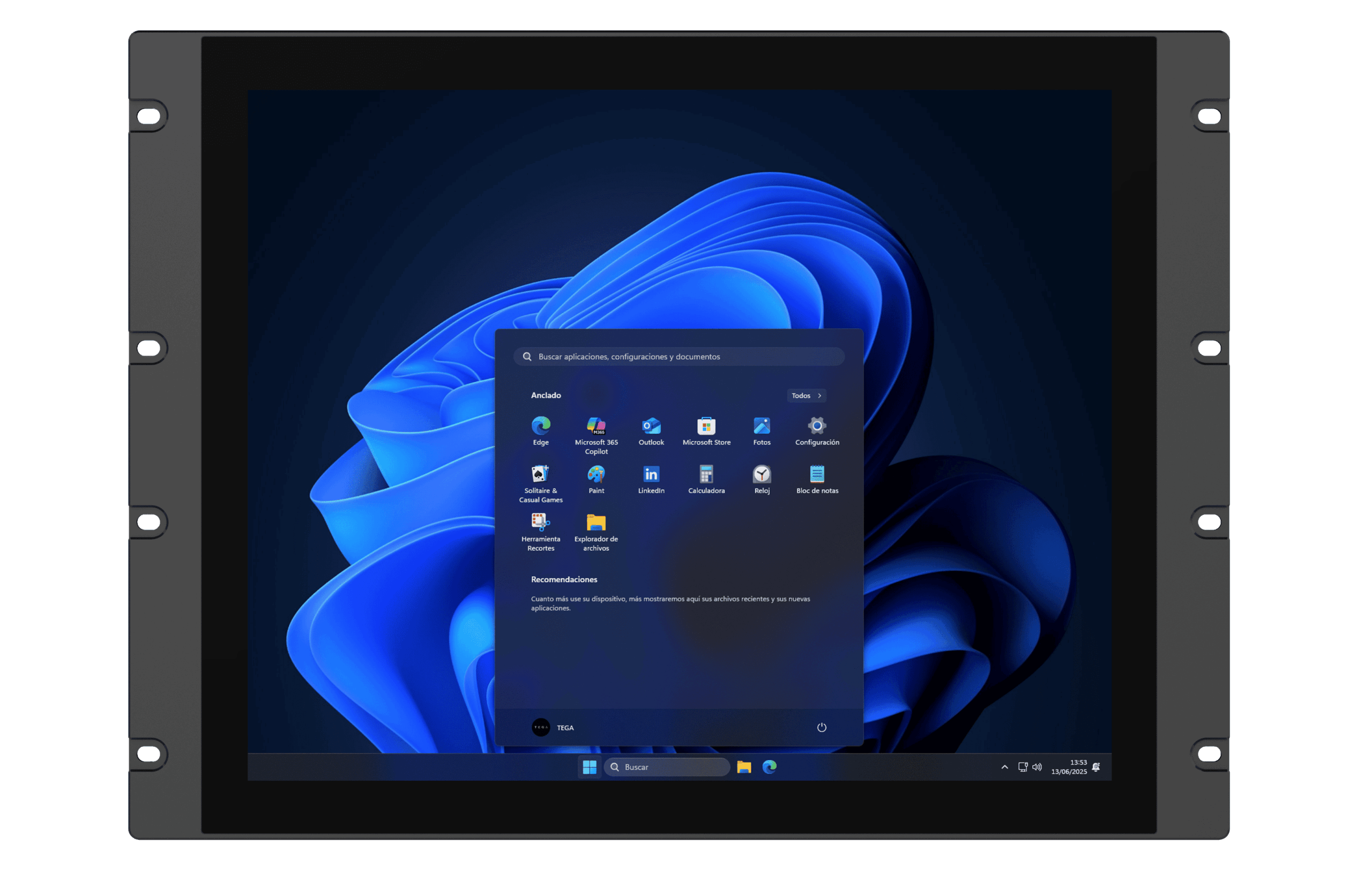
Many installations combine panel PCs and standalone industrial monitors . An industrial monitor is essentially a robust display without an integrated computer, designed to connect to an external IPC or other type of controller. A panel PC, on the other hand, integrates the PC directly behind the display.
Industrial monitors are a good option when high modularity or numerous expansion slots are required in the PC, or when processing needs to be centralized in a rack and only the displays distributed. However, this involves more cabling, more components, and greater installation and maintenance complexity.
High-performance panel PCs are the preferred choice when the goal is to simplify the architecture: the entire system is embedded within the panel itself , resulting in fewer cables, less space required, and fewer potential points of failure. This approach is particularly useful in compact machines, vehicles, or self-service kiosks, where installing a separate PC is not cost-effective.
In both cases, industrial monitors and panel PCs share a focus on robustness, long lifespan, and environmental adaptability , but the integrated panel PC solution offers clear advantages in ease of installation and total cost of ownership when no additional internal expansion cards are required.
Internal performance and configuration options
Modern panel PCs offer a wide range of hardware configurations to suit the needs of each application, from basic equipment for simple tasks to high-performance solutions for intensive data processing or graphics.
In the entry-level segment, Intel Atom processors and low-power platforms are typically used , sufficient for simple HMIs, kiosks, basic data logging systems, and light visualization applications. Their main advantages are low power consumption, minimal heat generation, and the absence of a fan, which enhances reliability.
In applications that demand more computing power, such as complex SCADA systems, data analysis , real-time video, or integration with multiple fieldbuses
Most models integrate industrial SSD storage units , which are more resistant to vibrations and shocks than traditional mechanical hard drives. Furthermore, they typically offer the option of adding extra drives for data or to separate the operating system and production logs, improving security and ease of maintenance.
In terms of memory and connectivity, it is common to have several serial ports, USB, Ethernet, digital I/O and, in some cases, external expansion slots or additional modules to add WiFi, LTE, field inputs or specific industrial buses, all within a fanless and sealed design.
Panel PC for HMI, SCADA and industrial automation
One of the key applications of high-performance panel PCs is their use as HMI stations in SCADA and process control systems . Thanks to their touchscreen and robust construction, they become the natural point of interaction between operators and the automation system.
In factory automation environments, they are used to visualize machine status, start and stop processes , adjust parameters, consult recipes, and analyze trends. Their direct integration into the machine panel or control cabinet ensures that the operator always has relevant information at hand.
In building management and facility control systems (BMS), panel PCs allow monitoring of energy consumption, climate control, lighting and security systems , displaying clear dashboards for technical staff and facilitating rapid intervention in case of incidents.
In sectors with strict hygiene requirements, such as food or pharmaceuticals, panel PCs with IP65 or IP69K front panels are integrated into processing and packaging lines, allowing staff to change recipes, confirm batches, review HACCP parameters and record traceability data without leaving the production area.
Furthermore, in logistics and transport, they are installed in warehouse interiors, loading stations, shipping docks and access control points , offering a robust tool for managing goods flows, picking, real-time inventory and shipping documentation.
Services, customization and specialized support
Beyond the hardware, a crucial aspect when choosing an industrial panel PC is having a supplier that offers quality service and technical support . Specialized brands and authorized distributors in industrial computing provide pre-purchase advice, assistance in selecting the right equipment, and after-sales support in case of problems.
Many product lines offer the option to customize the panel PC to meet customer needs : from CPU, RAM, and SSD configuration to pre-installation of the operating system and the required automation or SCADA software. This allows the equipment to be delivered ready for integration into the machine or installation, reducing commissioning time.
Industrial panel PCs typically come with full I/O support and multiple mounting options , making them easy to adapt to different types of cabinets, control panels, articulated arms, or mobile structures. Furthermore, many manufacturers offer long product lifecycles, which is crucial for machine series and long-term projects.
In the online channel, certain stores specializing in industrial technology have established themselves as leaders in Spain and Europe , working exclusively with internationally renowned brands and guaranteeing high-end equipment. Their added value lies in combining competitive prices, expert technical support, and a user-friendly shopping experience through their e-commerce platforms.
For the professional customer, it is especially useful to be able to consult with experts before finalizing the purchase , clarify technical doubts, compare models and ensure that the chosen panel PC supports the specific conditions of their work environment, both mechanically, electrically and in terms of communications.
Product ranges and examples of use in the industry
Within the high-performance panel PC market, various brands offer complete product families organized by performance level . These ranges span from budget-friendly models, designed for basic HMI functions, to advanced solutions with high processing capacity and expanded connectivity options.
Some product lines offered by specialized distributors, such as those focused on HMI and SCADA, include panel PCs used in factory automation, process control, smart building systems, and monitoring applications . All these devices share an IP65-rated front panel with touch functionality, making them suitable for demanding industrial environments.
In sectors such as Oil & Gas or in power generation and distribution facilities, large format panel PCs with multiple communication ports and advanced display capabilities are used , integrated into control centers where operators need to have a global view of the plant and react quickly to any alarm.
In food quality laboratories and R&D centers, panel PCs are used to manage recipes, record test results, and consult protocols , taking advantage of their resistance to cleaning and their ability to function stably for long periods without intensive maintenance.
This whole range of use cases demonstrates that high-performance panel PCs have become a key component of industrial digitization and the IIoT , acting as a direct interface between control systems and people, and bringing plant data closer to those responsible for production, maintenance and quality.
Given all of the above, it is clear that a high-performance panel PC is not just a screen with an integrated computer, but a tool designed from the ground up to survive in harsh environments, simplify installation, offer comfortable touch interaction and serve as the visible brain in applications as diverse as factory automation, food processing, chemistry, logistics or Oil & Gas, always with the robustness, flexibility and support that today's industry demands.

Table of Contents
- 1 What exactly is a high-performance Panel PC?
- 2 Robust design and protection against harsh environments
- 3 Key advantages of a Panel PC compared to other solutions
- 4 Touch technologies and display options in industrial environments
- 5 Screen size ranges and recommended uses
- 6 Panel PCs versus industrial monitors: key differences
- 7 Internal performance and configuration options
- 8 Panel PC for HMI, SCADA and industrial automation
- 9 Services, customization and specialized support
- 10 Product ranges and examples of use in the industry