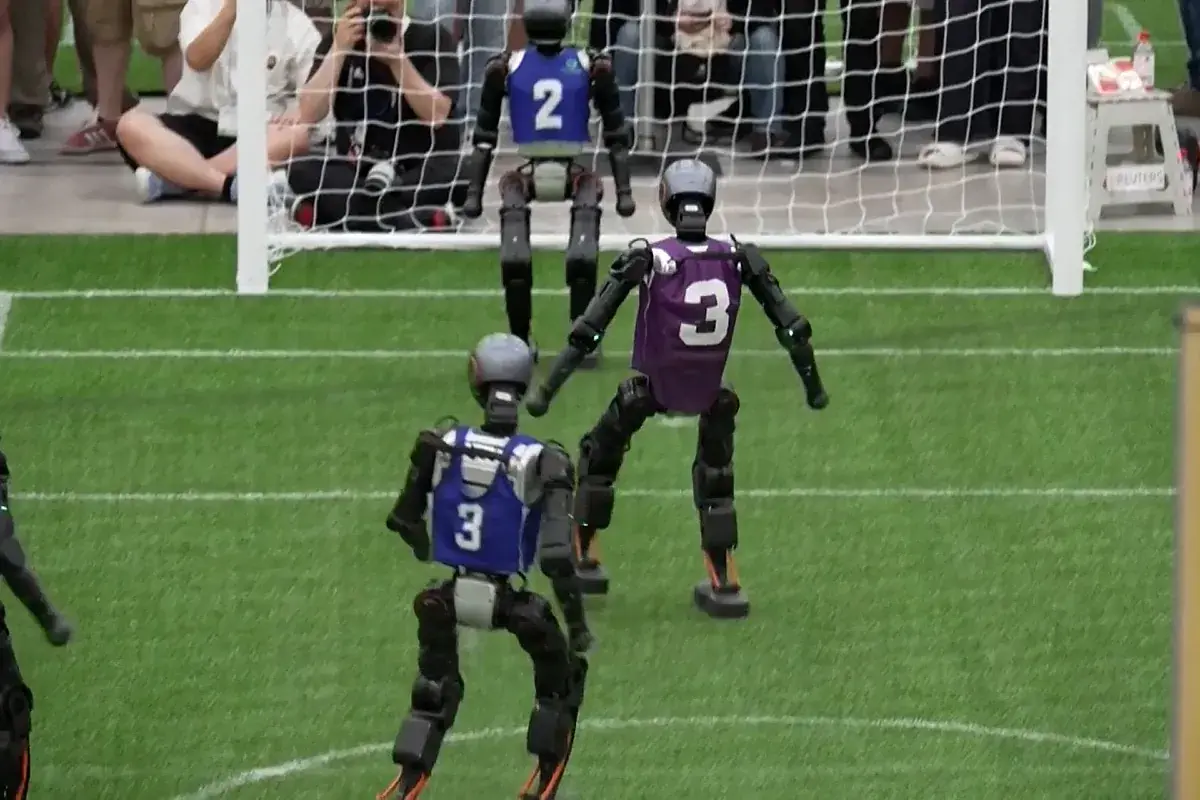
The South Korean city of Incheon has recently witnessed an unprecedented technological display with the RoboCup, the world's most important event in the field of robotics and artificial intelligence. This year, thousands of researchers and experts from around the globe gathered to test their mechanical creations in an environment that increasingly resembles everyday reality , demonstrating that robots have moved beyond mere laboratory prototypes to become machines capable of making decisions in fractions of a second.
While football often captures everyone's attention because of the spectacle of a humanoid kicking a ball, this tournament has a much more ambitious goal behind it. The organizers and participants make no secret of the fact that these tech-focused matches are, in reality, a crucial testing ground for perfecting autonomous mobility and computer vision systems that, sooner or later, will be integrated into our industries and homes to help us with the most complex tasks.
Chinese hegemony and the goal of a humane world championship
In purely competitive terms, the Hephaestus team from Tsinghua University has once again demonstrated why they are the current benchmark in this field. The Chinese developers successfully defended their title after a nail-biting final against the team from the China Agricultural University, in which their robots gave a masterclass in stability and recovery after the inevitable falls and collisions that occur during the game. This is no small feat, as maintaining the balance of a moving biped while processing its environment is one of the biggest challenges in modern engineering, driving the significant investment in Chinese humanoid robots.
The goal these teams have set is breathtaking: to reach 2050 with a team of robots capable of defeating the human FIFA World Cup champions. While it's true that they still lack the spark and agility of elite athletes, the pace of technological advancement in recent years suggests that this isn't a pipe dream. The coordinated plays and collective decision-making we witnessed in Incheon prove that teamwork is no longer an exclusive human skill.
Standardized hardware to power AI
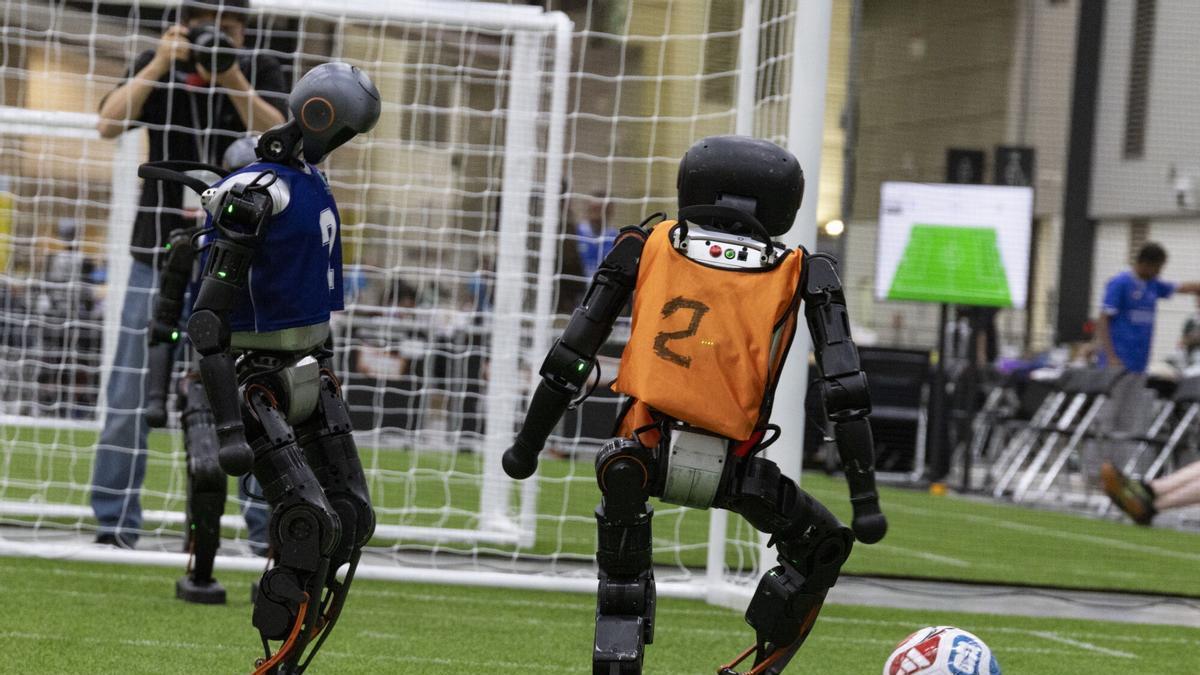
One of the major innovations of this edition has been the paradigm shift in robot development. Until very recently, each team had to build its machine from scratch, wasting precious time designing parts and motors. However, this time, the vast majority of participants opted to use shared hardware platforms , such as the Booster T1 model, allowing them to focus exclusively on improving the robot's "brain"—its artificial intelligence algorithms.
This democratization of technology has enabled teams from countries as diverse as Germany, the United States, and Korea to compete on a level playing field. With a reliable physical base, engineers can train their robots in ultra-realistic virtual environments before deploying them on real grass. This not only accelerates machine learning but also allows for testing risky maneuvers without fear of a programming error sending the robot crashing to pieces.
A future beyond the ball and the grass
But it wasn't all about scoring goals in Incheon, not by a long shot. RoboCup also served to test the robots in disaster scenarios, where their mission was to locate targets and overcome obstacles in areas simulating earthquakes or fires. These tests are vital, as the autonomous navigation technology in hostile environments being developed here will have direct applications in emergency and rescue services throughout Europe and the rest of the world in the coming years, relying on autonomous control in industrial robots.
Furthermore, the competition included specific challenges for the industrial and logistics sectors, where the humanoids had to demonstrate their dexterity in assembling parts or sorting materials. Seeing a robot perform these tasks with the same precision as a human operator confirms that we are witnessing a tool that will revolutionize manufacturing and healthcare . The success of this event, with more than 3.000 participants from 45 countries, makes it clear that interest in humanoid robots in factories is at an all-time high and that what we see today as a sporting curiosity will soon be an indispensable part of our daily professional lives.
In short, what happened in South Korea represents a qualitative leap in how robots interact with their environment and with each other, consolidating development platforms that previously seemed unattainable. The progress in the stability of bipedal robots and the response speed of their visual systems demonstrates that the integration of artificial intelligence into physical bodies is maturing at a rapid pace. Looking ahead to the coming decades, it is clear that these competitions are the perfect laboratory for forging the machines that will help us solve the major logistical and social challenges of the future.
Table of Contents