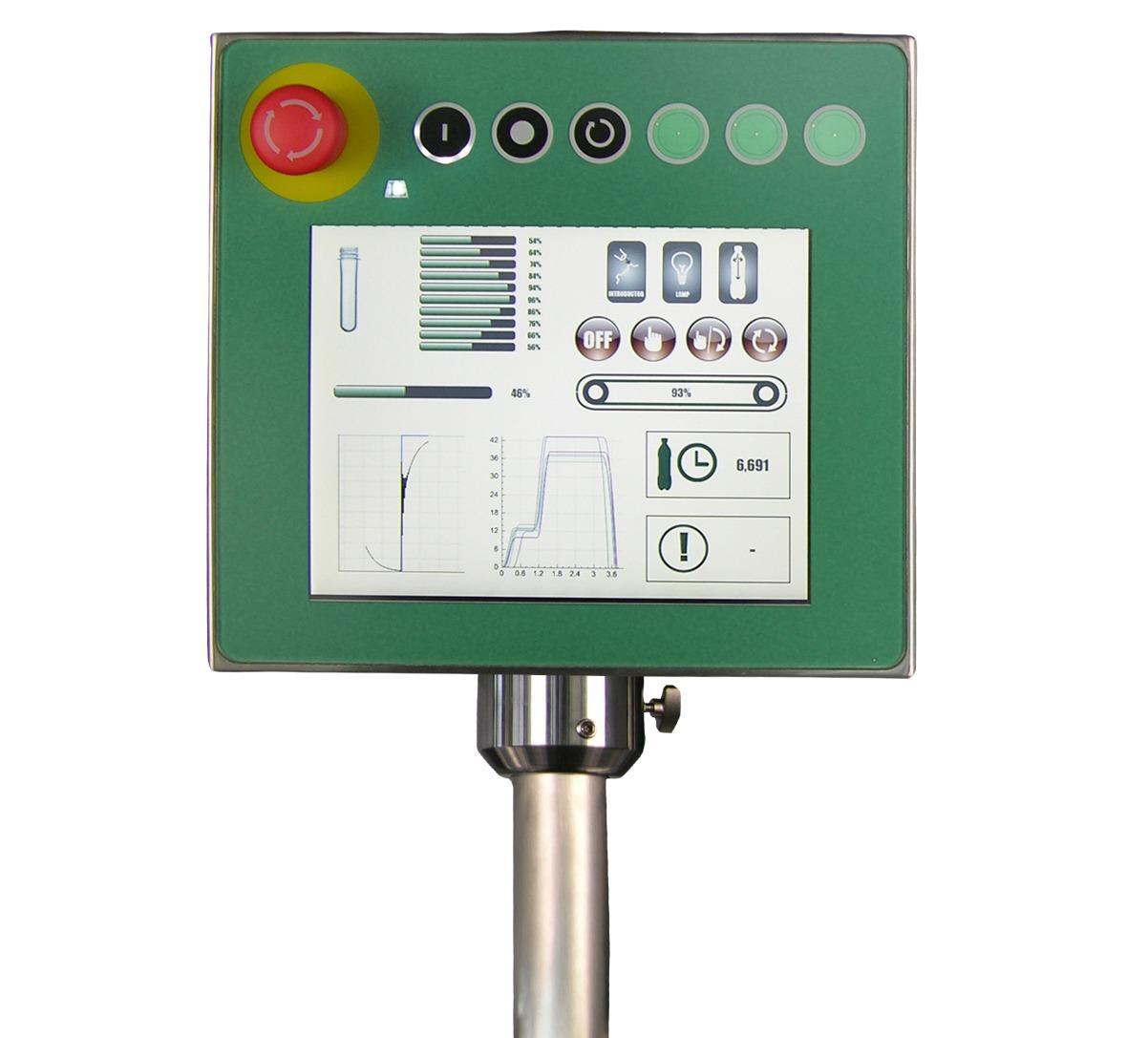
Industrial controllers have become the brains of modern automation . In virtually any production plant, from a small bottling facility to a refinery or an automobile factory, there are tens or thousands of devices measuring variables, making decisions in milliseconds, and executing commands tirelessly. Thanks to them, companies maximize their technical and human resources, reduce errors, and improve product quality.
Not so long ago, much of this work depended on operators monitoring panels, adjusting valves, and manually starting motors . Today, that role is taken over by controllers capable of working in harsh environments, communicating with other equipment, integrating with management systems, and even participating in Industry 4.0 architectures. Understanding what they are, what types exist, and how they are organized in an industrial control system is key if you want to make sound automation decisions or simply understand what goes on behind the scenes in a modern plant.
What is an industrial controller and what is it used for?
An industrial controller is essentially a programmable electronic device designed to reliably and continuously automate processes . It receives input signals from sensors (temperature, pressure, flow rate, position, speed, etc.), compares them with defined setpoints or parameters, executes control algorithms, and generates commands to the final elements (valves, motors, contactors, pneumatic cylinders, resistors, robots, etc.).
The main purpose of these devices is to optimize production: improving cycle times, reducing failure rates, and enabling operation without constant personnel presence , even in hazardous or hard-to-reach areas. Instead of relying on continuous monitoring by an operator, the controller executes its logic autonomously, records data, detects deviations, and reacts immediately.
Beneath the surface, they all share the same operating principle: they measure process variables using sensors, send that information to a processing unit, and adjust the outputs to bring reality closer to the desired value . In many cases, control is achieved using proportional, integral, or derivative (PID) algorithms, which allow for fine and stable regulation.
In addition to issuing commands, modern controllers collect critical statistics: execution times, number of cycles, types of failures, stoppages, alarms, and energy consumption . This data is used to analyze productivity, calculate the profitability of specific lines, plan maintenance, and make investment decisions.
In most modern plants, industrial controllers don't operate in isolation; instead, they are integrated into networks with supervisory control and data acquisition (SCADA) systems, data logging, manufacturing execution systems (MES), and even enterprise resource planning (ERP ) systems. This allows an engineer or production manager to view the status of a robotic line, the quantity produced during the shift, or active alarms on their screen, even if they are hundreds of kilometers away.

Types of industrial controllers according to the control object
A classic way to classify industrial controllers is by the type of equipment or variable they directly control . Under this approach, we can find several common groups in industrial plants.
First, there are unidirectional motor controllers . These manage the starting, stopping, and, in many cases, the speed control of motors that always rotate in the same direction. They are used, for example, in simple booster pumps, fans, or conveyor belts that do not require reversing the direction of rotation.
Very close to these are the bidirectional motor controllers , capable of handling essentially the same functions, but also allowing for changes in the direction of rotation. They are typical in overhead cranes, elevators, linear positioning servos, or any system where the mechanical axis must move forward and backward.
Another important component is pneumatic controllers , used in systems where the main actuators are pneumatic cylinders or valves. By controlling air pressure and flow, these devices achieve fast, repeatable movements with a good cost/performance ratio, very common in assembly lines, packaging, or light handling.
In environments requiring high force and precise control, hydraulic controllers come into play . By regulating oil pressure and flow, they control presses, jacks, high-tonnage linear actuators, and industrial lifting systems. The principle is similar to pneumatics, but with a virtually incompressible fluid, providing greater precision under high loads.
Above these more "specialized" controllers are PLCs (Programmable Logic Controllers) , true all-rounders. Although we will examine them in detail later, within this classification by control object they can be considered general-purpose controllers, since they are capable of controlling motors, pneumatic and hydraulic valves, and all types of field devices simultaneously.
Open-loop and closed-loop control
Another way to classify controllers is according to how they use output information to make decisions . Here, two main families are distinguished: open-loop controllers and closed-loop controllers.
An open-loop controller operates solely based on input signals and predefined logic, without considering the actual system response. For example, activating a conveyor belt for 10 seconds at regular intervals, without measuring whether the load has actually progressed as expected. This approach is simple and inexpensive, but it doesn't compensate for disturbances or process variations.
In contrast, a closed-loop controller continuously compares the actual output with the desired value (setpoint) and adjusts the commands to reduce the error. A typical example is temperature control in an oven: the controller measures the temperature, compares it with the setpoint, and modulates the power of the heating elements or the opening of the gas valve to maintain the target value.
Within closed-loop control, several specific types stand out, widely used in industrial automation.
Proportional controllers adjust the output signal directly as a function of the error: the greater the difference between the measured variable and the setpoint, the greater the correction. They are simple and effective, but in many processes they leave a persistent error that never completely disappears.
PID (Proportional-Integral-Derivative) controllers add two more actions: the integral, which accumulates the error over time and helps to eliminate it completely, and the derivative, which reacts to changing trends and improves stability. They are the basis of process control in refineries, chemical plants, water treatment, industrial climate control, and many other applications.
Industrial controllers according to their specific functions
In addition to large process controllers, it is common to find simpler devices in a plant dedicated to very specific functions . Many of these are now integrated into PLCs or DCSs, but their logic remains clearly identifiable.
Counters or worktables are used to record units: number of pieces produced, revolutions of a shaft, pulses from a flow meter, etc. They are essential for quantity control, productivity calculation, and jam detection. They also usually include simple timing functions.
Timers are used to perform actions at specific times: starting a pump after a delay, closing a valve for a fixed period, or generating operating sequences. Although they may seem basic, they are the foundation of many discrete automation systems.
Furthermore, the control algorithms themselves (proportional, integral, derivative, or combinations thereof) can be viewed as specialized functional blocks that execute within a larger controller . Their design and tuning largely determine the quality of control over the process variable.
Large families of industrial controllers: PLC, DCS, PAC and more
Beyond classifications by control object or open/closed loop, in practice, the focus is primarily on certain families of standard controllers in the industry . Although the boundaries between them have become blurred over the years, they remain useful for understanding the overall landscape.
The PLC (Programmable Logic Controller) originated as a replacement for relay boards in the automotive industry, radically reducing wiring and making logic changes much easier. Over time, it incorporated analog inputs and outputs (0-10 V, 4-20 mA), communication capabilities, and more powerful processors, allowing it to expand from discrete automation to the control of medium-sized processes.
Today, a typical PLC can handle from a few dozen to thousands of input/output signals , is prepared to work in environments with electrical noise, vibrations and high temperatures, and is programmed according to the IEC 61131-3 standard, in languages such as ladder logic, structured text, function block diagram, instruction list or sequential diagrams.
Distributed Control Systems (DCS) emerged to control continuous, large-scale processes, such as oil refineries, power plants, pulp and paper mills, and water treatment plants. Their philosophy is based on distributing input/output modules and controllers throughout the plant, connected via a high-speed network to one or more centralized control rooms.
In a DCS, the control logic and the operator interface (HMI) are closely linked . When creating a new control loop, the system generates coordinated blocks in the controller and graphical elements, alarms, and trends in the interface. This greatly simplifies engineering, operation, and maintenance in large plants.
Programmable Automation Controllers (PACs) have emerged as a bridge between the PLC world and that of industrial computers. They leverage more powerful processors and open architectures to execute complex control tasks, manage large volumes of data, and communicate with multiple systems and protocols without relying so heavily on proprietary platforms.
Unlike many traditional PLCs, numerous PACs allow programming in high-level languages (C, C++) or the integration of models developed in tools such as MATLAB/Simulink , while maintaining compatibility with IEC 61131-3. They are especially interesting when combining classic control with advanced analysis, machine vision , or optimization algorithms.
At the high end of the computing power spectrum are Industrial PCs (IPCs) , ruggedized computers designed for industrial environments that act as high-performance controllers. They are mounted in cabinets, in panel-PC format , or on DIN rails, and typically run on systems like Windows IoT. They allow the execution of SCADA software, database servers, and integrated control and monitoring applications.
Also highly relevant are embedded controllers , which are very small and energy-efficient, such as the Strato Pi Max , designed for specific tasks where space and energy are critical. They are integrated into compact machines, field equipment, communication modules, or small distributed control systems.
ICS Systems: The Complete Industrial Control Architecture
When we talk about ICS (Industrial Control Systems), we're not just referring to a specific controller, but to the set of devices, networks, and software that allow for the monitoring and automation of a plant. This umbrella term includes DCS, PLCs, PACs, SCADA systems, and other instrumentation and communication elements.
A typical ICS is built in layers. At the field level are the sensors and actuators: pressure transmitters, flow meters, thermocouples, control valves, frequency converters, motors, pneumatic cylinders, etc. These devices measure the physical environment and execute the commands they receive.
Above this level is the control level , comprised of PLCs, DCSs, RTUs (remote telemetry units), and other automatic controllers. Here, control algorithms are executed, decisions are made regarding each piece of equipment or loop, and the operating sequences of the different parts of the plant are coordinated.
The next step is the supervisory level , where SCADA systems and HMIs come into play. These devices allow operators to view the process status, change setpoints, recognize alarms, force manual operations if necessary, and consult historical trends.
At the top is the management and integration level , occupied by Manufacturing Execution Systems (MES) and, above that, by ERP and other business applications. This is where production data intersects with orders, inventory, planning, costs, and quality, providing a comprehensive view of the factory.
SCADA, DCS and PLC in detail: how they fit together
SCADA (Supervisory Control and Data Acquisition) systems are software platforms, supported by servers and communication networks, designed to monitor high-level, often geographically distributed, processes. They receive field data from RTUs or PLCs, store it, generate graphical displays, record events, and allow remote commands to be sent.
Unlike pure control systems, SCADA software typically does not close rapid control loops , but rather focuses on monitoring, setpoint adjustment, alarm management, and operator decision-making. They are very common in electrical grids, oil pipelines, gas pipelines, drinking water systems, and large transportation infrastructures.
In many cases, the boundaries between DCS, SCADA, and PLC have become blurred. PLCs can now function as small DCS systems thanks to remote I/O and advanced HMIs, and SCADA systems manage closed-loop control in distributed installations. Advances in processor and network technology have made the choice more dependent on the application, scale, and manufacturer strategy than on strict technical limitations.
Historically, the control of large plants evolved from small, local controllers to centralized panels filled with analog instruments and paper recorders, and finally to distributed architectures with electronic controllers and graphic displays . This leap enabled complex interlocks, advanced alarm management, automatic event logging, reduced wiring, and a comprehensive, real-time view of the plant's status.
Key features of modern industrial controllers
As the core of the automation system, industrial controllers share a number of essential technical characteristics for their use in the plant.
The first is their reliability and stability . They are designed to operate 24/7 in environments with electromagnetic interference, dust, vibrations, humidity, or extreme temperatures. They incorporate internal diagnostic mechanisms, power monitoring, non-volatile memory, and, in many critical applications, redundancy at the CPU, power supply, or network level.
Another fundamental property is real-time capability . They must be able to respond to changes in input signals in milliseconds, ensuring that the process remains stable and that dangerous situations are avoided. This is achieved using real-time operating systems or deterministic kernels within DCS, PLCs, and PACs.
Flexibility and programmability are equally key. Users can develop and modify control programs to adapt to new products, process variations, or plant expansions. The use of standards such as IEC 61131-3 and reusable function blocks greatly facilitates this task.
In terms of connectivity, modern controllers offer a wide variety of communication interfaces: Industrial Ethernet, digital fieldbuses (PROFIBUS, Modbus, Foundation Fieldbus, HART, etc.), open and proprietary protocols , and industrial serial communication . This allows for data exchange with other equipment, monitoring systems, databases, and cloud platforms.
Furthermore, they are designed to be easy to maintain and expand . The modular design allows for adding I/O cards, replacing faulty modules without shutting down the entire plant, or scaling control capacity as the installation grows. Remote diagnostics significantly reduces response times to incidents.
Finally, their ability to integrate into smart, connected environments is becoming increasingly important . The concepts of IIoT (Industrial Internet of Things) and Industry 4.0 are driving controllers to include remote monitoring functions, data transmission to the cloud, predictive maintenance, cybersecurity, and support for advanced analytics.
How to choose the right type of industrial controller
Selecting the right controller for a specific application is not trivial. Factors to consider include plant size, process criticality, number of signals, type of variables, availability requirements, and budget.
In installations with fewer than a few hundred input/output signals and relatively simple processes, a PLC is often the preferred option due to its cost, ease of programming, and large pool of trained technicians. This is common in individual machines, small production lines, pumping systems, and building automation.
When it comes to complex plants with thousands of signals and high criticality (refineries, chemical plants, mineral concentrators, power generation), DCSs remain the most common choice. Their strength lies in offering a unified, scalable, and highly robust platform where regulatory control, advanced control, alarm management, and operation are managed in a fully integrated manner.
PACs and industrial PCs find their niche when intensive computing functions, integration with IT systems, massive data processing, or advanced control algorithms are required . They are also very interesting in new developments that aim to combine traditional control with analytics, vision, or artificial intelligence.
Beyond the core technology, it's critical to consider factors such as manufacturer support in the country, spare parts availability, a community of skilled professionals, and references from similar applications . A good decision at this point can make all the difference in maintenance costs and system lifespan.
This entire ecosystem of industrial controllers and ICS systems has radically transformed production methods in almost every sector : energy, automotive, petrochemical, food, water and sanitation, transportation, agriculture, and many more. Understanding their types, characteristics, and integration methods allows companies to maximize the benefits of automation and lays the foundation for evolving toward increasingly efficient, safe, and flexible plants.
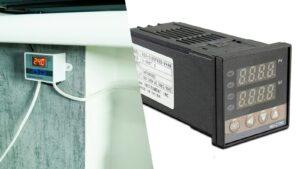
Table of Contents
- 1 What is an industrial controller and what is it used for?
- 2 Types of industrial controllers according to the control object
- 3 Open-loop and closed-loop control
- 4 Industrial controllers according to their specific functions
- 5 Large families of industrial controllers: PLC, DCS, PAC and more
- 6 ICS Systems: The Complete Industrial Control Architecture
- 7 SCADA, DCS and PLC in detail: how they fit together
- 8 Key features of modern industrial controllers
- 9 How to choose the right type of industrial controller