
The electric vehicle industry is advancing by leaps and bounds, and much of that progress depends on batteries. In recent weeks, three key developments have highlighted concrete improvements: a cooling system manufactured in Spain, a new polymer material that extends cell life, and a Chinese patent that brings solid-state technology closer to reality. These innovations address distinct but complementary problems , from thermal management to durability and energy density.
While Mahle's Tarragona plant is already mass-producing plates that maintain controlled temperature, laboratories in South Korea and China are presenting chemical and structural solutions that promise more efficient batteries. The common denominator is the pursuit of greater range and a longer lifespan , two factors that remain the main obstacles to the mass adoption of electric vehicles.
Mahle starts production of cooling plates in Montblanc
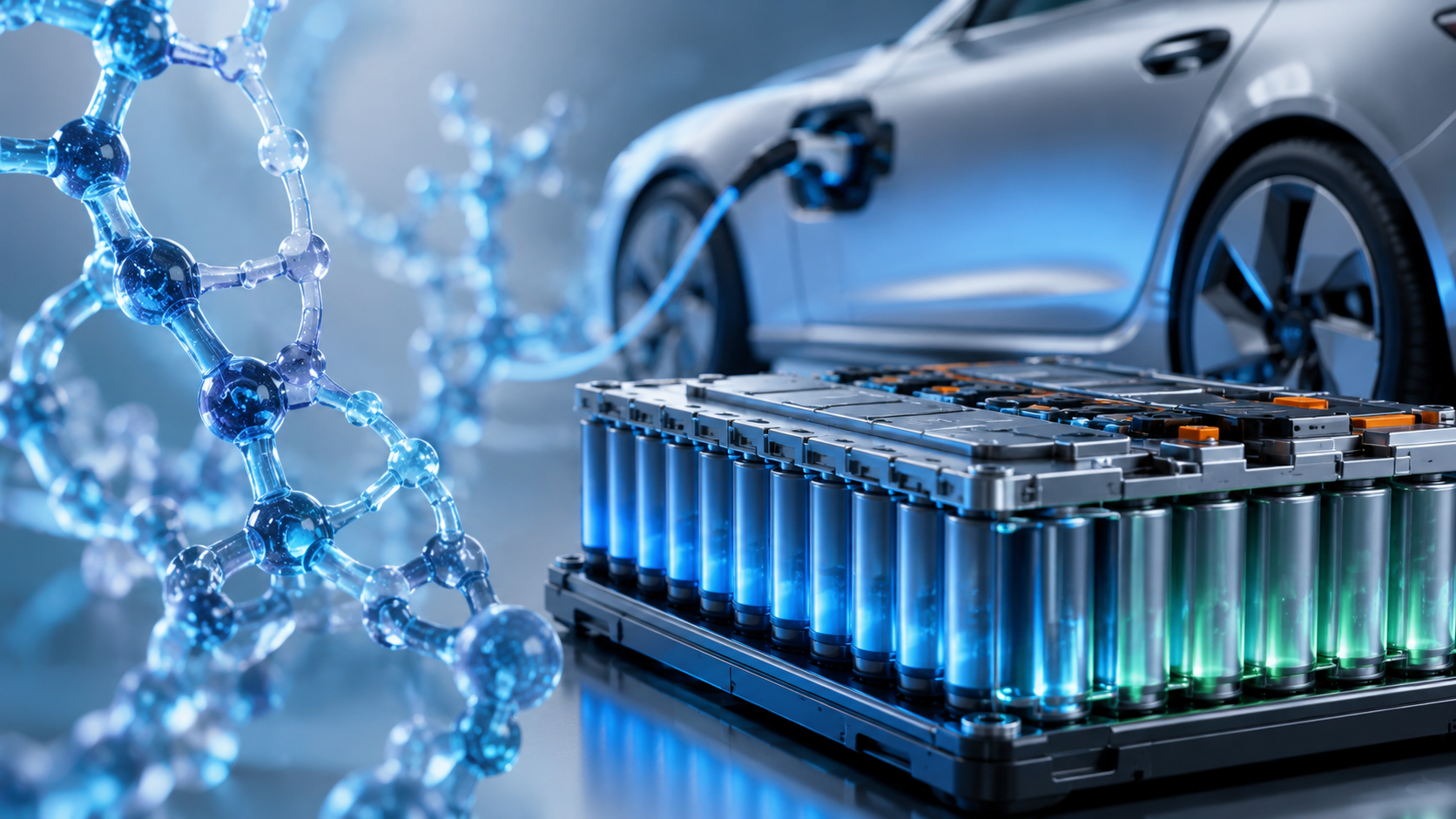
Mahle's plant in Montblanc (Tarragona) has begun mass production of a critical component: a cooling plate for electric vehicle batteries. An investment of tens of millions of euros has modernized the facilities and enabled production to reach a capacity of 15.000 units per week. The workforce of 750 employees has seen an increase in skilled jobs in the area.
These plates keep the battery temperature below 40°C and ensure uniform heat distribution between the cells. Precise thermal control is essential for fast charging and the longevity of lithium-ion batteries , as overheating accelerates degradation. The manufacturing process is highly automated, with minimal manual intervention, to meet stringent requirements for corrosion resistance and surface cleanliness. Roger Gombau, the plant manager, emphasized that this project demonstrates Mahle's industrial capabilities in the field of electromobility.

A hybrid polymer doubles the lifespan of the batteries.
A team from Sungkyunkwan University and Seoul National University has developed a new polymer binder that allows for the production of thicker electrodes without compromising performance. The material, called DHP, combines elastane and polyacrylic acid , two polymers with complementary properties: elastane provides elasticity, while polyacrylic acid ensures strong interaction with the electrode components.
In conventional batteries, the polyvinylidene fluoride (PVDF) binder tends to migrate to the surface during drying when the electrode is thick, causing cracks and spalling. The new polymer avoids this problem and doubles the bond strength , maintaining structural integrity even in very thick electrodes. In tests, cells with the DHP retained 86,8% of their initial capacity after 200 charge and discharge cycles, while conventional cells stopped functioning after around 95 cycles. Furthermore, the technology can be integrated into existing production lines without the need for new equipment, facilitating its industrial adoption. The researchers, led by Ki-Jae Kim and Jang Wook Choi, believe this advancement could significantly increase the range of electric vehicles.

BYD patents a composite cathode for solid-state batteries
Chinese manufacturer BYD has registered a patent (CN122474592A) that addresses one of the biggest challenges of solid-state batteries: maintaining close contact between solid components as the cell expands and contracts. The solution consists of a composite cathode that mixes two types of solid electrolytes : small halide particles and larger sulfide particles. By combining them, the smaller particles fill microscopic gaps, optimizing ion transfer and reducing mechanical stress.
BYD's chief scientist, Lian Yubo, has indicated that the stability of the solid-solid interface is the main obstacle to the industrialization of this technology. The company expects to have its first batch of solid-state batteries next year , although mass adoption is not expected until the next decade. In the laboratory, the use of smaller sulfur particles has improved capacity retention by almost 18%. BYD holds several patents in this field, such as a solid electrolyte membrane with polymer fibers and a double-layer cathode coating. Despite the progress, the industry agrees that manufacturing challenges remain before these batteries are seen in production cars.
These three developments reflect a clear trend: research into batteries for electric vehicles is advancing on multiple fronts, from cooling to materials chemistry. While Mahle is reinforcing its industrial commitment in Spain with a state-of-the-art plant , laboratories in Korea and China are proposing solutions that could double battery lifespan and pave the way for solid-state technology. The combination of these innovations, although still at different stages of development, points to a future where electric cars are more autonomous, durable, and safe.

Table of Contents