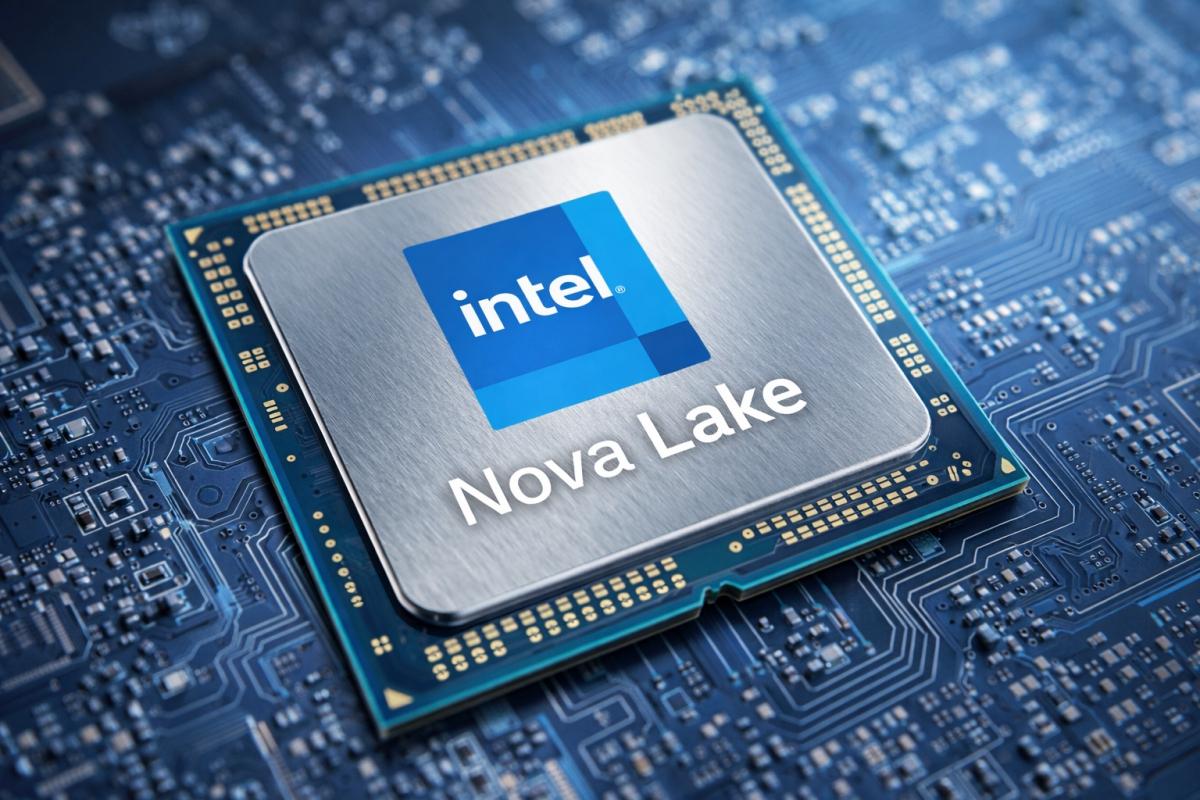
Intel is determined to overhaul its strategy to try and regain lost ground in the desktop market . The manufacturer has confirmed, with a strong statement from Robert Hallock, that its next major architecture, popularly known as Nova Lake, will debut in desktop computers before servers. This decision breaks with the industry's traditional approach and represents a significant shift in direction compared to what its main competitor is doing.
While AMD has decided to debut its new Zen 6 architecture in the enterprise segment with the EPYC Venice processors, Intel has opted for the opposite approach. Robert Hallock, Vice President and Head of the Enthusiast Business, was emphatic in a recent interview: "We have a new core" that will arrive first in desktop computers. With this move, the tech giant aims to send a clear message to gamers and hardware enthusiasts, a sector that has felt somewhat neglected in recent years.
Intel makes a statement: Nova Lake arrives first on desktop computers
Hallock's statement is no coincidence. It comes right after AMD announced its roadmap for the coming years, where Zen 6 debuts first in data centers. Intel's new architecture, however, will do the opposite and prioritize the high-end consumer market . Although the executive didn't directly mention the Nova Lake name, all leaks and industry rumors unequivocally point to this being the core he has in mind.
Intel's strategy with Nova Lake is not a mere whim. The company knows it has lost considerable prestige in recent years, especially due to Arrow Lake's disappointing gaming performance, which fell short of its predecessor, Raptor Lake. Hallock acknowledges the community's skepticism, stating that he "understands people's skepticism after the last two years," but promises that they are preparing for one of the most significant desktop CPU launches in their history.
To back up these claims, Intel has completely reorganized its team. Hallock explains that there is now a whole organizational structure dedicated to the desktop segment, with its own budget and staff . This same group was responsible for the recent Intel Arrow Lake Refresh and will be in charge of successfully launching Nova Lake.

Linux leaks: 24 and 28 kernels confirmed
Meanwhile, internal testing is already underway. Linux logs from the Intel GFX project have revealed the existence of at least two variants of Nova Lake-S. These processors have been identified with CPUID 300F15 and a BIOS dated July 16. They are 24-core and 28-core versions, whose internal configurations have already been exposed.
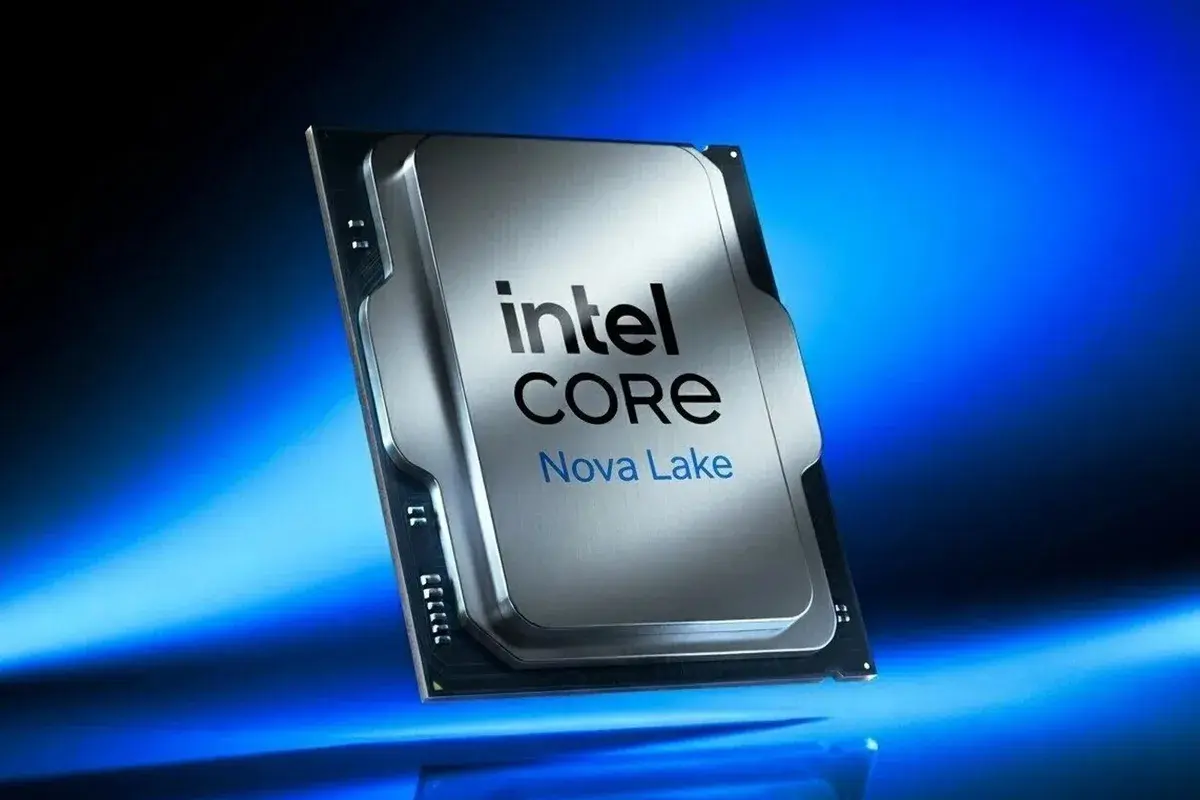
The 24-core model has been detected on a motherboard called "NVL-S UDIMM 1DPC eDP CRB Fab2". This CPU features 24 threads and a base clock speed of 3,4 GHz. Its internal configuration is said to be 8 performance cores, 12 efficiency cores, and 4 low-power cores (8+12+4) , an arrangement that had been previously rumored.
On the other hand, the 28-core variant has appeared on a motherboard labeled "NVL-S UDIMM 1DPC OC EV CRB". This model has 28 threads and operates at a base clock speed of 3,2 GHz. The core configuration in this case would be 8+16+4 , thus offering a greater number of efficient cores for multithreaded tasks.

An ambitious roadmap to 2030
Looking ahead, Intel's roadmap is ambitious. The company claims to have processors planned through 2030, with a continuous release cadence for the gaming segment. According to leaks, it won't stop at these 24- and 28-core versions; models with up to 52 cores and a large Level 3 Cache (bLLC) are expected to compete directly with Ryzen X3D and the gaming market.
This tactical move by Intel is a clear response to AMD's dominance in the desktop market. Lisa Su's company has capitalized on its unified architecture and chiplets to quickly adapt its new cores to different markets. However, Intel seems to want to play its own game. Hallock's announcement invites enthusiasts to "do the math ," a direct provocation aimed at AMD and its new processors.
The gaming community is eagerly awaiting Intel's return on its promises. The last few years have been tough for the tech giant , which has seen its market share shrink in the face of the Ryzen surge. However, with Nova Lake and this new strategy of prioritizing desktops, Intel aims to turn things around and prove it still has a lot to offer in the high-performance PC market.
It's clear that Intel has changed its approach and is ready to compete head-to-head for the desktop market . With a strategy that prioritizes consumers over data centers, a reorganized team, and hardware that promises to be highly competitive, Nova Lake is presented as Intel's great hope for winning back enthusiasts. Only time will tell if these claims amount to nothing or if Intel truly rises to the occasion. Upcoming releases will be key to determining whether this strategy pays off and if gamers regain their lost confidence.