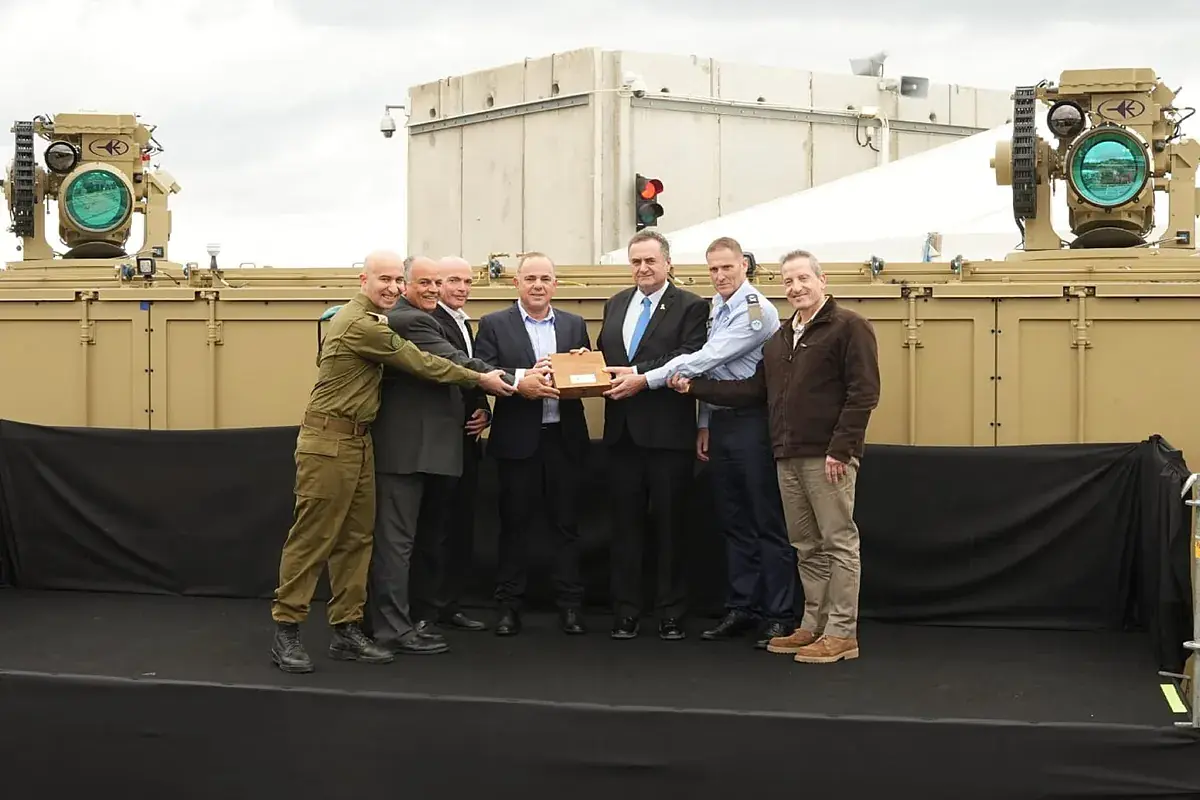
Israel has, for the first time, incorporated a high-energy laser system into its air defenses, capable of shooting down drones, rockets, and mortar rounds in a matter of seconds. The new device, known as Iron Beam, represents a technological leap forward in how Israel confronts cheap and numerous aerial threats, such as swarms of UAVs.
This system, developed by Rafael Advanced Defense Systems in cooperation with the Israeli Ministry of Defense and other Israeli technology companies, has already been delivered to the Army and is currently being integrated into the air defense network. The idea is for it to act as an additional layer, designed to neutralize smaller, more frequent threats that are very costly to intercept with conventional missiles.
What is Iron Beam and how does it fit into a layered defense?
Iron Beam is a directed-energy (HEL) defense system designed to destroy short-range targets using a concentrated laser beam. It does not replace interceptor missiles but rather complements Israel's existing multi-layered defense architecture, which already includes systems such as Iron Dome, David's Sling, and Arrow.
In this scheme, Iron Dome is the last line of defense against rockets and drones that manage to approach the protected territory. Ahead of it are David's Sling, focused on medium-range missiles, and Arrow, geared towards long-range ballistic threats. Iron Beam comes into play at the very bottom and most vulnerable level of that pyramid: small, numerous, and inexpensive threats.
The system features its own radar, electro-optical sensors, and threat management software , capable of deciding whether the most efficient approach is to use a laser or a traditional interceptor. This process is automated and extremely fast, allowing for a rapid reaction before the projectile reaches its target.
From a military point of view, this approach allows the most expensive missiles to be reserved for higher-value threats , using the laser against homemade rockets, low-cost drones, or other projectiles that until now required spending interceptors far above their manufacturing cost.
A 100 kW laser: speed of light and minimum cost per shot
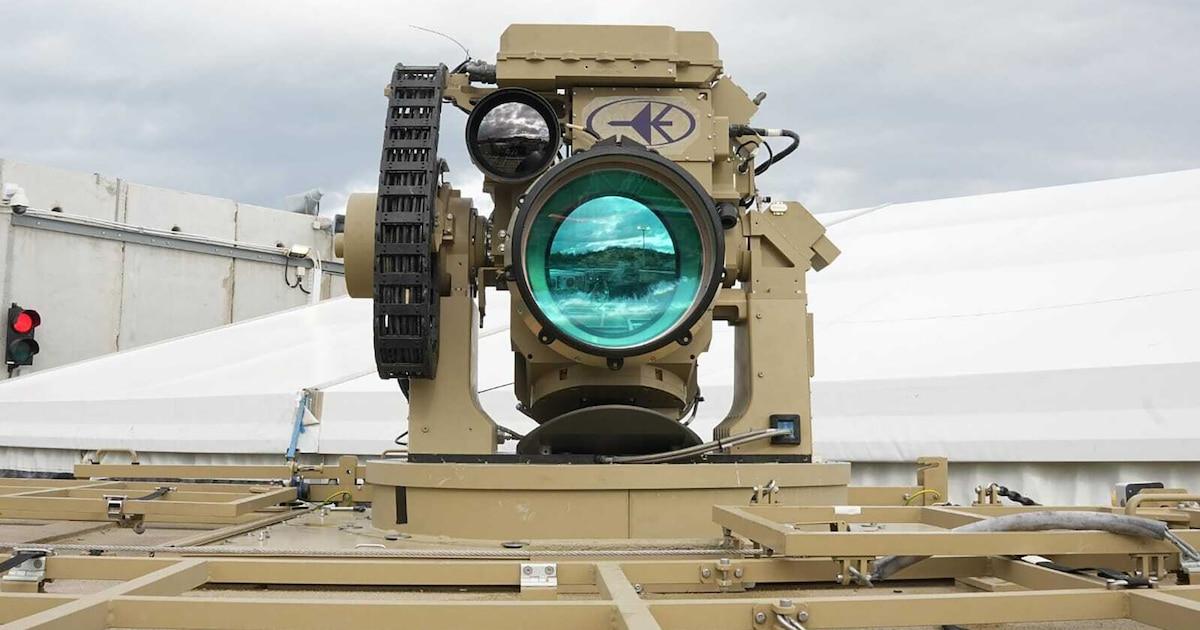
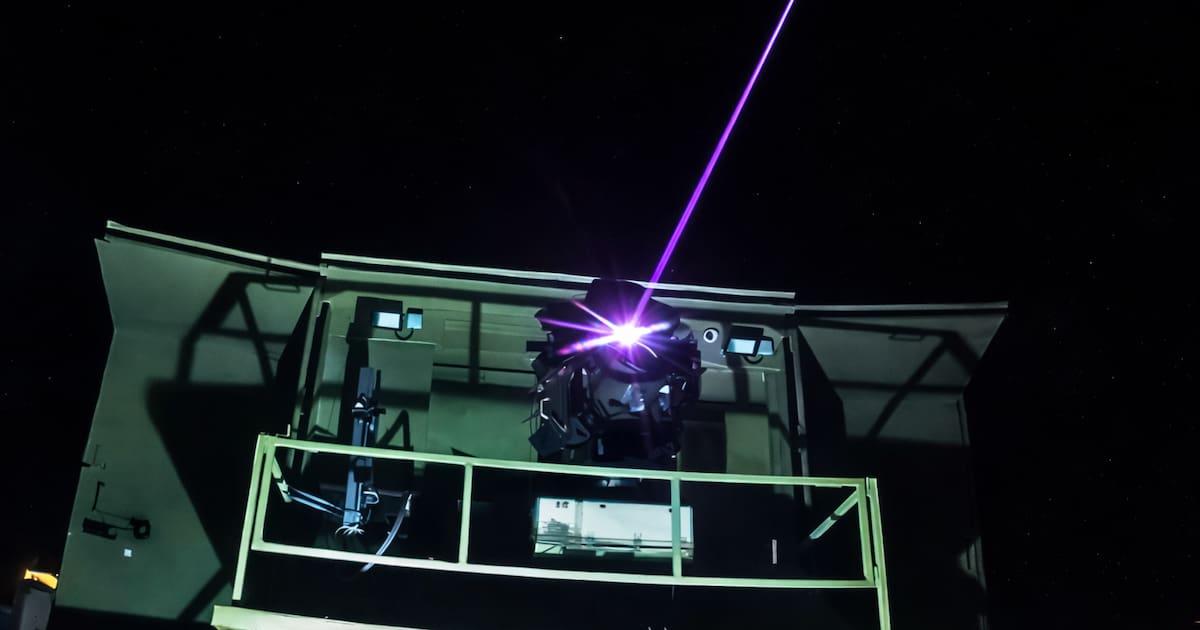
According to data released by the Ministry of Defense and Rafael, Iron Beam uses a high-power laser in the region of 100 kW . This energy is concentrated on a very small point of the target for a few seconds, causing a temperature increase of thousands of degrees and, in practice, the structural collapse of the drone, rocket, or missile.
Because it is a beam of light, the impact occurs at the speed of light, approximately 300.000 km/s . This minimizes the time between target detection and neutralization, a key advantage when dealing with short-range threats or irregular trajectories, which leave very little room for maneuver for traditional systems.
Another of the system's strengths is its ability to keep the beam stabilized on a moving target , compensating for vibrations, distance, wind, and atmospheric turbulence. It achieves this through adaptive optics, sensor tracking, and real-time digital control, allowing it to engage the target from the outside without direct detonation.
All of this translates into extremely low operating costs: each launch requires virtually no electricity. Israeli authorities have likened the cost of an interception to "turning on a light ," a symbolic figure compared to the tens of thousands of dollars that each Iron Dome interceptor missile can cost.
This cost difference is crucial compared to drone swarms and mass attacks by cheaply manufactured rockets. Where previously each projectile required the expenditure of a much more expensive interceptor, the laser allows for sustained defenses without a runaway budget.
Testing in real combat and integration into the Air Force
The Israeli Ministry of Defense has confirmed that Iron Beam has undergone extensive testing against rockets, mortars, and unmanned aerial vehicles , with results deemed satisfactory. This battery of tests formed the basis for authorizing its formal delivery to the Israel Defense Forces.
Political and military officials have explained that the system has already been used in real-world operational scenarios , including the interception of drones and missiles during clashes on the border with Lebanon. These initial uses served to refine the software, adjust the beam power, and adapt the system to prolonged combat conditions.
The official plan envisions its gradual integration into the Israeli Air Force and, subsequently, its deployment in various parts of the country as part of a multi-layered defense network. The stated intention is to achieve a broad deployment covering the regions most vulnerable to drone and short-range rocket attacks.
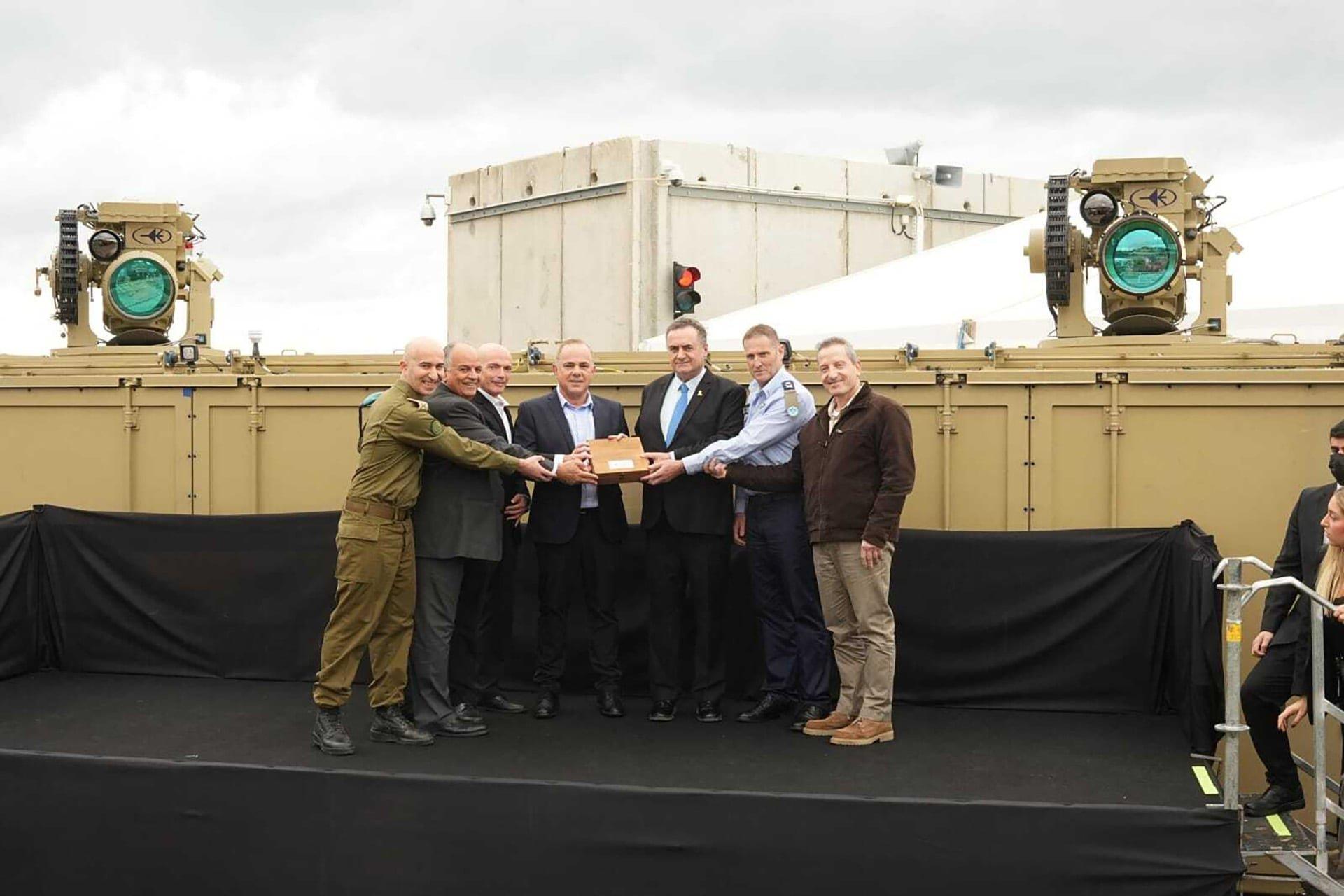
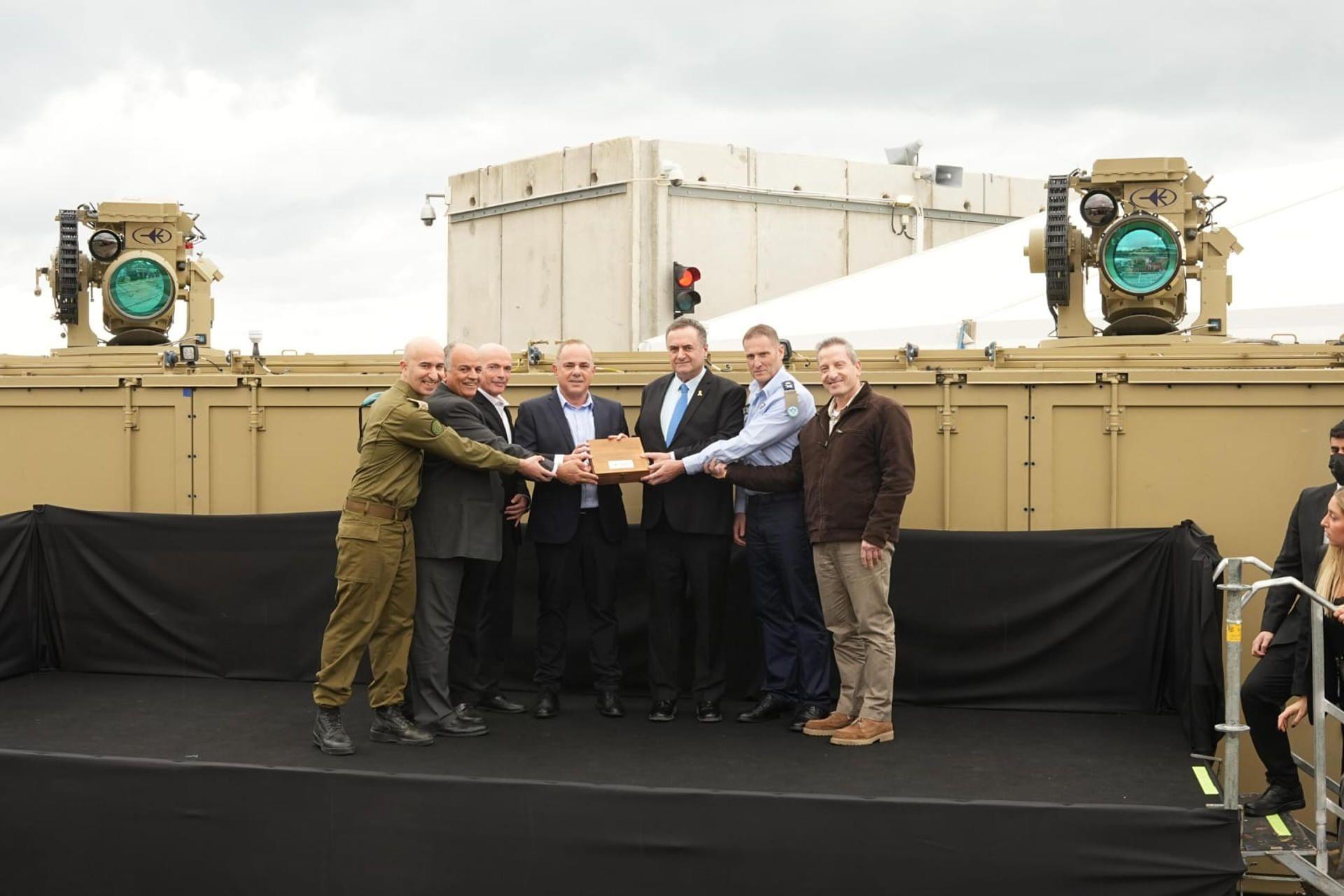
During the handover ceremony, Defense Minister Israel Katz hailed the project as a "historic milestone" and emphasized that, for the first time globally, a high-energy laser system has reached operational maturity and consistently executed multiple interceptions. Katz also took the opportunity to issue a warning to Israel's adversaries, specifically mentioning Iran, Syria, and Lebanon.
Rafael executives and Air Force commanders have also described Iron Beam as a key component in the evolution of the air defense shield , enabling a more favorable balance between cost and effectiveness. In their view, this type of solution will be essential in future scenarios that combine sophisticated missiles with large numbers of low-cost drones.
System variants and possible future applications
Alongside the main Iron Beam model, Israeli authorities and Rafael have mentioned the development of different variants tailored to specific tactical needs . Although full technical details are not public, configurations with varying power levels and deployment formats have been described.
The standard version would be geared towards area defense from fixed positions , with an approximately 100 kW laser designed to cover large areas and withstand intensive attacks. Other, less powerful variants could be mounted on large trucks or even lighter vehicles, increasing the system's mobility.
These mobile modules would allow for the support of ground forces or the protection of specific critical infrastructure , such as air bases, logistics hubs, or energy facilities. In this way, the laser would not be limited to static defense but could be deployed as the situation on the ground changes.
For allied countries, including the European Union, the interest in these variants lies in the fact that they facilitate the adaptation of the laser concept to different budgets and scenarios : from the protection of strategic airports and ports to the reinforcement of bases deployed in international missions.
International impact and potential implications for Europe
The commissioning of Iron Beam has brought the international race for laser defense systems into sharp focus . Powers such as the United States , the United Kingdom, Germany, China, Russia, and Japan have been researching directed-energy weapons for years, but, for now, their projects remain primarily in the testing or technology demonstrator phase.
Israel, on the other hand, has become the first country to integrate a high-power laser system into its national defense network , giving it a leading position in an area that is expected to shape the next generation of air defense shields.
For Europe, and particularly for Spain, this development is not just a technological curiosity: it represents a potential paradigm shift in protection against drones and rockets , threats that also concern European armed forces. Recent conflicts have demonstrated that highly affordable unmanned aerial vehicles can cause significant damage without an appropriate defense.
In this context, it is expected that NATO and the European Union will accelerate the evaluation of laser solutions , either through their own developments or industrial cooperation with countries that have already made significant progress in this technology. This is not simply about following Israel's lead, but about adapting defense capabilities to an environment where drone and rocket saturation has become a realistic scenario.
Although challenges such as dependence on weather conditions and the need for large energy supplies remain, the deployment of Iron Beam demonstrates that the concept is operationally viable . For European defense planners, the question is no longer whether laser shields will be an option, but when and how they will be integrated into their existing systems.
With the deployment of the Iron Beam laser system for defense against drones and other short-range threats, Israel has entered a new phase in which directed energy technology is moving from prototypes to operational reality . The combination of near-instantaneous response, high accuracy, and very low firing costs foreshadows a profound shift in how airspace and critical infrastructure will be protected—a shift that the rest of the world, including Europe, is watching closely and that will likely shape defense investment decisions in the coming years.

Table of Contents