Jensen Huang, CEO of Nvidia, is scheduled to travel to Barcelona to participate in a key event for the development of artificial intelligence in Europe. The event will take place on October 13th, with the inauguration of the new AI factory at the Barcelona Supercomputing Center (BSC). This center, directed by Mateo Valero, will be the first of seven selected to launch the new phase of the EuroHPC program, which aims to offer free AI services to small and medium-sized enterprises (SMEs) and public administrations. Huang's presence in Barcelona underscores the strategic importance that Nvidia places on Europe.
Nvidia is no ordinary player in this field. The company has established itself as the world's leading company by market capitalization, approaching five trillion euros, a figure equivalent to the GDP of Germany or the combined GDPs of France and Italy. The personal fortune of its CEO is estimated at around 180.000 billion euros , placing him among the richest people on the planet. Despite his prominence, Huang only owns between 3% and 4% of the company's capital.
The BSC launches the first European AI factory with Nvidia technology
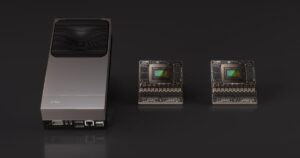
The expansion of the BSC's MareNostrum 5 supercomputer has been carried out using hardware and software from Nvidia, the leading manufacturer of high-performance chips for training and learning AI models. The new machine at the Catalan center will run on Nvidia's Blackwell chips, which, according to the data provided, are up to 30 times faster than the Hopper processors currently used by MareNostrum 5. These processors, however, have become the center of a geopolitical dispute, as Donald Trump banned their export to China, a decision that Huang has repeatedly criticized.
The BSC is a public consortium involving the Spanish State, the Catalan Government (Generalitat), and the Polytechnic University of Catalonia (UPC). The total cost of the AI factory project amounts to €154 million . Of this amount, the European Union contributes half, €77 million, while the Spanish administrations contribute €60 million, representing 39% of the total. The Catalan Government (Generalitat) contributes €10 million. The remaining 10% comes from the governments of Portugal (€12 million) and Turkey (€5 million). An additional €42 million is needed for services related to the machine's operation.

Mateo Valero, director of the BSC, has maintained a close relationship with Huang for years and has not hidden his satisfaction with this development. Valero pointed out that countries without these machines will face serious difficulties in prospering , and described the growth in the number of these systems as essential for technological sovereignty. "This new factory is the first of its kind in Europe; it's a great source of pride," he declared. The inauguration on October 13 is expected to be a large event, with more than 600 attendees, including top representatives from the central government and the Catalan government. BSC officials have also invited author Dan Brown, whose novel 'Origin' places the climax of the plot in the chapel of the BSC's Girona tower, precisely where the new machine will be installed, alongside the quantum computers.
Huang downplays the existential risks of AI
Beyond his business career, Jensen Huang has become a prominent voice in the debate surrounding the dangers of artificial intelligence. In an interview with CBS News journalist Jo Ling Kent, the executive flatly rejected the most catastrophic predictions. Huang stated that the probability of AI destroying the world is 0% and refuted the notion that the end of humanity is near because of this technology. His remarks were a direct response to a tweet from Evan Hubinger, Anthropic's chief researcher specializing in AI alignment, who had estimated a greater than 10% chance that AI could wipe out all human beings within the next decade.

Nvidia's CEO maintains that the apocalyptic narratives circulating about the risks of AI lack scientific basis. In his view, those who spread these alarmist messages are usually politically motivated or simply seeking attention . "Scaring people is unnecessary and irresponsible," he has stated. Furthermore, he wanted to make it clear that Nvidia will never release unsafe technology and that AI development must continue at the fastest possible pace: "We should go as fast as we can, regardless of what others are doing." With this statement, Huang was alluding to the United States' main rival on the geopolitical stage, China. Regarding regulation, he rejects the need for additional legislation beyond what already exists.
However, it's important to put these statements into context. Nvidia is a dominant leader in the AI chip market, with a 68% global share projected for the fourth quarter of 2025, according to data from Epoch AI. These integrated circuits are the foundation of its business and its primary source of revenue , so the company has a vested interest in ensuring that AI development continues unabated. This doesn't mean Huang's words are dishonest, but it also explains why AI is driving up the cost of graphics cards in the current market, suggesting that his words, like those of any other executive in the industry, should be analyzed with due caution.
China is considering opening the door to Nvidia chips
On the geopolitical front, Nvidia's situation in China remains complex. According to a report by The Information, China's Ministry of Industry and Information Technology has asked domestic companies like Alibaba and ByteDance to report how many units of the Nvidia RTX Pro 5500 they plan to purchase and for what purpose. This inquiry suggests Beijing's intention to eventually approve the sale of these chips . The RTX Pro 5500 is a professional GPU for Blackwell workstations, launched earlier this month, which, while capable of running demanding AI tasks, falls outside the category of accelerators that the United States has blocked from being sold in China.
The news triggered a sharp drop in the shares of Chinese chipmakers. Semiconductor Manufacturing International Corp (SMIC) fell 3,7% , while Hua Hong Semiconductor dropped nearly 5%. Moore Threads Technology, considered by many to be China's answer to Nvidia, declined 6,3%, and Cambricon Technologies fell 5,7%. NAURA Technology Group also suffered losses, down 3,4%, as did CXMT, which fell nearly 4%. These movements contrasted sharply with the overall gains in the Chinese and Hong Kong markets.
The report comes after the United States and China held a summit in Washington where they agreed to improve their trade relations, including a $30.000 billion tariff waiver in both directions. However, neither side addressed the thorny issue of AI chip sales . The potential approval of Nvidia's sales in China would represent increased competition for local manufacturers, who are struggling to develop comparable processors amid an adverse regulatory environment. Chinese manufacturing processes are still considered years behind the advanced technology of the United States and Taiwan.
The event on October 13th in Barcelona is therefore shaping up to be a landmark for AI in Europe, with Nvidia as the undisputed protagonist. Meanwhile, its CEO continues to set the pace of the global debate on the risks and opportunities of this technology, and the company navigates between trade restrictions and the growing demand for its products worldwide. The balance between innovation, security, and geopolitics will be key to understanding the immediate future of the sector.