
Button cell batteries are small, inexpensive, and widely used in a wide range of small electronic devices. From watches and hearing aids to calculators and remote controls, their tiny size and versatility make them indispensable for everyday life. However, with so many types and compositions available, choosing the right one can be a somewhat confusing task.
In this article, we'll explore the different types of button cell batteries, their chemical compositions, shapes, sizes, and the most common applications for each one. You'll also learn how to interpret the alphanumeric codes that accompany each model and why it's essential to take their specifications into account.
What are button cells?


A button cell is a small, round, disc-shaped battery, typically used in electronic devices that require little power but need to operate for extended periods. They are called button cells because their shape resembles a button, and unlike other batteries, they usually have a longer lifespan.
Button cell batteries are found in a multitude of devices, from watches and hearing aids to car keys and some toys. Despite their small size, these batteries offer a reliable and long-lasting power source for devices that cannot use larger batteries.
One of the most important features of button cells is that they come in various sizes and with different chemical compositions, making them suitable for a wide range of uses. Depending on their composition, their ability to operate in different temperature conditions, their voltage and their shelf life also vary.
There are several types of button cell batteries, depending on the chemical components they are made from. Below we detail the most common models and their applications in daily life.
Types of button batteries
Button cell batteries are divided into several types based on their chemical composition and size. Each of them has unique characteristics that make them more or less suitable for certain electronic devices. The main types are:
Alkaline batteries (LR)


Alkaline batteries are an economical and widely used option in devices that don't require much power but are used constantly, such as calculators or measuring devices. They have a voltage of 1,5 volts , and although their lifespan is shorter compared to other types of batteries, they are a common choice due to their affordability.
Some models include the LR44 (one of the most popular), the LR41 , and the LR43 . The latter, for example, is commonly used in low-end watches and toys. One of its main advantages is its ability to operate in extreme temperature conditions, ensuring reliable performance in both cold and warm climates.
Lithium batteries (CR and BR)

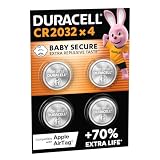
Lithium batteries are the preferred choice when stable, long-lasting performance is required. They operate at 3 volts and are known for their longevity compared to other types of batteries. They are commonly found in devices such as remote controls, car keys, and computer motherboards.
The most commonly used models include the CR2032 , CR2025 , and CR2016 . Although all these models are quite similar (sharing the same diameter), they vary in thickness. For example, the CR2032 is thicker than the CR2025, which provides it with longer battery life.
Lithium coin cell batteries are ideal for long-lasting applications such as watches and medical devices due to their ability to maintain a constant voltage over time.
Silver Oxide (SR) Batteries


Silver oxide batteries have a longer lifespan than alkaline batteries and are often used in devices that require precise operation, such as watches and some medical devices. They have a nominal voltage of 1,55 volts , and as they discharge, their voltage remains constant, making them especially useful for devices that require stable performance over extended periods.
They are more expensive than alkaline batteries, but their longer lifespan makes them a superior choice for precision devices. Among the best-known models are the SR44 , SR41, and SR43.
Zinc-air batteries


Zinc-air batteries are known for their use in hearing aids due to their ability to provide a constant and long-lasting current. These batteries are activated only upon contact with air, making them ideal for devices used intermittently. Their voltage is 1,4 volts.
Some common zinc-air battery models are the PR41 and PR44 . These batteries, once opened and exposed to air, have a relatively short shelf life, so it is essential to store them properly before use.
Rechargeable batteries
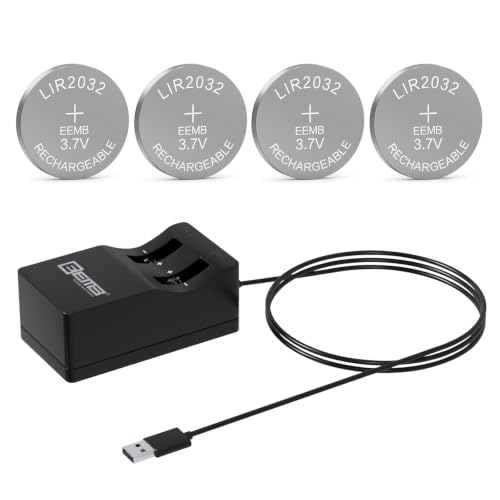


Although most button cell batteries are disposable, rechargeable versions are also available , ideal for certain electronic devices used frequently, such as remote controls or toys. These batteries can be recharged multiple times, making them more economical in the long run and generating less waste.
Among the most common types of rechargeable button cell batteries are nickel-metal hydride (NiMH) and lithium-ion batteries . NiMH batteries are popular for their ability to provide a constant charge, while lithium-ion batteries are known for delivering a large amount of energy, making them ideal for smaller devices.

Button cell equivalencies
Many button cell batteries have alternative names that vary depending on the manufacturer, which can be confusing. Fortunately, it's possible to find equivalents for each model and ensure you're using the correct battery for your device.
For example, CR2032 batteries are also known as DL2032, BR2032, and ECR2032, depending on the manufacturer. The same is true for the CR2025 model , which is also marketed under names such as DL2025 and BR2025.
To avoid errors when replacing a button cell, it is essential to look at the code printed on the original battery. This code contains key information about the chemical composition and size of the cell.
Alphanumeric codes and how to interpret them
Button cell batteries are identified by an alphanumeric code that gives you information about their composition and dimensions. Generally, the first letter indicates the main chemical component of the battery, while the numbers let you know its dimensions in millimeters.
For example, in a CR2032 , the letter "C" refers to its composition (lithium), the "R" indicates that the battery is round, and the numbers "2032" indicate that it has a diameter of 20 mm and a thickness of 3,2 mm.
Storing button cell batteries
To ensure a long life for button cell batteries, it is important to store them properly. They should be kept in a cool, dry place away from direct sunlight. In addition, it is advisable to avoid contact with metal objects to prevent short circuits.
Most button cell batteries have a shelf life of up to 5 years in storage if kept properly. However, it's important to pay attention to the expiration date, as after that time, batteries can begin to lose their charge even if they haven't been used.
How to recycle button cell batteries?
Proper recycling of button batteries is essential to prevent the release of hazardous chemicals into the environment. Many of these batteries contain heavy metals and other substances that can be harmful if not handled correctly.
Button batteries should be disposed of at designated collection points . You can find battery collection containers in many stores, supermarkets, and municipal recycling centers. It is not recommended to throw them in the regular trash, as this can lead to contamination.
Table of Contents