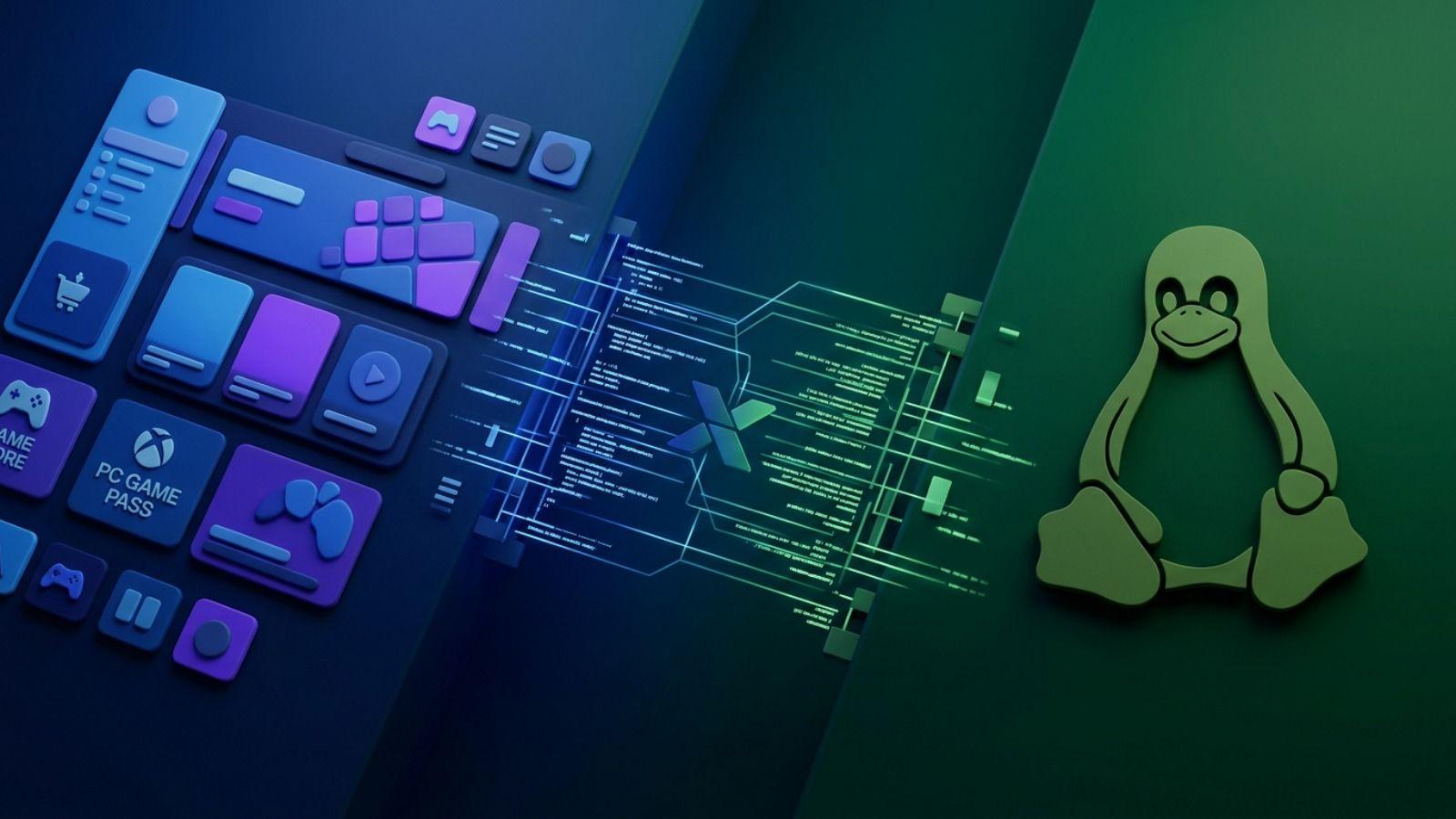
The next Linux kernel release is already revealing several of its features. Among the areas receiving the most attention are native recognition of Switch 2 controllers and the opening of the integration window, with a changelog that is still preliminary and not yet a production-ready version.
At this stage, it's important to distinguish between what's already in the development tree and what will reach users' computers. On the one hand, the HID section is gaining ground for gaming peripherals; on the other, the 6.753 changes recorded up to October 23rd serve to gauge the pace of the maintainers, not to indicate a finalized Linux 7.4 release.
Native support for Switch 2 controllers

The most noteworthy addition for PC gamers using Linux is a preliminary driver that allows Nintendo Switch 2 controllers to be recognized without going through Steam. This work, part of the HID changes, was developed by Vicki Pfau, commissioned by Valve , and is a developer with experience in hardware compatibility for the Valve and SteamOS ecosystem.
The controller covers the general input of the Joy-Con 2, the Pro Controller 2, and the GameCube controller that Nintendo offers with Switch Online. All three work via Bluetooth; for now, the wired USB mode is reserved for the Pro Controller.
Until now, using these controllers on Linux required keeping Steam Input running to translate button presses to the system. With built-in kernel support, that dependency disappears, and the controller behaves like a standard peripheral, boosting gaming on Linux by opening the door to other launchers and emulators without needing the Valve client open.
Mice, laptops and other peripherals
The HID block isn't limited to Nintendo. It also incorporates a new controller for Pulsar mice , capable of reading battery, voltage, and charging status in both wired and wireless modes, as well as adding support for the Kysona M600V2.
In the realm of portable PC consoles, power improvements are included for the ASUS ROG Ally , along with controller and lighting enhancements for the Lenovo Legion Go S. This is complemented by more compatible sensors in AMD's new SoCs and finer trackpad handling on Macs with the T2 chip.
Integration calendar and planner settings
The Linux 7.4 integration window opened on October 19th, and according to published counts, 6.753 changes had been incorporated by the 23rd, not counting merges . This is an early snapshot of development: the previous cycle, 7.3, closed its window with 15.267 changes, but that figure corresponds to the end of the process, not the beginning.

The original schedule set the regular closing date for November 1st; if an additional week was confirmed, it would be extended to November 8th . The extension would serve to clear the backlog of pending applications, not to reopen the submission period: any applications not received by then would be considered for Linux 7.5, and the first candidate would be moved depending on the circumstances.
Among the changes already implemented are adjustments to the EEVDF scheduler that, in published tests, reduce short-throw task latency by up to 55%. There is also finer management of vCPUs based on the time the hypervisor marks as stolen, and a preference for SMT threads that share a core on NVIDIA Vera CPUs, with improvements measured in specific environments.
The stable kernel version is scheduled for January 2027 , so support for Switch 2 controllers will remain in a preliminary phase until distributions adopt the new kernel. In the meantime, Steam Input will continue to be the standard method for those who want to use these peripherals on Linux.
Given this scenario, Linux 7.4 is shaping up to be a cycle focused on expanding compatibility with gaming peripherals and fine-tuning the scheduler's performance, while keeping in mind that many figures are still provisional. Native support for Switch 2 controllers and the evolution of the integration schedule will be two key points to watch until the stable version is released.
Table of Contents