
When we hit send on a message, start a video call, or watch a streaming video, behind the scenes there's a choreography of data traversing submarine cables, antennas, and data centers. This global infrastructure operates thanks to Linux , the open-source operating system that has become the nervous system of telecommunications and the cloud. Far from desktops, where Windows and macOS dominate, Linux reigns supreme on the servers and networks that connect the world.
In recent months, several developments have reinforced this position. From Microsoft's launch of Azure Linux 4.0 to the confirmation that major operators like Telefónica, AT&T, and Vodafone rely on Linux for their next-generation networks. Even Linus Torvalds himself has explained how his role has evolved to coordinate a kernel that can no longer depend on a single person. Everything suggests that Linux is not only maintaining its position but also quietly expanding.

Linux in telecommunications: the case of Telefónica, AT&T and Vodafone
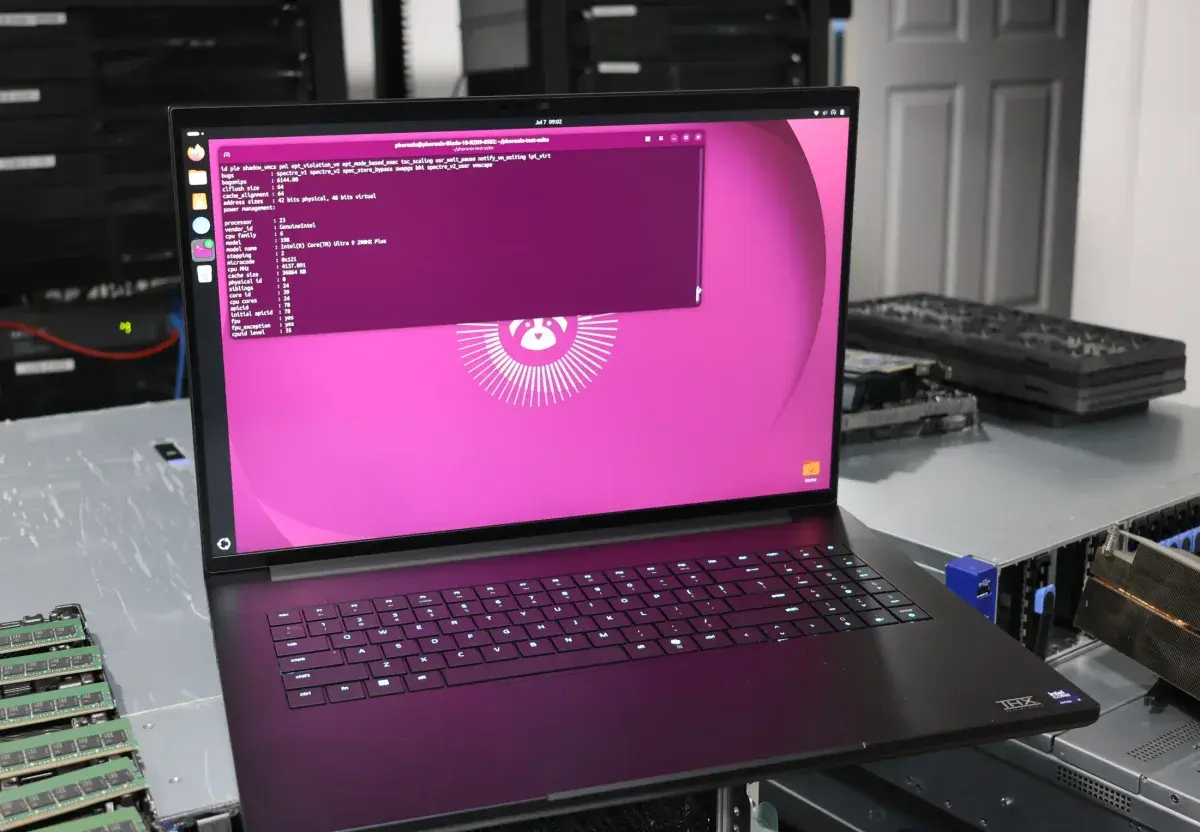
The telecommunications sector has been one of the first to adopt Linux on a large scale. Telefónica, for example, has led the transition to the Open RAN architecture, which separates hardware from software in base stations. The company uses standard commercial servers with Linux optimized with real-time patches to process radio signals with microsecond latencies. This allows for the deployment of more flexible 5G networks and reduces dependence on a single vendor.
AT&T, for its part, has virtualized more than 75% of its core network functions using Linux. The company spearheaded the creation of ONAP, an automation platform hosted by the Linux Foundation, and replaced its proprietary routers with generic switches running Linux-based operating systems. Network functions now run as virtual instances on Linux hypervisors , allowing capacity to be scaled in minutes without the need to install new hardware.
Vodafone, for its part, has invested heavily in edge computing. The operator has deployed thousands of computing nodes at the edge of its network, running enterprise Linux distributions. These nodes manage IoT traffic and critical applications such as autonomous vehicles using containers and Kubernetes, all on Linux. The company also uses Linux to slice its mobile network and offer dedicated, ultra-low-latency segments to industrial customers.

These three giants demonstrate that Linux is not just a desktop operating system, but the foundation upon which global connectivity rests. The flexibility of open source allows each operator to adapt the kernel to their needs , whether to reduce latency, improve security, or integrate new features without waiting for a manufacturer.
Microsoft is betting on Linux with Azure Linux 4.0

Microsoft, historically a rival of Linux, has taken another step in its integration with the open-source ecosystem. The company has released the preview version of Azure Linux 4.0, a distribution based on Fedora and RPM packages, designed specifically for cloud workloads. This distribution includes only the packages necessary for servers , reducing memory consumption and accelerating boot times.
Azure Linux 4.0 is available in the Azure Marketplace and can be deployed on any Azure virtual machine. Key new features include an optimized kernel with Hyper-V drivers, security features such as SELinux, and a rapid patching system for critical vulnerabilities. Microsoft recommends using it in test environments for now , but plans to release it to production soon. This distribution, formerly known as CBL-Mariner, was already used internally by Azure and is now offered as an additional option for customers.


Microsoft's commitment to Linux isn't limited to Azure. It recently released a preview version of WSL containers, allowing Linux containers to run natively on Windows without Docker Desktop. This simplifies the work for developers who need Linux environments without leaving Windows, and demonstrates that the Redmond company sees Linux as a strategic ally for cloud computing and development.
Linus Torvalds: from code to kernel coordination

As companies adopt Linux on a massive scale, kernel creator Linus Torvalds has explained how his work has changed. During the Open Source Summit in Mumbai, Torvalds confessed that he hardly writes any code anymore. His role now consists of overseeing the entire project and coordinating those responsible for each area , using Git and email as his primary tools.
Torvalds defines himself as the lead developer, not a programmer. He reviews the explanations that accompany changes and decides whether a proposal needs further testing. The Linux kernel has grown so large that it can no longer depend on a single person , and Torvalds relies on a chain of managers who filter patches before they reach him. This model has allowed Linux to continue evolving with hundreds of developers spread across the globe.


Security remains a top priority. The Bad Epoll vulnerability (CVE-2026-46242), a use-after-free flaw in the epoll subsystem affecting kernels from version 6.4 onward, has recently been identified. This flaw allows for privilege escalation to root and also affects Android, although devices with older LTS kernels, such as the Pixel 8, are safe. Patches are already available, and no active attacks have been detected, similar to what occurred with the critical privilege escalation vulnerability in other environments.
Linux remains the operating system that underpins the digital infrastructure, from telecommunications networks to the Microsoft cloud, including the kernel coordinated by Torvalds. Its adaptability and open development model make it the foundation upon which the future of connectivity is being built , with European companies like Telefónica and Vodafone leading the way in innovation.

Table of Contents