The Linux kernel is undergoing a profound transformation. On one hand, one of the largest code cleanups in its history is underway: the removal of over 55.000 lines dedicated to 32-bit ARM platforms that now have virtually no active users. On the other hand, a veteran developer has significantly accelerated kernel compilation by using artificial intelligence to pinpoint bottlenecks in the process. These two initiatives share the same goal: more efficient, maintainable, and future-proof code.
The kernel community, led by Linus Torvalds, remains very active in these changes. While Torvalds acknowledges that he hardly writes code anymore and now focuses on coordination, maintainers like Arnd Bergmann and Lorenzo Stoakes are working on concrete proposals that could mark a turning point in the evolution of Linux. These modifications not only affect developers but also end users, who will see a more stable and faster system in the long run.
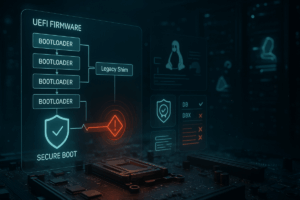
Historical cleanup of 32-bit ARM platforms
Arnd Bergmann, the project maintainer, has submitted a series of 13 patches to remove support for older hardware that no longer has a significant presence in the ecosystem. The proposal affects platforms such as SA1100, Footbridge, RISCPC, Orion/Dove/MV78xx0, OMAP24xx, i.MX31, LPC18xx, STM32F4/F7/H7, Versatile MPS2, AT91 SAMV7, Axxia, and several PXA board files. According to information published on Phoronix, the removal would free up more than 55.000 lines of code and numerous Device Tree files that are no longer needed.
This decision stems from the need to reduce the maintenance burden of preserving obsolete code . Every time a new feature is introduced or a subsystem is modified, developers must consider these older platforms, which slows down kernel evolution and hinders broader cleanups. While some users may still be running these platforms with recent versions, the community considers their presence extremely small.


The timeline for this cleanup is not yet finalized. Bergmann prefers to delay removal until Linux 7.5 , although technically the patches could be incorporated into Linux 7.4. This strategy aims to simplify dependencies and avoid interference with the next Long Term Support (LTS) release. It also provides an opportunity for users who rely on these systems to present compelling arguments for continued support. After these platforms are retired, numerous drivers will be orphaned, allowing for further rounds of source code simplification.
AI accelerates kernel compilation
The other big news comes from Lorenzo Stoakes, an ARM engineer and veteran kernel developer. He has released a series of 23 patches that accelerate Linux compilation by up to 90% in some scenarios, after using a language model to pinpoint bottlenecks in the process. The results, published on Phoronix, show improvements of 36% in builds with all modules enabled, up to 70% in incremental builds, and nearly 90% in so-called "noop" builds (when there are no changes to compile).

Stoakes explained that the AI generated a lot of code, but much of it was "horrible" and had to be almost entirely rewritten. The engineer extensively audited and rewrote the output , in addition to thoroughly reviewing the commit messages, cover letter, and code comments. He also documented the use of AI by adding an "Assisted-by" tag to all commits. The tool was initially used to locate bottlenecks and later to suggest fixes, coordinating builds, testing, and debugging.

The problem was found in the Kbuild build system, where Arm64 architecture Makefiles were making an excessive number of calls to the GNU Make shell function, launching external processes that cumulatively slowed down compilation. The improvements affect components such as Kbuild, kallsyms, modpost, objtool, and mksysmap , as well as the Rust build system . Stoakes notes that the improvement is noticeable regardless of the hardware used, suggesting that the bottleneck lay in an internal mechanism of the build process.
A more modern and efficient kernel
These two initiatives reflect a clear trend: Linux is seeking to simplify its codebase and adopt new tools to remain agile . Removing legacy ARM support not only reduces complexity but also eliminates a constant source of potential vulnerabilities in deprecated drivers. In fact, the increase in AI-driven bug reports has led maintainers to remove batches of old drivers and entire subsystems, such as ISDN.
Regarding AI-assisted compilation, Stoakes' case adds to a growing debate about the use of these tools in kernel development. Linus Torvalds has already pointed out that language models are significantly improving at detecting bugs , to the point that maintainers are receiving more and more reports of minor issues that would have otherwise gone unnoticed. However, generating clean code still depends on the judgment of a human developer, as Stoakes himself demonstrates by having to rewrite a large part of the output.
Stoakes' patch series is under review, and Bergmann's ARM cleanup doesn't yet have a release date. Both proposals, if approved, will make the kernel easier to maintain , with less internal complexity and a better foundation for future ARM technologies and other developments. For users, this means faster builds, a more stable system, and a community that can respond more quickly to security challenges.
In short, Linux continues to evolve towards cleaner, more efficient code , leaving behind historical burdens and taking advantage of new tools. The combination of cleaning up legacy code and optimizing processes with AI marks a path we will likely see repeated in the coming years. Far from stagnating, the project demonstrates an enviable capacity for adaptation, keeping its community active and prepared for future challenges.