
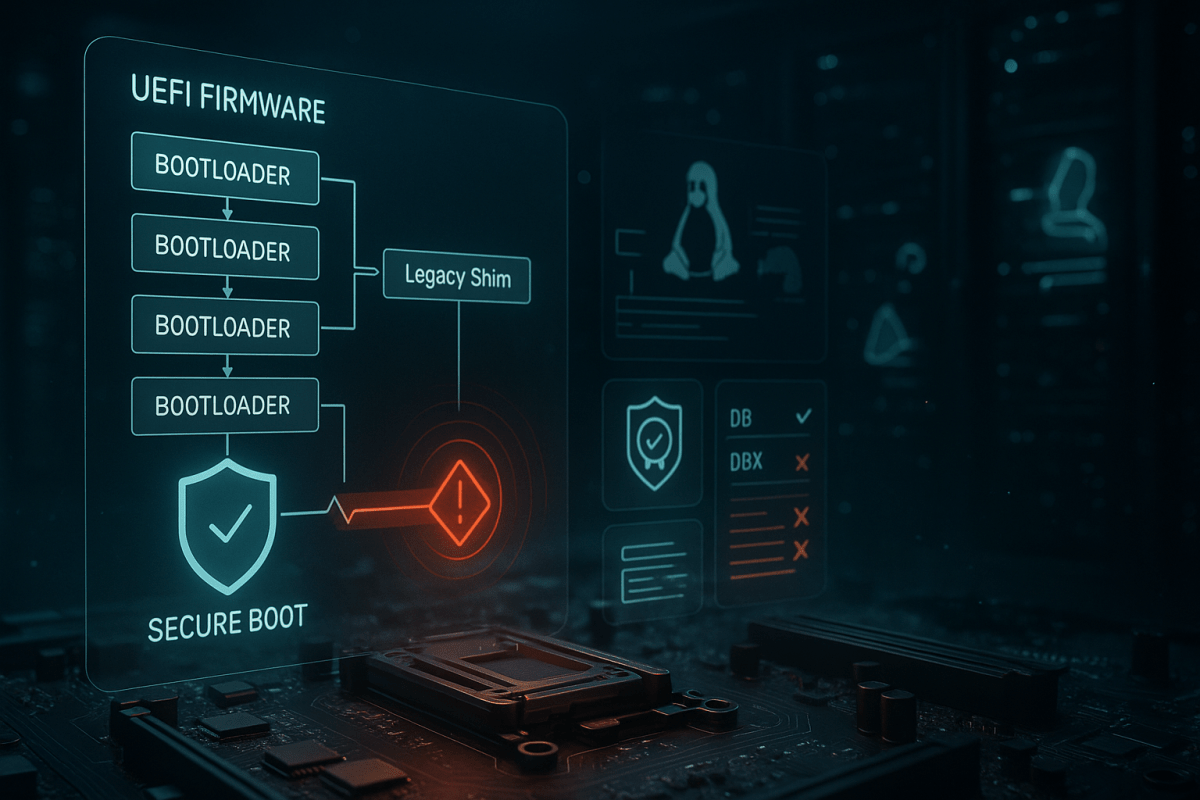
The Linux ecosystem is undergoing a profound transformation on several fronts. While the system kernel prepares to adopt Rust as its development language and the role of artificial intelligence in code review is being debated, enterprise distributions like Red Hat Enterprise Linux are expanding their support to indefinite limits. All of this is happening while Linux maintains absolute dominance in the realm of supercomputing and servers, where even Microsoft uses it for its most powerful machines.
These moves are not accidental. The community surrounding the kernel, with more than 5.000 developers and some 150 core maintainers, is looking for tools that reduce the review burden and increase security without stifling innovation. The decisions made in recent months will shape the course of the world's most important free operating system for years to come.

The Linux kernel is betting on Rust to reduce vulnerabilities
Greg Kroah-Hartman, maintainer of the stable Linux kernel, stated during the Open Source Summit India 2026 that Rust has ceased to be an experiment and has become a real part of the project's future. According to his estimate, which he described as "completely unscientific," the language could have prevented approximately 80% of the vulnerabilities recorded in the kernel over the past 25 years. The remaining 20% would correspond to logic errors that the compiler cannot detect.
The transition will not involve a complete rewrite of the existing C code. The strategy is to maintain the current C code and use Rust for new components , especially in subsystems like the graphics, where only drivers written in Rust will be accepted. Kroah-Hartman explained that Rust's ownership and type system allows many memory and resource management errors to be blocked during compilation, freeing reviewers to focus on the program's logic.

The change is already being implemented in critical components. Binder, Android's inter-process communication mechanism, has parallel implementations in both C and Rust, and the C version will soon be phased out. The community has granted Rust first-class language status , and Kroah-Hartman recommended that anyone wanting to contribute to the kernel learn Rust: "It makes programming fun again."
Linus Torvalds defends AI as a tool in development
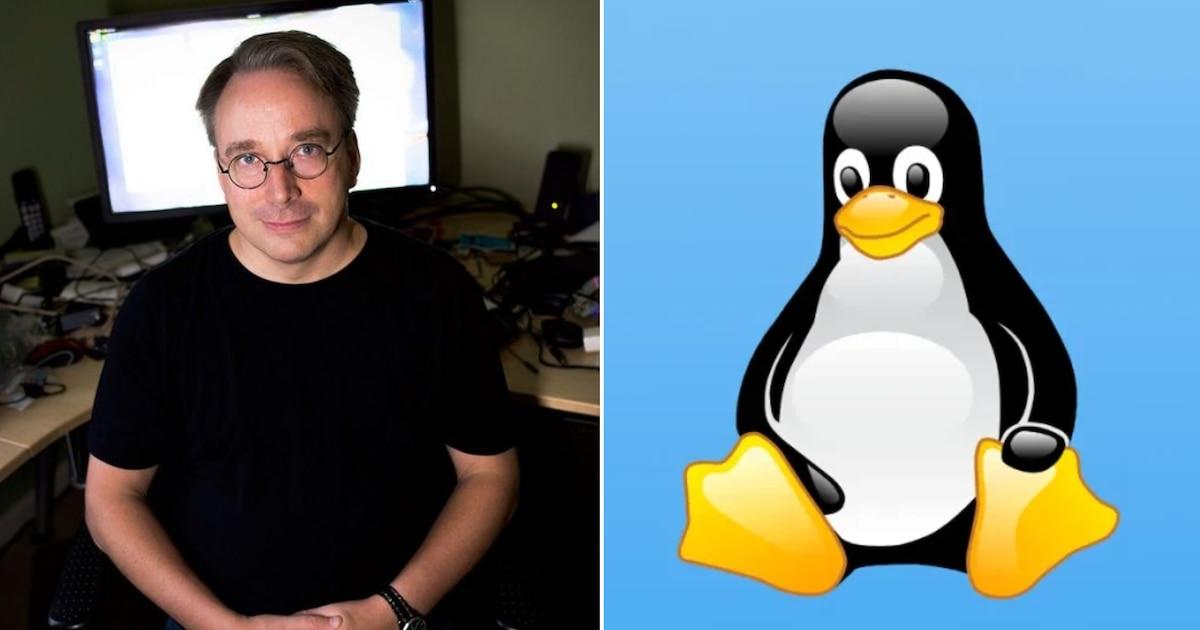
Linux creator Linus Torvalds clarified his stance on artificial intelligence in kernel development. During an exchange on the project's mailing list, he stated that Linux will not become an anti-AI movement and that those who disagree with its use can create a fork or leave. The discussion arose in the wake of Sashiko, a large-model language system designed to analyze patches and detect bugs before integration.
Torvalds believes AI is a useful tool, like any other, and that excessive pre-implementation that negates its benefits should not be imposed. However, he has also been critical when its use is irresponsible: months ago, he warned about the chaos AI was creating in Linux security, as automatically generated reports were clogging the kernel's private lists with known problems or without concrete solutions. For him, ultimate responsibility for the code must always rest with human developers.
Torvalds' stance reinforces the idea that AI should complement, not replace, human judgment . In a project with over 5.000 developers and around 13 new vulnerabilities discovered every day, any tool that speeds up the review process is welcome, as long as it doesn't create additional noise.
Red Hat offers indefinite support for RHEL.
In the enterprise sector, Red Hat has launched a long-life technical support offering for Red Hat Enterprise Linux, informally known as "RHEL forever." The service has no predetermined end date and is offered through a customized, undisclosed fee. Officially called "The Long-Life Add-On," it is targeted at highly regulated sectors such as finance, telecommunications, healthcare, and government.
The company, an IBM subsidiary, will provide critical patches for vulnerabilities classified as critical, urgent bug fixes, and 24/7 technical support as long as the customer continues to pay. The fixes are applied retroactively to protect API stability and prevent disruptive updates. This option is offered as an annual extension of Red Hat Enterprise Linux Extended Life Cycle Premium support, which already provides 14 years of updates for major versions.
Red Hat believes many organizations need more time to migrate their applications, especially when software lifecycles don't align with hardware investments or regulatory deadlines. With RHEL forever, IT managers can plan without the pressure of an end-of-support deadline.
Linux dominates in supercomputing and servers
While Windows maintains a market share of around 70% on the desktop, the story is radically different in the realm of supercomputing. According to the TOP500 list of the world's most powerful machines, all of them run some variant of Linux . The most powerful machine, at the Shenzhen National Supercomputing Center (China), uses Kylin OS, which is based on Linux. Even Microsoft, in its Eagle supercomputer (ranked 7th), has had to deploy nodes running Ubuntu 22.04 for artificial intelligence tasks.
The reasons are clear: Linux allows for maximum system customization, the elimination of background processes, and 100% hardware optimization. A 1% loss due to irrelevant tasks can translate into trillions of lost operations . Furthermore, volume licensing for Windows would cost millions for a supercomputer, while distributions like Rocky Linux, Red Hat Enterprise, or AlmaLinux offer technical support at a fraction of the cost. In the web server market, over 80% use Unix/Linux variants, and the leading cloud platforms (AWS, Google Cloud, Azure) have over 90% of their infrastructure running on Linux.
Linux's modular philosophy, inherited from UNIX, allows each tool to focus on a specific task. If configured correctly from the outset, maintenance costs are significantly reduced , something organizations increasingly value in a world where energy and resource efficiency are key.
Taken together, these advances demonstrate a Linux ecosystem in full swing. The kernel is being strengthened with Rust and AI as allies, enterprise distributions are extending their lifecycles indefinitely, and dominance in high-performance computing is being consolidated. The community, with its characteristic practical spirit, continues to demonstrate that Linux is ready for the challenges of the future without losing its open and collaborative essence.
