

The Community of Madrid has established itself in recent years as one of the leading data center hubs in Europe , with sustained growth in new facilities and a strong commitment to resource efficiency. This momentum comes amidst a heated debate about the impact of these infrastructures on water and energy consumption, two issues that the regional government has placed at the heart of its discourse.
The regional government emphasizes that the expansion of the digital economy and Artificial Intelligence (AI) does not have to be at odds with environmental protection. Officials from the Madrid regional government argue that the new generation of data centers incorporates technologies that significantly reduce water demand and electricity consumption, going so far as to describe as "technically false" claims that these infrastructures could leave the region without water.

Madrid, national leader with 40 data centers and 15 projects underway
According to data released by the regional government, the Community of Madrid currently has 40 operational data centers and another 15 under construction. This figure places the region at the forefront of the Spanish market and, according to the administration itself, is growing at a faster rate than other major European hubs such as Frankfurt, London, Amsterdam, and Paris.
Regional authorities consider these data centers to have become a strategic infrastructure for the Madrid economy. Their role is key to supporting the constant increase in digital services, cloud storage, and especially the deployment of AI-based applications, which require enormous processing and information management capacity.
In this context, the Community's strategy involves continuing to attract large-scale technology projects , linked to both international companies and national operators, and consolidating Madrid as a preferred location for new data center investments within Europe. The stated objective is to combine economic growth, innovation, and sustainability in a single model.

Official figures have also been used to reinforce the narrative that the sector's development is occurring with increasing control over its environmental impact. The region showcases its portfolio of centers in operation and under construction as proof that it is possible to expand digital infrastructure while adjusting water and energy consumption through more efficient technologies.
At the same time, the regional government insists that the Community of Madrid wants to remain aligned with European regulations , which are moving towards increasingly greater demands for transparency regarding the use of resources in this type of facility, especially in relation to the water footprint and energy expenditure.
Reduction of up to 90% in water intensity
One of the most repeated messages from the Madrid government is that the new generation of data centers has significantly reduced the water consumption associated with their operation. According to figures released by the regional government itself, some facilities have seen their water intensity reduced by up to 90% compared to previous models.
This improvement is largely attributed to the implementation of closed-loop cooling systems , which allow water to be reused within the cooling process itself. This type of solution minimizes the need for constant inputs of fresh water, directly resulting in a reduced impact on the region's water reserves.

In addition to closed-loop systems, the industry is incorporating technologies that allow servers to be kept at the correct temperature using alternative refrigerants or by combining different cooling methods. In some cases, this makes it possible for part of the operation to be carried out with virtually no water consumption, especially at certain times of the year or under specific environmental conditions.
Regional authorities insist that it is inappropriate to compare the water needs of current data centers with those of facilities built decades ago . According to the Minister of Digitalization, innovation has completely transformed the sector and has modified, both technically and operationally, how computer equipment is cooled.
Alongside the reduction in water usage, the regional government also highlights the improvements achieved in energy efficiency . The new data centers require less electricity to maintain their equipment at the appropriate temperature, allowing for increased processing capacity without a proportional increase in energy consumption and, consequently, the associated carbon footprint.
The Atazar as a symbol of the balance between water and digitization
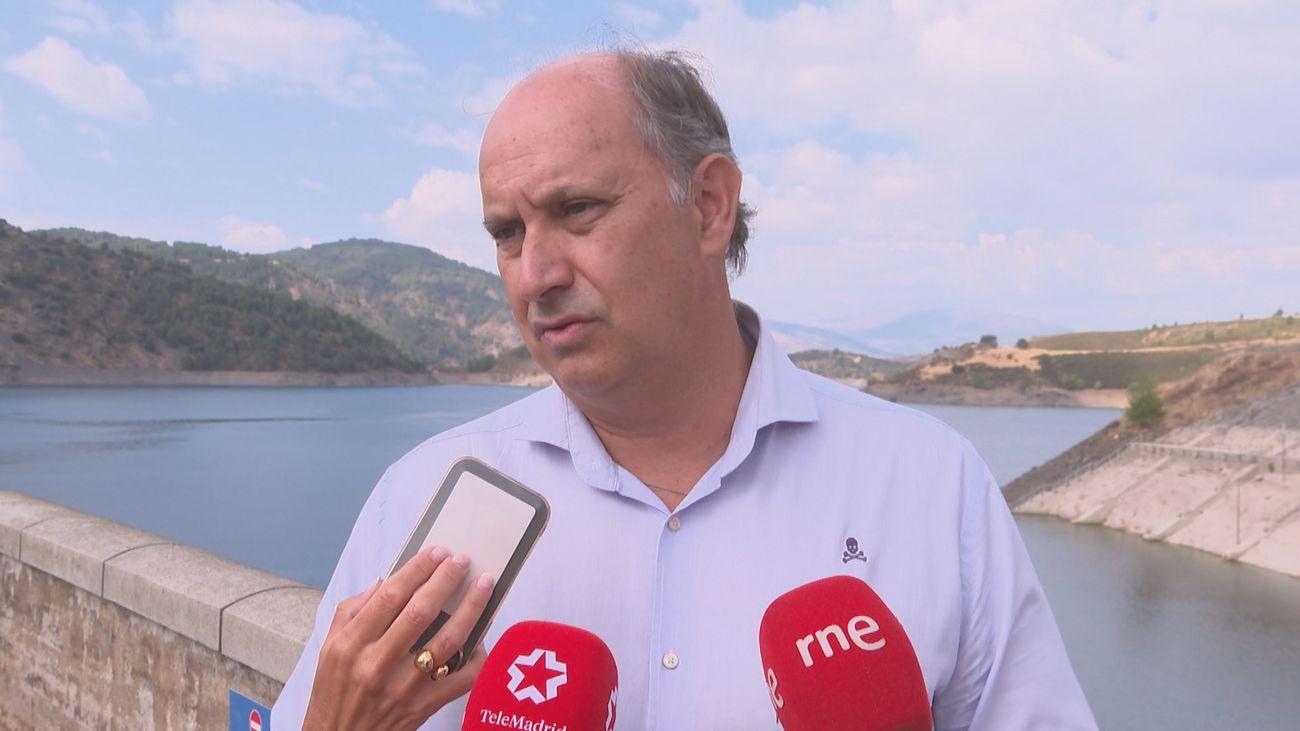
Many of these messages have been conveyed from the El Atazar reservoir dam , a key point for the water supply of the Community of Madrid. The choice of this location is not accidental: the regional government seeks to emphasize the compatibility between water resource protection and technological development.

During several visits to the reservoir, the Minister of Digitalization has categorically rejected warnings that point to data centers as a direct threat to the region's water reserves. He describes these claims as a "technically false generalization" and argues that, with current technology, the water impact can be kept under control as long as the facilities are designed and managed according to efficiency criteria.
In his remarks, the regional official described El Atazar as a strategic resource that must be preserved and emphasized that Madrid's digitalization is being driven by innovation, efficiency, and technical rigor. This combination, he maintains, makes it possible to reconcile the need for greater computing power with the obligation to protect the environment.
The regional government emphasizes that the expansion of data centers is taking place under supervision and a regulatory framework that requires increasingly detailed reporting of water and energy usage. Transparency in these indicators is presented as a key tool to ensure that the sector's environmental footprint remains within acceptable parameters.
Ultimately, the message the Community of Madrid wants to convey is that environmental protection and economic growth do not have to be conflicting objectives. In the Executive's view, recent experience in deploying data centers demonstrates that it is possible to advance connectivity, digital services, and AI capabilities without overburdening the region's natural resources.
Critical infrastructure for digitization and Artificial Intelligence
Data centers have become the backbone of the digital economy . They house and process the information used by cloud services, content platforms, business applications, and AI tools that are increasingly common in the daily lives of citizens and companies.

The Community of Madrid emphasizes that data centers are the cornerstone of the deployment of Artificial Intelligence , both in the private sector and within the public administration itself. Their capacity to store, process, and distribute data at high speed is essential for enabling new business models, more agile public services, and solutions based on massive data analysis.
The regional government directly links the growth of data center infrastructure to the creation of skilled job opportunities , the attraction of foreign investment, and the strengthening of the regional technology ecosystem. Madrid aims to capitalize on this momentum to consolidate its position as one of the continent's major digital hubs.
At the same time, regional authorities are aware that the expansion of this infrastructure poses significant challenges, especially in terms of energy demand and pressure on electrical grids . Therefore, in addition to advances in cooling, the adoption of more efficient architectures and the integration of low-environmental-impact energy sources are being encouraged.
Along these lines, the Community of Madrid argues that the sector's shift towards highly efficient water and energy designs responds not only to regulatory requirements, but also to the business need to reduce operating costs and comply with sustainability criteria that are increasingly valued by customers, investors and society in general.
With 40 centers already active and 15 more under development, significantly reduced water usage thanks to closed-loop systems and innovation in cooling , and an official discourse that attempts to combine competitiveness with environmental care, Madrid is positioning itself as a large-scale laboratory for how to integrate digital infrastructure into the territory without neglecting the protection of water and energy resources.
