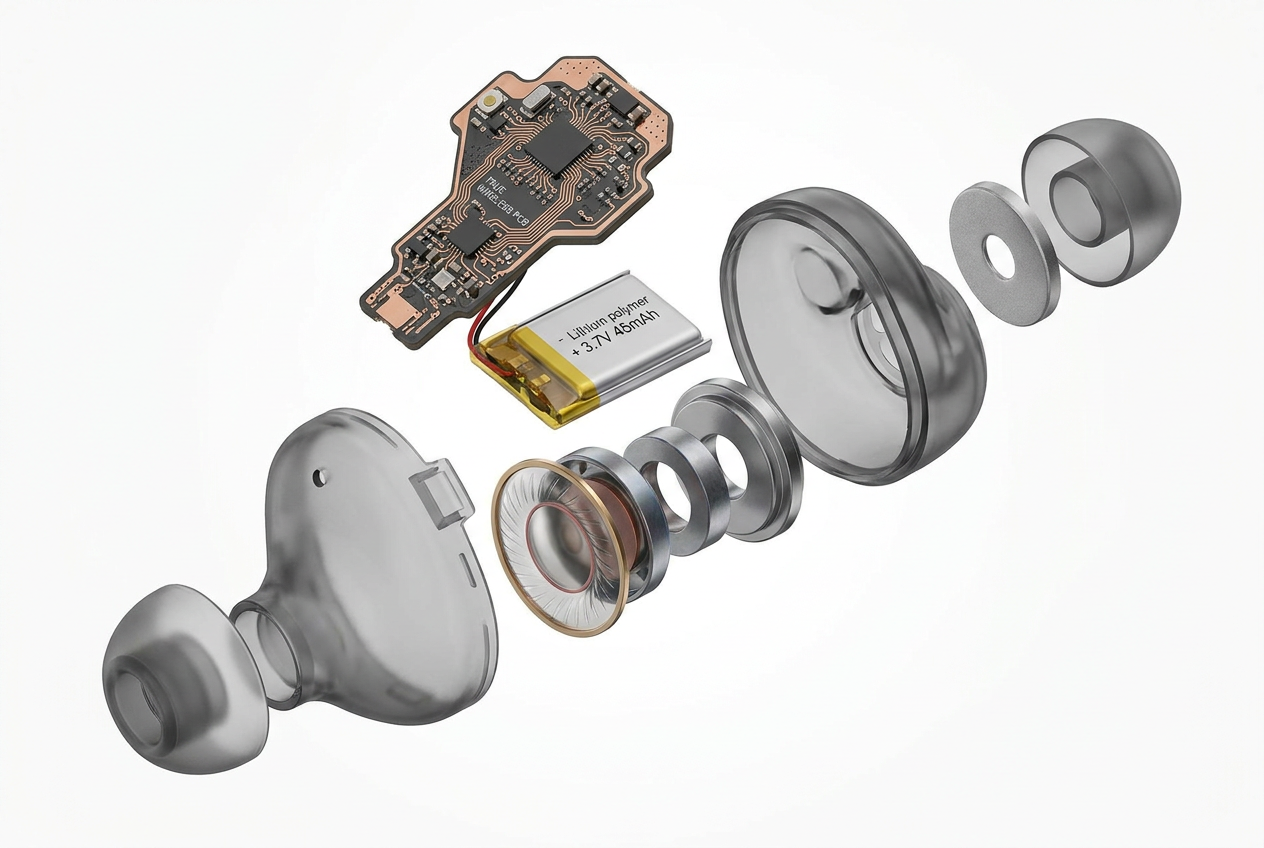
Fitting all the technology of a professional sound system into a space smaller than 5 cm³ is, essentially, an electronic puzzle. True Wireless Stereo (TWS) earbuds represent the pinnacle of miniaturization , where Bluetooth radio, power management, amplifiers, and sensors must be crammed into a ridiculously small size without the device overheating or running out of battery after ten minutes.
To pull off a project like this, it's not enough to know about electronics; you have to master the art of advanced printed circuit board design. The challenge is to achieve impeccable audio quality and a weight low enough that the user doesn't feel like they're wearing a brick to their ear, all while complying with international regulations and very demanding manufacturing standards.
Ultraminiature Board Architecture and HDI Technology
When we talk about TWS earbuds, we're dealing with dimensions that are usually smaller than 15 mm x 10 mm, and the most interesting thing is that they aren't perfect rectangles, but rather have irregular shapes that mimic the anatomy of the human ear. To make everything fit, High Density Interconnection (HDI) is used, employing microchannel structures and a via-in-pad design, which allows every square millimeter to be utilized.
In terms of construction, 3- to 4-layer configurations are common, although more sophisticated models use rigid-flex structures of up to 6 layers . This combination of FR-4 for the rigid areas and polyimide (PI) for the flexible parts allows the board to bend and adapt to the internal recesses of the case, eliminating the need for cables and connectors that would only take up space and could fail.
- Passive components: Sizes 0201 are used as standard and 01005 in areas where space is critical.
- Traces and spaces: The routing is so dense that it ends up working with 40/40 μm or 50/50 μm lines.
- Total thickness: In order to stack the plate with the battery, the thickness usually ranges between 0,4 and 0,6 mm.
- Surface finishes: Immersion gold is the preferred option to ensure perfect soldering and prevent oxidation.
Bluetooth Connectivity and the Antenna Challenge
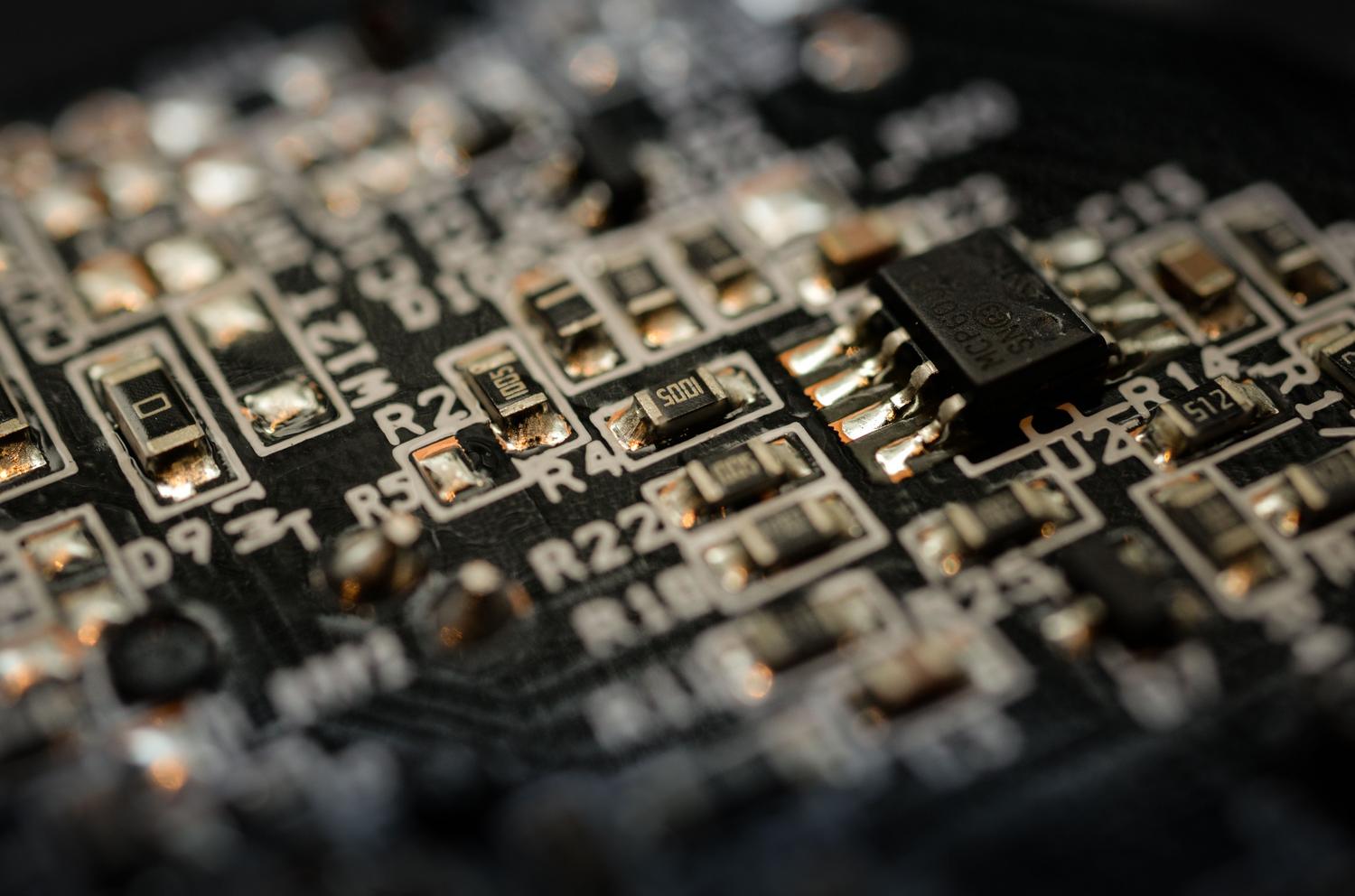
The antenna is the heart of communication, but in a TWS earbud, it occupies the worst possible position: it's surrounded by plastic, metal, and, most problematically, the user's head. The body load effect alters the antenna's resonance, so theoretical simulations are useless; real-world tests with body phantoms are necessary to ensure that the return loss is less than -10 dB.
There are several strategies for implementing the antenna depending on budget and space. Chip antennas are compact but less efficient, while those printed on the PCB require a very strict ground clearance area. For high-end models, LDS (Laser Direct Structuring) antennas are used , integrated directly into the plastic casing, taking advantage of the product's external volume.
To avoid interference, it is vital to position the antenna away from the battery and the driver magnets. Additionally, Pi or L matching networks with high-Q components are typically implemented to compensate for manufacturing variations and ensure a stable 2.4 GHz signal.
Food and Efficient Energy Management
Since we use tiny lithium polymer cells (between 30 and 70 mAh), every microamp counts. The battery management circuit (BMS) design must be extremely efficient, aiming for a quiescent current of less than 1 μA so that the earbud doesn't self-discharge while stored in the case.
Charging is typically done via pogo pins, where the contact resistance must be controlled to allow currents of 50-100 mA. It is essential to integrate overvoltage and undervoltage protection systems , as well as an NTC thermistor that cuts off the load if the temperature falls outside the safe range (generally between 0 °C and 45 °C).
To improve the user experience, intelligent power-saving features such as Automatic Power Save Delivery (APSD) and transmission power control are implemented, which adjusts the signal strength according to the distance to the paired device, thus extending battery life.
Advanced Audio and Sensor Path
To achieve clear sound without consuming much power, the industry has adopted unfiltered Class D amplification . This architecture utilizes the speaker's own inductance to filter the signal, eliminating bulky components. Because the drivers are very small (5-7 mm), a DSP is required to apply electronic equalization and boost the bass below 200 Hz.
In premium models, Active Noise Cancellation (ANC) adds a significant layer of complexity. It requires a hybrid system with external feed-forward microphones and internal feedback microphones that must be perfectly matched in sensitivity (within ±1 dB). The routing of these analog signals must be shielded to prevent digital noise or Bluetooth RF interference from contaminating the audio.
In addition, IR proximity sensors or capacitive detection are integrated for the automatic pause function when the earpiece is removed. These tactile electrodes must be designed avoiding right angles and maintaining a safe distance from the antenna to prevent false triggers.
Precision Manufacturing and Quality Control
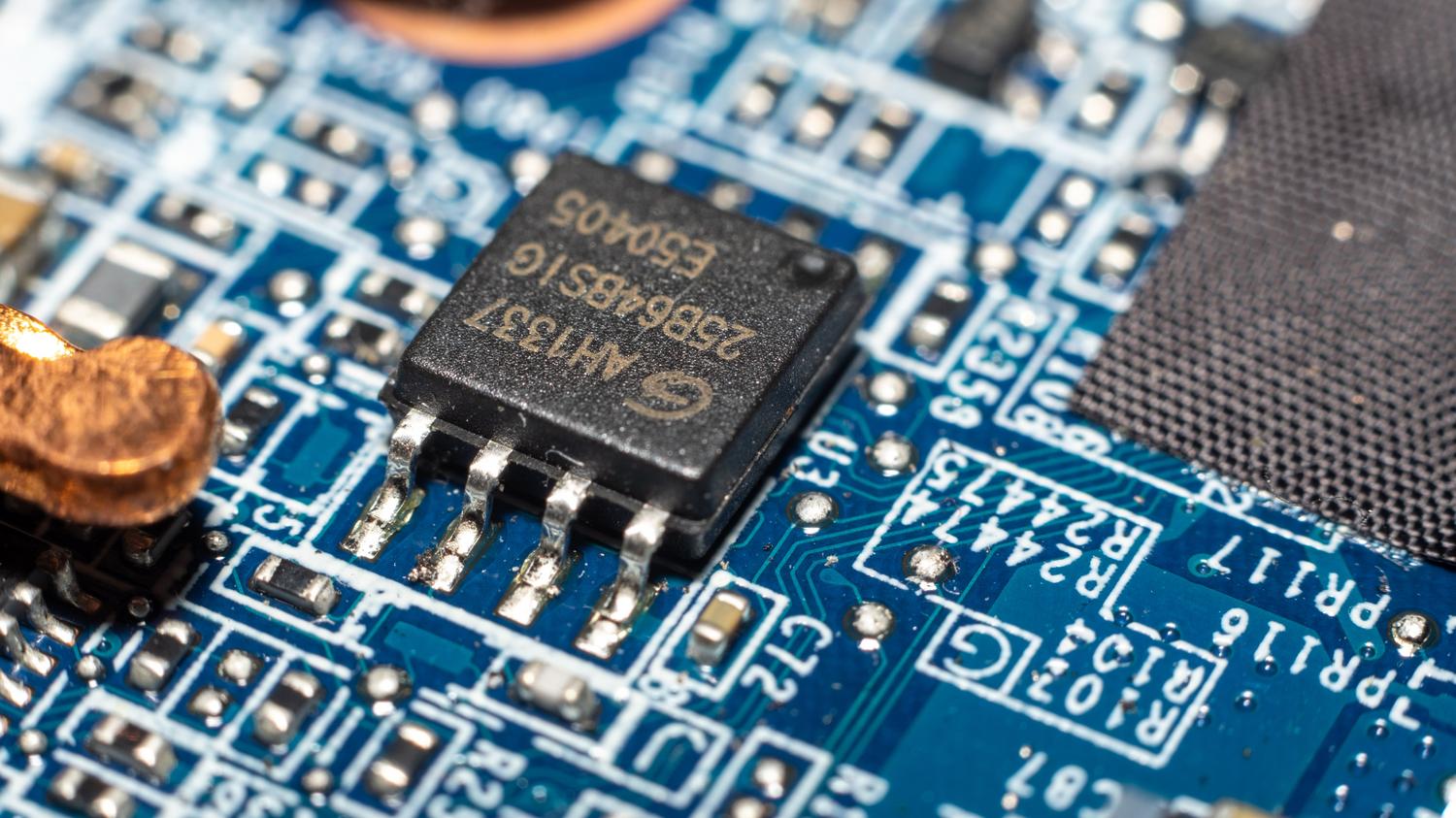
Putting a design on paper is one thing, but manufacturing millions of units with micron-level precision is quite another. SMT assembly requires pick-and-place machines with an accuracy of ±30 μm for 0201 components and meticulous solder paste control using SPI to prevent electrical bridging.
The manufacturing process must strictly comply with IPC standards and the RoHS directive , ensuring the absence of toxic materials and the robustness of the board. Automated optical inspection (AOI) is key to detecting soldering errors in components so small that the human eye could not easily see them.
Finally, the ethical and legal aspects cannot be overlooked. The design of these circuit boards is often protected by international patents , so reverse engineering must be handled with care to avoid legal infringements. Furthermore, since these devices handle personal and health data, signal encryption is a non-negotiable requirement.
The success of a true wireless earbud lies in the symbiosis between an ultra-dense HDI construction, precise power management, and an antenna optimized for the human body. Achieving this balance allows the wearable electronics to be invisible to the user yet powerful in performance, ensuring that miniaturization does not sacrifice sound quality or wireless connection stability.
Table of Contents