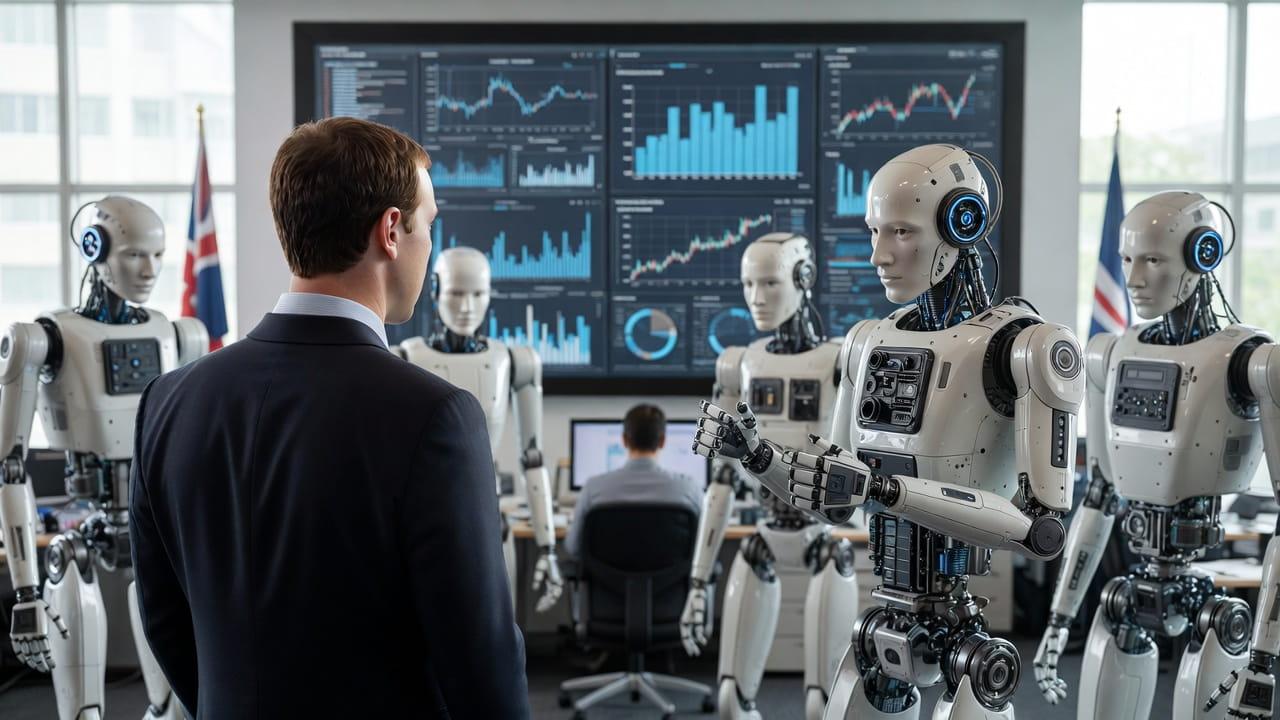
Meta Platforms has taken another step in its roadmap toward humanoid robotics and advanced artificial intelligence with the acquisition of Assured Robot Intelligence, a young company focused on AI models for robots. The recently completed, undisclosed transaction aligns with Mark Zuckerberg's company's strategy to position itself at the forefront of the next generation of robots capable of navigating human environments.
With this acquisition, Meta adds a team specializing in developing algorithms that enable robots to understand, anticipate, and adapt to human behavior in complex and changing scenarios. While financial details have not been disclosed, the move reinforces the perception that the humanoid robot market has moved beyond laboratory experiments and become a priority for major technology companies.
Who is Assured Robot Intelligence and what does it bring to Meta?

Assured Robot Intelligence, known in the industry as ARI, is a startup focused on artificial intelligence models applied to the control of humanoid robots . Its technology addresses one of the biggest challenges in robotics: enabling machines to make reliable decisions without constant supervision, operating safely in unstructured spaces, from homes to flexible factories.
The company develops fundamental AI models that aim to equip robots with the ability to interpret their surroundings, predict human reactions , and adjust their movements in real time. The goal is for them to perform diverse physical tasks, such as housework or logistical support, without relying on rigid programming or perfectly controlled environments.
Prior to the acquisition, ARI had raised an initial funding round, with participation from, among others, the venture capital fund AIX Ventures , although the specific figures have not been disclosed. Beyond the capital, its value lay primarily in its technical team and an intellectual property portfolio focused on full-body control and robotic self-learning.
The startup's co-founders, Lerrel Pinto and Xiaolong Wang , have extensive experience in robotics research and entrepreneurship. Wang was a researcher at Nvidia and an associate professor at the University of California, San Diego, with a history of academic awards and high-profile publications. Pinto, for his part, taught at NYU and previously co-founded Fauna Robotics, a company that developed humanoid robots for children, which was eventually acquired by Amazon as part of its own robotics strategy.
How will ARI be integrated into Meta's AI and robotics structure?

Following the closing of the agreement, the entire Assured Robot Intelligence team will join Meta Superintelligence Labs , the company's cutting-edge AI research unit. There, they will work closely with Meta Robotics Studio , the group created in 2025 to establish the technological foundation for Meta's future humanoid robots.
The joint focus will be on several key capabilities: full-body control, autonomous learning , and real-time adaptation. In other words, teaching robots to move with human-like coordination, learn from their own experience, and react without relying on a fixed script every time environmental conditions change.
ARI's workforce was primarily distributed between San Diego and New York , which aligns with Meta's global and decentralized research team structure. This geographically diverse integration allows the company to continue attracting talent from various technology hubs without concentrating everything in Silicon Valley.
Beyond software, Meta has made it clear that it is also willing to invest in its own hardware : sensors, control systems, and components specifically designed for humanoids. The combination of AI models, precision electronics, and development platforms aims to create a technical ecosystem that can be used both internally and by third-party companies.
An internal memo leaked last year already mentioned Meta's ambitions in this area: a humanoid robot project integrating cutting-edge AI models and consumer-oriented hardware . While there's no guarantee that this robot will reach the market as a final product, the acquisition of ARI fits with that long-term plan.
Meta Strategy: From Superintelligence to Physical-Digital Robotics
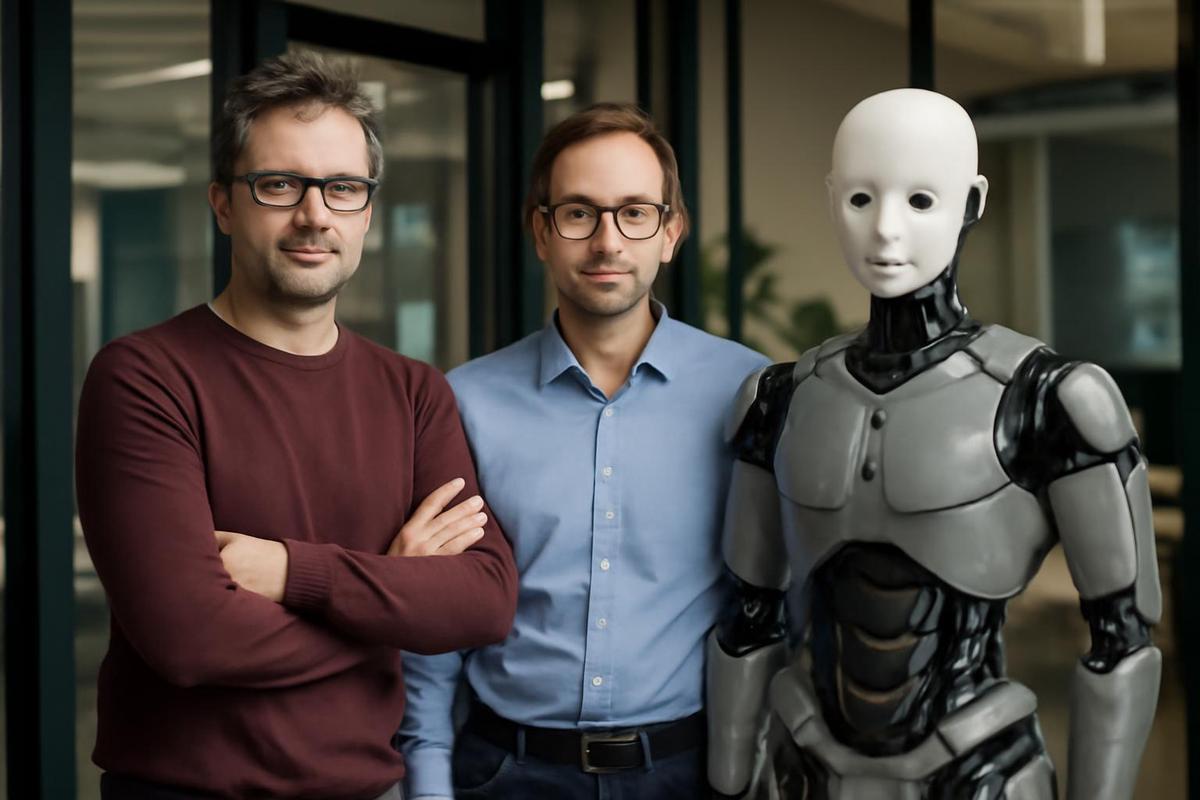
The acquisition of Assured Robot Intelligence adds to other recent moves that outline a broader strategy: Meta has indicated 2026 as the start of a stage focused on "superintelligence" , with the deployment of autonomous agents and systems capable of making complex decisions in different contexts.
In parallel, the company has closed a multi-million dollar deal with Google to lease TPU chips , securing computing power to train increasingly large AI models. This battle for computing infrastructure has become a key element of competition among major tech companies, which is no longer limited to software but rather focuses on who has the most computing power.
In the specific field of humanoid robotics, Meta competes with Tesla (Optimus), Figure AI, Boston Dynamics, Apptronik, and Agility Robotics , among others. The difference in approach is significant: while Tesla focuses on integrating robots into its industrial and automotive ecosystem, and Figure concentrates on logistics, Meta intends for robotic intelligence to act as an interaction layer for its social and virtual reality platforms . Furthermore, companies like Boston Dynamics are key players in this competitive landscape.
The underlying idea is that the advances made in language models, virtual reality, and recommendation systems can be transferred to the physical world through robots that interact naturally with people. For a company whose business has been based on connecting users and content, extending that logic to physical agents is consistent with its evolution toward more immersive experiences.
Many AI researchers also argue that the path to potential artificial general intelligence (AGI) lies in training models in the real world, where machines learn from direct interaction with objects, people, and spaces, and not just from static data. Humanoid robotics, in this sense, is seen as a crucial testing ground.
The regulatory precedent of Manus AI and the impact on future operations
The acquisition of Assured Robot Intelligence comes shortly after an episode that has shaped Meta's regulatory agenda. In December 2025, the company announced the acquisition of Manus AI for over $2.000 billion, managing to close the deal in just ten days. However, in April 2026, China blocked the transaction, citing its national security review mechanism for foreign investments, forcing Meta to reverse the deal.
This blockade has heightened the perceived risk surrounding cross-border technology transactions , especially those involving advanced AI and sensitive data. For Meta and the other industry giants, the lesson is clear: every new acquisition must be planned with potential regulatory vetoes in mind in different jurisdictions.
In this context, agreements like ARI's, with their more modest size and focus primarily on talent and intellectual property, become strategically critical for maintaining the pace of innovation without exposing themselves to as much international regulatory dispute. It is no coincidence that Meta emphasizes incorporating specialized teams with high research capabilities.
The Manus AI case has also highlighted the extent to which governments want to influence who controls robotic intelligence technologies. For the European industry, accustomed to a more strictly defined regulatory framework, these developments reinforce the importance of having clear but balanced regulations that allow it to compete without being completely excluded from the major players.
Global race for humanoid robots and Europe's position
Meta's move is part of a genuine technological race to dominate the humanoid robot market . Alongside Tesla, Google, Amazon, Boston Dynamics, and several high-profile startups, the company is competing to develop machines capable of moving, learning, and working in environments designed for humans.
These systems aim to transform sectors such as logistics, flexible manufacturing, domestic services, and personal assistance . Unlike traditional industrial robots, designed for repetitive tasks on assembly lines, humanoid robots seek to replicate human mobility and dexterity, opening the door to a much wider range of applications.
For Europe and Spain, this scenario presents both a challenge and an opportunity. Although the epicenter of many of these operations remains in the United States and Asia, the robotics and AI talent at European universities and research centers is competitive. Furthermore, the European Union's focus on AI regulation and ethics could become an added value if a stable and predictable framework for investment can be established.
In the Spanish-speaking world, teams in Spain and Latin America are already developing robotic solutions for agriculture, logistics, and services, often with leaner cost structures than their US counterparts. The major bottleneck remains access to capital-intensive hardware, a problem that forces many startups to seek international funding or adopt asset-lighter models.
In this context, moves like Meta's acquisition of Assured Robot Intelligence send a clear signal to the European ecosystem: strategic acquisitions in humanoid robotics and applied AI are accelerating, and those who excel in specific niches will have a better chance of being considered by major companies.
Lessons and signals for robotics and AI startups in Spain and Europe
The deal between Meta and ARI offers several clues for founders working in robotics, autonomous systems, or advanced AI in Spain and the rest of Europe. One of the most obvious is that the time for exiting through acquisition is ripening : Big Tech companies are opting to buy talent and technology instead of building everything internally from scratch.
Recent patterns show that the most attractive startups for these deals tend to share three characteristics: a very specific specialization (e.g., AI for robotic security or full-body control), a technical team with experience that is difficult to replicate, and well-documented and protected intellectual property.
For projects originating in the Spanish-speaking world, this means taking aspects such as IP documentation, technical benchmarks , and proof-of-concept testing in real-world environments very seriously. A good demo isn't enough: potential buyers typically demand solid evidence that the technology works outside the lab.
The ability to fit into larger ecosystems is also relevant . Assured Robot Intelligence didn't aim to cover the entire stack (hardware, software, and services), but rather to solve a very specific problem that Meta needed to complete its robotics puzzle. For many European startups, positioning themselves as a key piece of a larger system can be more realistic than trying to compete head-on on all fronts.
Finally, regulatory implications are not a minor detail. Episodes like the veto of Manus AI demonstrate that, as AI becomes more strategic, regulators will have more influence on the viability of M&A transactions . Considering from the outset where the data is located, how the capital is structured, and which jurisdictions are involved can prevent unpleasant surprises when a potential takeover bid arrives.
Taking a step back, Meta's acquisition of Assured Robot Intelligence illustrates how humanoid robotics and artificial intelligence applied to the physical world are entering a consolidation phase where talent, specialization, and regulatory risk management are as important as the technology itself. For the European and Spanish ecosystem, which combines strong technical expertise with limited capital, these kinds of moves serve as a reminder that there is room to play a significant role if companies focus on clear niches and build early connections with major international players.

Table of Contents
- 1 Who is Assured Robot Intelligence and what does it bring to Meta?
- 2 How will ARI be integrated into Meta's AI and robotics structure?
- 3 Meta Strategy: From Superintelligence to Physical-Digital Robotics
- 4 The regulatory precedent of Manus AI and the impact on future operations
- 5 Global race for humanoid robots and Europe's position
- 6 Lessons and signals for robotics and AI startups in Spain and Europe