The Raspberry Pi family has become much more than just a simple board for tinkering at home. In recent months, new products and solutions based on this platform have emerged, directly targeting edge artificial intelligence, reliable storage, and professional embedded systems, with a particular impact on the European and Spanish markets.
From a new official flash drive designed to withstand demanding use, to a surveillance camera with integrated computer vision and an AI HAT designed specifically for generative models on Raspberry Pi 5, the brand is reinforcing an ecosystem that is no longer limited to the educational or maker field, but is starting to compete head-to-head in industrial, security and data analysis projects without depending on the cloud.
AI HAT+ 2: Generative Artificial Intelligence and Vision on Raspberry Pi 5
The launch of the AI HAT+ 2 marks a significant shift in how Raspberry Pi approaches artificial intelligence. Until now, much of the focus was on classic computer vision tasks (object detection, segmentation, etc.), but the rise of generative language models has changed the landscape: it's no longer enough to simply "see," now devices have to "understand and respond."
This new expansion board is designed for the Raspberry Pi 5 and integrates a Hailo-10H accelerator capable of delivering up to 40 TOPS (INT4) , along with 8 GB of dedicated RAM. This combination allows for handling larger and more complex models directly on the device, without relying on external servers, which is very useful in environments where data privacy and low latency are critical.
One of the key features of the AI HAT+ 2 is that it maintains compatibility with the vision workflows already known in the Raspberry Pi ecosystem, so users who worked with models like YOLO or with segmentation algorithms can continue to take advantage of that capability, while now adding generative AI functions in the same hardware.
Raspberry Pi has confirmed that, from launch, it will offer support for edge-optimized language models such as DeepSeek-R1-Distill and Llama 3.2 . While more compact than their cloud-based counterparts, they can be adapted using fine-tuning techniques like LoRa and the Hailo Dataflow Compiler, opening the door to specialized assistants : from local translation to describing scenes captured in real time by cameras connected to the board itself.
In terms of integration, this HAT maintains compatibility with the official Raspberry Pi camera ecosystem , facilitating the upgrade of existing projects that already use computer vision. Furthermore, the company has indicated that the product will have a launch price of around $130 and its production is guaranteed until at least 2036 , a very relevant detail for European companies that need a stable supply for their long-term designs.
With this move, Raspberry Pi strengthens its position in sectors such as robotics, offline data analysis, and process control in environments without a reliable internet connection, where relying on cloud services is not an option or can make the project too expensive.
Raspberry Pi Flash Drive: the official flash drive designed to last
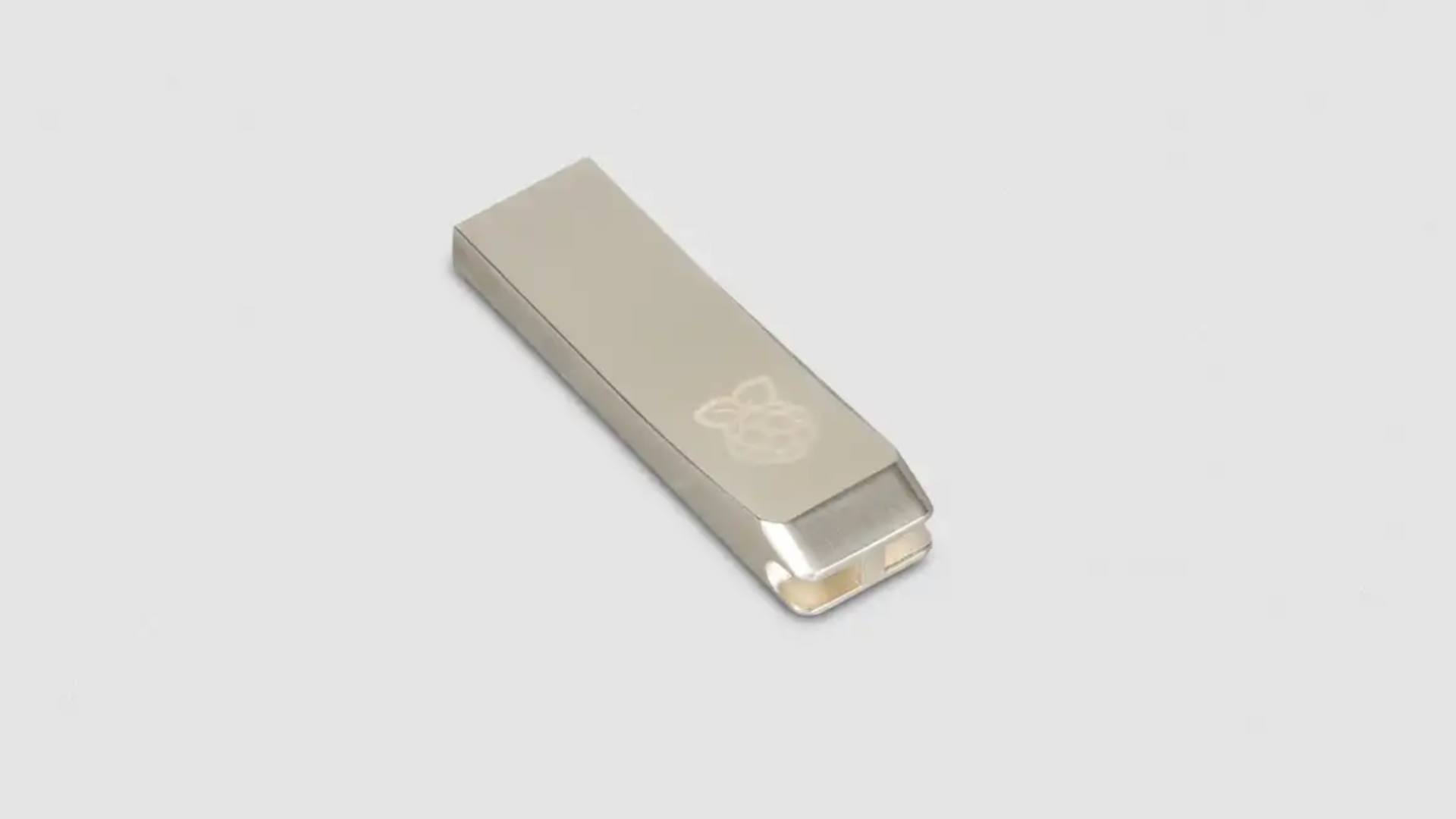
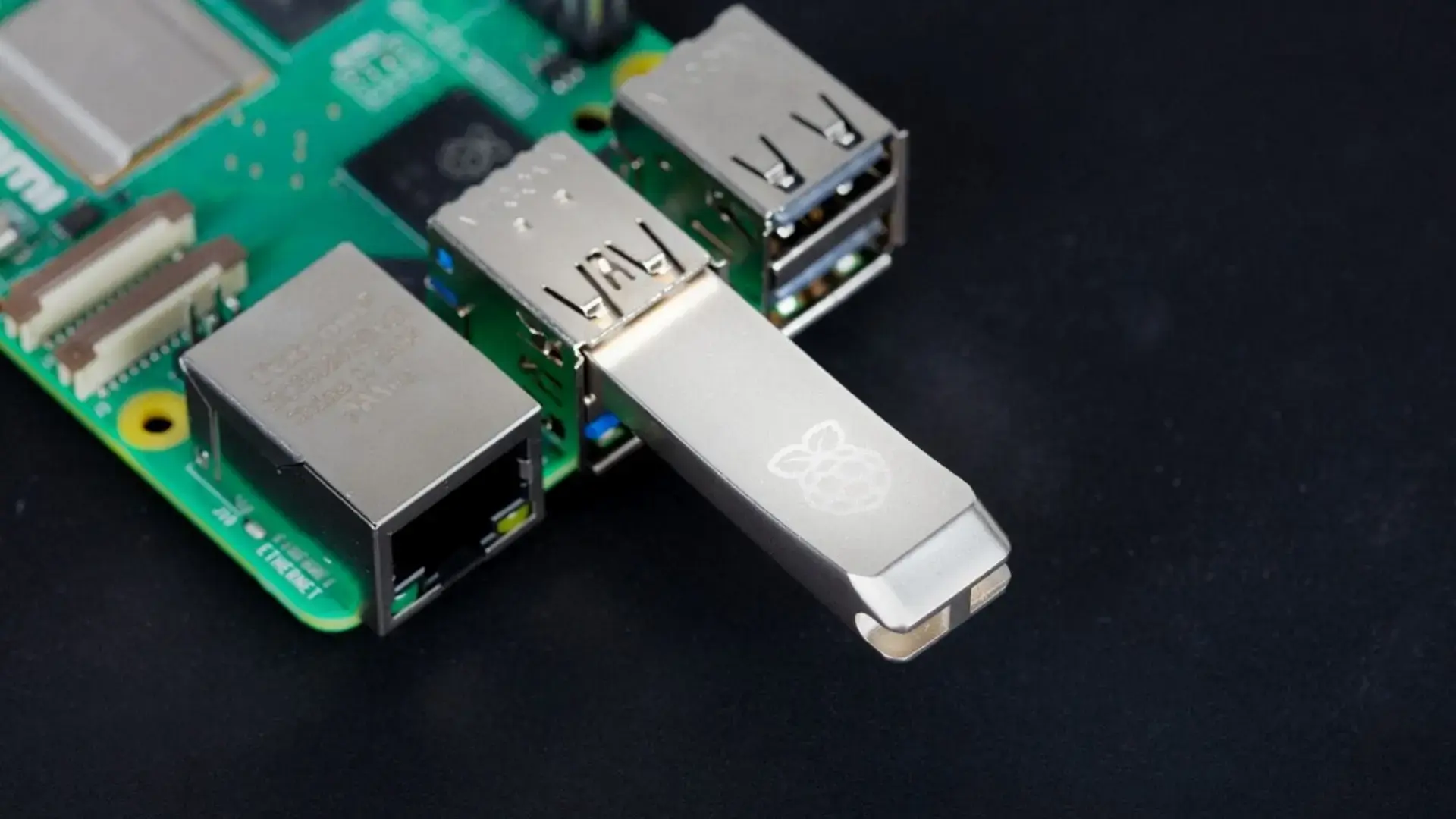
Another notable addition to the ecosystem is the Raspberry Pi Flash Drive , an official USB 3.0 flash drive available in 128GB and 256GB capacities . It might seem like just another flash drive in a market saturated with cheap options, but the focus here isn't solely on price, but rather on the combination of speed, stability, and durability against rough handling.
While many low-cost USB flash drives offer inconsistent speeds, lower actual capacity than advertised, or failure during power outages, Raspberry Pi has focused on long-term reliability . The device features a durable aluminum casing with a small hole for attaching it to a keychain or backpack, and connects via USB-A 3.0 , making it compatible with both Raspberry Pis and conventional PCs.
The 128GB version achieves sustained sequential write speeds of around 75 MB/s , while the 256GB model reaches approximately 150 MB/s . This performance jump between the two models can make a significant difference if you plan to use it for continuous data recording or even for running Raspberry Pi operating systems and distributions directly from USB.
Internally, the drive uses a pseudo-SLC cache that acts as a fast zone to absorb the most intense write bursts. In the background, this data is transferred to higher-density but slower QLC flash memory. This approach allows write speeds to approach the practical limit of USB 3.0 for short periods , without performance plummeting under sustained load.
Another key point is its robustness against unexpected power outages or power cuts . According to data provided by Raspberry Pi itself, the unit has undergone tens of thousands of random power cycles under intensive I/O workloads, precisely to validate that data corruption does not occur easily.
The Raspberry Pi Flash Drive also includes support for SMART reporting and TRIM operations , features more common in SSDs than in simple flash drives. This allows you to monitor the memory's health and maintain its performance throughout the device's lifespan. Furthermore, it automatically enters USB 3.0 low-power states when idle, which is important for battery-powered projects or installations with many connected drives.
In Spain, this USB drive is already available at Raspberry Pi specialists such as TiendaTec, Rubii, and RaspiPC. The approximate price is around €29,99 for the 128GB version and around €55,95 for the 256GB version . These prices are slightly higher than those of generic models, but justified by the emphasis on stability and durability for more demanding uses than simply transferring files.
Smart cameras based on Raspberry Pi Compute Module 5 and Sony IMX500 sensor
Alongside the development of new HATs and storage solutions, advanced surveillance cameras using the Raspberry Pi platform as the core of the system are arriving on the European market. A prime example is an outdoor camera that combines a Raspberry Pi Compute Module 5 (CM5) with the 12,3-megapixel Sony IMX500 computer vision sensor .
The Compute Module 5 addresses the need for an industrial and compact form factor , designed for integration into end products rather than prototypes. In this case, the typical configuration includes 4 GB of RAM and 16 GB of eMMC storage , sufficient to run a complete Linux system, video capture services, network communications, and the application logic required for remote management and local analysis.
The differentiating factor is the Sony IMX500 sensor , capable not only of capturing images at resolutions up to 4056 × 3040 pixels , but also of running machine learning models directly on the sensor itself thanks to its integrated inference accelerator. This architecture, already documented in the Raspberry Pi AI Camera , allows for the generation of processed outputs (such as detections or classifications) without overloading the CM5's main CPU.
From an edge vision perspective, these types of devices significantly reduce both latency and bandwidth requirements . Instead of continuously sending video streams to the cloud, the camera processes scenes locally and only transmits the relevant results: detection of people, vehicles, intrusions, or object counts in industrial environments.
The IMX500 sensor can operate at its maximum resolution at approximately 10 frames per second , or at resolutions of approximately 2 megapixels at 30 fps , providing flexibility to adjust the balance between detail and performance depending on the application. This approach is well-suited for perimeter surveillance, access control, or process monitoring in warehouses and factories.
The camera is integrated into a metal housing with IP66 certification , guaranteeing protection against dust and water jets, essential for permanent outdoor installations. The recommended operating range is approximately 0 to 50°C , sufficient for most European climates, although in extreme environments additional protection or climate control systems may be required.
For connectivity and power, Ethernet with PoE under the IEEE 802.3at standard was chosen, so a single cable provides both data and power. Power consumption is around 15 W , in line with other professional IP cameras. This solution simplifies installation, reduces potential points of failure, and facilitates maintenance, features valued by integrators and security companies.
What makes these cameras particularly interesting compared to DIY setups using standard Raspberry Pi and generic camera modules is their integrated product approach . We're talking about a closed, robust solution designed for continuous operation, which can serve as a foundation for European developers to build intelligent surveillance systems, traffic analysis, or advanced monitoring without starting from scratch in terms of hardware.
With prices around $380 , these devices occupy a middle ground between fully enclosed IP cameras and custom-built solutions. Specialized embedded hardware distributors within the EU, such as Fab to Lab and similar retailers, are presenting them as kits geared towards professional applications , where the flexibility of the Raspberry Pi ecosystem gives them an edge over less modifiable devices.
The range of Raspberry Pi- based products and releases demonstrates that the platform is taking a firm step towards a more professional landscape: from the AI HAT+ 2 focused on generative AI and computer vision, to the official flash drive designed to offer stable and long-lasting storage, to industrial cameras with Compute Module 5 and sensors capable of processing models directly on the chip. All of this positions Raspberry Pi as a highly competitive option for projects in Spain and Europe that require edge computing, privacy, low power consumption, and a mature hardware and software ecosystem without relying exclusively on cloud services.
Table of Contents