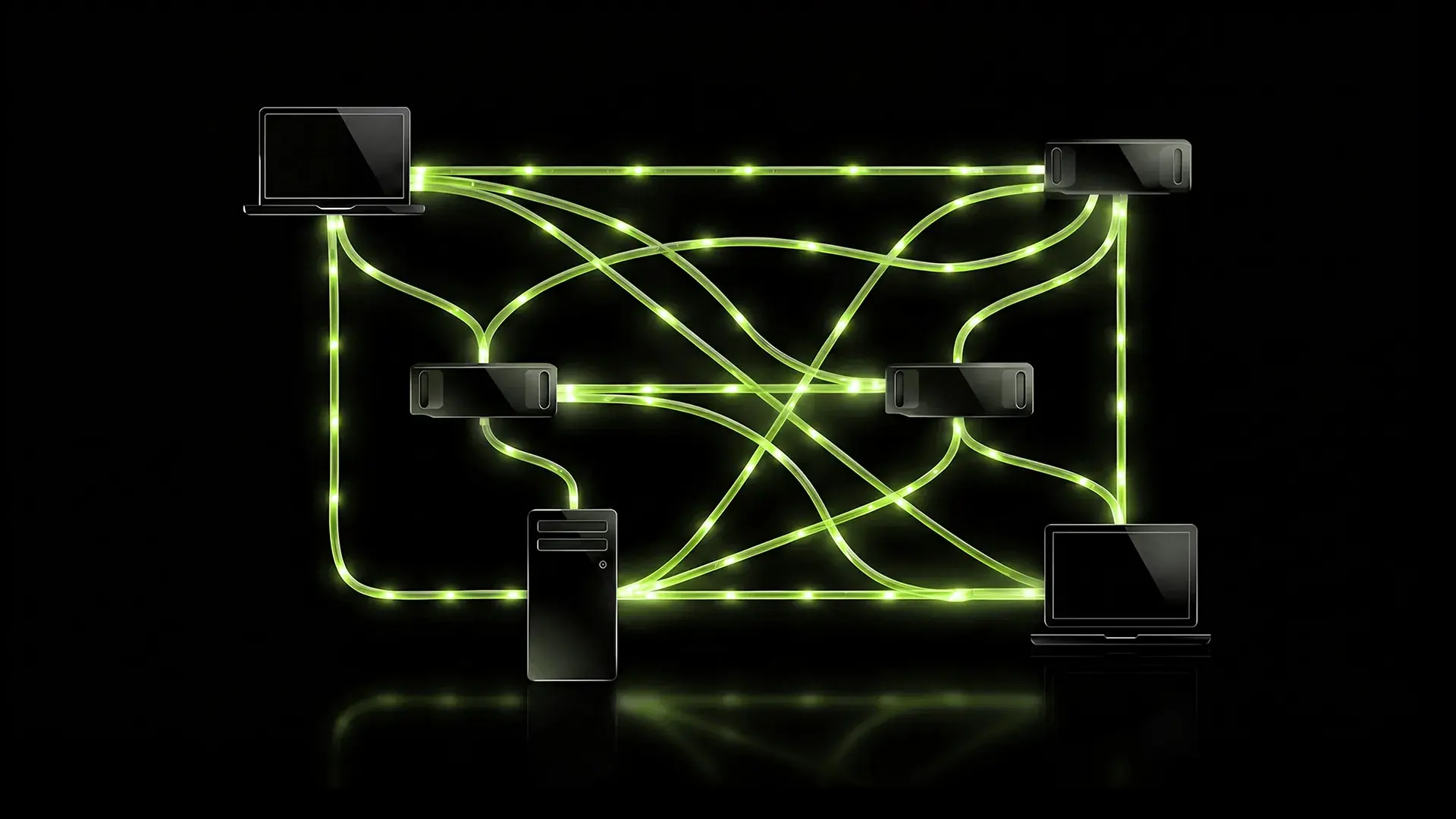
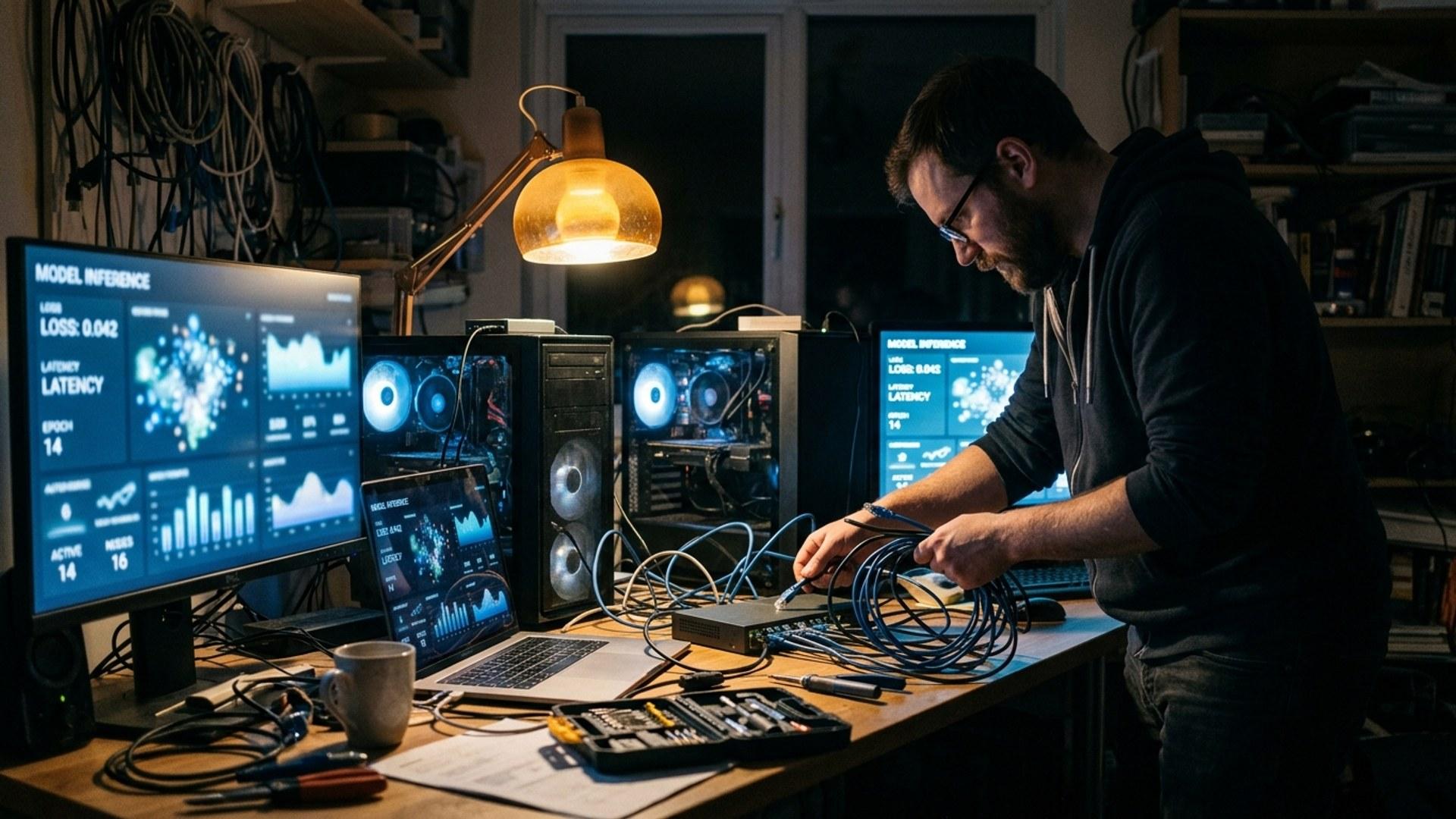
At IFA 2026, NVIDIA unveiled a solution that will redefine local artificial intelligence. Called the Personal AI Router, or PAIR for short, its goal is to leverage existing home computers to run AI tasks collaboratively. It's not a physical router or a new inference engine, but rather a tool that acts as an intermediary between AI applications and the various devices on a local network.
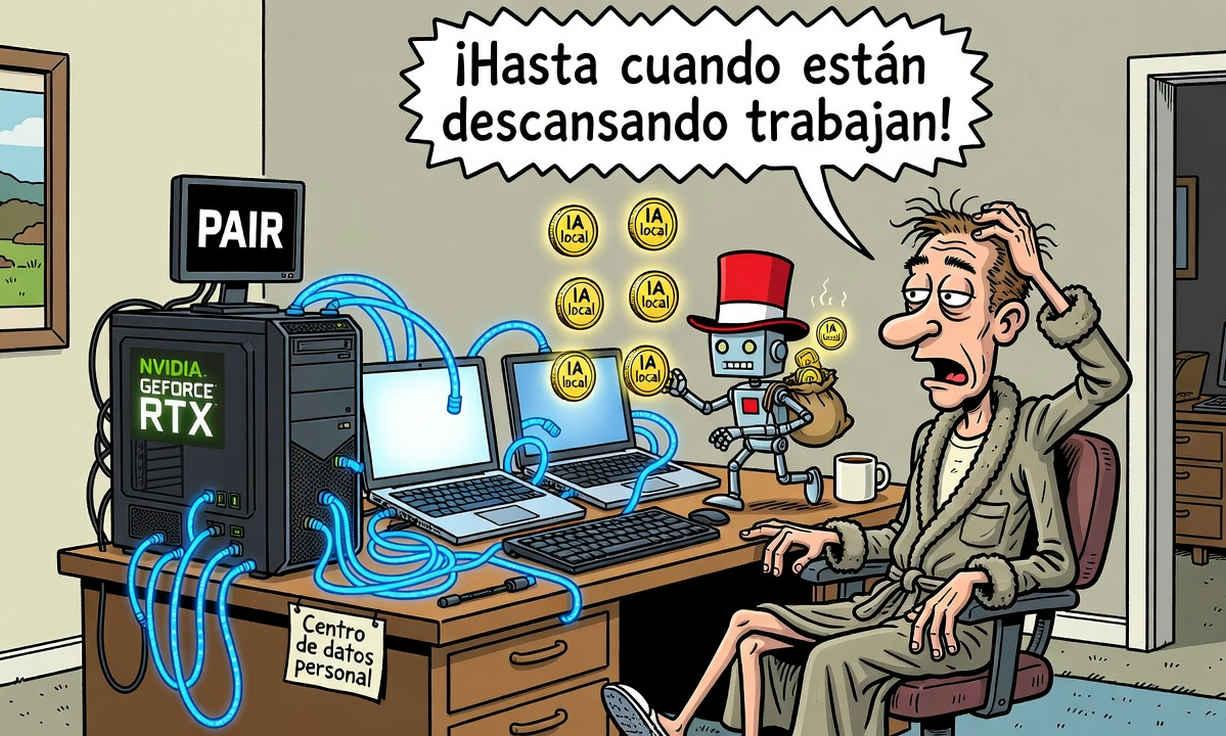
The idea is simple: if you have a gaming PC, a workstation, or even a MacBook with a modern chip, it's very likely that a significant portion of its computing power is going unused for many hours each day. PAIR detects these devices, connects them securely, and distributes the inference requests generated by AI agents among them, ensuring that the workload isn't bogged down by a single graphics card.
What exactly is NVIDIA PAIR?
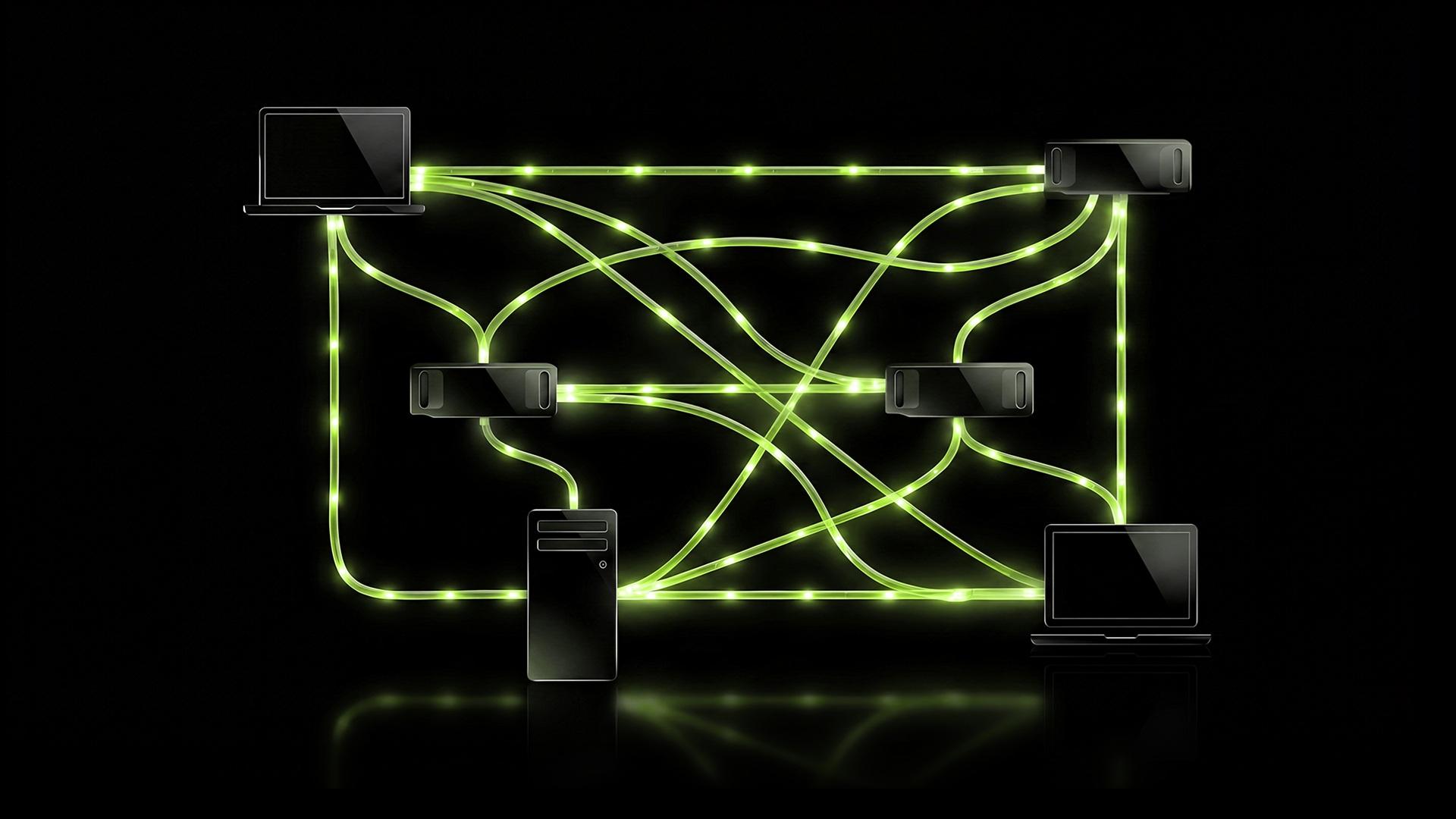
PAIR is a free and open-source software that acts as a proxy between AI applications and the inference engines installed on each machine. When an agent launches multiple subtasks simultaneously, PAIR decides which machine on the network can handle each one, taking into account whether it has the requested model loaded, the current GPU load, and whether the machine is available. For the user, the experience is seamless: they only see a single connection, while behind the scenes the traffic is distributed among the participating nodes.
One of its key features is that it doesn't replace Ollama or LM Studio , but rather leverages them. In fact, PAIR takes control of the ports these engines use by default to receive requests and forward them to the most appropriate node. This means that existing applications can continue to function without changes, significantly lowering the barrier to entry for those who already have their AI environment set up locally.
How task division works
Device discovery is done using mDNS, the same protocol a printer uses to appear on the network . After installation, each machine advertises its availability, and the others automatically detect it. You can also add a node directly using its IP address, but the usual process is for the main machine to display a six-digit PIN that the other device must enter to establish the pairing.
Once connected, communication between nodes is encrypted using mTLS, meaning mutual certificates that guarantee traffic doesn't leave the private network . This is important for those handling sensitive information, as agent instructions and data remain on-premises, without passing through any external server. However, the project developers warn that LAN security should be reviewed before using it on shared or untrusted networks, because it opens local HTTP endpoints and allows for discovery on the LAN.
Performance and demonstrations
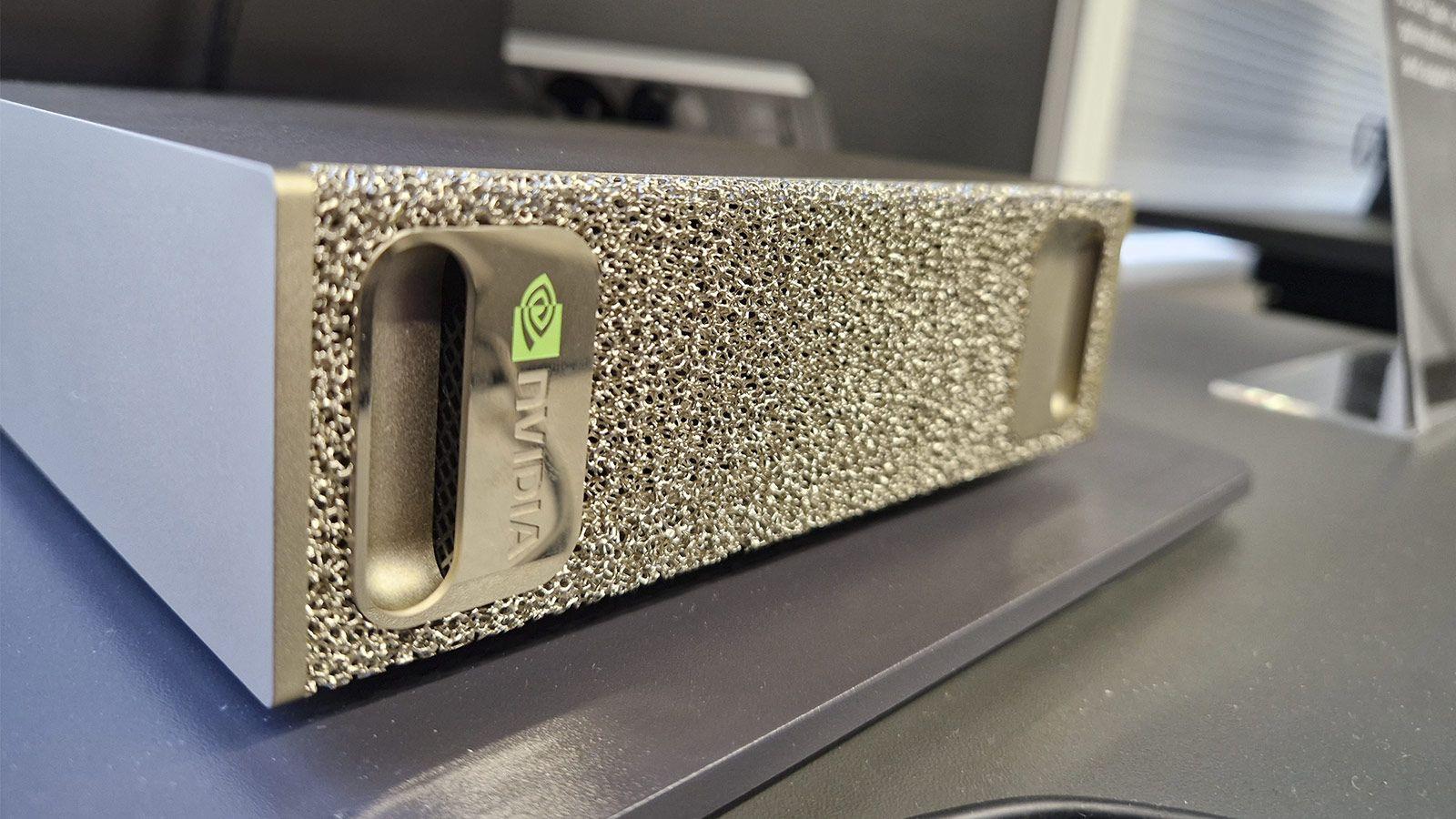
The million-dollar question is whether it actually improves performance. NVIDIA shared an unofficial demo with the Hermes Desktop agent and Ollama running the Qwen 3.6 35B A3B model. A five-sub-agent task that took an average of 18 minutes on a single RTX Spark laptop was completed in 8 minutes and 48 seconds using a three-machine cluster : the laptop, a DGX Spark, and an RTX 5090. This improvement of just over 2x is explained by the fact that subtasks can be executed in parallel across multiple GPUs, instead of queuing on a single one.
The company emphasizes that this is neither a general benchmark nor a promise of linear scaling . The result depends heavily on the type of workload, the model used, the network configuration, and which nodes are available. Highly sequential tasks, or those where only one machine has the required model, will see little benefit. Furthermore, PAIR does not pool the memory of different graphics cards, so it is not a solution for loading a model that doesn't fit on a single GPU.
Compatibility and requirements
The PAIR beta is available for Windows 11, Linux, and macOS , with support for x64 and arm64 architectures (although Windows on ARM is considered experimental). Hardware requirements include GeForce RTX 20 Series or later GPUs, Turing-based RTX PRO or later, DGX Spark, or Apple M4 or newer chips. At least 8 GB of RAM and 20 GB of disk space are also required, and an internet connection is not needed for operation, only for downloading the templates.
An interesting detail is that PAIR isn't limited to NVIDIA products ; any computer that can run Ollama or LM Studio can participate, including systems with Apple Silicon. In fact, it has been successfully tested on networks of up to 18 GPUs. The flexibility for nodes to join and leave as they please—for example, if a laptop goes to sleep or a PC starts playing a game—is another of its defining features, as the scheduler adapts the distribution in real time.
RTX Spark and other new features
PAIR arrives at a time when NVIDIA is also finalizing the launch of the first PCs with RTX Spark, scheduled for October. These machines combine a Blackwell GPU with a 20-core Grace CPU and up to 128 GB of unified memory, and are designed to run AI agents locally. At IFA, Lenovo (Yoga Pro 9n and Yoga 9n) and Acer (a compact desktop concept) showcased their offerings, and Dell, HP, ASUS, MSI, and Microsoft are all expected to unveil their models.
Along with PAIR, NVIDIA has announced simplifications for other agent projects. Perplexity Portable Computer will support RTX GPUs with at least 24 GB of VRAM on both Windows and Linux, allowing users to run complete workflows without spending credits and with prior permission to send data to the cloud. Hermes Agent will incorporate a one-click setup that automatically detects the GPU, and OpenClaw will also have a similar option on Windows.
In terms of performance, the optimizations in llama.cpp allow for up to 1,9x more throughput on a GeForce RTX 5090 , while vLLM improves throughput by 1,2x on a Blackwell RTX PRO 6000 and by up to 1,4x on clusters of two DGX Spark cards. These improvements are already available through LM Studio, Ollama, and the engines themselves.
All of this points to a clear trend: moving the bulk of AI work out of the cloud and leveraging the hardware we already have at home. PAIR is another piece of that puzzle, and although it's in beta, it's worth trying if you have more than one powerful computer. The final version doesn't have a release date yet, but the community can already download it and contribute improvements via GitHub.