
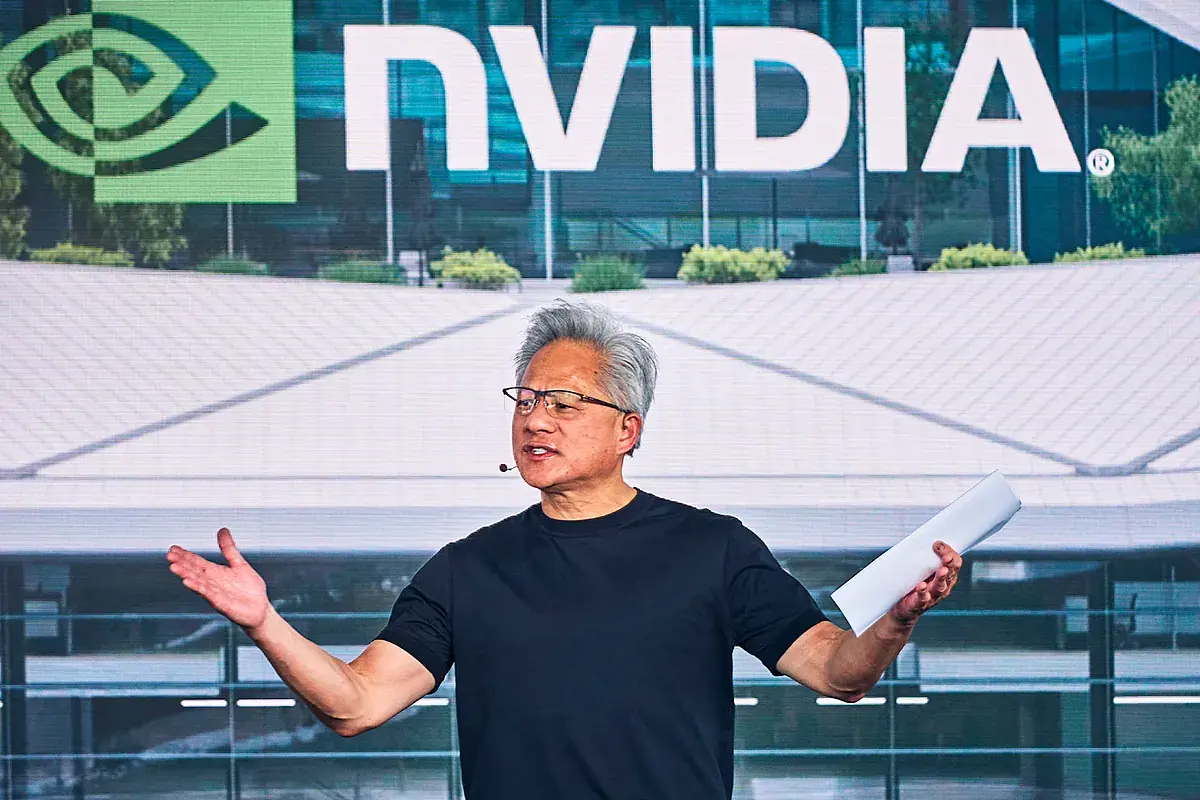
Nvidia is in the eye of the storm. Next Wednesday, after the close of Wall Street, the chipmaker will present its quarterly results, an event that generates enormous expectations in the market. With projected revenue of around $92.000 billion and earnings per share of $2,09, the company is once again demonstrating that it remains the leading force in artificial intelligence globally.
However, the relevance of this data is not limited to the company itself. Nvidia is part of the Dow Jones index, and its shares are closely watched by investors worldwide. A slip in the figures or a disappointing guidance could trigger a chain reaction , affecting not only technology stocks but also the markets as a whole.

A figure that will set the pulse of the sector
The market expects Nvidia to maintain its explosive growth rate. According to analysts' consensus, the company should report revenues of $92.070 billion in the second fiscal quarter, a year-over-year increase of nearly 96%. Earnings per share are estimated at $2,09, up 99% from the same period last year. These figures confirm that demand for artificial intelligence infrastructure continues to show no signs of slowing down.
Growth isn't just a number. Behind this forecast lies Nvidia's ability to maintain its position as the leading provider of processors for AI data centers and AI systems. Companies like Microsoft, Amazon, and Google continue to invest billions in computing power deployments, and all indications are that this trend will continue in the coming years. However, the concentration of sales among a few customers and restrictions in some regions are being closely monitored to assess whether this demand is sustainable in the long term.

Artificial intelligence as a backdrop
Nvidia's earnings report comes at a time of heightened tension in the AI sector. Recent market movements, such as the surge in oil prices and uncertainty surrounding interest rates, have added extra pressure to an industry already under intense scrutiny. The company's stock price has experienced volatility in recent months , reaching record highs in May and then declining, though without falling below its yearly lows.
Investors expect the company to also provide clear guidance on chip demand, gross margin, and data center spending trends. Any shifts in these metrics could alter market expectations , and the outcome will serve as a test for the entire technology sector. Experts note that Nvidia has already established itself as the true "pick and shovel seller" of the AI gold rush, but it also faces significant challenges such as potential competition in AI chips and market saturation.

a turning point
The entire ecosystem will be watching the post-results conference. Company executives may offer insights into the production of new generations of chips, such as the Blackwell and Vera Rubin platforms, which are expected to further improve the cost per token and maintain their competitive edge. However, caution in the face of the complex global environment has made markets less tolerant of any deviations from forecasts.
On the other hand, the regulatory situation is also a factor. Nvidia has been forced to adapt its sales strategy to certain markets, such as China, and any impact in that region could affect quarterly results. Analysts believe a compelling message is necessary to maintain investor confidence, which has already placed the company among the most valuable in the world.
However, the biggest question is how the company will manage its leading position and whether its forecasts will align with the market's expectations. The next trading session will undoubtedly be one of the most intense for Nvidia's share price and for the main European indices.
Ultimately, Nvidia has become the symbol of an era in which software and hardware are merging to create machines that think. Its quarterly figures are not just a financial metric, but a barometer of how much the market is willing to pay for the promise of artificial intelligence. And that, right now, weighs more heavily than ever on the decisions of major investment funds.
