
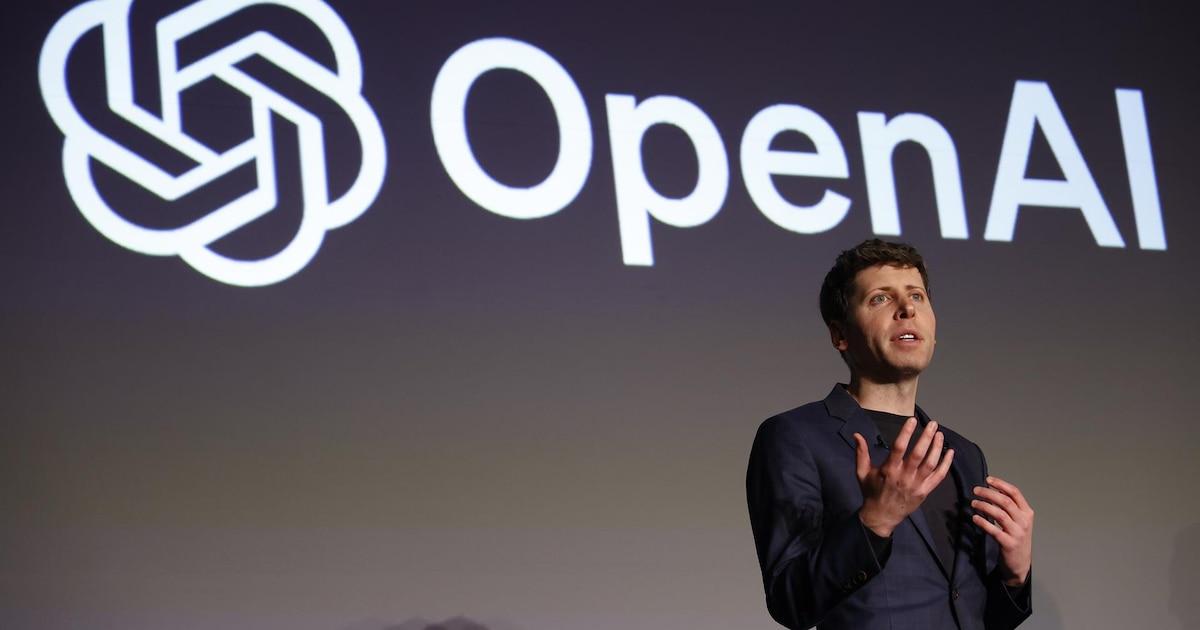
The partnership between OpenAI and Cursor, which lasted for almost four years, has come to an abrupt end . The artificial intelligence company announced its decision to terminate the contract that allowed the AI-assisted programming platform access to its models. The move comes just weeks after SpaceX completed its acquisition of Cursor for $60.000 billion.
According to the published information, the deadline for the final closure of OpenAI's model supply to Cursor is set for November 12, 2026. From that point on, developers who rely on this integration will have to find alternatives. The decision affects not only new models but also those already available, leaving a transition period of approximately two and a half months.
Context of the breakup
The split comes amid growing tensions between OpenAI and companies linked to Elon Musk. SpaceX's acquisition of Cursor was the catalyst. Reports indicate that the contract between OpenAI and Cursor included a clause allowing OpenAI to terminate the agreement in the event of a change in control of the platform. This clause was triggered by the acquisition, and OpenAI decided to exercise it.
OpenAI has justified its decision by stating that it cannot trust SpaceX to use its technology in accordance with its terms of service. The company cited a history of breaches by Musk's companies, including Twitter's breach of contract after Musk acquired it in 2022. It also mentioned that xAI, another Musk company, allegedly misused OpenAI models, something Musk himself reportedly partially admitted under oath.
The contractual clause
The agreement between OpenAI and Cursor was not a simple supply contract. It included a specific change-of-control clause , which gave OpenAI a limited time to terminate the agreement after an acquisition. Reports indicate that OpenAI waited until the last possible moment to execute the termination, aiming to maximize the time developers could maintain access to their models through Cursor.
This clause is common in agreements of this type, but its activation in this case has caused a major upheaval in the industry. OpenAI's decision was not taken lightly, and the company has stated that it has great respect for the Cursor team and what they have built. However, mistrust of SpaceX has outweighed the commercial relationship.
Background with Elon Musk
The relationship between OpenAI and Elon Musk has been marked by controversy for years. Musk co-founded OpenAI in 2015 but left the board of directors in 2018. Since then, he has maintained a public dispute with the company and its CEO, Sam Altman. In 2024, Musk sued OpenAI over its transition from a non-profit to a for-profit entity, though that lawsuit was partially dismissed.
Now, the split with Cursor adds a new chapter to this conflict. OpenAI has explicitly cited its experience with Musk's companies to justify the decision. The company mentioned that Twitter, now part of SpaceX, breached its contract after Musk's acquisition. It also pointed out that xAI was caught training its Grok model with outputs from OpenAI models, something Musk reportedly partially admitted to in a sworn statement.
Impact on developers
OpenAI's decision will have a direct impact on developers who use Cursor as their AI-assisted programming tool. Many of them rely on OpenAI's models for their daily tasks, and they will now have to find alternatives before November 12, 2026. Although Cursor offers other models from providers like Anthropic, Google, and xAI, the loss of OpenAI is significant.
OpenAI has shown its willingness to help developers during the transition , offering support for migrating to other solutions. However, uncertainty remains high, and many are wondering if this split is the start of a larger escalation in the conflict between OpenAI and Musk's ecosystem. What is clear is that the generative AI sector is undergoing a major reconfiguration, and this decision is just one example of how alliances can break down when ownership structures change.
Ultimately, the split between OpenAI and Cursor is a strategic move that reflects the growing distrust between these two tech giants. November 12, 2026, will mark the end of an era for Cursor users who relied on OpenAI's models. Meanwhile, the code assistant market is becoming increasingly multipolar, and this decision could set a precedent for future partnerships in the industry.