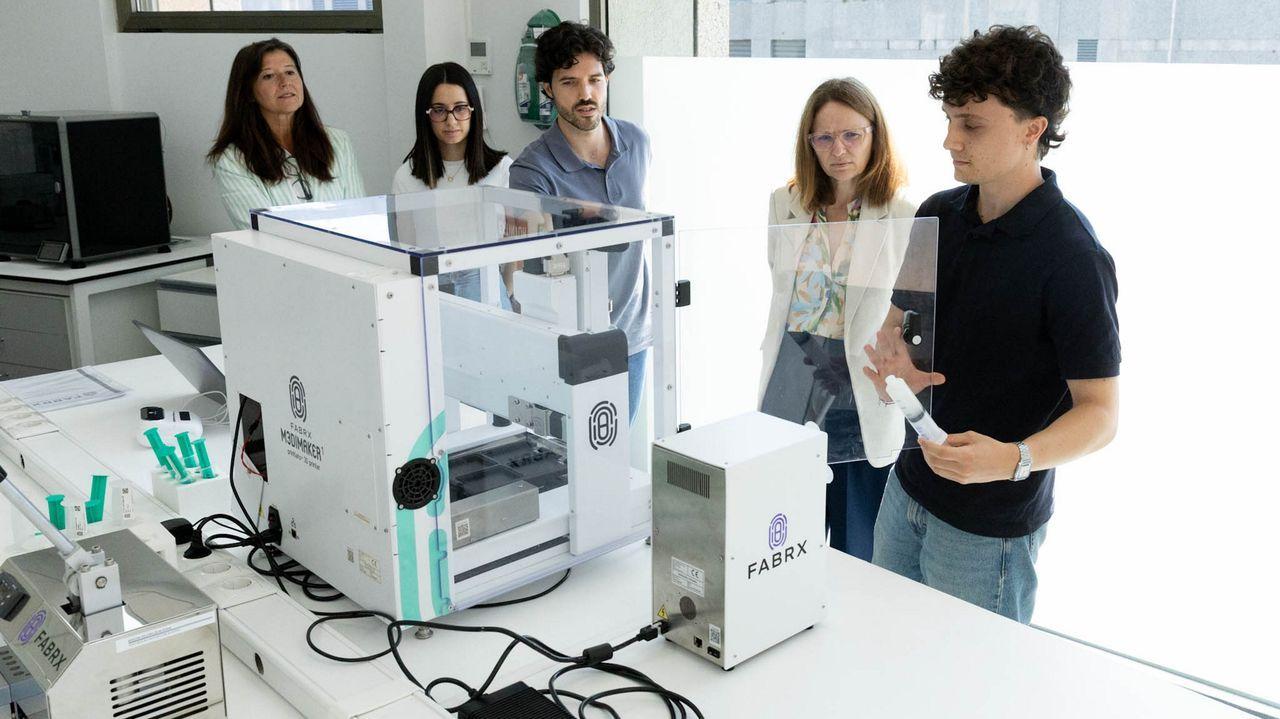
The manufacture of customized medicines using 3D printing is getting closer to becoming a clinical reality in Spain. The Galician company FABRX Artificial Intelligence (FABRX AI), specializing in this field, has just received a new financial boost from the Galician Regional Government (Xunta de Galicia) to further develop its 3DMED project, which aims to enable hospitals and pharmacies to produce personalized drugs at the point of dispensing. The grant of €135.000 is part of the region's Industrial PhD program, which this year is allocating more than €2,5 million to 15 new scholarships.
The director of the Galician Innovation Agency, Carmen Cotelo, visited FABRX AI's facilities in Santiago de Compostela to learn firsthand about the company's progress. During the visit, Cotelo emphasized the value of collaboration between universities and businesses in transforming scientific knowledge into tangible solutions that improve patients' lives. The company, which has already collaborated with hospitals in various countries and participated in clinical trials, has become a leader in the field of medical 3D printing.
A researcher to bring technology closer to the patient
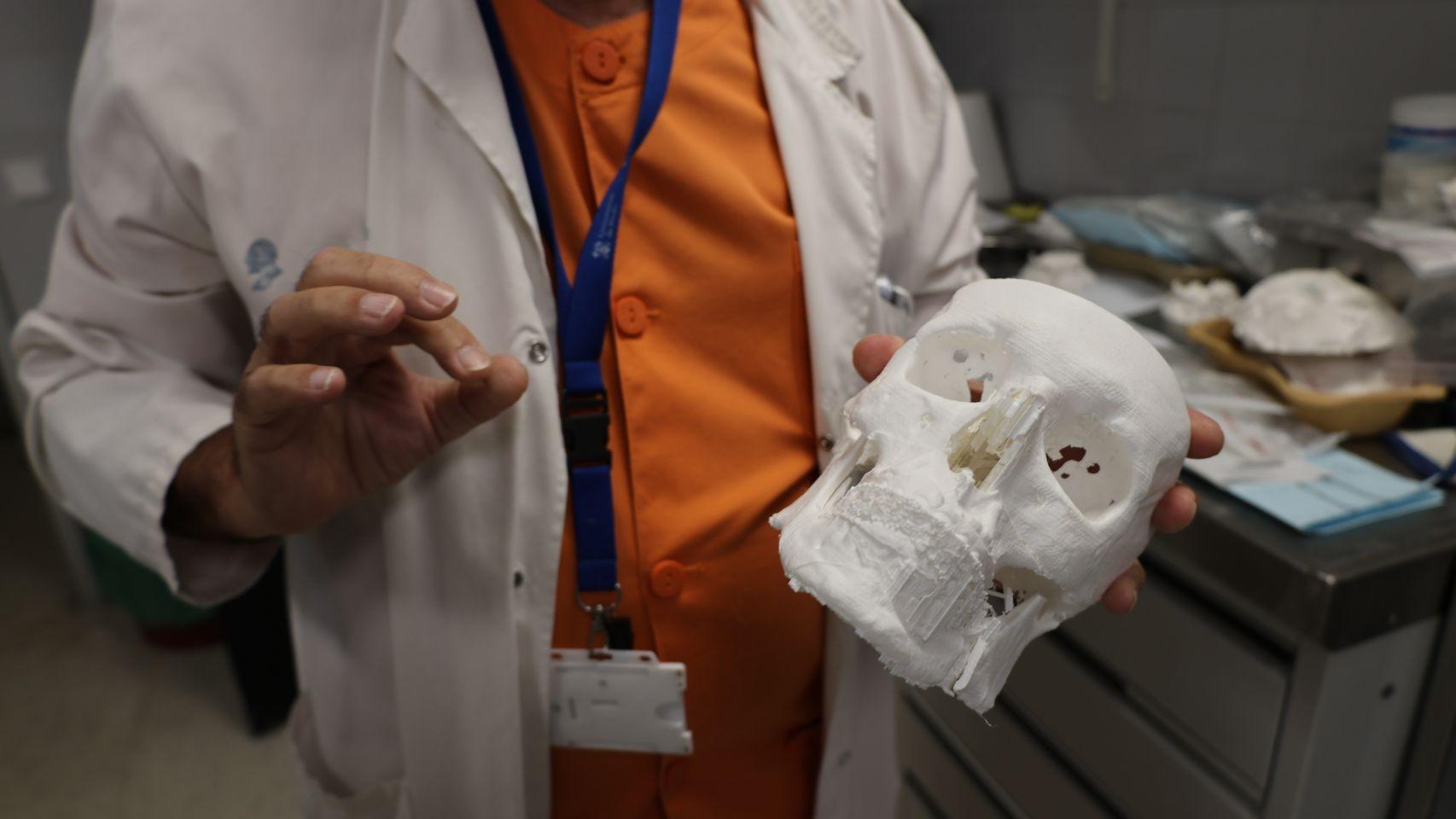
The 3DMED project, officially called '3D Printing of Personalized Drugs: Clinical Implementation', aims to advance the implementation of 3D printers in healthcare settings. The idea is that medications can be produced automatically and individually, tailored to the specific needs of each patient—a true revolution compared to current standardized production methods.
To carry out this research, the company will rely on biologist Daniel Grandal González, a graduate of the University of Santiago de Compostela (USC), who will complete his doctoral thesis at FABRX AI's facilities. His work will be co-supervised by Carmen Álvarez Lorenzo, professor and director of the Institute of Materials (IMATUS), and by Álvaro Goyanes Goyanes. Grandal is one of 12 researchers who will develop their theses directly in Galician companies thanks to this initiative, while three others will do so in technology centers.
A well-established program with visible results

The 2026 call for Industrial PhDs, whose contracts began on September 1st, marks a new milestone in a program that has already accumulated an investment of nearly €12,7 million. In its six editions, the Galician Regional Government (Xunta) has supported the hiring of 91 PhD students, who have carried out their research linked to R&D projects of interest to the Galician productive sector.
FABRX AI is no stranger to this collaborative model. In the 2023 call for proposals, the company received €94.000 to bring on board researcher Xela Rodríguez Maciñeiras, a pharmacy graduate, for a project also focused on 3D printing of medications. This track record demonstrates the company's commitment to young talent and to knowledge transfer between academia and industry.
3D printing as a tool for personalized medicine
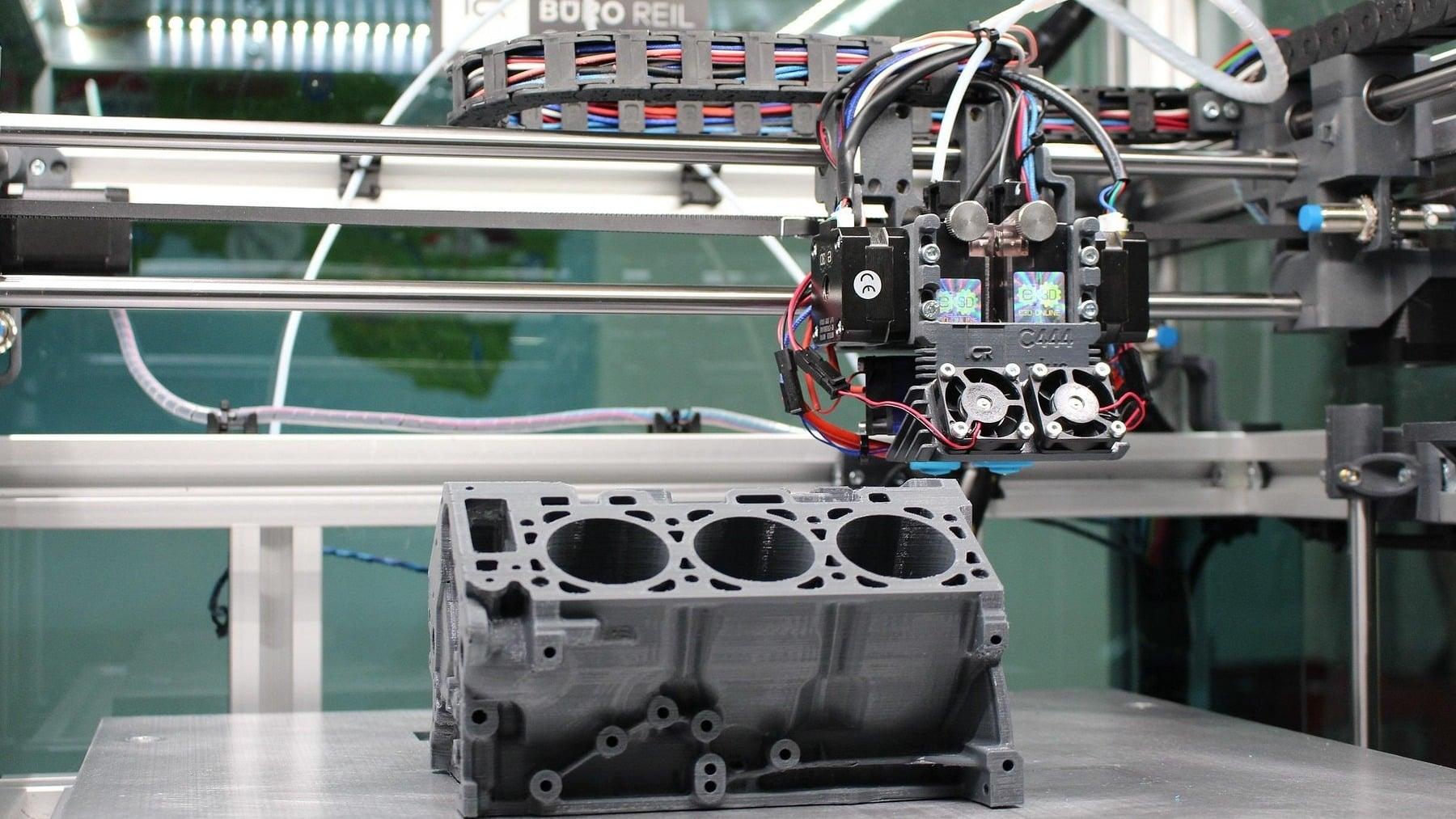
The technology developed by FABRX AI has already been used in clinical trials, including one conducted at the University Clinical Hospital of Santiago. The company has collaborated with hospitals in various countries, which strengthens the credibility of its proposal. The ability to manufacture medications at the point of dispensing would not only allow for tailored dosages and formulations for each patient, but could also reduce costs and waiting times.
The Galician government's Industrial PhD program funds both the hiring costs of researchers and other expenses associated with projects, including initiatives that promote international mobility and cooperation between universities and companies. The underlying objective is to reduce the gap that traditionally separates university research from its practical application in the market.
With this new funding, FABRX AI reinforces its position as one of the most innovative companies in the field of pharmaceutical 3D printing in Spain. The company, headquartered in Santiago de Compostela, continues working to ensure that personalized medicine ceases to be a promise and becomes an accessible reality for all patients.
The Galician government's commitment to industrial PhDs is bearing fruit, and the FABRX AI case is a clear example of how collaboration between the public sector, universities, and businesses can generate significant advances in areas as sensitive as healthcare. 3D printing of personalized medicines not only promises to improve the effectiveness of treatments but also opens the door to a more sustainable and patient-centered healthcare model.

Table of Contents