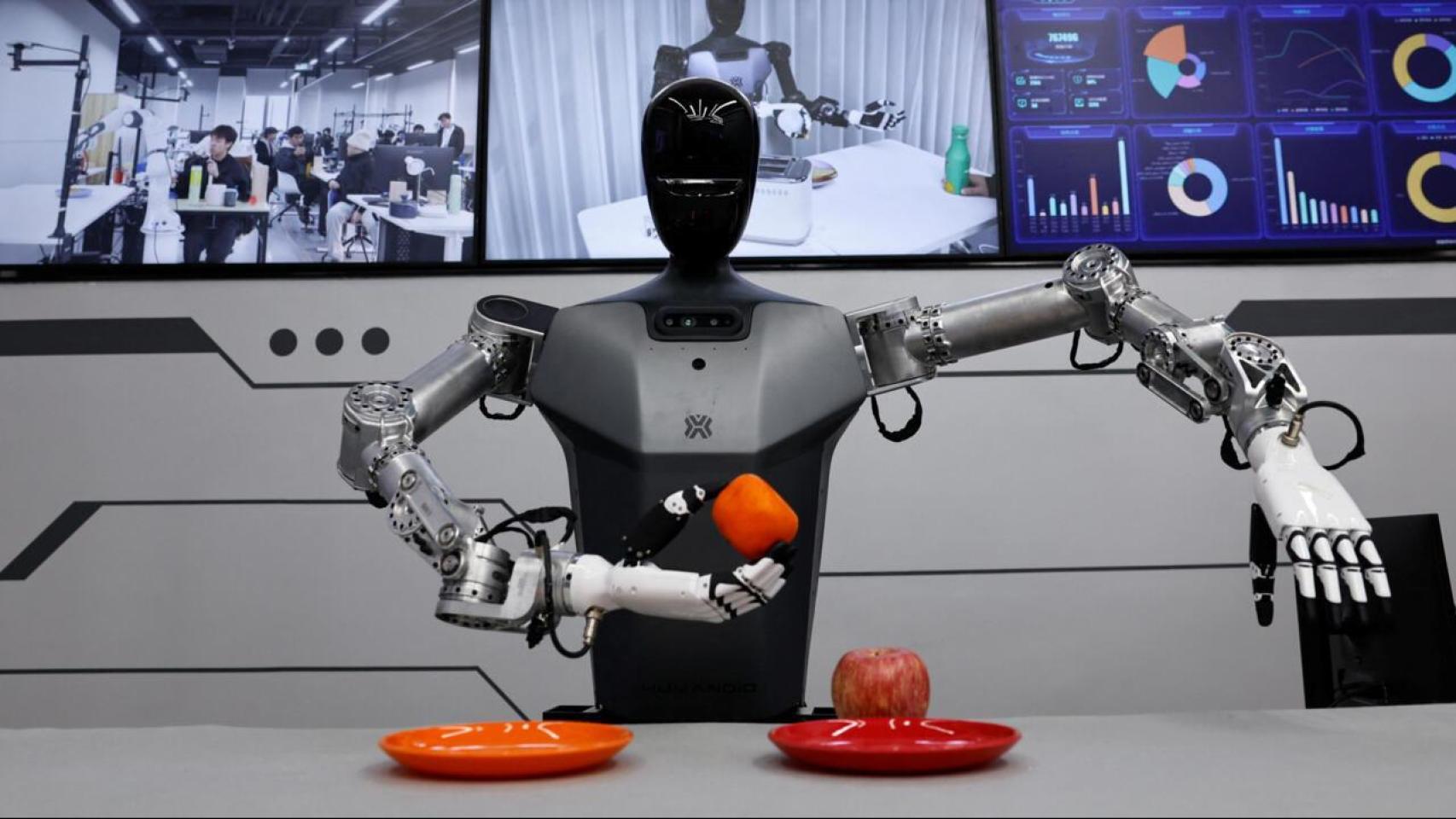
The creation of Primus Robotics marks a new strategic move in European industrial robotics , with the Basque Country and Madrid as the main hubs for its development. The new company was founded with the aim of bringing humanoid robots from the experimental stage to real production lines, in a context where European industry is seeking to automate demanding tasks without completely redesigning its factories.
This joint initiative between Funditec and Fagor Arrasate aims to bring to market a humanoid robot capable of working in environments designed for people, sharing space with operators and existing machinery. With a cautious yet ambitious approach, the company intends to manufacture humanoid robots in Spain for industrial and logistical tasks that, to this day, still rely heavily on human physical labor. The collaboration also aligns with local projects such as the promotion of robotics in the Basque Country.
A joint venture with a clearly industrial focus
The project is structured as a joint venture , with Funditec Intelligence—Funditec's division specializing in artificial intelligence applied to physical autonomous systems—and Fagor Arrasate, a cooperative within the Mondragón Corporation with extensive experience in industrial automation and capital goods , each holding a 50 % stake . This combination of capabilities places Primus Robotics in a unique position within the European robotics ecosystem.
The company was conceived with a clear industrial focus : it's not just about research or launching isolated prototypes, but about bringing to mass production a humanoid robot designed to operate in factories and warehouses. The industrial headquarters are located in Arrasate (Mondragón) , where Fagor contributes its facilities and expertise in automation integration, robotics, and precision engineering to produce the units that will ultimately be deployed on its customers' production lines. This type of industrial decision complements initiatives like those of other Basque manufacturers who are committed to local robotization.
Funditec, for its part, focuses its research and development of artificial intelligence algorithms , as well as the systems architecture that will power the robot's brain, at its center in Carabanchel (Madrid). From there, AI models are designed and customized for each use case, which are then integrated into Primus's own operating system.
The partners have committed an initial investment of several million euros to finance technological development, R&D in artificial intelligence and robotics, and the commissioning of the first production plant in the Basque Country. At the same time, Primus Robotics is exploring various avenues of state and European public funding to accelerate the project's scaling up and strengthen its role within the EU's technological autonomy strategy.
Plant in Arrasate and a phased industrial plan
Primus Robotics' production hub will be located in a 2.500-square-meter building at the Fagor Arrasate plant in Arrasate, Gipuzkoa. From this facility, the humanoid robots will be manufactured, integrated, and validated before being deployed in customer environments.
The industrial plan is structured in phases , with increasing investments linked to technical and commercial milestones. According to initial forecasts, around 200 units will be produced in 2027 , serving as a launchpad to validate the product under real-world conditions. The next step is set at around 1.200 units annually by 2030 , at which point the company expects to have consolidated the humanoid's integration into various industrial sectors.
From 2031 onwards , an expansion of capacity is planned to increase manufacturing volume and reach the goal of exceeding 3.000 humanoids annually by 2035. This growth will be supported by the experience gained in the initial pilot facilities and by the demand generated by companies seeking to automate processes without completely transforming their facilities.
The initial deployments will take place in industrial environments linked to the partners themselves , which will serve as real-world testing grounds. In this way, production lines and logistics environments associated with Fagor and its ecosystem will provide a platform to validate both the robot's capabilities and its integration with existing systems.
The initial focus is on industrial and logistical tasks involving repetitive work , such as handling parts, supplying production lines, and supporting maintenance operations. However, the project's developers do not rule out the possibility that, once the system's robustness has been demonstrated, the humanoids could take on heavy or potentially dangerous jobs in other sectors where safety and generational workforce renewal are critical factors.
Primus P1 and a sovereign AI operating system
The company's first product will be Primus P1 , a humanoid robot specifically designed for professional environments. While all the technical details have not yet been released, its developers present it as the first industrial humanoid produced in Spain , designed to operate in factories and warehouses without requiring a complete redesign of the infrastructure.
The centerpiece of the project is Primus OS , a proprietary operating system based on artificial intelligence that runs at the edge (edge AI). This approach aims to enable the humanoid robot to make real-time decisions in the field, reducing reliance on the cloud and ensuring greater control over the data generated during the robot's daily operation. Connectivity and low-latency communications, such as those analyzed in industrial 5G solutions , can be key support for these factory deployments.
One of the aspects most emphasized by company officials is their commitment to "sovereign and Spanish intelligence ." The idea is that the data collected by the robots will remain within the factory, and that the consolidation of code and models will take place in processing centers managed by the project partners. This aims to strengthen technological autonomy and protect sensitive information associated with production processes.
Each robot learns specific tasks from real-world process data and observation , improving its performance with practice. It then shares relevant parameters with the rest of the fleet through federated learning mechanisms , allowing the experience gained by one humanoid to be transferred to others without compromising the confidentiality of the raw data.
In terms of hardware and components, Primus Robotics works with international suppliers for key elements and leverages the Mondragón industrial ecosystem for manufacturing and integration. This combination of global supply chains with local assembly and design aims to balance competitiveness, reliability, and control over critical technology. In some cases, the integration of new robotic hands and tools is a differentiating factor, as demonstrated by developments in autonomous robotic hands.
Interoperability and difference compared to traditional robotics
The company emphasizes that the project was designed with a strong focus on interoperability with the existing technology infrastructure in European factories. The intention is for the humanoid robot to connect with common plant systems, such as PLCs, MES, and SCADA, using standard industry protocols like OPC UA , thereby reducing technical integration barriers.
This approach aims to minimize changes to existing infrastructure and shorten implementation times for new clients. Compatibility with digital twin platforms is also considered a key pillar, as it allows for the simulation and validation of robot deployment before physical intervention on production lines—something that can be particularly useful in sectors with highly streamlined processes. The challenges of controlling and navigating mobile platforms are addressed in papers on autonomous control and SLAM.
In contrast to traditional industrial robotics, often based on fixed arms or cobots programmed for very specific tasks , Primus Robotics advocates a more flexible approach. The humanoid is conceived as a mobile and autonomous system , capable of moving around the factory, collaborating with operators, and adapting to changes in the environment or assigned tasks without requiring a complete reprogramming of the installation.
The technological architecture has been designed from the outset with an open and modular approach , aiming to facilitate component upgrades, the integration of new software modules, and adaptation to different industrial processes. This contrasts with some closed solutions where customization is more costly and time-consuming, hindering their adoption by factories with evolving needs.
All of this is part of a broader trend in European industry , which is moving from isolated pilot projects with humanoid robots to considering their permanent integration into certain production lines. Some of the first trials are being carried out in automotive plants, a field that is particularly demanding in terms of safety, repeatability, and precision.
Impact on skilled employment and the local ecosystem
In terms of employment and economic impact, Primus Robotics anticipates creating around one hundred direct, skilled jobs in the first few years, in addition to a similar number of indirect jobs associated with suppliers, specialized services, and local businesses. The aim is to build a complete value chain , not simply assemble components designed by third parties.
The profiles sought range from software engineering and artificial intelligence to mechanical and electronic design, including production and assembly technicians, testing personnel, sales teams, and support services. A significant part of the team will be based in the Basque Country, with the explicit aim of leveraging and strengthening the Basque industrial and technological ecosystem , while AI research will be concentrated in Carabanchel.
The project leaders acknowledge that demographic aging and the difficulty in filling certain factory positions have influenced the initiative's design. In regions like the Basque Country, with a predominantly elderly population, industrial companies are finding it increasingly difficult to attract personnel willing to perform physically demanding tasks or work in hazardous environments.
In this sense, Primus Robotics' proposal is presented as a complement to human labor rather than a mass replacement. The technology is geared towards taking over the most physically demanding, repetitive, or dangerous tasks, allowing people to redeploy to higher-skilled, higher-value roles within the same organization. The company acknowledges that this transition process is already underway in many sectors and aims to support it with locally developed technology.
In terms of investment and return, the project is structured as a phased plan , with validation milestones that trigger further capital injections. Both partners have emphasized that the commitment to manufacturing humanoid robots in Arrasate is one of the most ambitious decisions Fagor Arrasate has made in recent years, combining automation, robotics, and precision engineering with a global focus in a single product.
Business model and market strategies
Regarding its business model, Primus Robotics proposes direct sales of units combined with service contracts as its primary approach. These agreements will include preventive and corrective maintenance, software updates , technical support, and potential functional upgrades throughout the robot's lifespan, similar to what is already seen in other families of advanced industrial machinery.
The company does not rule out, however, pay-per-use or subscription models that would facilitate early adoption of the technology. These types of structures could be particularly attractive to customers who want to test the integration of humanoids in their facilities without making a large upfront capital investment.
From a market perspective, the initial focus is on industrial and logistics environments , currently considered the segments with the greatest need for flexible automation. These are spaces where highly structured processes coexist with repetitive manual tasks, and where the introduction of a humanoid robot capable of moving around the plant can add value relatively quickly.
In the medium term, the project envisions differentiated commercial strategies depending on the sector and company size. For industrial SMEs, approaches combining local integrators, turnkey projects, and tailored financial solutions are being explored, with the aim of reducing barriers to entry and enabling smaller companies to access this technology as well. Initiatives focused on talent and international projection, such as the national robotics conference , provide a framework for these strategies.
This approach opens the door to more intensive service models where needed, with packages that include staff training, integration support , and ongoing assistance to adapt the robot's operation to changes in the production process. In this way, Primus Robotics aims to position itself not only as a hardware manufacturer but also as a long-term technology partner for industry. The connection with training centers and regional laboratories, such as innovation labs , can facilitate adoption and training.
European dimension and development of physical AI
Beyond the national level, the project is part of a European context in which humanoid robotics is gaining traction as a tool to strengthen industrial competitiveness. Plants across the continent are simultaneously facing cost pressures, environmental demands, generational succession challenges, and an increasingly competitive global environment—factors that are driving the adoption of more sophisticated automation.
Funditec emphasizes that Primus Robotics represents a significant step in the development of what they call physical AI : artificial intelligence systems integrated into autonomous platforms that must operate in complex and, in many cases, mission-critical environments . This experience also draws on other projects in which the organization participates, such as the development of autonomous ground vehicles for defense and security, opening the door to a potential transfer of knowledge between different applications.
The choice of the company's name, referencing the motto "Primus circumdedisti me" associated with Juan Sebastián Elcano, points to a symbolic vocation for leadership and exploration, although the project is based on very specific parameters of industrial competitiveness and technological autonomy. The stated objective is to help Europe develop its own capabilities in a segment that could prove strategic in the coming decades.
In terms of positioning, Fagor Arrasate continues to strengthen its role as a global provider of advanced metal forming and processing solutions , while Funditec Intelligence consolidates its role in the design of AI architectures for complex physical systems. Primus Robotics sits at the intersection of these two worlds, with a proposition that combines heavy machinery engineering and advanced software.
As conceived, the project aims to position the Basque Country and Spain on the map of industrial humanoid robot manufacturing , leveraging the existing industrial base and adding locally developed artificial intelligence capabilities. If the timeline is met and demand is sufficient, the production of Primus P1 and its successors could make the new company a key player in the European industry's transition to more automated models, while maintaining control over the technology and the data that underpin them.
Table of Contents
- 1 A joint venture with a clearly industrial focus
- 2 Plant in Arrasate and a phased industrial plan
- 3 Primus P1 and a sovereign AI operating system
- 4 Interoperability and difference compared to traditional robotics
- 5 Impact on skilled employment and the local ecosystem
- 6 Business model and market strategies
- 7 European dimension and development of physical AI