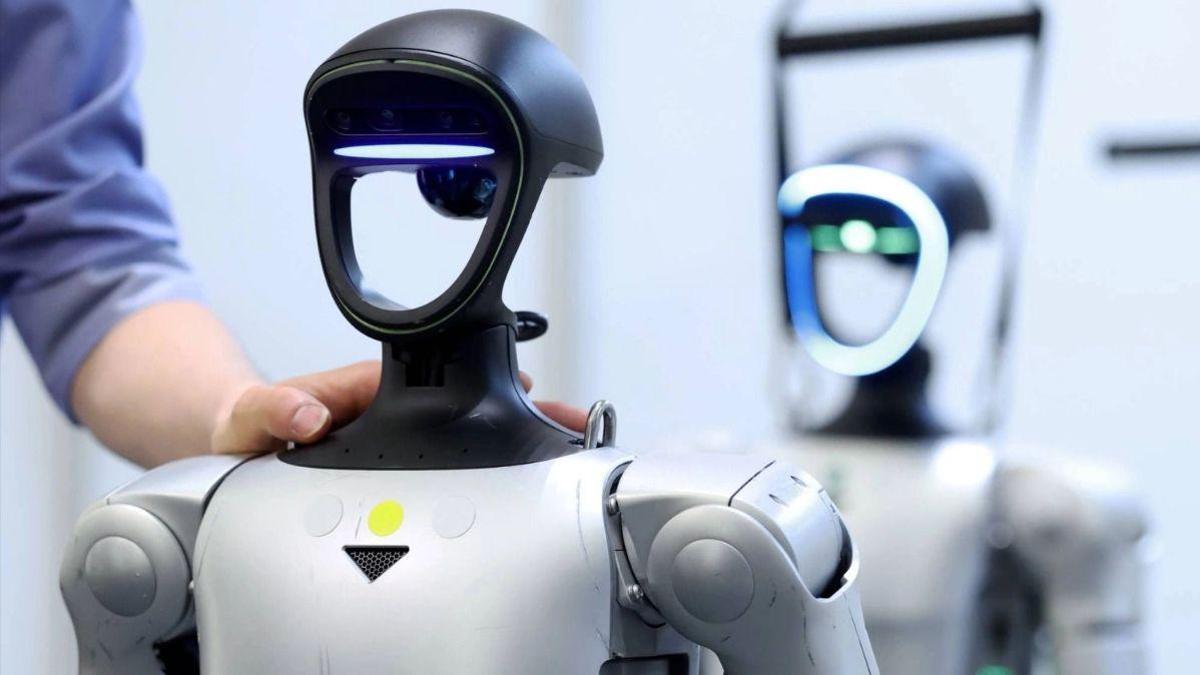
Robotics has become a fundamental pillar for industrial and healthcare transformation in Spain. In recent weeks, various initiatives have highlighted both the potential of this technology and the challenges that still remain for its equitable implementation. From international agreements seeking to guide public policy to public-private partnerships accelerating the development of autonomous platforms, the Spanish robotics ecosystem is experiencing a period of rapid growth.
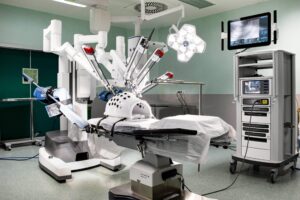
However, progress is not uniform. While private centers and some public hospitals are incorporating state-of-the-art robotic surgery systems , regions like Extremadura are warning of a healthcare gap that limits patients' access to these technologies. Below, we review the most relevant milestones and the demands shaping the sector's agenda.
An international declaration to place robotics as a priority
Four robotics and automation organizations—the Spanish Association of Robotics and Automation (AER Automation), the Association for Advancing Automation (A3) from the United States, the International Federation of Robotics (IFR), and VDMA Robotics + Automation from Germany—have signed the Barcelona Declaration on Robotics and Automation 2026 in Barcelona . This document establishes ten priorities for policymakers, including the development of a specific national robotics strategy, promoting investment through tax incentives, integrating robotics into the education system , and strengthening investment in healthcare and assistive robotics. The four organizations represent more than 3.000 companies and organizations in the sector. According to Carlos Méndez, president of AER Automation, the declaration "represents the commitment and international unity to actively collaborate with public administrations in building a framework that allows us to harness the full potential of robotics as an engine for competitiveness, sustainability, and social well-being."
Public-private collaboration for autonomous mobile robotics
In parallel, Sisteplant and the Center for Automation and Robotics (CAR), a joint center of the Spanish National Research Council (CSIC) and the Polytechnic University of Madrid, have signed a scientific and technological collaboration agreement to accelerate the development of autonomous mobile robotics technologies. The twelve-month program includes field tests of the R-Bot platform in extreme operating environments , with varied terrain and adverse environmental conditions. R-Bot, presented as Europe's first platform-agnostic robotic platform, allows for the integration and management of fleets of ground and aerial robots for industrial inspection tasks. Capabilities to be evaluated include autonomous navigation, teleoperation, asset inspection, operation in the absence of GPS signal, and recovery after loss of connectivity. These validations are part of the European project EDIH Madrid Region 2.0, which offers 21 technology validation services. Ángela Ribeiro, a researcher at CAR-CSIC, emphasized that public-private collaboration is key to meeting the needs of Spanish industry, while Lluís Llauradó, Product Manager at R-Bot, highlighted that the agreement represents a significant step forward in the platform's technological maturity. The company asserts that automation with R-Bot can reduce inspection times by up to 90% and associated costs by 70% , while also preventing personnel exposure to hazardous environments.
Innovation in industrial automation: sensors that give robots a sense of touch
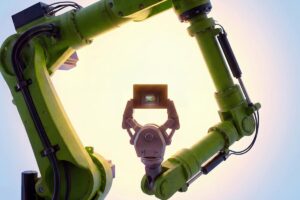
In the field of industrial automation, a collaboration between HBK (Hottinger Brüel & Kjær) and the French company Siléane has resulted in a tactile intelligence solution for robotic gripping. Developed for an international cosmetics manufacturer, the system incorporates four PW22i intelligent load cells into the robot's end-of-arm tooling. These cells, factory-calibrated and connected via IO-Link technology, measure the force exerted at each point of contact and verify grip quality in real time . Until now, validation systems relied on position tracking or presence sensors, which offered limited information. With this solution, the robot can detect deviations and react instantly, preventing container deformation or product loss. Simon Kleefeldt, Product Manager at HBK, noted that "this project reflects a fundamental shift in automation: integrating intelligence into the sensor itself to create more reliable, autonomous, and easier-to-implement systems." The technology aligns with the principles of Industry 4.0 and has demonstrated operational improvements such as waste reduction and faster start-up.
Robotic surgery is advancing, but it's not reaching everyone.
In the healthcare sector, the La Luz University Hospital, part of the Quirónsalud Group, has successfully performed the first total knee replacement surgery assisted by the VELYS robotic system in Spanish private healthcare. The procedure, led by Dr. Manuel Leyes, utilized an imageless platform that does not require a preoperative CT scan and allows for dynamic, real-time adjustments. The system collects intraoperative anatomical information to optimize alignment, ligament balance, and implant position. "The VELYS robot acts as a surgical assistance tool that provides precise information in real time," explained Dr. Leyes. Quirónsalud has more than 20 Da Vinci platforms, three of which are the Da Vinci 5 model, and has 12 ROSA and CORI robots for joint replacement, in addition to two Mazor X robots for spinal surgery. More than 100 professionals are certified to operate these systems.
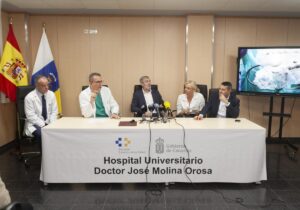
However, the reality in other regions is very different. In Extremadura, only the university hospitals of Badajoz and Cáceres have robotic platforms—a Da Vinci and a Hugo RAS—while the other six health districts lack this technology. Dr. Olga Blasco, president of the Extremadura Society of Surgery, denounces that the region "is lagging behind the rest of the country" and that the shortage of equipment creates a healthcare gap that prevents patients from accessing the same therapeutic options . Blasco calls for a strategic robotics plan that would allow the incorporation of platforms in hospitals such as Plasencia, Mérida, and Don Benito, where they could be shared by several specialties. Robotic surgery in Spain , she insists, "is no longer a technology of the future, but a tool fully integrated into clinical practice in many Spanish hospitals."
The combination of these advances and inequalities paints a picture in which Spain is making progress in industrial and medical robotics, but where territorial equity remains a challenge. The Barcelona Declaration, public-private partnerships, and innovations in sensors and surgery point the way forward, but investment and strategic planning will be key to ensuring that all citizens, regardless of where they live, can benefit from these technologies.

Table of Contents