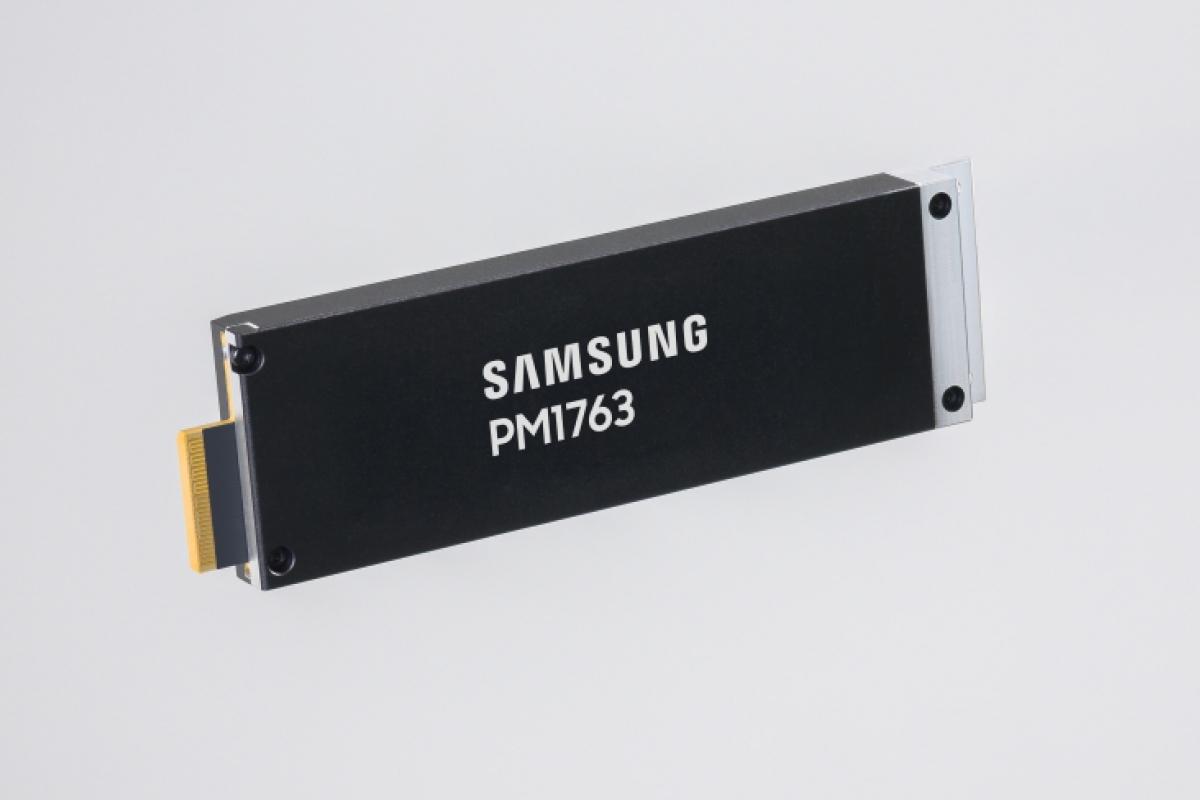
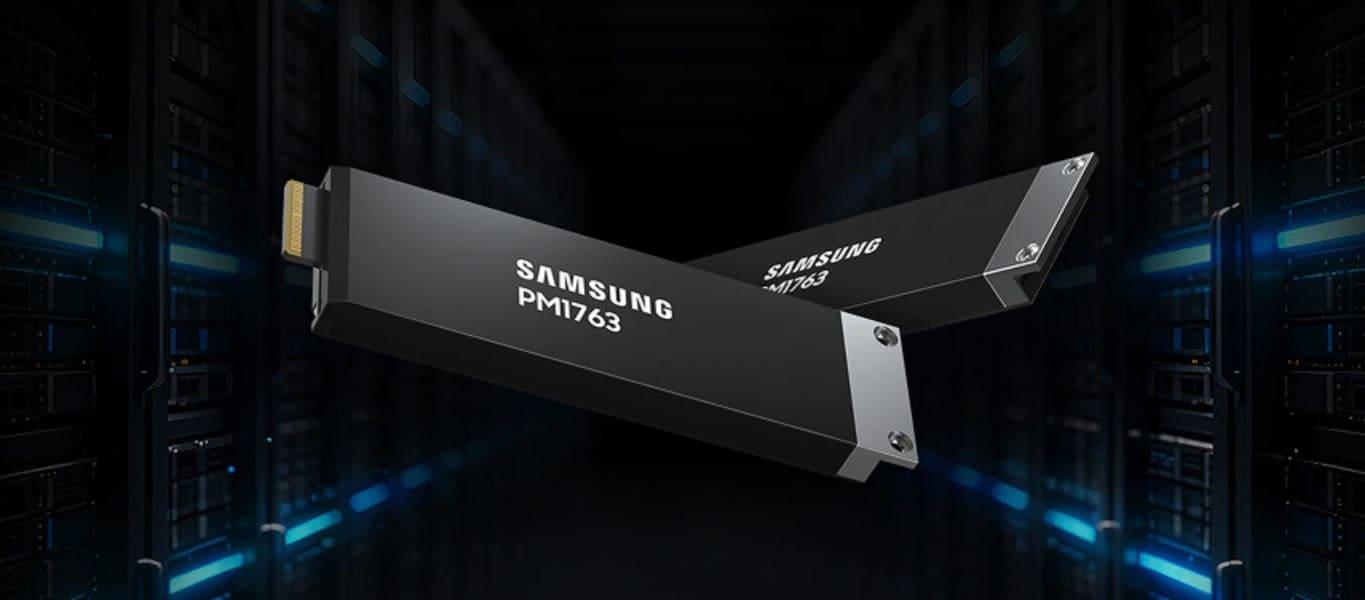
The storage industry is taking a generational leap with the arrival of the first enterprise SSD using the PCIe 6.0 interface. Samsung has confirmed that it is already mass-producing the PM1763 model, a drive designed exclusively for AI servers and high-performance data centers. This launch marks a milestone, as it doubles the available bandwidth compared to the previous generation and promises to reduce processing times for large volumes of data.
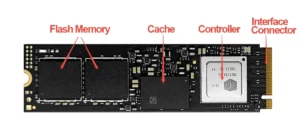
The PM1763 is no ordinary drive: it combines ninth-generation V-NAND memory with a 4-nanometer controller , enabling it to achieve transfer speeds that until now seemed reserved for science fiction. With sequential read speeds of up to 28.400 MB/s and write speeds of 21.900 MB/s, it can move a 40 GB language model in just 1,4 seconds. This performance, according to the company, offers more than 1,8 times the energy efficiency of its predecessor, the PM1753.
Mass production and first units
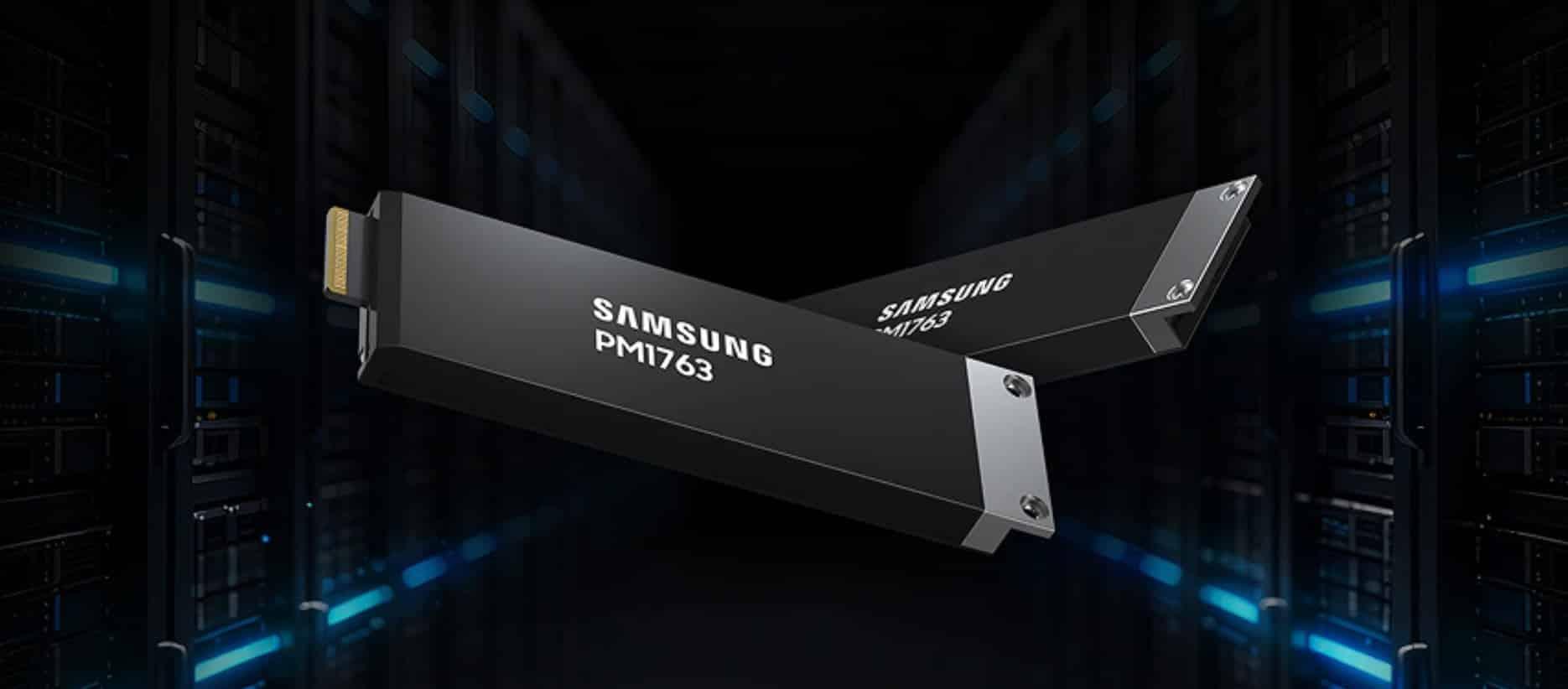
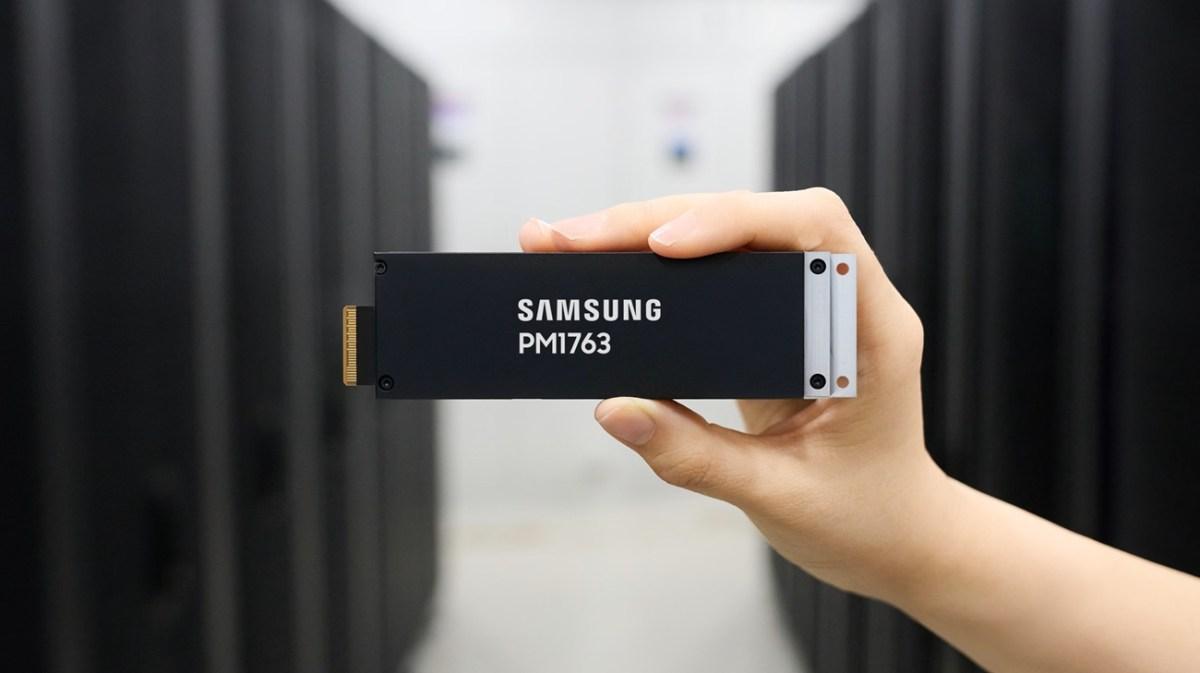
Samsung officially announced that mass production of the PM1763 began on July 8, 2026. The first available units are 4, 8, and 16 terabytes, although the company has already indicated that 32 and 64 TB versions will be released in the future. The drive is manufactured in E1.S and E3.S form factors, designed for blade servers and dense storage systems, and there is also a U.2 variant, although this latter version is only compatible with PCIe 5.0.
The new SSD is optimized for AI platforms like NVIDIA's upcoming Vera Rubin and integrates seamlessly into infrastructures that require a constant flow of data between memory and graphics processors. Samsung presents it as a turnkey solution for hyperscale data centers, where latency and power consumption are critical factors.

Performance and technical specifications
The performance figures speak for themselves. In sequential reads, the PM1763 achieves 28.400 MB/s, while in writes it reaches 21.900 MB/s. In terms of random operations, the drive registers 6.800K IOPS for reading and 950K IOPS for writing. This is more than double the performance of the previous generation PM1753 , which achieved 14.500 MB/s for reading and 10.000 MB/s for writing.
The PCIe 6.0 interface uses PAM4 signaling and is compatible with NVMe 2.1 and OCP 2.6, ensuring interoperability with the latest servers. The 4nm controller, designed by Samsung, not only enables these speeds but also reduces power consumption, a key factor in data centers where electricity bills are among the largest operating costs.
Efficiency and cooling for data centers
One of the PM1763's strengths is its cooling system. It's designed to work with servers that use direct-to-chip (D2C) liquid cooling. This technology draws heat directly from the controller and memory modules, preventing the drive's performance from being throttled by temperature, even during extended work sessions. Samsung claims that energy efficiency is more than 1,8 times better than the PM1753 , resulting in a lower cost per terabyte transferred.
Furthermore, the drive includes advanced telemetry and error recovery features designed to minimize downtime in critical environments. All of this makes the PM1763 a key component for data centers seeking to maximize performance per watt.
Advanced security for the quantum age
Security is another key feature of this SSD. Samsung has incorporated post-quantum cryptography (PQC) algorithms, designed to protect data against future quantum computer attacks. It also includes the TDISP (TEE Device Interface Security Protocol), which secures data paths in virtualized environments. These measures meet the most demanding cybersecurity standards , such as CNSA 2.0 and SPDM 1.4, and are especially relevant for critical infrastructure in Europe, where data protection is a top priority.
The PM1763 also supports SED (Self-Encrypting Drive) and IDE (Integrity and Data Encryption), ensuring that data is encrypted both at rest and in transit. Samsung designed this drive with the security requirements of AI platforms in mind, where sensitive data must be handled with the utmost care.
Impact in Europe and availability
Although PM1763 is exclusively an enterprise product, its arrival in Europe will have an indirect impact on the AI services we use daily. Operators like Telefónica and cloud providers will be the first to access these units, enabling them to reduce the processing costs of natural language models and improve the response speed of virtual assistants. In Spain, the Spanish Data Protection Agency (AEPD) views post-quantum security measures positively , as they align with European cybersecurity regulations for critical infrastructure.
For home users, the wait will be long. According to various sources, the first PCIe 6.0 SSDs for personal computers won't arrive until around 2030. Until then, PCIe 5.0 will remain the standard in the consumer market. In the meantime, the PM1763 points the way to what's to come in high-performance storage.
With the PM1763, Samsung has not only launched the world's first PCIe 6.0 SSD, but has also set a new benchmark for speed, efficiency, and security in data centers. Its 28,4 GB/s read speed, 4 nm controller, and support for post-quantum cryptography make it the ideal tool for the next generation of artificial intelligence. While currently only available to large enterprises and operators, its impact will be felt across all services that rely on the cloud and massive data processing.
Table of Contents